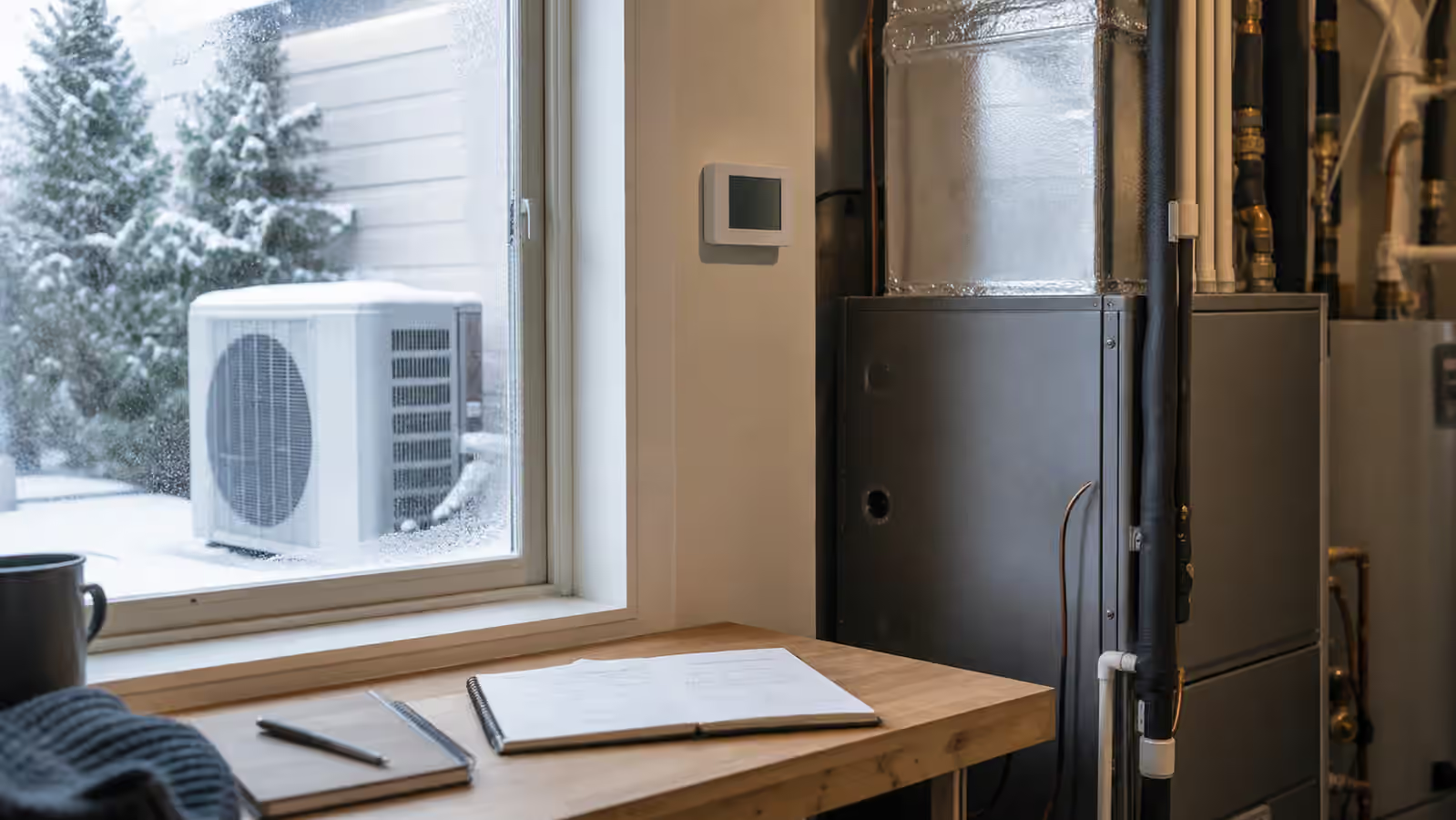
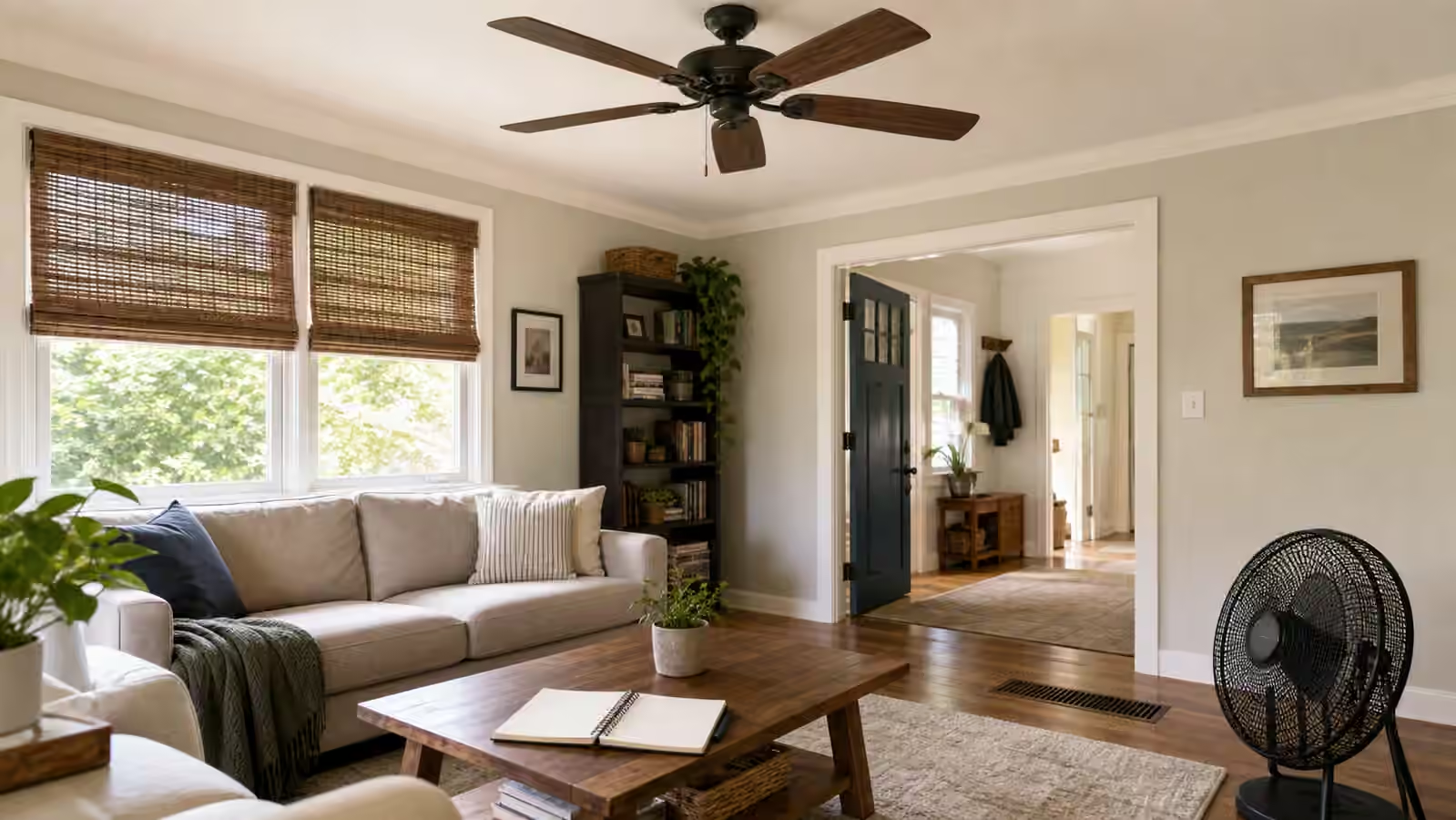
Heat pump comfort depends on the equipment, the building shell, the air path, and the controls that ask the system to run. The thermostat is easy to treat as a small accessory, but it decides when the heat pump starts, how hard it recovers after a setback, whether backup heat joins in, and how long the system is allowed to settle into a steady rhythm. A strong installation can feel uneven if the controls are configured badly or used like an old furnace. For background, see DOE — Energy Saver (2022): heating, cooling, and heat pumps .
This matters because heat pumps are happiest when the house, controls, and expectations agree with one another. Heat Pump Buying Guide and Heat Pump Sizing Basics explain how the equipment gets chosen. Ductwork and Airflow for Heat Pumps explains how comfort reaches the rooms. The control plan ties those pieces to ordinary mornings, nights, guests, seasons, and utility bills.
Heat pumps prefer steady work
Many homes have a thermostat culture inherited from furnaces and boilers. The system blasts heat, the room warms quickly, and the thermostat becomes a lever that can be pulled hard in either direction. Heat pumps often work better with a quieter pattern. They may run longer, deliver gentler air, and maintain comfort by avoiding large temperature swings. That steady operation can look strange to someone who expects short dramatic cycles, but it is often the point.
A heat pump that runs for long stretches is not automatically wasting energy. It may be matching the load of the house at low output. The warning signs are different: rooms that never reach comfort, frequent starts and stops, loud airflow, backup heat appearing often without a clear reason, or a system that overshoots and then sits idle. Those patterns deserve attention because they can point toward sizing, airflow, thermostat placement, or control settings rather than the basic idea of heat pump operation.
Thermostat placement also matters. A thermostat in sun, near a draft, close to a kitchen heat source, above a return path, or beside an exterior door may see a different house from the people in the rooms. Before changing the equipment, notice whether the thermostat location is telling the system a distorted story. A few degrees of local bias can create hours of comfort complaints elsewhere.
Setbacks need a different rhythm
Deep setbacks can be useful in some homes and disappointing in others. The issue is recovery. If the house cools far down overnight, the heat pump may need a long morning run to return to comfort. In mild weather that may be fine. In colder weather the thermostat may decide the recovery is too slow and call auxiliary heat, resistance heat, or another backup source depending on the system. That can erase some of the intended savings and make the house feel less predictable.
This does not mean every home should hold one temperature forever. It means setbacks should be tested, not assumed. A small overnight change may work well. A large daytime setback during an empty workday may be sensible if the house recovers before people return. A vacation setting may be reasonable if humidity, freeze protection, pets, plants, and other household needs are considered. The useful question is not whether setbacks are good or bad. The useful question is how this house recovers with this system in this season.
The cleanest test is ordinary observation. Choose a modest setting change and watch how long recovery takes, whether backup heat appears, how rooms feel, and how energy use changes over several similar days. Home Energy Monitoring Basics is helpful here because controls should be judged by patterns, not by one uncomfortable morning after a storm front.
Backup heat should not be mysterious
Many heat pump systems have some form of backup heat. It may be electric resistance heat, a furnace in a dual-fuel setup, or another arrangement chosen by the installer. Backup heat is not a failure by itself. It may be needed during very cold conditions, defrost cycles, equipment trouble, or unusually fast recovery. The problem is when homeowners do not know when it is expected to run, how the thermostat displays it, or what settings make it appear.
Ask the installer to explain the control language in plain terms. “Aux heat,” “emergency heat,” “balance point,” “dual fuel,” and “lockout” should not remain mysterious words on a screen. Emergency heat usually means a special mode, not an everyday comfort shortcut. Auxiliary heat may be automatic, but the homeowner should know what normal looks like. In a dual-fuel home, the changeover between heat pump and furnace should reflect the equipment, climate, fuel, and comfort strategy rather than a guess made after move-in.
This is also where panel and backup planning connect. If the home uses electric auxiliary heat, that load may matter for Electrical Panel Planning Before Home Electrification and may be unrealistic for small backup systems. A battery plan that can run fans and controls is different from a plan that tries to support large resistance heat. The thermostat decides when that load is invited into the house.
Fan settings change comfort clues
Thermostats often expose fan settings that look simple but affect comfort diagnosis. Auto fan usually runs the blower when heating or cooling is active. A continuous fan setting may improve mixing in some homes, help filtration, or even out room temperatures, but it can also use extra electricity, move air through leaky ducts, or make occupants feel drafty. The right answer depends on the ductwork, blower, filter, noise tolerance, and household priorities.
Fan-only operation is sometimes used to chase a room imbalance, but it should not hide a duct problem. If a bedroom only becomes tolerable when the fan runs all day, the issue may belong in airflow balancing, return paths, duct sealing, or room load analysis. Ductwork and Airflow for Heat Pumps is the better companion than a thermostat menu when the complaint is uneven delivery.
Filter choice also affects the control story. A filter that is too restrictive for the system or overdue for replacement can reduce airflow and change how the heat pump behaves. The thermostat may call longer runs, rooms may drift, and the homeowner may blame the set point. Heat Pump Maintenance belongs in the controls conversation because controls cannot compensate forever for neglected airflow.
Room sensors and zones need restraint
Remote sensors and zoning can be useful when the thermostat sits in a poor representative location or when the house has distinct comfort areas. They can also create confusion if they are used to force one hard-to-serve room to control the whole system. A sunny office, a closed bedroom, a finished attic, or a room over a garage may have a real load problem. Making that room the boss can leave the rest of the house over-conditioned while the root cause remains.
Zoned ducted systems add another layer. Dampers, bypass paths, blower settings, and minimum airflow all matter. Closing off too much of a ducted system can create pressure, noise, and equipment problems. A zoned heat pump should be designed and commissioned as a system, not assembled from thermostat preferences alone. Ductless mini-split systems have different controls, but the same principle applies: a wall head conditions the area it can actually influence, and closed doors still matter.
Room sensors are best when they reveal patterns and support a deliberate strategy. They are weaker when they become a way to argue with physics. If one room is always wrong, write down when it is wrong, what the outdoor conditions are, whether doors are open, whether sun is hitting the room, and what the thermostat sees. That record gives an HVAC professional something better than a vague complaint.
Build a seasonal operating note
The most useful heat pump control plan is short, specific, and seasonal. It says what temperatures the household normally uses, what setback is acceptable, what fan setting is intentional, what backup heat display is normal, and what symptoms should trigger a service call. It also records filter sizes, thermostat model, remote sensor locations, and any installer settings the homeowner should not casually change.
This note is not busywork. It protects the house from memory drift. A setting changed during a cold snap can remain unnoticed for months. A guest can switch modes. A child can press buttons. A smart thermostat can receive an update or lose a schedule after a network change. When the house has a written baseline, troubleshooting starts from a known place instead of a pile of guesses.
Fold the note into Whole-Home Energy Map beside the major loads and future upgrades. Heat pump controls affect comfort, electrical demand, backup expectations, and load shifting. The thermostat is small, but it is one of the few places where the household’s habits meet the home’s largest comfort system every day.