
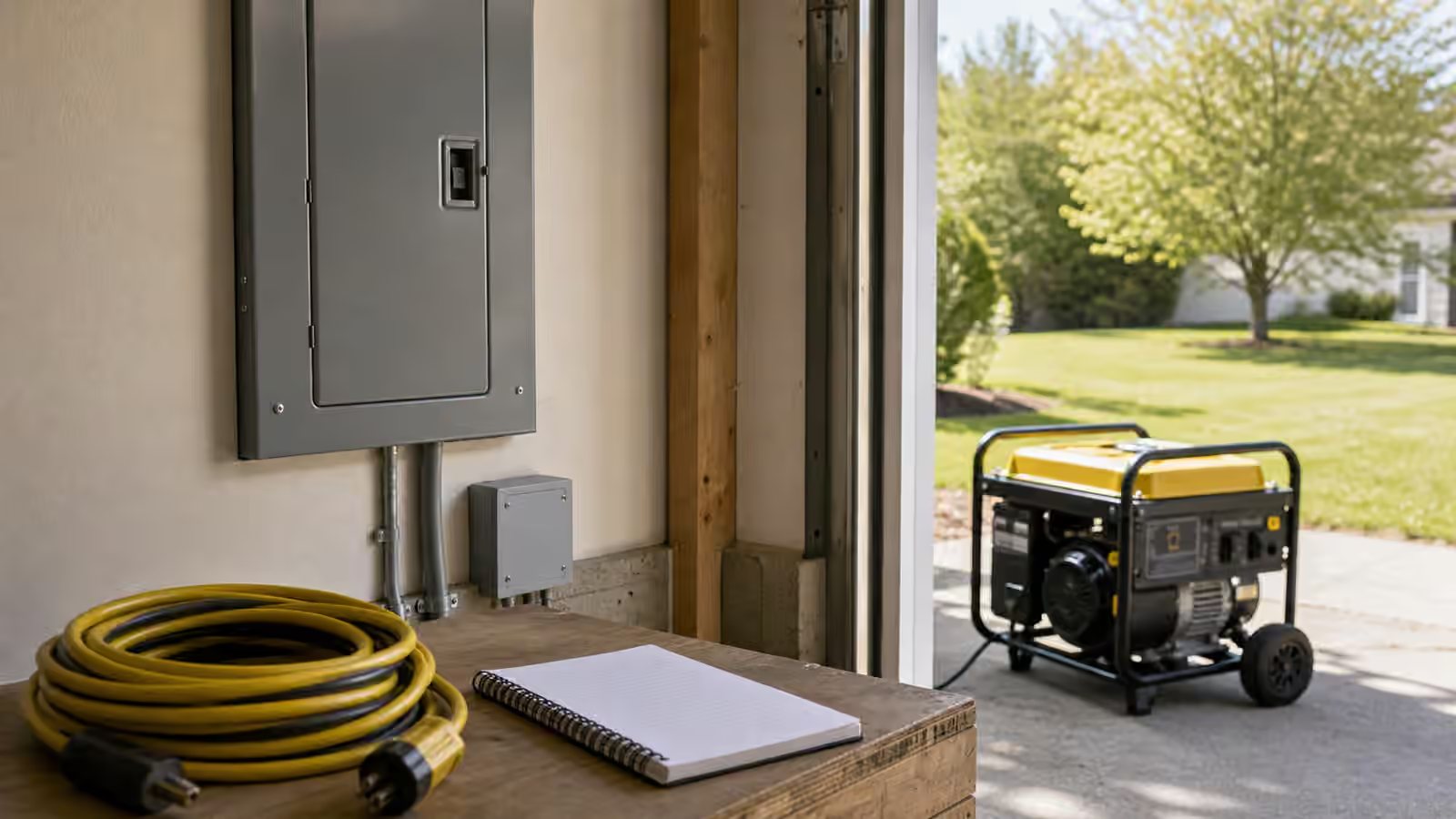
A portable generator becomes part of a home energy plan only when its boundary is clear. The generator must power selected loads without energizing utility lines, confusing household wiring, or inviting improvisation during a stressful outage. That boundary is usually created with properly installed transfer equipment, an inlet, labeling, and a load plan. Without that boundary, a generator can become more dangerous than useful. For background, see CPSC — Carbon Monoxide Safety .
This is not a wiring manual. Generator interconnection belongs with qualified electricians, permits, code requirements, utility rules, listed equipment, and the generator manufacturer’s instructions. The homeowner’s job is to decide what the backup plan should accomplish, where the generator can safely operate outdoors, which loads matter, and what questions must be answered before anyone buys parts.
The transfer boundary is the project
The most important idea is separation. A generator should not backfeed the grid. It should not rely on a cord plugged into a household receptacle. It should not create a condition where utility power and generator power can meet in unsafe ways. Generator Safety for Outages covers the carbon monoxide and electrical hazards plainly. Transfer planning is the equipment side of that same safety boundary.
A transfer switch, manual transfer panel, interlock kit, or inverter-based transfer system can each create a controlled source selection when designed and installed correctly. The details vary by panel, generator, local requirements, and load goals. Some systems feed a small set of circuits. Some allow selected circuits in the main panel to be energized when the main breaker is off and the interlock is engaged. Some standby systems transfer automatically. The common purpose is to make the source relationship deliberate.
The homeowner should not treat the names as interchangeable. An interlock must match the panel and installation requirements. A transfer switch has its own circuit limits. A critical-loads panel changes which loads are available. A standby system has maintenance and fuel assumptions. The right planning question is not “Which gadget is cheapest?” It is “Which boundary safely supports the loads we actually need?”
Start with loads, not generator size
A generator conversation often begins with watts. That is necessary, but not sufficient. The better start is Outage Priority List . Which loads truly matter during a grid outage? A refrigerator, freezer, lights, communications, a sump pump, a well pump, a heating system control, or a few receptacles may matter more than whole-house convenience. Large comfort loads may be possible in some systems, but they should not be assumed.
Backup Power Sizing and Watts, kWh, and Loads explain why startup surge, continuous watts, and run time all matter. A pump may start hard and then run briefly. A refrigerator cycles. A router is small but continuous. A microwave is short and high. A central air conditioner, electric range, electric dryer, or resistance heater may overwhelm a portable generator plan quickly.
Transfer equipment should match the chosen loads. If the plan is a few essentials, a small transfer panel may make sense. If the plan is flexible circuit selection through a main panel interlock, the household needs discipline and labeling so large loads are not turned on casually. If the plan requires automatic operation, the project becomes a different class of system with different cost, maintenance, and fuel questions.
The inlet and cord path are part of safety
The generator has to run outdoors, away from openings and places where exhaust can enter the home. That fact shapes inlet placement. An inlet in a convenient but poor location can encourage unsafe operation. An inlet too far from the safe generator location can create cord problems. An inlet near a driveway, walkway, garage door, window well, or neighbor’s opening may create practical issues that are easy to miss on paper.
The cord should be sized and rated for the system, protected from damage, and used in a way that does not create tripping, crushing, water, or heat problems. The homeowner does not need to engineer the cord, but they should discuss distance, route, storage, and strain with the installer. A neat diagram taped inside a cabinet can be more useful during an outage than a vague memory of where the cord was stored.
Portable generators also need a stable operating surface, fuel storage plan, weather protection that follows the manufacturer’s instructions, and a routine for shutdown before refueling. Transfer planning does not replace those details. It depends on them. A perfect panel installation still fails the household if the only practical generator spot is unsafe or unusable in bad weather.
Labels prevent outage improvisation
Outages are poor times for interpretation. People are tired, the house is dark, food may be warming, and phones may be low. A transfer system should therefore be labeled in a way that normal household members can understand. Which circuits are backed up? Which loads should stay off? Which order should the steps follow? Where is the generator cord? Where is fuel stored? Who is allowed to operate the system?
Critical Loads Panel Planning is useful because it turns backup into a smaller, clearer project. A refrigerator circuit, a communications outlet, a few lights, and a pump circuit are easier to reason about than an unlabeled whole-house panel. If the system uses an interlock and selected breakers, the labels and operating notes become even more important because the main panel still contains loads the generator should not carry.
The notes should be written after professional installation and walkthrough, not invented from memory months later. They should match the actual equipment. If the generator is replaced, loads are added, or the panel changes, the notes should be updated.
Fuel and run time limit the plan
Transfer equipment can make a generator connection safer, but it cannot create fuel, silence, or unlimited run time. Gasoline storage has shelf-life and safety concerns. Propane and natural gas have their own equipment and supply assumptions. Diesel, standby units, and larger systems change the maintenance picture. Noise can affect household use and neighbors. Weather can change access. None of these issues is solved by a breaker label.
The load plan should match fuel reality. A generator that can technically power several circuits may still be a poor match for long outages if fuel is hard to store or obtain. Running fewer loads can stretch fuel and reduce maintenance stress. Pairing a generator with a portable power station may also make sense for some households, letting the generator run intermittently while small electronics stay powered quietly. Portable Power Station vs Generator helps separate those roles.
Generators also need exercise, oil checks, storage care, and periodic testing according to their instructions. A transfer system that is never tested may surprise the household when it is finally needed. A calm seasonal test, done safely and without load heroics, can reveal missing cords, stale fuel, confusing labels, or a load that should be removed from the backup plan.
Professional walkthroughs are worth asking for
The installation should end with more than a receipt. The homeowner should ask for a walkthrough of the source selection, inlet, cord, backed-up circuits, loads to avoid, shutdown sequence, maintenance expectations, and any inspection documents. The walkthrough should be treated as part of the project, not a favor. The system is only useful if the household can operate it within its intended boundaries.
Good questions are practical. What can this generator carry continuously? Which loads have startup surge concerns? Which breaker combinations should be avoided? What happens when utility power returns? How should the generator be shut down before disconnecting? Where is the safest generator position? What maintenance is needed before storage? What labels or instructions should stay with the panel?
If the answers are unclear, pause before relying on the system. Backup power is a place where confidence should come from installed equipment, tested steps, and visible limits. A generator can be a useful outage tool, but only when the connection method is planned as carefully as the generator purchase.
Transfer planning turns a noisy portable machine into a bounded household system. It chooses what gets powered, how source isolation happens, where the generator operates, how people recognize the limits, and how the plan survives stress. That is less exciting than shopping by wattage, but it is the part that keeps backup power from becoming guesswork.


