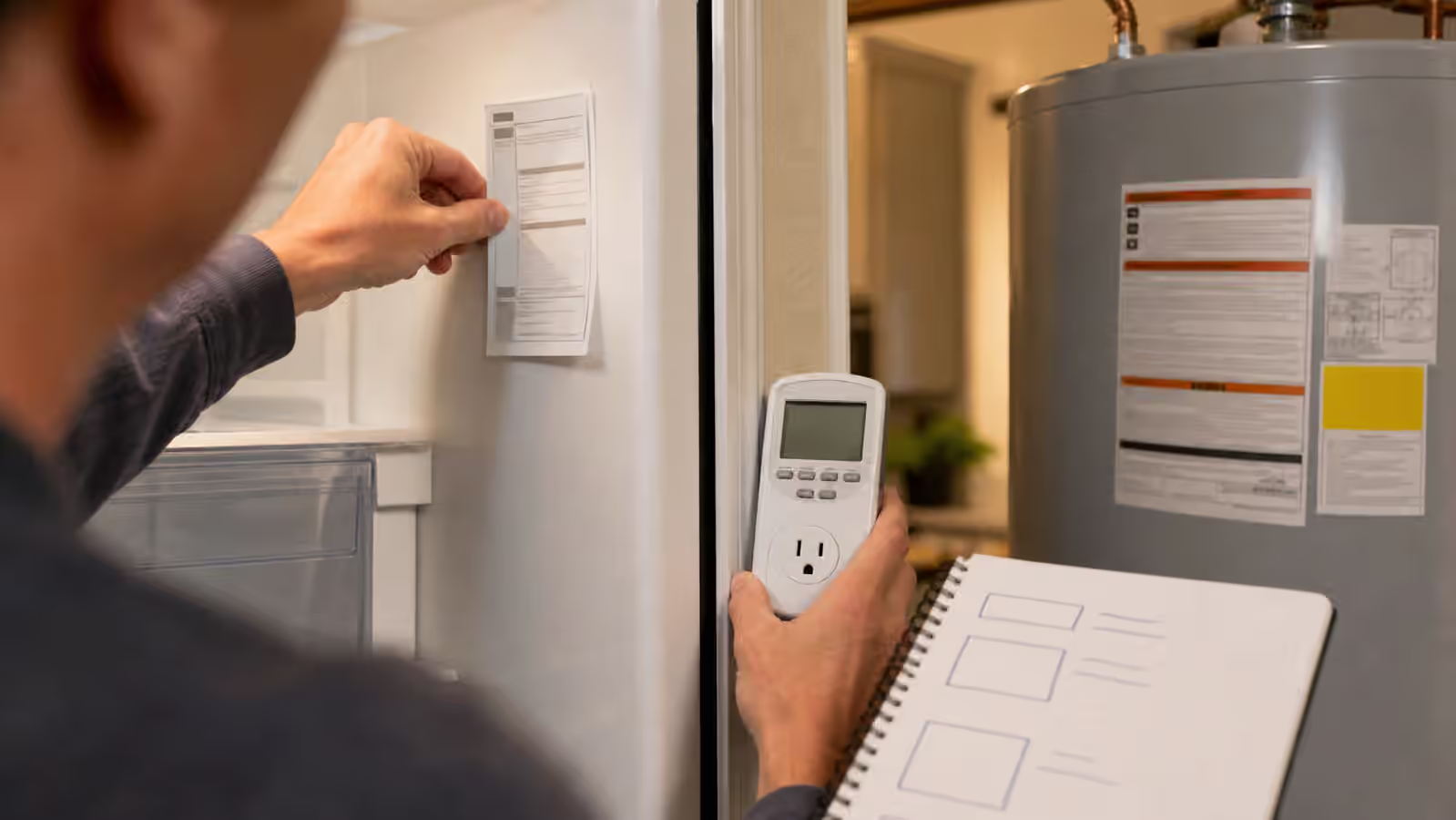
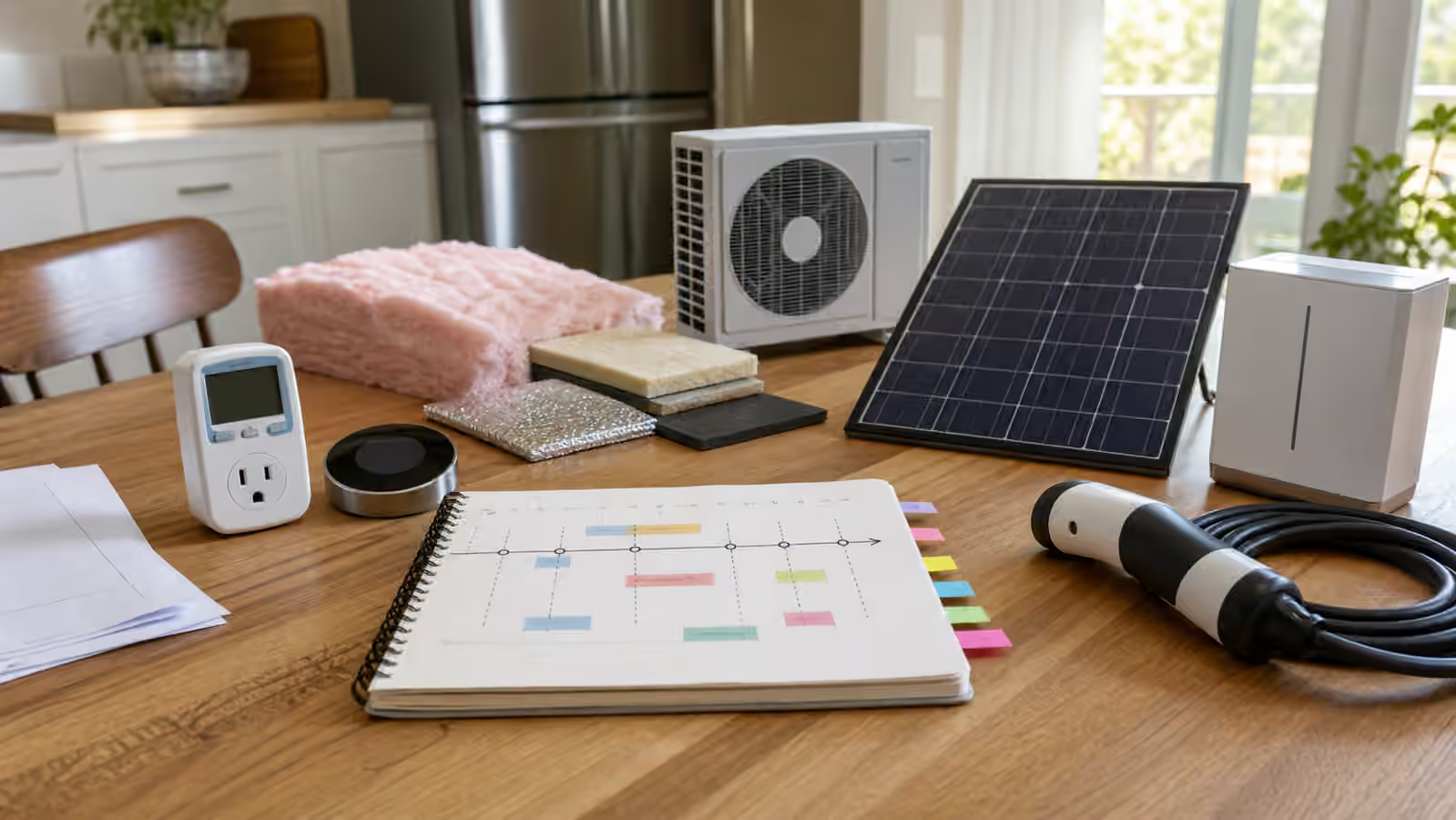
The garage often becomes the home’s energy overflow room. A freezer lands against one wall. Tool chargers gather on a shelf. A compressor appears under a bench. LED shop lights replace old bulbs. Holiday decorations need outlets. An EV charger may arrive. A battery or solar inverter may be planned nearby. None of these choices is strange by itself, but together they can turn the garage into a crowded electrical zone that deserves a map. For background, see Virginia Tech Extension — Estimating Appliance and Home Electronic Energy Use .
Garage and workshop planning is not a wiring tutorial. Electrical work belongs with qualified professionals, permits, equipment instructions, and local code. The homeowner’s job is to understand the loads, notice how they overlap, and ask for a layout that is safe, serviceable, and future-aware. A garage is too useful to let it become a tangle of chargers, cords, freezers, and half-remembered circuits.
Garages collect unlike loads
A kitchen circuit usually serves kitchen behavior. A bedroom circuit usually serves bedroom behavior. Garages are messier. They can hold storage, tools, appliances, vehicles, networking equipment, pumps, exercise gear, chargers, lighting, and outdoor equipment. Some loads run constantly. Some surge briefly. Some operate in dusty or damp conditions. Some are seasonal. Some are used by guests or teenagers who do not know which outlet is already burdened.
Watts, kWh, and Loads gives the basic language. The garage adds context. A chest freezer may draw modest power most of the time but run every day. A compressor may draw a high startup surge. Cordless tool chargers may use little energy individually but multiply. A space heater may be a large load that should not appear casually on an old circuit. An EV charger can dominate the conversation if it is not planned deliberately.
The first step is a room inventory. Walk the garage and name the loads by function, not just by outlet. Freezer. Door opener. Lighting. Workbench chargers. Compressor. Shop vacuum. Network node. Outdoor tool battery shelf. EV charger. Future heat pump water heater. Future battery system. This simple list prevents the garage from being treated as empty space when it is already doing work.
Continuous loads deserve respect
The freezer is a useful example because it is easy to overlook. It may not be large compared with a vehicle charger or compressor, but it runs across the year and matters during outages. If the garage gets hot, the freezer may work harder. If the outlet is shared with tools or chargers, a nuisance trip can become a food-loss problem. The freezer belongs on the same map as Refrigerator and Freezer Energy Planning , especially if backup power is part of the household plan.
Network gear, security devices, battery chargers, and door operators can also become continuous or semi-continuous loads. None may be dramatic, but they add to the garage baseline. If the home uses a portable power station during outages, decide whether any garage loads are actually included. A freezer may matter. Tool chargers probably do not. The garage can be full of devices that feel important during normal life and irrelevant during backup.
Continuous loads should be easy to identify, easy to disconnect if needed, and protected from being buried behind storage. If a freezer plug disappears behind boxes, nobody will know what happened until the problem is unpleasant. Energy planning and basic housekeeping overlap here.
Motor loads and tools can surprise small systems
Workshop tools are not all steady loads. Compressors, saws, vacuums, pumps, and dust collectors may have startup surges. They may share circuits badly. They may trip breakers when used with extension cords or other loads. The solution is not to guess larger and larger equipment. It is to understand which tools are used together and which circuits support them.
This matters for backup power too. A portable battery that can run lights and a router may not start a compressor. A generator that handles one motor may struggle if several loads start together. Inverter Sizing applies beyond outage gear because the surge lesson is the same: starting a motor can be harder than running it.
A workshop also changes safety conditions. Dust, vibration, sharp tools, heat, and cords create risks that a clean office does not. Power strips and extension cords should not become permanent wiring. Chargers should sit where heat can dissipate. Damaged cords should be retired. If the garage work expands, a dedicated circuit or subpanel discussion may be more reasonable than living with a permanent web of temporary fixes.
EV charging should not crowd out everything else
EV charging is often the largest planned garage load, so it can swallow the conversation. That is understandable, but it should be integrated rather than treated as an isolated project. EV Charging Load Planning explains why faster is not always necessary. A garage with an EV charger still needs lights, a freezer, door operation, chargers, and tool use.
The charger location affects cord management, parking, storage, and future equipment. A charger mounted where the cable crosses a walkway will become annoying. A charger installed without thinking about a future second vehicle, battery, solar inverter, or workshop circuit may force rework. A charger set to a lower current may serve the household perfectly while preserving panel capacity for other projects.
This is where Electrical Panel Planning Before Home Electrification belongs early. The garage may be physically close to the panel, but that does not mean capacity, breaker spaces, wire routes, and load calculations are simple. A professional can evaluate the whole picture when the homeowner brings a clear list of present and future loads.
Chargers need a charging habit
Cordless tools, yard equipment, bikes, scooters, and small backup batteries often gather in garages. Their chargers can become a quiet mess. Some are designed for long-term connection. Some are not. Some batteries prefer certain storage temperatures. Some chargers get warm. Some should be kept away from dust, moisture, or combustible clutter. Manufacturer instructions matter.
The energy side is modest but still worth organizing. A shelf full of chargers can draw small standby loads and create confusion. Smart Plugs, Timers, and Load Control at Home can help if the devices are appropriate for controlled power, but a timer should never override battery safety instructions. Sometimes the best control is a routine: charge after use, remove the battery when full if recommended, and keep the shelf clear enough to see what is happening.
Labeling helps even when labels are not fancy. Know which charger belongs to which tool. Keep damaged batteries out of service. Avoid burying chargers under rags, cardboard, or sawdust. Energy planning is not separate from fire prevention and maintenance.
Lighting and comfort shape real use
Garage lighting is usually a small load compared with charging and tools, but it changes behavior. Good LED lighting can make a workshop safer and reduce the temptation to use portable lamps awkwardly. Motion sensors or switching zones may help if the garage is used for storage, parking, and work at different times. The goal is not darkness. It is lighting that serves the task without staying on all day because the switch is inconvenient.
Comfort loads need more caution. Portable electric heaters, old refrigerators, dehumidifiers, and fans can be significant loads in a garage. A space heater in a workshop may draw more than several tools. A dehumidifier may run for many hours. A garage refrigerator may work hard in hot conditions. These loads should be visible in Home Energy Monitoring Basics rather than hidden in the seasonal bill.
If the garage is becoming a conditioned workshop, that is a building project as much as an electrical one. Insulation, air sealing, ventilation, moisture, and heating or cooling equipment should be planned together. Otherwise the garage becomes an expensive room that still feels bad to use.
Build a garage load map
The useful deliverable is a garage load map. It can be a sketch, not a formal drawing. Mark the panel if it is nearby, major outlets, freezer, door opener, workbench, chargers, compressor, lighting zones, EV charger location, future equipment, and any loads that matter during outages. Note which loads run constantly, which surge, which can wait, and which should never be casually switched.
Connect that sketch to Whole-Home Energy Map . The garage is part of the house, not a separate electrical island. A panel decision, solar battery plan, critical-loads panel, or EV charger setting may all depend on what the garage already does.
A well-planned garage feels ordinary. The freezer has a reliable outlet. Chargers are organized. Tools have adequate circuits. The EV charger serves the car without dominating the panel. Lighting supports work. Backup priorities are clear. The room remains flexible because the electrical plan is visible before the next device arrives.