An EV charger can become one of the largest electrical loads in the home. That does not make it a problem. It means the charger deserves a plan before it becomes a permanent part of the house.
The plan starts with daily driving, not charger maximum output. A vehicle that travels a short commute and sits in the driveway for twelve hours has a very different need from a vehicle that returns late, leaves early, and covers long distances every weekday. Charging is a rhythm as much as a circuit. The question is how much range must be restored during the hours the car is normally parked.
Start with the routine
Think through ordinary days first. How many miles does the vehicle usually cover? How many hours is it parked at home? Does it need to return to full every night, or only recover enough for the next day? Can charging happen during off-peak utility hours? Is a second EV likely to arrive later? These questions often reveal that the fastest possible charger is unnecessary.
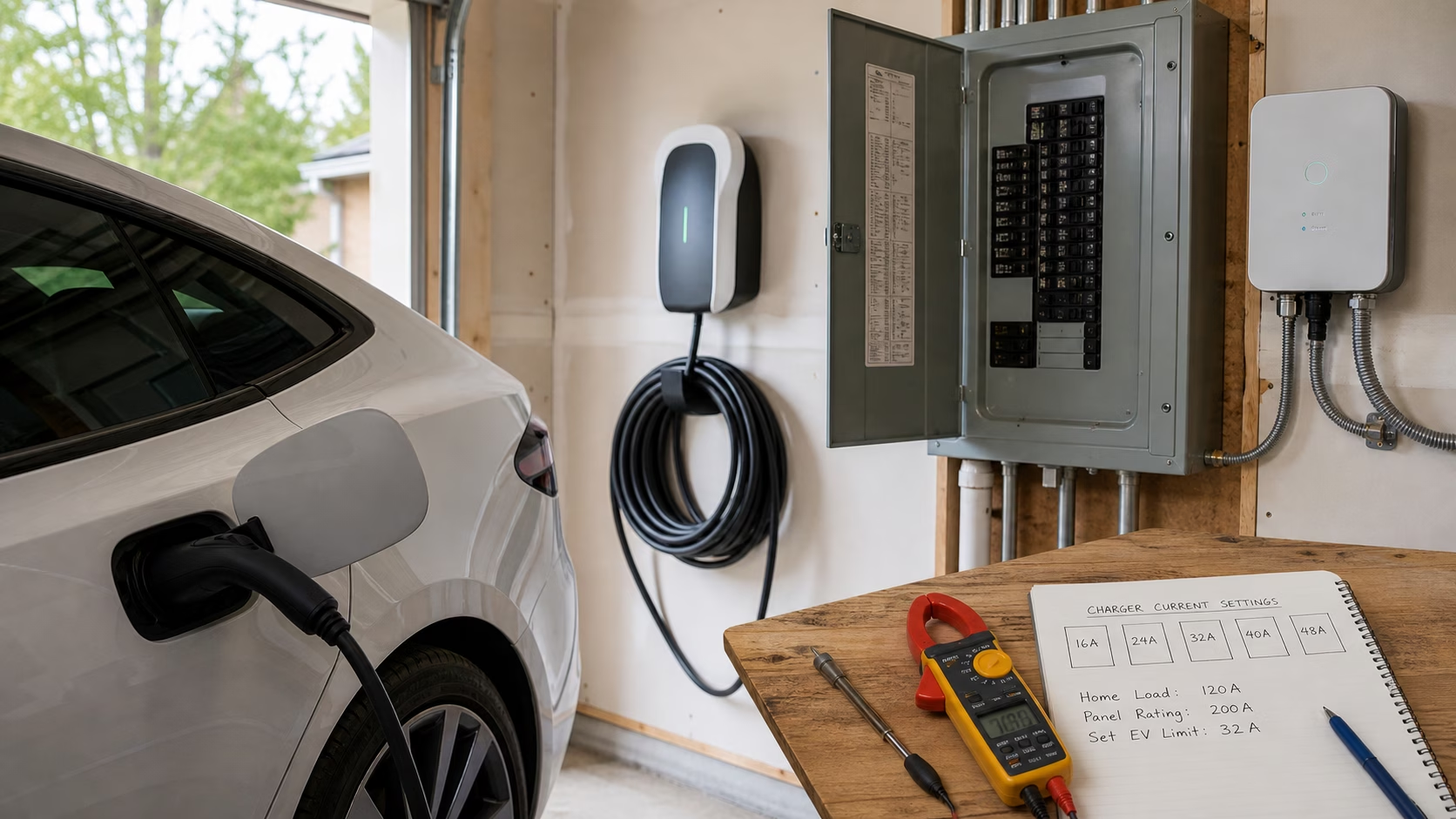
A lower current setting can be enough when the car sits overnight. That matters because lower current can reduce stress on the electrical plan, make load management easier, and sometimes avoid a costly service upgrade. Speed is valuable when it solves a real problem. When it only satisfies a spec-sheet instinct, it can make the installation more expensive without changing daily life.
Understand the panel
An electrician may need to evaluate the existing service size, current large loads, available panel spaces, wire route, charger location, outdoor exposure, and whether a load calculation is required. The charger should be planned alongside the appliances already in the home, not as though it is the only major load. Heat pumps, water heaters, dryers, ranges, well pumps, air conditioning, and workshop equipment all shape the available capacity.
Load management can reduce charging current when the home is using other large loads. In some homes, that is more practical than a panel upgrade. It is not a magic box, though. The equipment has to be compatible, the settings have to make sense, and the homeowner should understand what happens when the house asks for power elsewhere.
Plan for the next house, not just the next car
Future electrification belongs in the conversation now. If you may add a heat pump, heat pump water heater, induction range, electric dryer, home battery, solar array, or second EV, tell the electrician before the charger is placed and wired. A slightly more thoughtful route, conduit choice, panel layout, or current limit today can prevent awkward rework later.
Read Whole-Home Energy Map before treating the charger as a standalone project. Low daily mileage may make Level 1 enough. A long commute may justify Level 2. Tight panel capacity may call for current limiting or load management. Outdoor parking may require weather-rated equipment and a better cable plan. Multi-family parking may require building approval, ownership coordination, and a more formal installation path.
The useful accessories are usually about keeping the charging routine clean. An EV charging cable organizer can keep the cable off the floor, and an EV charger pedestal may help where the best parking spot is not beside a wall.
For the shopping side, read EV Charger Buying Guide .
Apply this guide as a decision record
Use EV Charging Load Planning: Add the Car Without Overloading the House to turn a vague household question into a checkable one. Its scope is specific: How to plan home EV charging around panel capacity, daily driving, charger settings, load management, and future electrification. Before changing the setup, write down the condition you are trying to change, the constraint that matters most, and the evidence you still lack.
For a first pass through ev charging load planning, compare the current state with a relevant baseline and record one observation, measurement, or conversation. Make the smallest reversible change available. Keep the manual, model number, room condition, schedule, or maintenance note beside the decision so a future check does not depend on memory. Keep EV charging, load planning, panel capacity in view as separate signals instead of treating them as one verdict.
A useful follow-up asks whether EV Charging Load Planning: Add the Car Without Overloading the House improved the named problem without creating a new one. Check the tradeoff that fits this subject — heat, noise, comfort, water, power, wear, effort, or cost — and describe the result in plain language. If a boundary is safety-critical, stop at the guide’s limit and bring the details to a qualified local professional.
The conclusion for ev charging load planning should stay narrow. Record what was observed, which condition made the result possible, what maintenance keeps it dependable, and what would make you revisit the choice. That turns a guidebook into a decision record you can use again rather than a promise to remember.