Home EV charging is less about maximum speed and more about enough speed, safe wiring, and a routine that fits your driving. The best charger is not always the largest one your vehicle can accept. It is the one your home can support comfortably and that refills the car in the time it is already parked.
Many drivers can meet daily needs with overnight charging. Others need faster recovery because of long commutes, multiple drivers, short parking windows, cold weather range loss, or a vehicle that works hard every day. The difference depends on miles driven, vehicle efficiency, parking location, electrical capacity, utility rates, and whether another large load is already competing for the panel.
Level 1 and Level 2
Level 1 charging usually uses a standard outlet and can be enough for low daily mileage when the car is parked for many hours. It is simple, but it is not a shortcut around safety. The outlet still needs to be appropriate for continuous load, in good condition, correctly protected, and compatible with the vehicle’s charging equipment.
Level 2 charging uses a 240V circuit and normally needs a qualified electrical installation. It can recover range much faster, which is valuable for longer daily driving, multi-driver households, or vehicles that need to be ready again by morning. The installation may be plug-in or hardwired, indoor or outdoor, current-limited or full output, simple or connected to a utility program. Each choice should follow the circuit the home can safely support.
What the charger has to fit
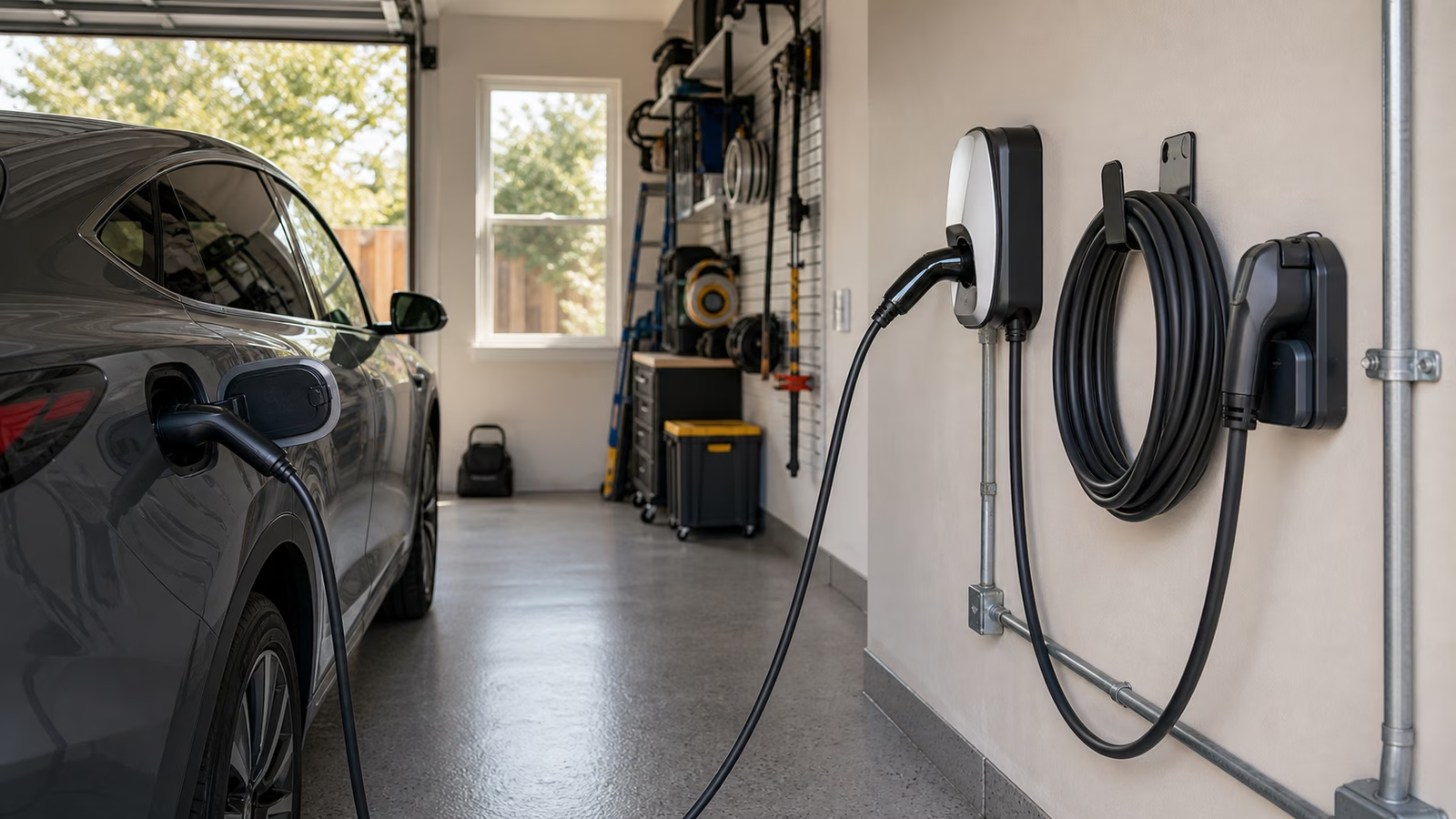
Cable length and storage matter more than they seem. A charger that technically works but leaves the cable across a walkway, garage floor, or driveway becomes an everyday nuisance. Outdoor charging adds weather exposure, mounting details, and cable handling. App features can be useful for scheduling and energy tracking, but the basic charging routine should not depend on a fragile software experience if the household wants simple reliability.
Load management deserves special attention when the electrical panel is tight. A charger that can reduce current when the house is using other large loads may avoid or delay a panel upgrade, but only if the equipment and installation are designed correctly. Utility program compatibility can also matter, especially where off-peak rates, managed charging, or rebates require specific equipment.
The Department of Energy’s Alternative Fuels Data Center recommends safety-certified equipment and a certified electrical contractor for home charging work. That is the right baseline. A home charger is a continuous electrical load, often running for hours while people sleep, so certification, installation quality, permits, inspection, and warranty support are not decorative details.
Buying decision
Choose a charger that matches the circuit you can support, not the biggest number on the box. Oversizing the charger does not help if the panel, circuit, vehicle, or utility program cannot use it. Ask the installer to explain panel capacity, whether a load calculation is needed, whether the charger can be current-limited, whether the run needs trenching or outdoor-rated equipment, and who handles permits and inspection.
The EVSE itself is often installer-specified. The practical accessories are simpler but still useful: an EV charging cable organizer keeps the cable from becoming a daily obstacle, an EV charger holster gives the connector a clean resting place, and a garage cord cover can help when a cord crosses a garage path.
For panel planning, continue with EV Charging Load Planning .
Apply this guide as a decision record
Use EV Charger Buying Guide: Home Charging Without Guesswork to turn a vague household question into a checkable one. Its scope is specific: How to compare Level 1 and Level 2 home EV charging, circuit needs, outdoor ratings, cable handling, and installer questions. Before changing the setup, write down the condition you are trying to change, the constraint that matters most, and the evidence you still lack.
For a first pass through ev charger buying guide, compare the current state with a relevant baseline and record one observation, measurement, or conversation. Make the smallest reversible change available. Keep the manual, model number, room condition, schedule, or maintenance note beside the decision so a future check does not depend on memory. Keep EV charging, buying guide, garage in view as separate signals instead of treating them as one verdict.
A useful follow-up asks whether EV Charger Buying Guide: Home Charging Without Guesswork improved the named problem without creating a new one. Check the tradeoff that fits this subject — heat, noise, comfort, water, power, wear, effort, or cost — and describe the result in plain language. If a boundary is safety-critical, stop at the guide’s limit and bring the details to a qualified local professional.
The conclusion for ev charger buying guide should stay narrow. Record what was observed, which condition made the result possible, what maintenance keeps it dependable, and what would make you revisit the choice. That turns a guidebook into a decision record you can use again rather than a promise to remember.