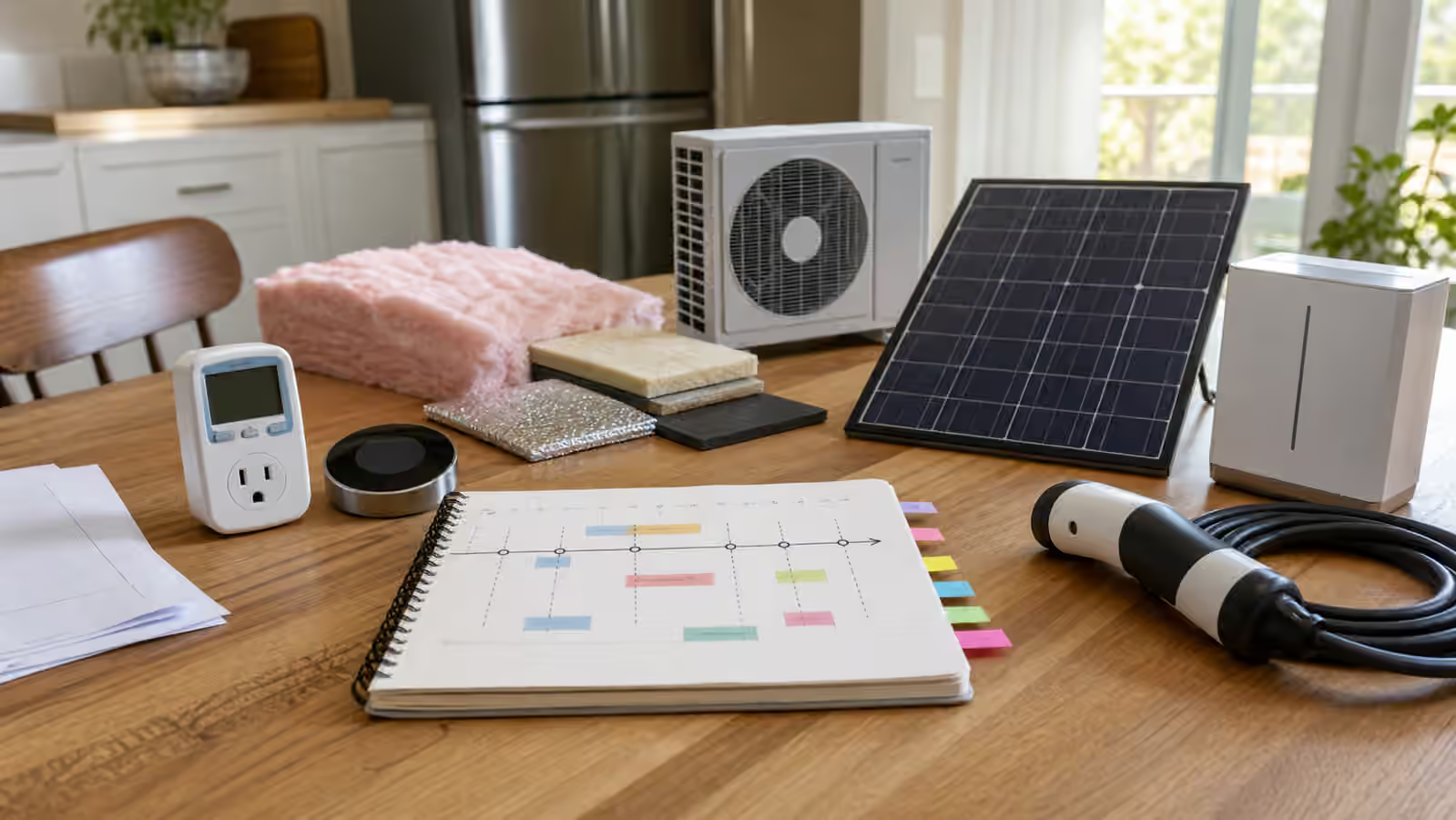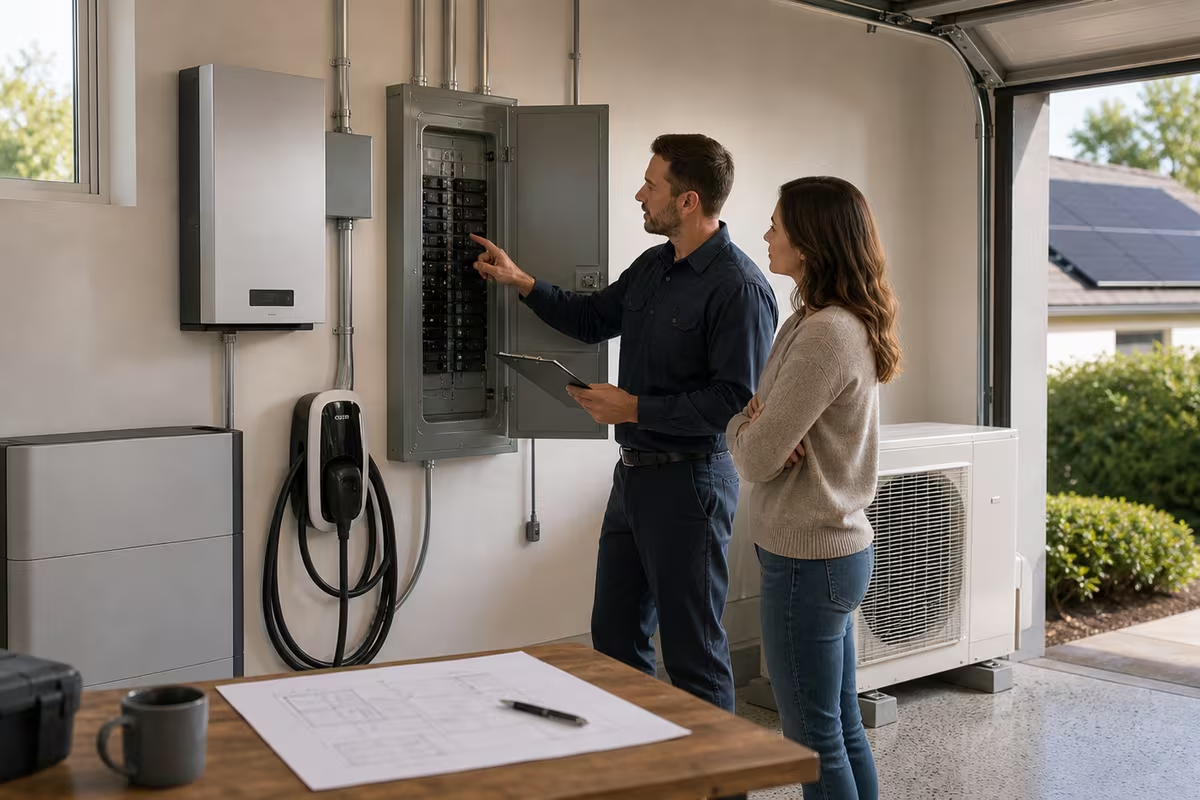
The electrical panel is where home electrification stops being an idea and becomes a house-specific project. You can read about heat pumps, EV chargers, induction ranges, solar, batteries, and smart appliances for weeks, but eventually every plan has to meet the same gray box on the wall. The panel tells you how power enters the home, how circuits are organized, what has already been added, what was improvised years ago, and how much room there may be for the next upgrade.
This is not a do-it-yourself wiring guide. Electrical work belongs with qualified professionals, permits, local code, utility rules, and equipment instructions. The useful homeowner skill is different. It is learning how to prepare, ask better questions, understand tradeoffs, and avoid buying appliances in an order that forces expensive surprises later.
A home can have plenty of enthusiasm for electrification and still have a panel that needs planning. Maybe the service is small. Maybe the panel is full. Maybe a previous owner used tandem breakers in confusing ways. Maybe the garage is far from the panel. Maybe the heat pump, water heater, dryer, and EV charger would all like capacity during the same hours. None of that means the project is doomed. It means the panel deserves attention before the shopping cart fills up.
Start with the loads, not the products
Most people approach electrification by product category. They want an EV charger, a heat pump, an induction range, or a home battery. The panel does not think in product categories. It sees electrical loads. Some loads are steady. Some cycle. Some surge briefly. Some can wait. Some are essential. Some are large but flexible.
Watts, kWh, and Loads gives the language for this. Panel planning asks where those loads will live in the house and whether they need to run at the same time. A Level 2 EV charger may not need full power if the car sits overnight. A heat pump may be essential during cold weather. An induction range may draw heavily for short cooking windows. A heat pump water heater may be able to run during easier hours. The actual question is not simply “Can I add this?” It is “How does this load behave with the rest of the house?”
That behavior matters because a panel upgrade is not the only possible answer. Sometimes the right answer is a service upgrade. Sometimes it is a subpanel. Sometimes it is a smaller charger, a load management device, a smart panel, a different appliance choice, or a better installation sequence. Sometimes the existing equipment is fine after a professional load calculation. The point is to find out before the project becomes a last-minute scramble.
The panel tells a history
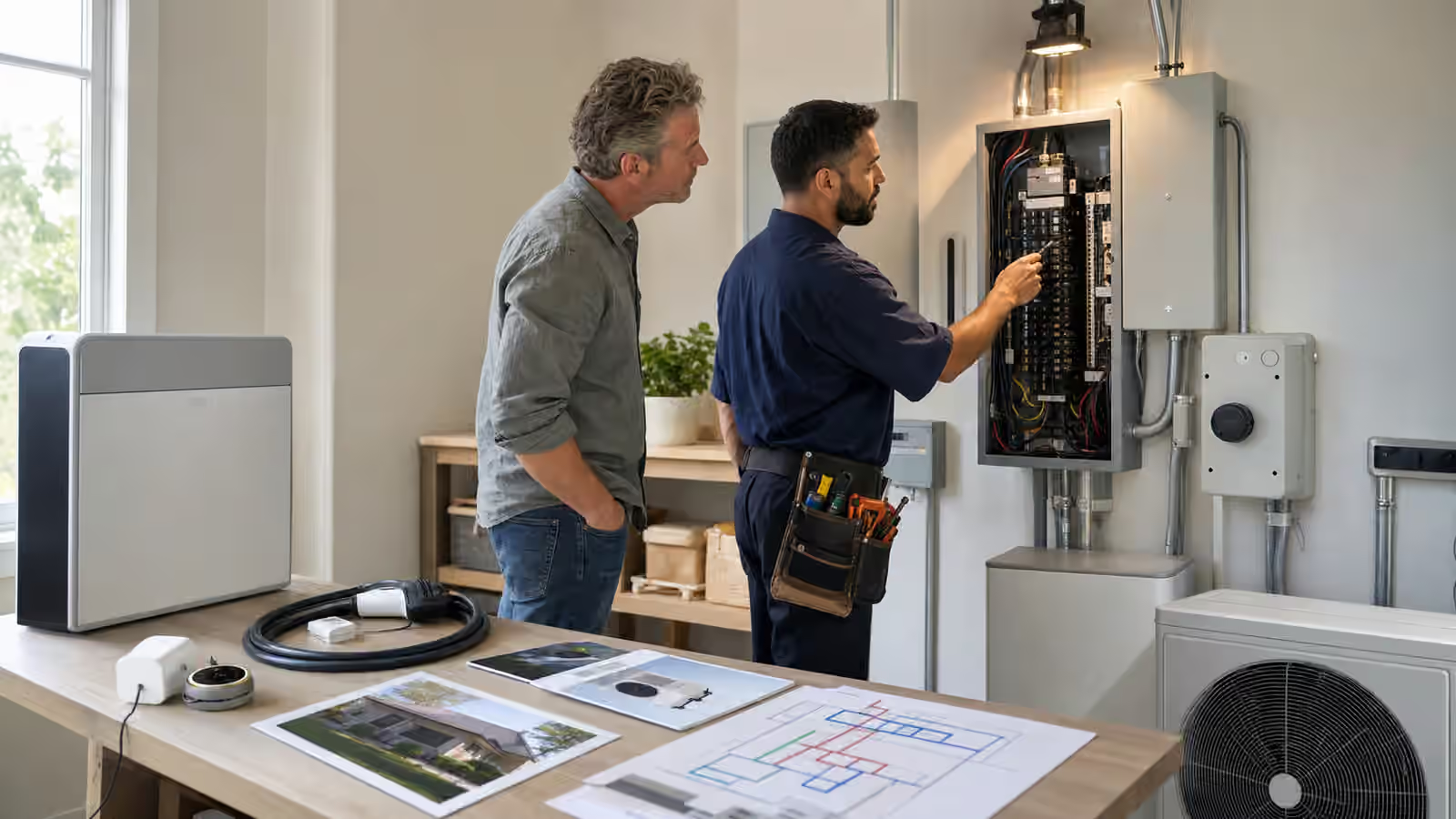
Open a panel cover with a professional and you are often reading the home’s biography. Original circuits sit beside renovations. A kitchen remodel leaves traces. A previous EV charger may have been removed. A finished basement may have added loads. A solar system may have changed the arrangement. Labels may be neat, outdated, vague, or missing. The panel is not only equipment. It is a record of decisions.
That history can hide risk and cost. A circuit labeled “lights” may also serve outlets. A garage circuit may already be burdened. A panel may look like it has physical spaces available while electrical capacity is a different question. A home may have a large main breaker and still need careful load planning because specific circuits, feeder routes, or equipment locations create constraints.
This is why Whole-Home Energy Map belongs early in the process. A sketch of sources, loads, circuits, and priorities gives the electrician something better than a vague wish list. It also helps the homeowner see which future projects should be mentioned now. If you plan to add an EV charger this year and a heat pump next year, the panel conversation should include both.
EV charging is often the first stress test
EV charging is a common first encounter with panel limits because the load is visible and garage-based. A homeowner may assume faster is always better. The panel may suggest otherwise. Many drivers do not need the maximum possible charging rate at home. They need enough energy by the time they leave. That distinction can save capacity.
EV Charging Load Planning explains the charging side in more detail, but the panel lesson is simple. A charger can sometimes be configured below its maximum rating. Charging can be scheduled. Some systems can reduce charging when other large loads run. A well-planned charger serves the car without forcing the whole house to be designed around the charger’s most aggressive setting.
The same thinking applies to future bidirectional charging or vehicle backup. Owning an EV does not automatically mean the car can safely power the house. That requires compatible vehicle equipment, transfer and isolation hardware, utility approval where required, and a system designed for that purpose. The panel is where those promises become either real or not yet real.
Heat pumps and ranges change the kitchen and mechanical room
Heat pumps, heat pump water heaters, and induction ranges can make a home cleaner and more efficient, but they also move energy demand onto circuits. A heat pump may replace fossil fuel equipment that did not draw much electricity. An induction range may need different wiring than the old cooking setup. A heat pump water heater may be efficient over time but still requires a proper circuit and space conditions.
The panel conversation should therefore happen before demolition, appliance delivery, or rebate deadlines. Contractors can coordinate better when they know the electrical path. A heat pump installer may focus on heating and cooling performance, while an electrician sees panel capacity, disconnect placement, wire runs, and code. The homeowner benefits when those conversations happen together instead of sequentially after a problem appears.
Sequencing matters. Weatherization may reduce the heat pump size. A managed EV charger may avoid a service upgrade. A planned subpanel may make later projects cleaner. A panel replacement may be easier before the garage is finished. Electrification is not just a list of devices. It is an order of operations.
Batteries and solar add control questions
Solar and batteries complicate the panel in a different way because they are not only loads. They can be sources, storage, backup systems, or bill-management tools depending on design. A rooftop solar system that saves money during normal operation may not power the home during an outage unless it is designed with the right inverter and storage behavior. A battery may back up selected circuits, a subpanel, or more of the home depending on capacity, output, and installation.
This is where Backup Power Sizing and Home Battery Buying Guide become practical. The backed-up loads need to be chosen deliberately. Trying to back up everything can make a system expensive and still disappointing if the largest loads drain it quickly. A critical-loads approach may be calmer: refrigerator, network, lights, medical equipment if applicable, a few outlets, and heating or cooling only if the system is designed for it.
The panel is also part of safety. Transfer equipment, interconnection rules, rapid shutdown, disconnects, labeling, and inspection exist because power sources must not create hazards for occupants, workers, or utility crews. Good planning makes those safety boundaries visible.
Load management is not a compromise word
Some homeowners hear load management and think they are being denied the system they want. In many homes, load management is what makes the system smarter. It recognizes that not every large load needs full power at the same time. The water heater can wait. The EV can slow down. A battery can support a peak. A smart panel can shed nonessential loads during backup operation. The house becomes coordinated instead of oversized.
Coordination can reduce cost, preserve comfort, and make future upgrades easier. It can also help the grid, especially when many homes in a neighborhood electrify around the same time. The household decision connects to the wider planning behind Whole-Home Energy Map and the broader energy transition. The point is not to make daily life complicated. The point is to let controls handle timing that people should not have to think about constantly.
The best load management is boring. The car is ready. The shower is hot. The kitchen works. The house stays comfortable. The panel is not overloaded. The homeowner does not need to act like a grid operator.
A better first appointment
A good panel-planning appointment begins with information. Know what you want to add now, what you might add later, where equipment may go, whether you care about outage backup, and which loads matter most. Bring utility bills if requested. Photograph equipment only if it is safe to do so. Do not remove covers or touch electrical parts. Let the professional inspect what needs inspection.
Ask about service capacity, panel condition, available spaces, load calculation, permit requirements, utility coordination, future EV charging, heat pump readiness, solar or battery plans, and whether load management could avoid or defer larger work. Ask what should be done now to avoid reopening walls later. Ask which choices are optional and which are code or safety requirements.
The result may not be a single answer. It may be a phased plan. That is often the most realistic outcome. Homes change over years, not in one perfect retrofit. A panel plan gives those years a backbone.
Electrification becomes less intimidating when the panel is treated as the planning center rather than an afterthought. The gray box on the wall is not the enemy of the future home. It is the place where the future home has to become safe, permitted, sequenced, and real.