A heat pump can only be as good as the air path that carries its work through the house. The outdoor unit may be efficient, the indoor equipment may be well chosen, and the thermostat may look modern, but rooms still judge the system by airflow. If the ducts leak, returns are starved, filters are neglected, registers are blocked, or a bonus room sits at the end of a weak branch, the house may blame the heat pump for a distribution problem. For background, see DOE — Energy Saver (2022): heating, cooling, and heat pumps .
This is why ductwork deserves attention before and after a heat pump upgrade. Heat Pump Buying Guide touches the choice between ducted and ductless systems, but a ducted home needs its own airflow conversation. The equipment is one part of the system. The duct network decides whether the delivered heat or cooling reaches the rooms where people actually live.
Ducts are not passive tubes
Ducts look simple from the outside because they are metal, flex, or fiber pathways. In practice they are a pressure system. Air has to leave the air handler, move through supply branches, enter rooms, return to the equipment, pass through a filter and coil, and repeat. Every restriction changes the system. A crushed flex duct, a leaky attic joint, an undersized return, a dirty filter, or a closed register can shift air away from one room and create noise or comfort trouble somewhere else.
Heat pumps can make these weaknesses more visible because they often deliver air differently from older equipment. A furnace may blast hotter air for shorter periods. A heat pump may run longer with gentler supply temperatures. That can feel excellent in a well-distributed home and disappointing in a home where airflow was already marginal. The problem is not that the heat pump is weak. The problem may be that the ducts were never asked to deliver steady comfort this honestly before.
The duct review should therefore happen early, especially when Heat Pump Sizing Basics is part of the project. A load calculation tells the home how much heating or cooling is needed. The duct assessment asks whether the system can move that air quietly and reliably to the right places.
Returns matter as much as supplies
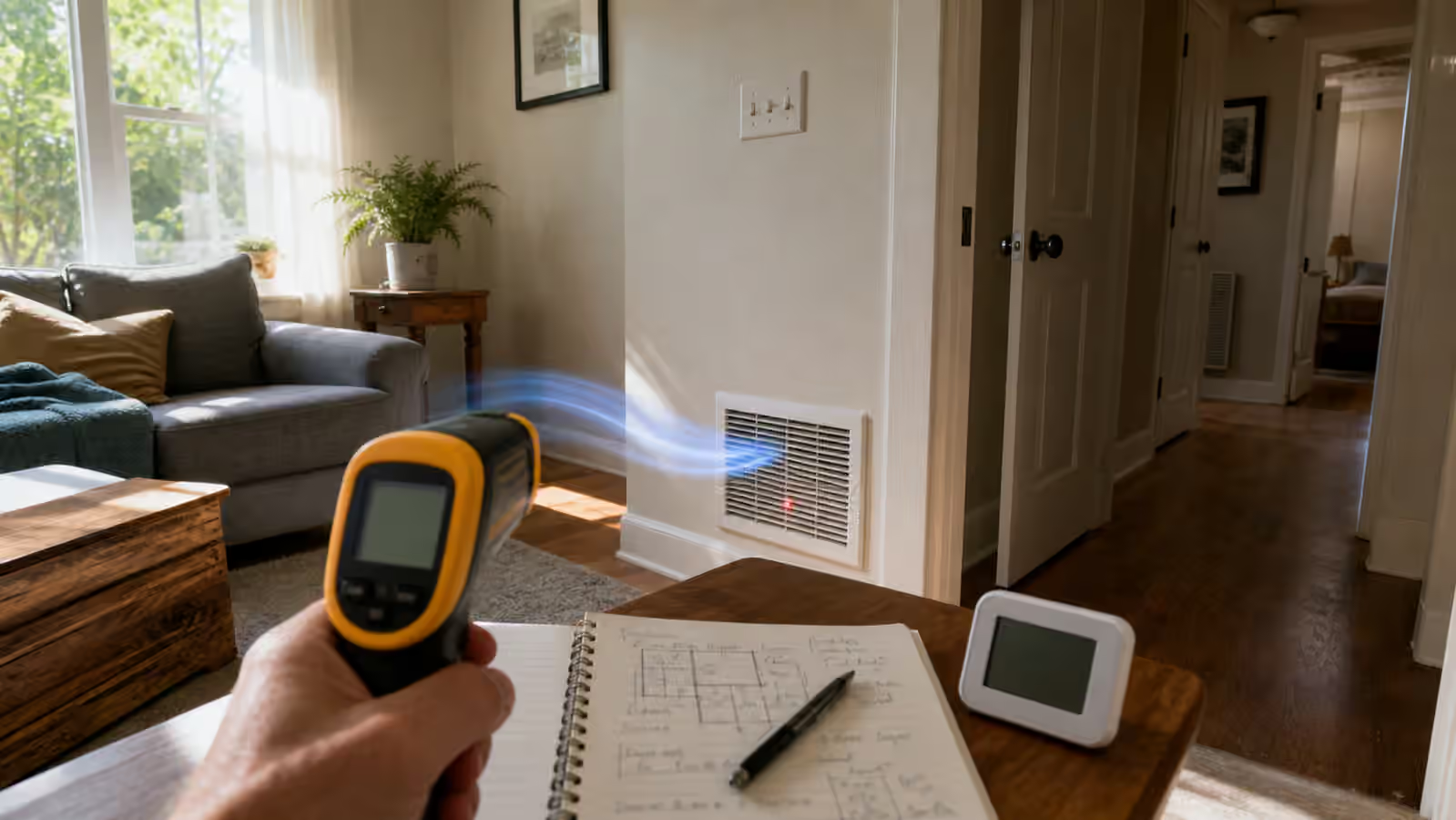
Homeowners often notice supply registers first because they feel the air coming out. Returns are easier to ignore, but they are just as important. The air handler cannot supply air to rooms unless air can return. A bedroom with a strong supply and no good return path may become pressurized when the door is closed. Air then finds its way through gaps, under doors, around framing, or through leaks that were never meant to be part of the HVAC design. Other rooms may be pulled negative, drawing air from attics, crawlspaces, garages, or outside.
Return problems often masquerade as room personality. One bedroom is always stuffy. A hallway door whistles. The system gets louder when several doors close. A room cools slowly even though the register feels active. These clues do not prove a single cause, but they justify asking an HVAC professional about return paths, transfer grilles, jumper ducts, door undercuts, and balancing. The right answer depends on the layout, fire and sound considerations, and local practice.
Closing supply registers is a common attempt to fix imbalance, but it can create new trouble. Ducted systems are designed around airflow. Randomly closing registers can increase pressure, reduce total airflow, increase noise, stress equipment, or worsen leakage. A small adjustment under professional guidance is different from treating registers as room-by-room shutoff valves. If several rooms are wrong, the system needs diagnosis rather than a game of vent whack-a-mole.
Leakage and insulation change the delivered energy
Duct leakage wastes energy because conditioned air escapes before it reaches the room, and unconditioned air may be pulled into the return side. Leakage is especially damaging when ducts run through attics, crawlspaces, garages, or other spaces outside the conditioned envelope. A heat pump working efficiently at the equipment can still feel expensive if a meaningful share of its air is being delivered to a hostile attic.
Sealing ducts is not the same as wrapping everything in tape from a hardware drawer. Durable duct sealing usually means appropriate mastic, approved tapes, clean surfaces, accessible joints, and workmanship that follows code and manufacturer requirements. Some duct systems are hidden or difficult to reach, and some homes need professional testing to understand whether leakage is severe enough to drive the comfort problem. This is not glamorous work, but it can change how every later heat pump decision feels.
Insulation matters when ducts pass through hot or cold spaces. A supply duct running across a summer attic can lose cooling before the air reaches a bedroom. A winter duct in a cold crawlspace can lose heat and invite condensation concerns depending on conditions. Duct insulation should be considered with air sealing, moisture, and the building boundary in mind, which is why Air Sealing and Insulation Priorities belongs beside duct planning.
Filters and coils set the everyday baseline
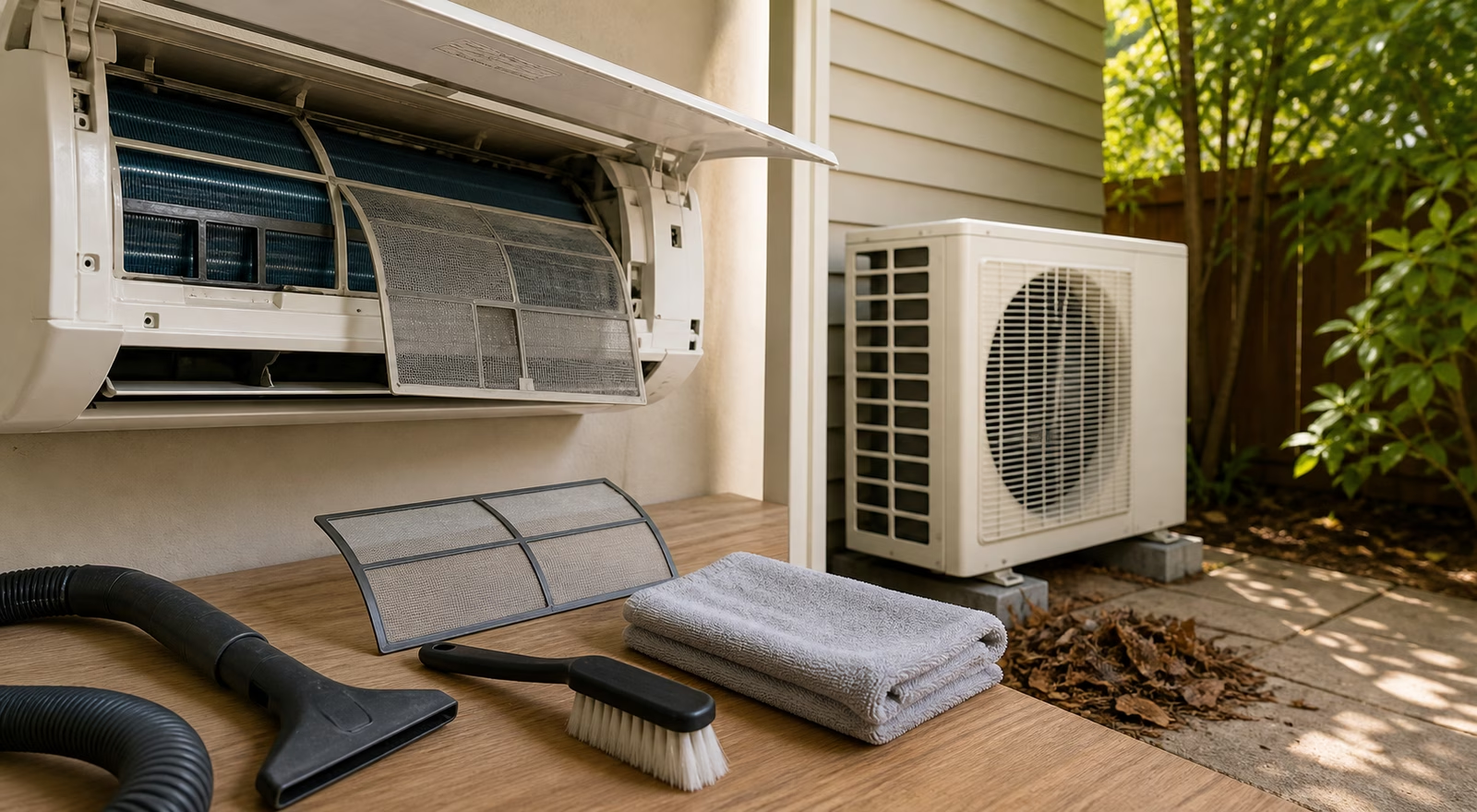
Airflow conversations can become technical, but the everyday baseline is simple. A filter that is too dirty, too restrictive for the system, poorly fitted, or forgotten behind furniture can reduce airflow. That affects comfort, efficiency, noise, and equipment operation. Filters should match the system’s requirements, the household’s dust and pet load, and the actual replacement rhythm people can maintain.
The same practical attention applies to coils, blower wheels, registers, and returns. A return grille blocked by a sofa is not a controls problem. A supply register buried under a rug is not a heat pump sizing problem. A renovation that added dust to the system may shorten filter life for a season. A household that adopts pets may need a new maintenance rhythm. Heat Pump Maintenance is not separate from duct performance; it is the routine that keeps the distribution system from slowly drifting away from the design.
Good maintenance records help technicians. Filter sizes, replacement dates, comfort complaints by room, unusual noises, and thermostat behavior tell a better story than “the system is bad.” Airflow problems are often patterns. The more clearly the pattern is described, the less likely the visit becomes a quick filter change that misses the deeper issue.
Commissioning proves the promise
A heat pump installation should end with more than equipment standing in place. Commissioning is the process of checking that the installed system behaves as intended. For airflow, that may include verifying fan settings, static pressure, refrigerant charge where applicable, supply and return temperatures, thermostat configuration, backup heat controls, condensate handling, and room comfort. The exact checks depend on the system, but the principle is evergreen: design intent has to meet the installed house.
Commissioning matters because ducts do not always reveal their problems at the proposal stage. A branch may be harder to access than expected. A return may be undersized. A filter cabinet may be awkward. A thermostat setting may call backup heat too early. A ducted heat pump can be a strong upgrade only when the final setup is tuned enough that the homeowner is not left solving comfort problems by guesswork.
Ask the installer to explain what was checked, what settings were chosen, what maintenance belongs to the homeowner, and which symptoms should trigger a service call. That conversation should be plain enough to remember. If a contractor cannot explain airflow, returns, filter access, and room balance in ordinary language, the proposal may be too equipment-centered.
Ductless homes still need airflow thinking
Ductless systems avoid many duct problems, but they do not eliminate air distribution. A wall-mounted head conditions the room or zone it can actually influence. Doors, hallways, stairwells, sun exposure, open plans, and room usage decide how far comfort travels. A single head in a living room may not make closed bedrooms comfortable. A multi-zone system may solve that problem, but it brings its own questions about placement, capacity, controls, and maintenance access.
Ductless planning should be honest about how people live. If bedroom doors close at night, each bedroom may need its own strategy. If a home office has afternoon sun and electronics, it may behave differently from a shaded room of the same size. If the kitchen creates heat and moisture, the nearby zone may not behave like a quiet sitting room. Airflow is still real even when ducts are absent.
The right lesson from ductwork is not that every home needs perfect ducts. It is that comfort is delivered, not merely produced. A heat pump upgrade should account for the building shell, room loads, air paths, filters, controls, and maintenance habits. When those pieces line up, the system can feel calm: longer runs, fewer room complaints, fewer mysterious bills, and less temptation to oversize equipment to hide a distribution problem that should have been solved at the air path.