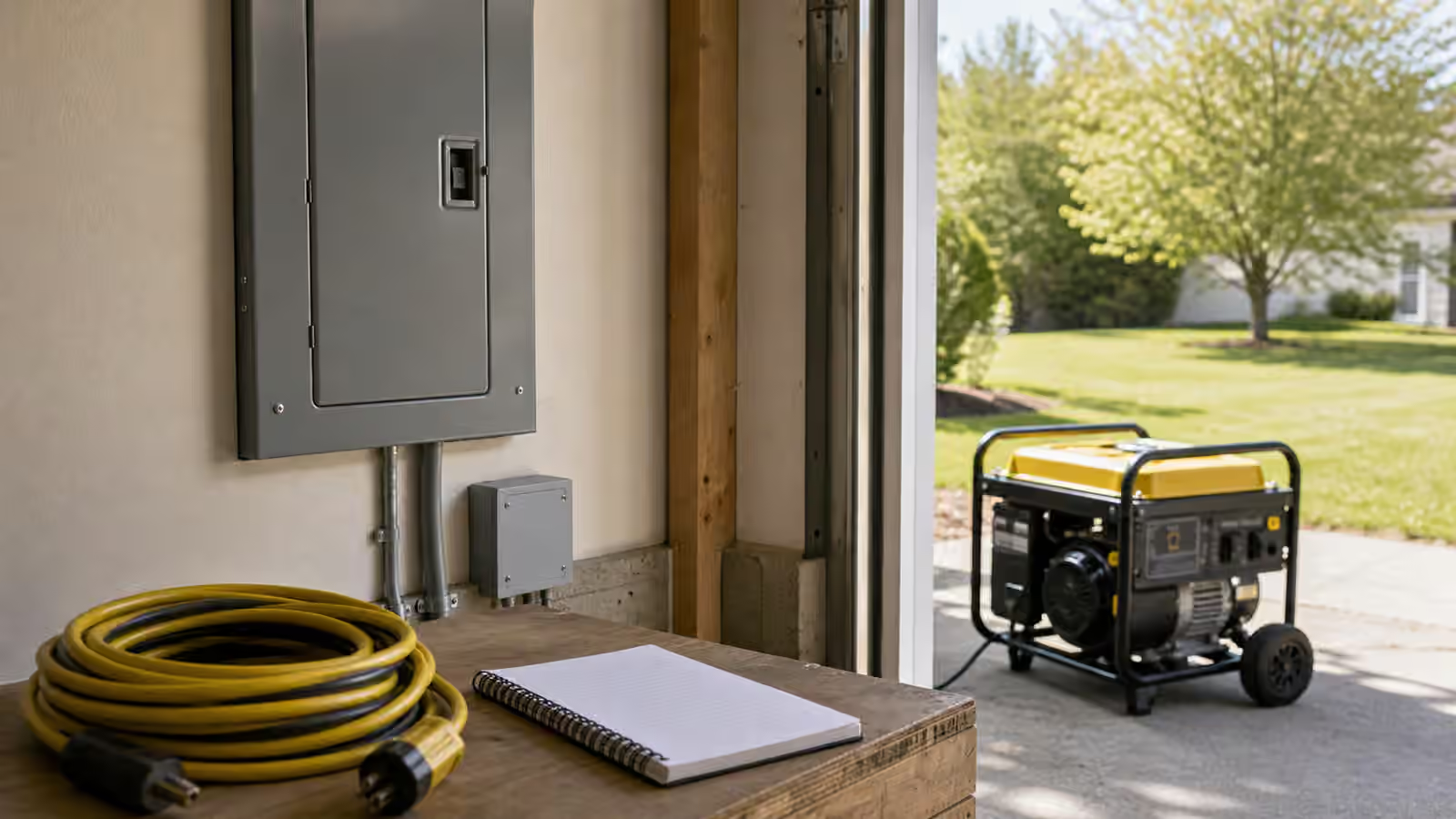
Critical-loads planning begins with a plain admission: most homes do not need every circuit powered during an outage. They need the right circuits powered safely, long enough, and with enough clarity that nobody improvises when the grid fails. A critical-loads panel, backed-up subpanel, transfer switch, or load-shedding design is simply a way to turn that admission into wiring, controls, and labels. For background, see Virginia Tech Extension — Estimating Appliance and Home Electronic Energy Use .
This is not a do-it-yourself wiring project. Panel work, transfer equipment, generator connections, battery integration, permits, inspections, and utility requirements belong with qualified professionals. The homeowner’s useful job is to decide what the backup system is supposed to protect, understand the tradeoffs, and make sure the installation reflects the actual outage priority list rather than a vague wish to keep everything normal.
Critical loads are a design choice
The phrase critical loads can sound official, but the right list is household-specific. A refrigerator, freezer, network equipment, a few lights, a garage door opener, a sump pump, selected outlets, and a modest comfort strategy may be critical in one home. A well pump, medical equipment with verified requirements, security equipment, or communication gear may change the list in another. A television may be comfort, not critical. A freezer full of food may matter more than a microwave. The label should follow consequences, not habit.
Outage Priority List should come before the electrical design. It separates health, safety, food, water, communication, and comfort into a calmer order. Once that order exists, Backup Power Sizing can translate the list into energy, runtime, and output needs. The panel plan then asks which of those loads are hardwired, which are plug-in devices, which need automatic backup, and which can be handled manually.
The answer may surprise people. A router and lamp can be easy with a small portable station. A refrigerator may be manageable if someone is home to plug it into a safe temporary setup, but more useful on a backed-up circuit if outages happen when nobody is home. A sump pump may require more careful output and surge planning. Central HVAC, electric ranges, dryers, and large water heaters can push the design far beyond a modest critical-loads plan.
Circuits do not always match rooms
Critical-loads planning often gets messy because a circuit label rarely tells the whole truth. A breaker labeled “kitchen lights” may also feed outlets. A basement circuit may serve a freezer, lights, and something added during a remodel. A garage circuit may include a door opener, tools, outdoor receptacles, and a refrigerator someone added later. Moving a circuit into a backed-up subpanel may bring along loads that were never intended to be backed up.
That is why the circuit investigation matters. An electrician may need to map circuits, verify labels, identify multiwire branch circuits or shared neutrals where relevant, check panel condition, and understand which loads belong together. The homeowner can help by walking the house, noting what matters during an outage, and describing daily use. The professional turns that information into a safe design.
Circuit reality can also change the plan. A homeowner may want to back up only the refrigerator, but the refrigerator may share a circuit with countertop outlets that could invite heavy cooking loads during an outage. A home office outlet may share a circuit with equipment that should not be on battery. A sump pump may need a dedicated discussion because of surge and water consequences. Critical-loads planning rewards specificity.
Automatic backup and manual backup solve different problems
Automatic backup feels elegant because selected circuits keep running when the grid fails. That can be valuable for refrigeration, network equipment, security, a sump pump, or a household where nobody may be home to move cords. It can also make a system more expensive and more permanent because the backed-up loads, transfer equipment, battery or generator behavior, and controls have to be designed together.
Manual backup can be perfectly reasonable for smaller needs. A portable power station can run a router, charge phones, support a lamp, or keep a laptop alive. A properly used generator with safe outdoor placement and appropriate transfer equipment can support selected circuits. The key is that manual does not mean improvised. Cords, placement, fuel, ventilation, charging, and load limits should be known before the outage.
Home Battery vs Portable Power is useful because it separates convenience from need. Some homes benefit from permanent automatic backup. Others would spend heavily to automate loads that could be handled with a modest portable plan. The right choice depends on who lives in the home, how often outages occur, which loads are hardwired, whether the home is owned or rented, and how much electrical work is appropriate.
Transfer and isolation are safety boundaries
Backup power must not energize the grid or household wiring in unsafe ways. Transfer switches, interlocks, inverter controls, listed equipment, disconnects, and inspections exist because sources of power need clear boundaries. A generator plugged into a wall outlet is not a shortcut. It is a dangerous backfeed condition. Generator Safety for Outages treats that boundary plainly because carbon monoxide and electrical hazards do not care that the outage is stressful.
Home batteries and solar add their own isolation questions. A grid-tied solar array may shut down during an outage unless the system is designed with the right inverter, battery, and controls. A battery may back up selected circuits, a critical-loads panel, or more of the home depending on capacity, output, and installation. The proposal should say what happens when the grid fails, what remains powered, what is shed, whether solar can recharge the battery during the outage, and which loads are excluded.
This is where Electrical Panel Planning Before Home Electrification becomes part of backup planning. The panel is not only a place to find breaker spaces. It is where sources, loads, transfer behavior, labels, service capacity, and future electrification plans meet. A critical-loads design that ignores the next EV charger, heat pump, or water heater may age badly.
Large and motor loads need respect
Some loads are challenging not because they run constantly, but because they start hard or require 240V. Well pumps, sump pumps, certain refrigerators or freezers, garage equipment, central air conditioning, heat pumps, and other motor loads can have startup behavior that matters to the inverter or generator. Inverter Sizing explains the difference between energy capacity and output. A battery with plenty of watt-hours can still fail if it cannot supply the needed surge or voltage.
The critical-loads list should therefore mark more than importance. It should mark behavior. A lamp is simple. A router is steady. A refrigerator cycles. A sump pump is quiet until it matters. A heat pump may be essential in cold weather but demanding enough to change the whole backup design. An induction range may be wonderful during normal operation and unreasonable for a small outage plan. A load can be valuable and still not belong on the backed-up panel.
Load shedding can help, but it should be designed, not assumed. Some systems can automatically drop large loads when battery output is limited. Some require manual choices. Some homeowners choose a critical-loads panel precisely because it makes excluded loads obvious. The point is not to make backup austere. The point is to avoid pretending a finite system can run every comfort load indefinitely.
Labels and records are part of the system
A critical-loads installation should leave behind clarity. The backed-up circuits should be labeled in a way the household can understand. The equipment should have manuals, installer contacts, permit records, warranties, and operating instructions in a findable place. The homeowner should know what happens automatically, what requires action, what should not be run during backup, and when to call for service.
This recordkeeping sounds dull until the first outage, the first service visit, or the first home sale. A future electrician should not have to reverse-engineer the system from guesswork. A household member should not discover during a storm that the freezer is not on the backed-up circuit. A buyer should not inherit a battery or generator connection with no explanation. Backup power is a safety system as much as a convenience system, and safety systems need documentation.
The final plan should fit back into Whole-Home Energy Map . Mark normal grid operation, outage operation, backed-up circuits, excluded loads, recharge sources, and manual actions. Once the map is clear, the backup system stops being a mysterious promise. It becomes a set of deliberate choices: these loads run, these loads wait, this equipment isolates the source, this battery or generator has a defined job, and the household knows the boundaries before the lights go out.