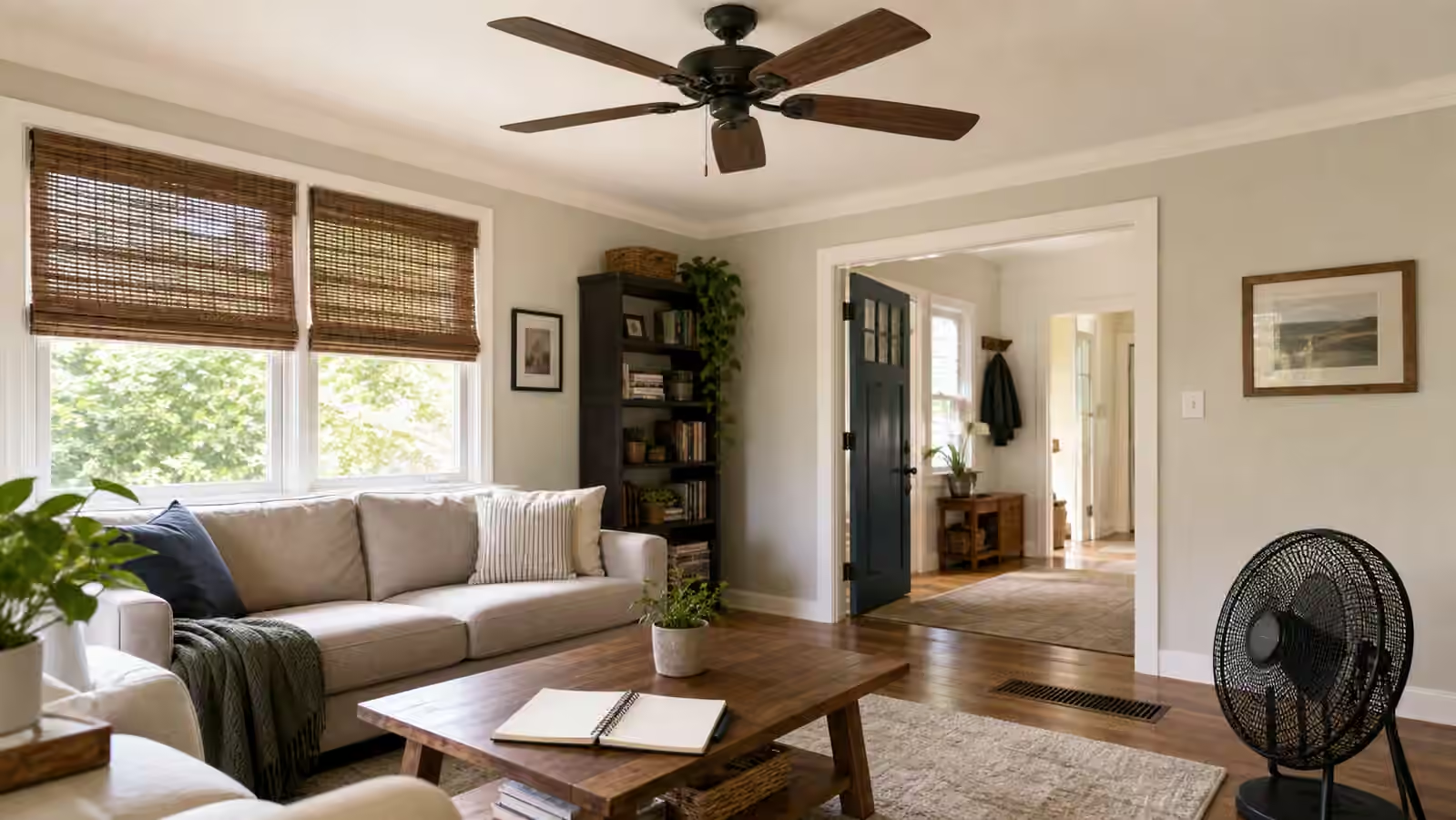
A ceiling fan does not cool a room the way an air conditioner or heat pump does. It cools people by moving air across skin. That difference sounds small, but it decides whether the fan is part of an energy plan or just another motor running in an empty room. A fan can make a warm room feel more comfortable, help a household tolerate a less aggressive cooling setting, and improve a room that feels stale. It can also waste energy if it runs when nobody is there or if people use it to hide a building problem that needs attention. For background, see DOE — Energy Saver (2022): assessing home energy use .
Room circulation is practical because comfort is not only a thermostat number. A room can measure the right temperature and still feel stuffy if air is still, sunny if the windows are exposed, or uneven if supply air cannot reach the occupied area. Fans, doors, shades, registers, and furniture placement all shape how the home feels. The goal is not to make every room windy. The goal is to use small air movement where it helps and avoid asking the cooling system to solve problems a fan could handle.
Moving air changes people, not the room load
The first fan lesson is behavioral. Because fans cool people rather than air, they should usually be turned off when the room is empty. Leaving a ceiling fan on all day in an empty bedroom does not store coolness for later. It simply uses electricity and may add a little heat from the motor. The energy draw is often modest, but modest loads still matter when they run for long hours by habit.
This makes fans different from some parts of a heat pump strategy. Heat Pump Thermostat Controls explains why steady operation can be normal for a heat pump. A fan is not the same kind of load. It belongs to occupancy and comfort. If someone is in the room, air movement may let the thermostat stay a bit higher in cooling season or make a slightly warm room feel acceptable. If nobody is in the room, the fan has lost its audience.
The useful test is simple: does the fan make the person in the room comfortable enough to avoid a larger cooling response? If yes, it may be a good energy tool. If it runs in empty rooms, fights with loose papers, creates noise, or makes people reach for blankets in a room that is already cool, it is not helping.
Direction and speed should match the season
Many ceiling fans have a direction switch or control mode. In cooling season, the common goal is a downward breeze that people can feel. In heating season, some households use a low-speed upward circulation mode to mix warm air that collects near the ceiling. That can help in tall rooms, stairwells, or spaces with noticeable temperature layering. It can also be irrelevant in low-ceiling rooms or annoying if the air movement feels drafty.
The right setting is judged by the room, not by a universal rule. Stand where people actually sit or work. Notice whether air movement reaches them. Notice whether the fan wobbles, clicks, hums, or feels too strong at the lowest useful speed. A fan that is uncomfortable will not become an efficiency measure just because it is technically moving air.
Controls matter here too. A wall control, remote, pull chain, or smart switch should make the useful settings easy. If the only convenient mode is high speed, people may avoid the fan. If the direction switch is hidden above the blades and never changed, the winter circulation feature may be theoretical. Energy features that require awkward behavior tend to disappear from real life.
Fans and shades work well together
Fans are strongest when they support other low-load comfort moves. Window Shading and Solar Heat Gain focuses on reducing the heat that enters through windows. A shaded room with gentle air movement often feels better than a sun-baked room with a fan running hard. The shade reduces the load; the fan improves the body’s experience of the remaining warmth.
This pairing is useful because many cooling complaints begin with a specific room at a specific time. A west-facing living room may feel fine until late afternoon. A bedroom may overheat after sun hits the roof and windows. A home office may have equipment, sunlight, and a seated person in one small space. Before lowering the whole-house thermostat, look for the room’s pattern. Shade first when sun is the driver. Add air movement where occupants feel it. Then judge whether the heat pump or air conditioner still needs to work harder.
Fans also help during mild weather when the compressor does not need to run. A porch door, an open interior door, a shaded window, and a fan may be enough for comfort during shoulder seasons, depending on outdoor air quality, humidity, security, and household needs. This is not a moral rule about avoiding mechanical cooling. It is a way to avoid using a large system when a small one solves the actual comfort problem.
Air paths decide whether circulation helps
A fan can move air only within the paths the room gives it. A closed bedroom door, blocked return path, covered register, heavy furniture, or isolated finished attic can defeat easy circulation. In ducted systems, air delivery and return paths matter for comfort and equipment behavior. Ductwork and Airflow for Heat Pumps is the deeper guide when room imbalance is persistent.
Ceiling fans should not be used to excuse a weak distribution system. If one bedroom never receives enough heating or cooling, the fan may make the occupant feel better sometimes, but it does not fix the cause. The cause may be duct leakage, poor balancing, closed doors, missing returns, insulation gaps, solar gain, or equipment sizing. A fan is a comfort layer, not a diagnostic conclusion.
Portable fans have the same limitation. They can help move air from a cooler area toward a warmer one, clear a stuffy corner, or support a single occupant. They can also create tripping hazards, noise, cord clutter, and a false sense that the whole room is being conditioned. Use them deliberately and within their ratings. A fan near water, damaged cords, unstable placement, or overloaded outlets turns a comfort tool into a safety problem.
Bedrooms need quiet and control
Bedroom fan planning is partly about energy and partly about sleep. A slightly warmer thermostat setting may be comfortable with a low, quiet fan. That can reduce cooling demand overnight. But a fan that clicks, wobbles, shines indicator lights, or blasts air at a sleeper will be turned off or replaced by a colder thermostat setting. The human details decide the energy result.
Bedrooms also matter during outages. A small fan can be a valuable load if heat is the main discomfort and the household has a battery or portable power station. Compared with whole-room cooling, a fan can provide meaningful comfort for far less energy. It will not solve dangerous heat, high humidity, medical needs, or indoor air quality concerns, but it can stretch a modest backup plan for ordinary comfort. Battery Runtime Calculator can show how a fan’s watts compare with larger loads.
The fan should be easy to power safely. A rechargeable fan, a low-power plug-in fan, or a ceiling fan on a backed-up circuit are different plans. The room should also have safe lighting and communication access. Fans are useful during outages because they are small, but small does not mean unplanned.
Motors, maintenance, and old fixtures
Most fan energy conversations focus on controls, but hardware still matters. Older fans may use more power, wobble, make noise, or have weak controls. Newer efficient motors can be better, but replacement is not automatically the first step. If the existing fan is quiet, safe, appropriately sized, and used only when occupied, the energy savings from replacement may be small. If it is unpleasant, rarely used, or unreliable, the comfort value of a better fan may matter more than the wattage alone.
Maintenance is basic but important. Dusty blades move air less cleanly and can aggravate the feeling of stale air. Loose mounting, wobble, unusual sounds, or heat at the control should be addressed. Fan work on ceilings and electrical boxes belongs within safe limits and, when needed, with a qualified professional. A fan is only as good as the support holding it above the room.
Put fans and circulation notes into Whole-Home Energy Map where they affect cooling, heating, and backup comfort. Name the rooms where fans actually change thermostat behavior. Name the rooms where fans are only covering up a deeper problem. The map helps keep air movement in its proper role: a small, useful comfort tool that supports the larger energy plan without pretending to be the whole plan.