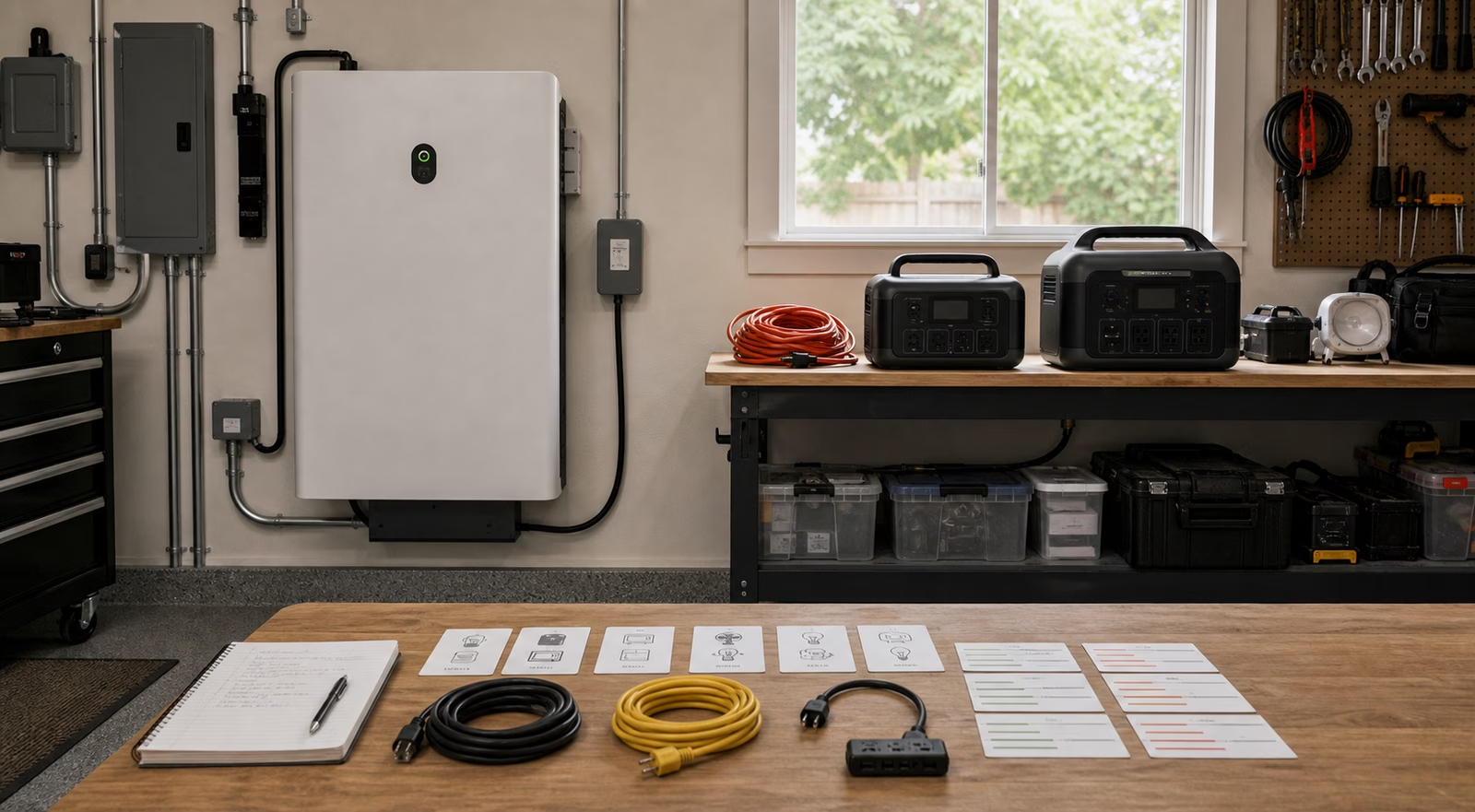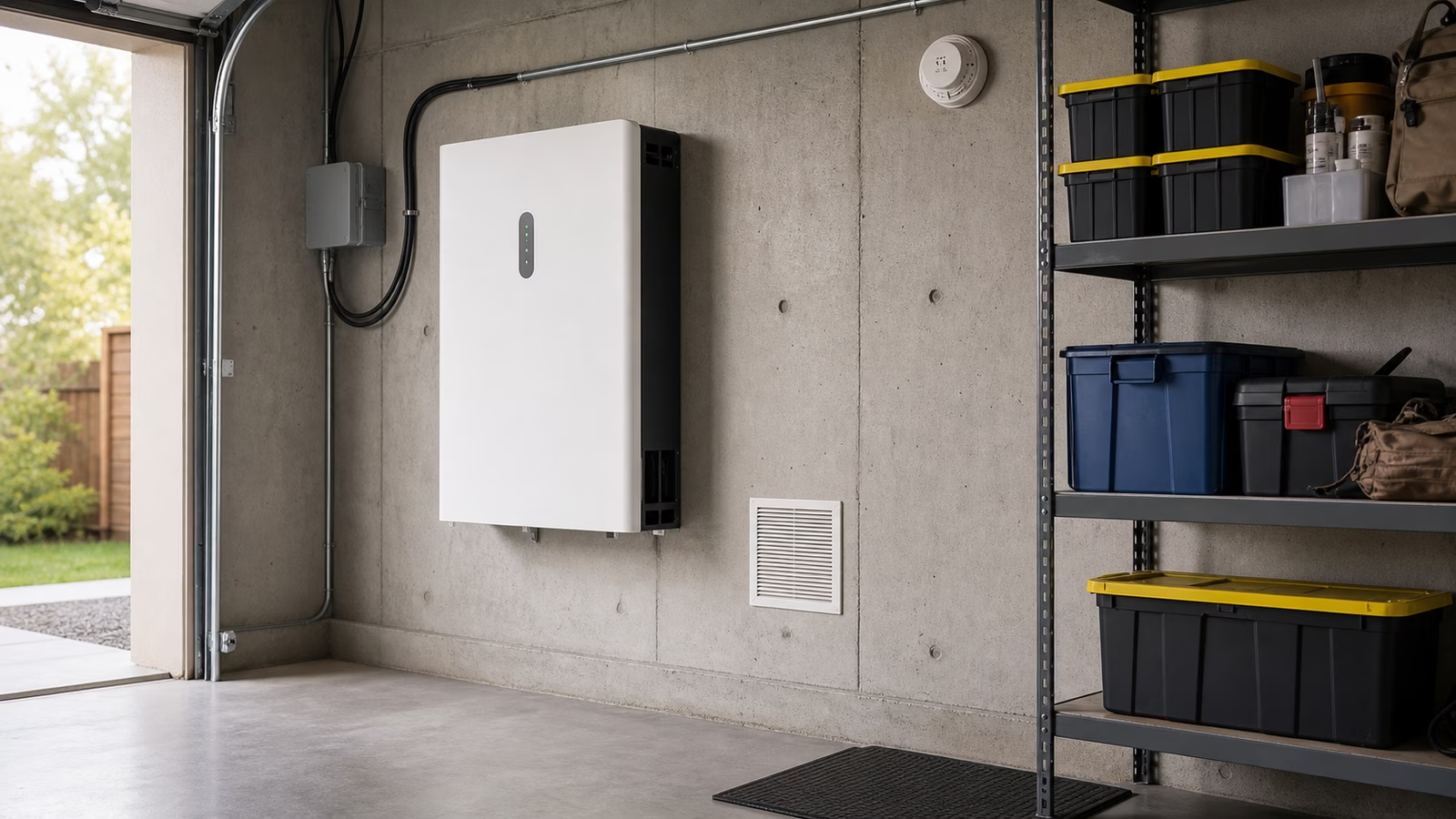
Batteries feel clean compared with fuel generators. There is no gasoline smell, no exhaust note, no pull cord, and no plume of carbon monoxide. That calm surface can make people casual. A battery is still stored energy in a box, and the box has limits. Good placement is the act of respecting those limits before an outage makes everything hurried.
The safest starting point is the manufacturer’s instructions. That sounds plain, but it matters. Portable power stations, wall batteries, chargers, and small lithium packs can have different ventilation needs, storage temperature ranges, mounting rules, clearances, and charging guidance. The manual is not a legal decoration. It tells you what the product was designed to tolerate.

Choose A Place That Does Not Fight The Battery
A good battery location stays dry, avoids direct heat, allows required ventilation, protects the unit from impact, and keeps the charger and cables organized. It should not be under a pile of blankets, next to a heater, in a flood-prone corner, or inside a cabinet that blocks vents while charging. Heavy units also need a realistic home. If moving the battery requires a two-person lift every time the power goes out, the plan will fail when someone is tired.
Permanent home batteries are a different category from portable stations. Their placement is not a casual homeowner preference. It depends on product listing, local code, manufacturer instructions, required clearances, fire access, electrical design, permitting, and inspection. A wall-mounted battery in the wrong place can create service, safety, and compliance problems that are much harder to fix later.
Charging Is When Attention Matters
Most battery trouble announces itself before it becomes dramatic. Stop using equipment that swells, smells unusual, overheats, leaks, sparks, makes new sounds, shows damage, or behaves unpredictably. Do not keep charging damaged batteries because you hope the next cycle will be better. Follow the manufacturer’s disposal or service guidance.
Avoid storing a battery fully drained. Avoid charging small devices under bedding or cushions. Avoid overloaded power strips and mystery adapters. Use the supplied or approved charger, and keep cables in good condition. Cable management straps are not glamorous, but tidy cables reduce tripping, strain, and confusion.
Buy For Documentation, Not Just Capacity
Capacity matters, but safety documentation matters too. A good buying decision asks whether the product has credible certification, clear battery chemistry, accessible support, replacement cable availability, warranty terms, and a storage temperature range that matches the place you plan to keep it. Handles, wheels, or a stable mounting method matter when the unit is heavy. A battery that is technically capable but miserable to move may not be the right battery for your household.
Some accessories belong around the edges. A battery storage safety bag can make sense for small device batteries, though it is not a magic shield. A battery-powered CO alarm belongs in generator-adjacent outage kits because fuel backup introduces a different and more immediate hazard.
The larger lesson is simple: batteries are safest when they are treated as equipment, not clutter. Give them a place, a charging routine, and a record. For fuel-powered backup safety, read Generator Safety for Outages .
Apply this guide as a decision record
Use Battery Safety and Placement: Where Backup Power Should Live to turn a vague household question into a checkable one. Its scope is specific: Safety-first guidance for placing and using portable power stations, home batteries, chargers, and battery accessories. Before changing the setup, write down the condition you are trying to change, the constraint that matters most, and the evidence you still lack.
For a first pass through battery safety and placement, compare the current state with a relevant baseline and record one observation, measurement, or conversation. Make the smallest reversible change available. Keep the manual, model number, room condition, schedule, or maintenance note beside the decision so a future check does not depend on memory. Keep battery safety, portable power station, home battery in view as separate signals instead of treating them as one verdict.
A useful follow-up asks whether Battery Safety and Placement: Where Backup Power Should Live improved the named problem without creating a new one. Check the tradeoff that fits this subject — heat, noise, comfort, water, power, wear, effort, or cost — and describe the result in plain language. If a boundary is safety-critical, stop at the guide’s limit and bring the details to a qualified local professional.
The conclusion for battery safety and placement should stay narrow. Record what was observed, which condition made the result possible, what maintenance keeps it dependable, and what would make you revisit the choice. That turns a guidebook into a decision record you can use again rather than a promise to remember.