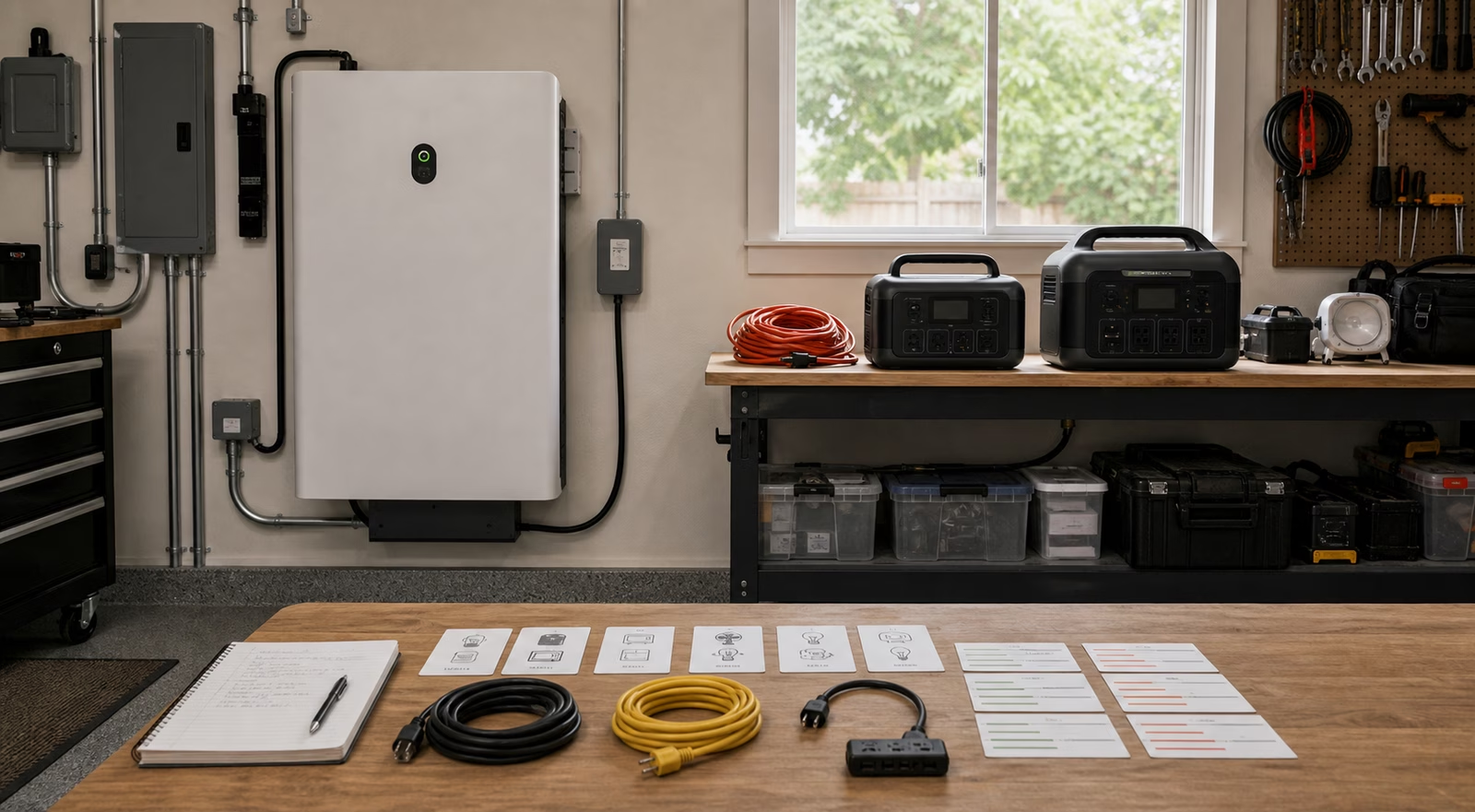
A backup battery that is empty, buried, overheated, or missing cables is not backup power. It is an expensive object with a hopeful label. The difference between the two is not heroics during an outage. It is the quiet habit of keeping the battery in a known state, in a known place, with the right cables beside it.
The best maintenance routine feels almost disappointingly ordinary. Once a month, look at the state of charge. Make sure the charger is still with the unit, not borrowed for something else or lost in a drawer. Run a small real load, even if it is just a lamp, router, or phone charger. The point is not to drain the battery. The point is to remind yourself what the buttons do, which outlet you planned to use, and whether the equipment still behaves the way you remember.

Store It Like You Expect To Need It
Batteries age fastest when they are ignored in bad conditions. Heat is especially unkind. So is deep discharge, damp storage, blocked ventilation, physical damage, and the casual habit of piling other gear on top of vents. Manufacturer guidance matters here because battery chemistry, storage charge, and temperature limits vary. Treat the manual as part of the equipment, not packaging.
A good storage place is boring in the best way. It stays dry. It avoids direct heat. It is easy to reach without moving six boxes first. The charger, solar cable, adapters, and manual live with the battery or in a labeled pouch nearby. A few cable management straps and simple cable labels can do more for outage readiness than another accessory you barely understand.
Practice The Outage Before The Outage
The first time you connect your router to backup power should not be the night the neighborhood goes dark. Practice once while everything is calm. Unplug the router from the wall, plug it into the battery, and confirm the internet actually comes back. Try the lamp you plan to use. Charge a phone. If the refrigerator is part of the plan, measure or research its behavior before assuming the battery can handle the compressor startup.
That practice run usually reveals small annoyances: the battery is heavier than expected, the cable is too short, the outlet is behind furniture, the display times out too quickly, or the router is plugged into a messy power strip. Those details are not trivial. They are exactly the things that become stressful at midnight. Write them down and fix the easy ones.
Watch Capacity And Support Over Time
Batteries are consumables with long service lives, not permanent infrastructure. Capacity slowly declines. Firmware support may end. Replacement chargers can become hard to find. Warranty windows close. If you rely on a battery for outages, keep the purchase receipt, model number, serial number, manual, warranty information, and replacement notes in your home energy file.
A plug-in power meter is useful here because it keeps the conversation grounded. Instead of guessing how much energy your router, lamp, or small appliance needs, you can measure ordinary plug loads and compare them with the battery’s usable capacity. That single habit prevents a lot of fantasy math.
For placement, charging, and warning signs, read Battery Safety and Placement . Maintenance keeps a battery ready; safety decides where and how it should live.
Apply this guide as a decision record
Use Battery Maintenance: Storage, Test Runs, State of Charge, and Replacement to turn a vague household question into a checkable one. Its scope is specific: How to keep portable power stations, backup batteries, and battery accessories ready without abusing the cells. Before changing the setup, write down the condition you are trying to change, the constraint that matters most, and the evidence you still lack.
For a first pass through battery maintenance, compare the current state with a relevant baseline and record one observation, measurement, or conversation. Make the smallest reversible change available. Keep the manual, model number, room condition, schedule, or maintenance note beside the decision so a future check does not depend on memory. Keep battery maintenance, portable power station, home battery in view as separate signals instead of treating them as one verdict.
A useful follow-up asks whether Battery Maintenance: Storage, Test Runs, State of Charge, and Replacement improved the named problem without creating a new one. Check the tradeoff that fits this subject — heat, noise, comfort, water, power, wear, effort, or cost — and describe the result in plain language. If a boundary is safety-critical, stop at the guide’s limit and bring the details to a qualified local professional.
The conclusion for battery maintenance should stay narrow. Record what was observed, which condition made the result possible, what maintenance keeps it dependable, and what would make you revisit the choice. That turns a guidebook into a decision record you can use again rather than a promise to remember.