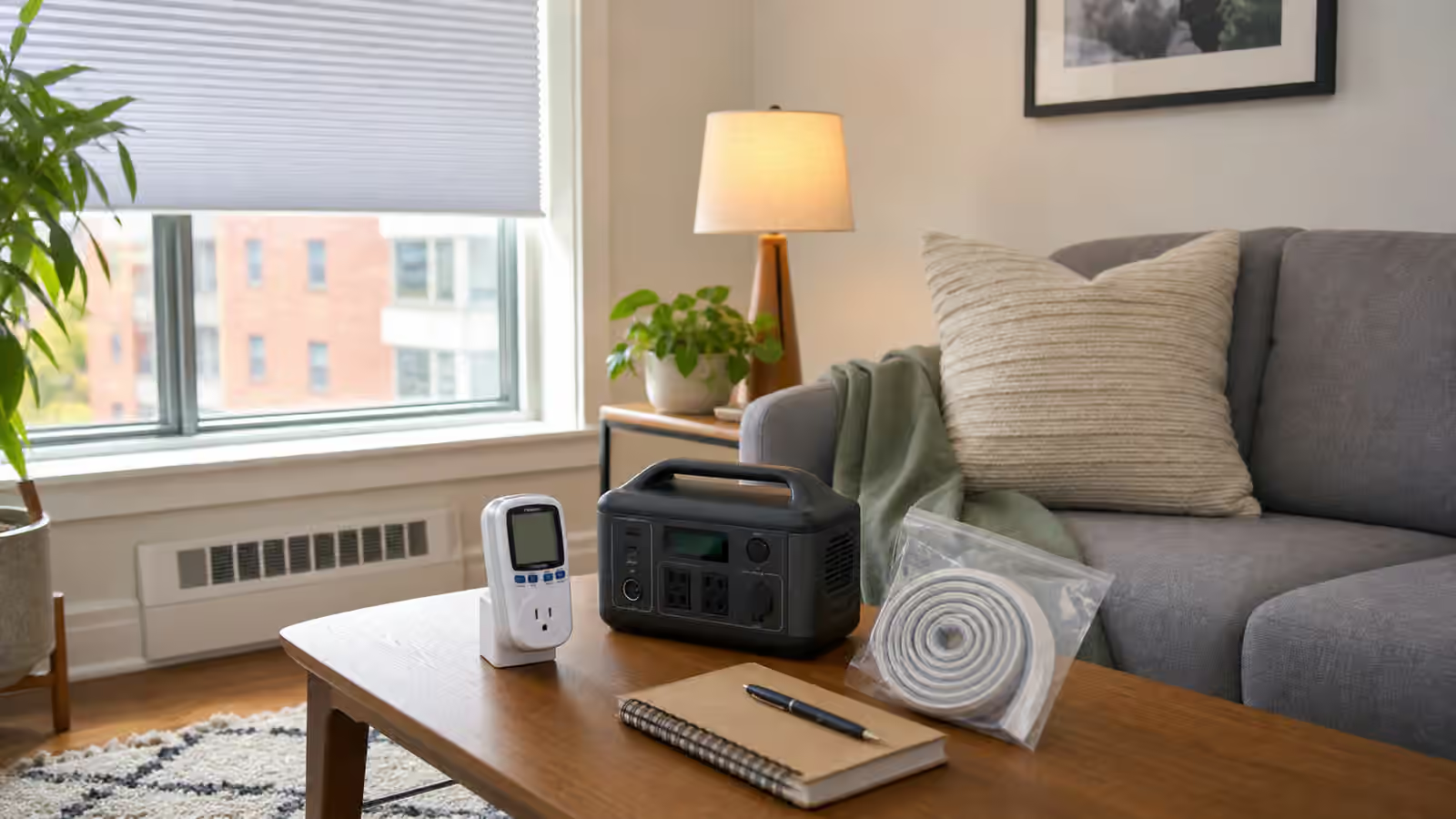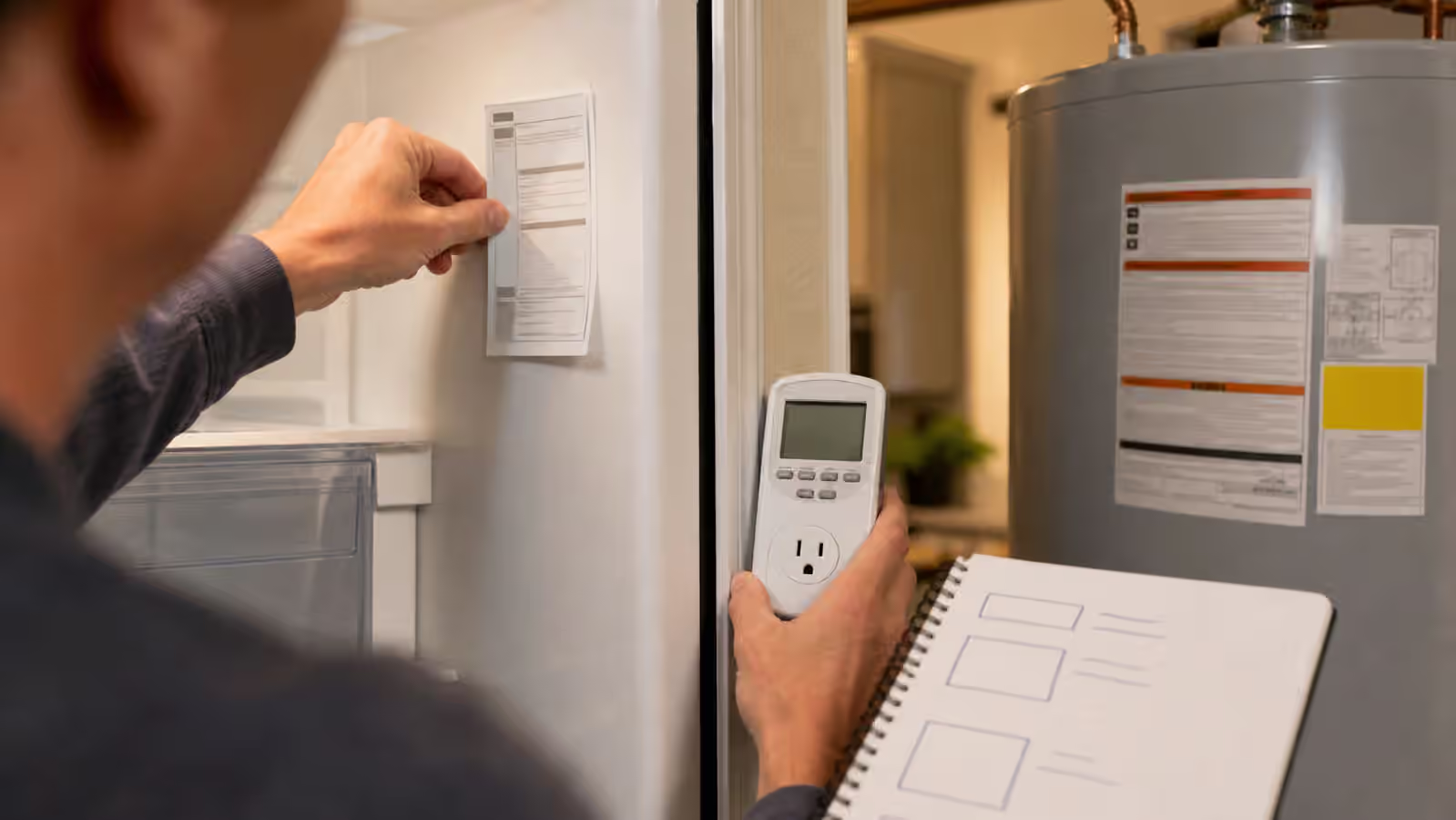
Every home energy plan eventually asks the same plain question: how much does this thing use? The answer may be hidden in several places. It may be stamped on a nameplate, printed in a manual, estimated on an energy label, measured by a plug-in meter, inferred from a breaker, or discovered in a monitoring app. None of those sources is perfect on its own. Together, they turn guesswork into a useful load picture. For background, see Virginia Tech Extension — Estimating Appliance and Home Electronic Energy Use .
Nameplates and labels matter because many home energy decisions are built from small assumptions. Backup runtime, inverter sizing, EV charging plans, solar estimates, panel capacity, appliance replacement, and load shifting all depend on the difference between a steady load, a short surge, a seasonal average, and a worst-case draw. If those words sound abstract, a refrigerator label, a dehumidifier nameplate, or a charger rating can make them concrete.
A label is a clue, not the whole story
A nameplate usually tells you something about electrical demand, but it may not tell you normal energy use. A motor, compressor, heating element, charger, or power supply may list voltage, amperage, wattage, frequency, or other ratings. Those ratings help installers, electricians, and inspectors understand what the equipment can require. They do not always describe how the device behaves every hour of the day.
That distinction is the bridge to Watts, kWh, and Loads . Watts describe power at a moment. Kilowatt-hours describe energy over time. A microwave may draw a lot of power for a few minutes. A small network stack may draw little power but run all day. A refrigerator cycles. A dehumidifier may run constantly in one basement and occasionally in another. The label gives a boundary. The routine gives the energy story.
This is why the same number can be helpful and misleading. A label that shows a high maximum draw may be critical for inverter sizing because startup and peak demand matter. It may be less useful for estimating a monthly bill if the device runs rarely. An annual energy label may be helpful for comparing appliances, but it may assume test conditions that do not match a hot garage, a large family, or an overloaded freezer.
Find the source before inventing the number
Before estimating a load from memory, look for the information the equipment already provides. Appliances may have nameplates inside doors, on back panels, near cords, under lids, behind toe kicks, or in installation manuals. HVAC equipment may have separate labels on indoor and outdoor units. Water heaters, pumps, chargers, inverters, and batteries may have labels near service panels or disconnects. Some labels are easy to photograph safely; others require a technician because access panels, covers, or electrical compartments should not be opened casually.
The purpose is not to become a repair technician. It is to collect enough information to ask better questions. A model number can lead to a manual. A manual can reveal heating elements, motor ratings, standby behavior, recommended circuits, or control settings. A photo can help an electrician or contractor identify what is already installed. Home Energy Documentation Handoff is the natural companion because labels are easy to lose track of once the project moves on.
When a label is unreadable, missing, or hidden, do not force the issue. Use safe measurements, manuals, replacement records, utility history, or professional help. The home energy plan should not require someone to pull out a built-in appliance, open a panel, or stand on a questionable ladder just to fill a spreadsheet.
Know when to measure instead
Plug-in meters are useful for many ordinary cord-and-plug devices. They can show standby power, running watts, and energy used over hours or days. A meter can reveal that a computer setup never sleeps, that a freezer works harder in a hot garage, or that a dehumidifier is a larger load than expected. Home Energy Monitoring Basics expands that idea from one plug to the whole house.
Measurement is especially helpful for devices that cycle. A refrigerator nameplate may tell you the maximum electrical rating, but a meter over several normal days can show the average energy use in that kitchen. A sump pump may be hard to characterize because it runs only when water arrives, so runtime notes during wet weather may matter more than a single label. A charger may use very little once a device is full but still draw more during active charging.
Large hardwired loads need different treatment. Ranges, dryers, heat pumps, water heaters, EV chargers, well pumps, and HVAC equipment should be understood through manuals, professional load calculations, monitoring equipment, or safe contractor measurements. A homeowner should not improvise measurement on hardwired circuits. The goal is better planning, not risky curiosity.
Labels help with backup power
Backup planning is where label confusion becomes expensive. A portable power station or inverter may handle a steady load but fail when a compressor starts. A battery may have enough stored energy for several small loads but not enough output for a pump surge. A generator may be large enough on paper but poorly matched to sensitive electronics or transfer equipment. Backup Power Sizing and Inverter Sizing both depend on knowing the difference between running watts, startup behavior, and total energy.
A refrigerator is a good example. The label may make it look large because it has to cover electrical requirements. Actual energy use may be moderate across a day. Startup may still matter to an inverter. If the refrigerator is a critical outage load, the planning note should include the label information, any measured average, and the fact that compressors cycle. That is more useful than writing a single confident number and pretending it covers every situation.
The same logic applies to pumps, freezers, medical equipment, network gear, and battery chargers. Some loads are important because they are continuous. Some are important because they surge. Some are important because failure has consequences. A good label note keeps those reasons separate.
Replacement decisions need context
Energy labels can help compare new appliances, but the old appliance’s situation matters. A refrigerator in a cool kitchen may perform differently than one in a sun-warmed garage. A clothes washer’s energy use depends on water temperature, spin behavior, and laundry habits. A dishwasher may save water and energy in one routine and disappoint in another if people pre-rinse heavily or run partial loads constantly. The label is a comparison tool, not a prediction of family behavior.
This is why appliance guides such as Refrigerator and Freezer Energy Planning , Clothes Washer Energy Planning , and Dishwasher and Hot-Water Energy Planning spend so much time on routine. The appliance does not live in a test lab. It lives in a household with cooking, laundry, guests, seasons, and habits.
When replacing equipment, keep the old label or manual long enough to compare capacity, circuit needs, venting, water connections, clearances, and controls. A more efficient appliance can still create installation problems if it needs a different circuit, drainage path, vent, or space condition. Labels help the energy plan meet the physical house.
Build a load note that can survive contact with reality
A useful load note has several kinds of information, even if it stays informal. It names the device, where it is located, what the label or manual says, whether the number is maximum power or measured energy, how often the device runs, and why it matters. A refrigerator matters for daily bills and outage planning. An EV charger matters for panel capacity and scheduling. A dehumidifier matters for moisture and summer energy. A heat pump water heater matters for hot-water comfort, room conditions, and electrical planning.
Those notes should be revised after the first real observation. If a plug-in meter shows a different pattern than expected, trust the measured pattern more than the original guess. If a contractor explains that a label number is not the right value for a load calculation, keep the explanation. If a utility bill changes after a replacement, add the context. Home energy planning improves when the record becomes less theoretical over time.
Appliance nameplates and energy labels are humble tools. They do not choose the system, and they do not replace professional design. They do something more basic: they slow down the habit of inventing numbers. Once the clues are visible, the rest of the home energy conversation becomes easier to test.