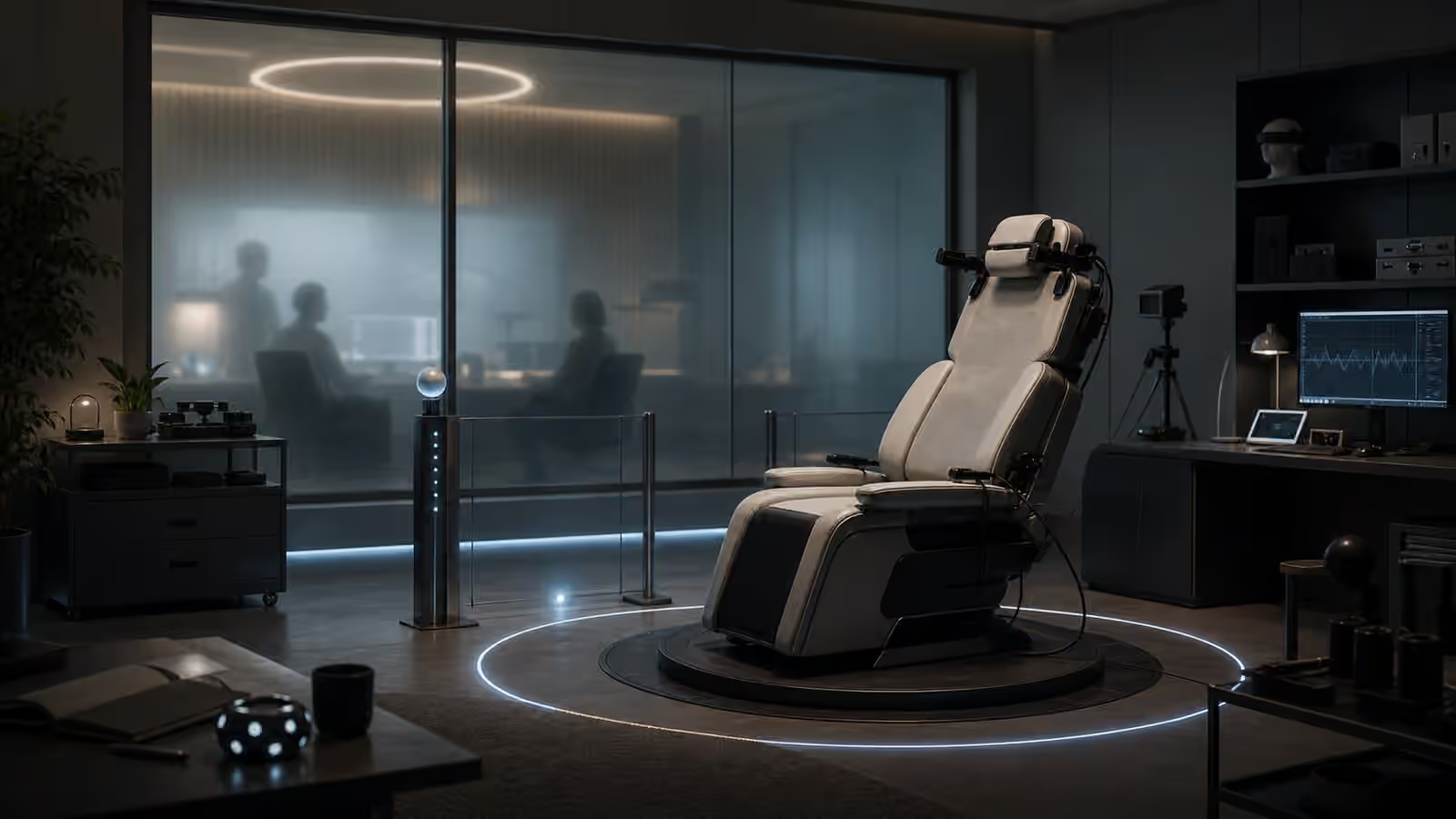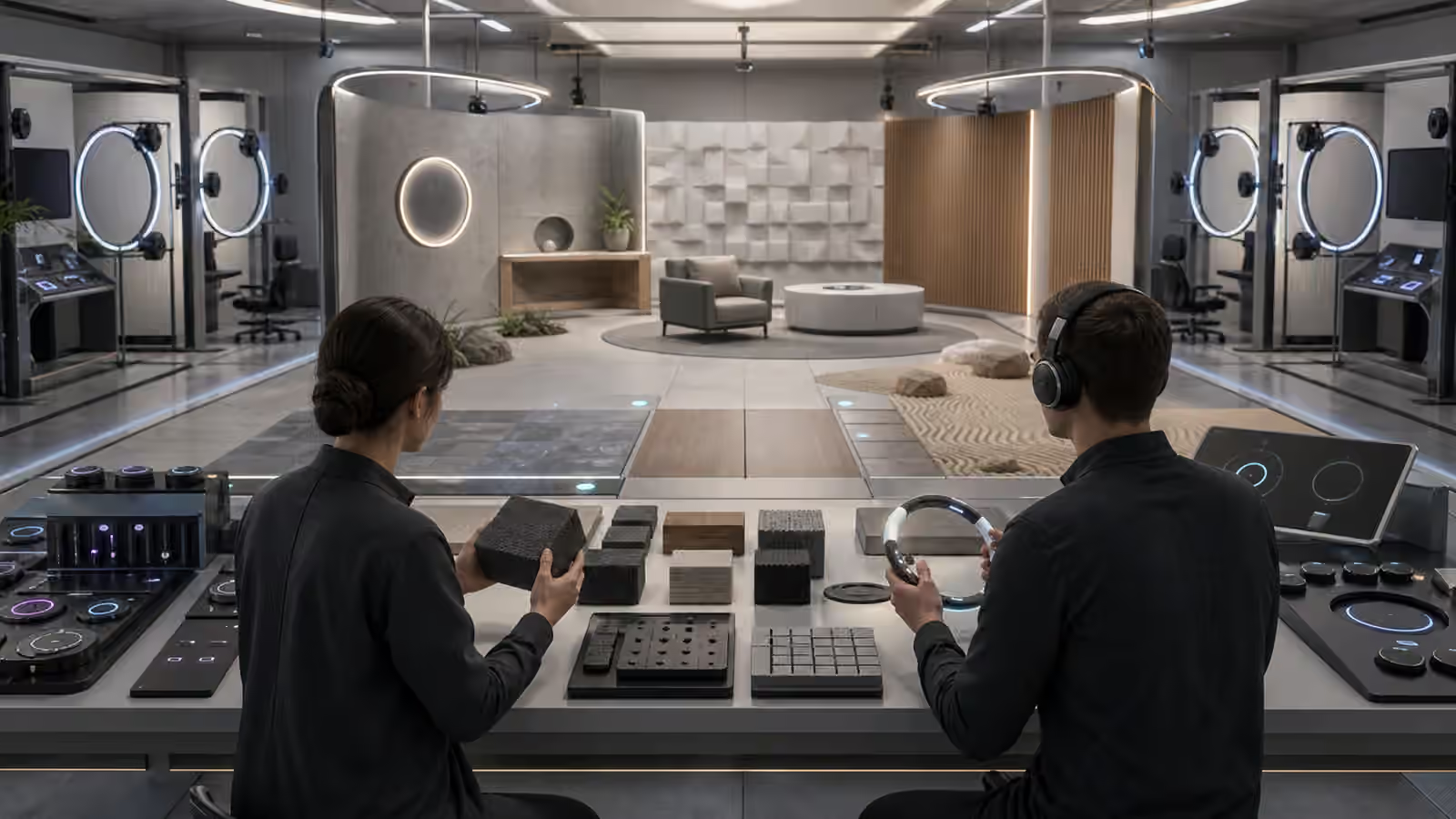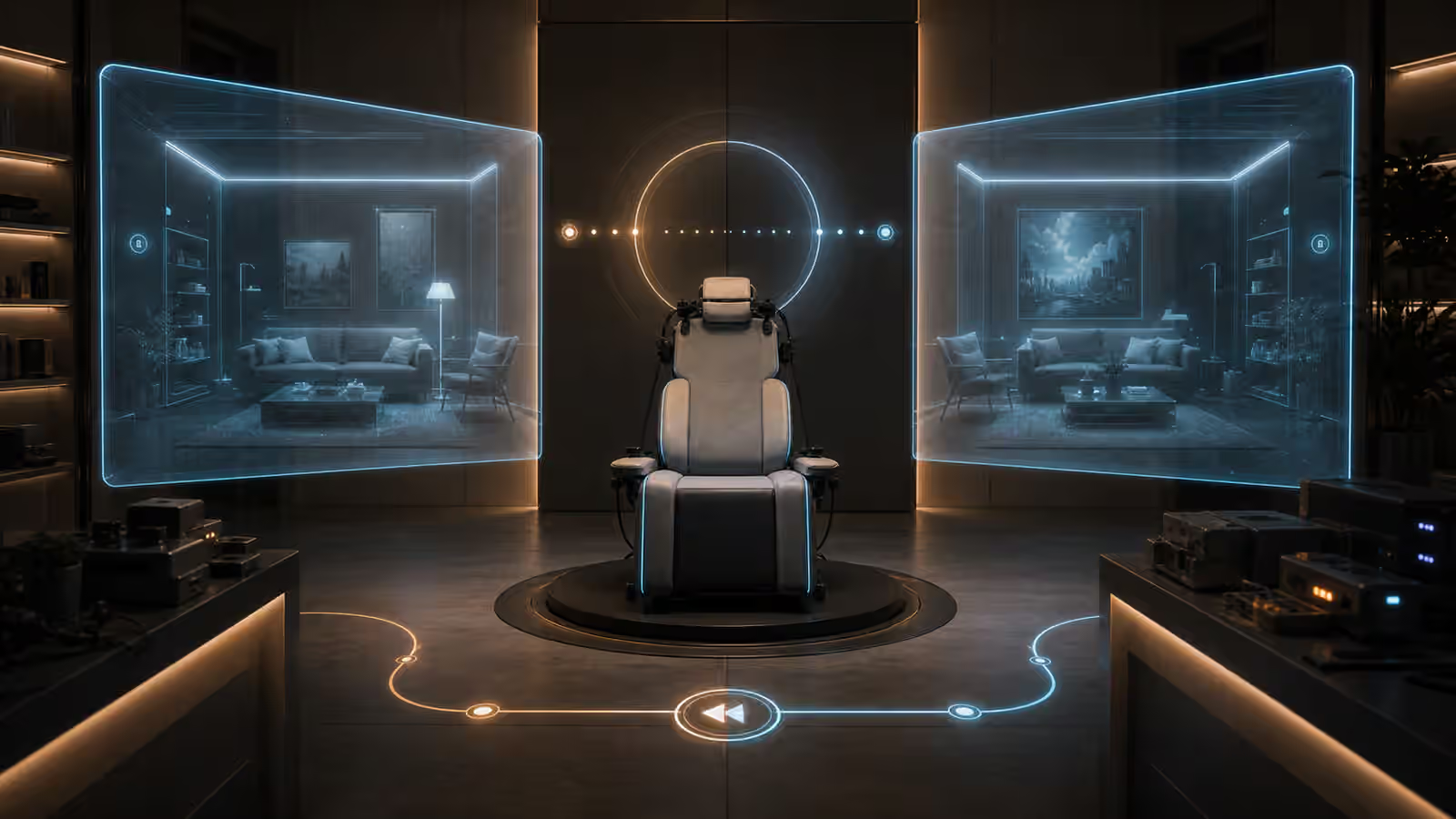
A full dive world should not arrive as a beautiful mystery box. Before a user lets a system shape sensation, attention, social presence, and memory, they deserve to know something about where the world came from. Who made it? Who changed it? What sensory channels does it use? Does it include synthetic people, advertising logic, strong touch, memory capture, or personal adaptation? Which parts are original, licensed, remixed, or generated? Provenance is the answer to those questions when it is designed for ordinary readers instead of hidden in a legal footer.
World Authoring for Full Dive VR explains the creator’s responsibility inside the scene. Provenance explains the user’s ability to judge that responsibility before entry. A world may look calm, but the user still needs to know whether it was built by a trusted education team, a friend, a commercial studio, an employer, a synthetic generator, a public remix community, or an unknown account with polished assets.
A Byline Is Not Enough
Ordinary media often treats provenance as a byline, studio mark, publisher name, or upload account. Full dive needs more context because the work does more than display content. It may move the user’s body model, control social distance, create touch, record reactions, or adapt to hesitation. A familiar creator name does not tell the user which of those powers are active.
The useful provenance layer should be readable as a set of lived promises. This world uses close-range haptics. This world includes synthetic companions. This world records only session incidents. This world changed its locomotion model last week. This world was remixed from a public template. This world has not been reviewed for seated use. The wording can be concise, but it has to describe the experience the body is about to meet.
Permission Boundaries in Full Dive VR belongs here because provenance and permission reinforce each other. A user cannot give meaningful permission to a world whose origins and active powers are opaque.
Sensory Profiles Should Travel With the World
Full dive worlds need something like a sensory profile. Not a marketing mood board, and not a dense technical manifest for engineers only. The profile should explain the channels the world may use: motion intensity, touch, pressure, temperature, scent, taste, voice cloning, gaze response, synthetic character memory, emotional inference, or persistent recording. It should also explain whether those channels are essential or optional.
Sensory Ratings and Content Warnings in Full Dive VR covers the user-facing warning side. Provenance adds the source side. If a world says it uses strong haptics, the user should be able to know who authored those haptics and whether they changed. If a world includes scent, the user should know whether it comes from the platform, the world creator, a venue module, or a personal profile.
This matters because sensory trust is cumulative. A creator who handles sound gently may still be careless with proximity. A platform that reviews visual content may not review temperature cues. A user who trusts a friend to build a calm room may not trust that friend to set replay permissions. Provenance lets trust be specific instead of vague.
Remixes Need Visible Lineage
Immersive worlds will be copied, forked, customized, and remixed. A classroom simulation may become a workplace drill. A quiet memorial garden may become a public tribute. A training room may be adapted for a different body type. A social lounge may be reskinned by a community. Remixing can be healthy when lineage remains visible.
The danger is false familiarity. A user may enter a world because it resembles a trusted original, while a remix has changed touch permissions, recordings, exits, or synthetic hosts. Visual similarity should not be allowed to smuggle new terms into an old relationship. Updates and Version Changes in Full Dive VR makes a similar point about patches. A remix is a patch with a different author.
Lineage does not have to become a genealogy chart. The user needs the practical facts: what this version is based on, who controls it now, which safety-critical settings changed, and whether the original creator endorses or has reviewed the variant. A world that cannot answer those questions should ask for less trust.
Synthetic Hosts Complicate Authorship
Synthetic People in Full Dive VR covers companions, guides, and consent. Provenance adds another layer: when a synthetic host speaks inside a world, whose judgment is it expressing? The creator’s script, a platform model, a venue policy, a user’s own memory archive, a brand sponsor, or live adaptation from session data?
This distinction matters because synthetic presence can feel personal. A warm guide can make a world seem safer than its settings deserve. A confident instructor can make an assessment feel official even when the world is experimental. A familiar voice can blur the line between memory and generated behavior. The user should not have to reverse-engineer who stands behind the person-like interface.
A good provenance design can keep synthetic hosts honest. It can indicate when the host is scripted, adaptive, connected to platform policy, or acting on behalf of another user. It can separate the charm of the character from the authority of the system. That separation protects both users and creators.
Advertising and Commerce Should Not Hide in Atmosphere
Full dive worlds will be tempting places for subtle persuasion. A product can be felt, a destination can be remembered, a celebrity-like presence can stand close, and a virtual object can become part of the user’s body memory. Advertising and Persuasion Boundaries in Full Dive VR and Commerce and Purchase Boundaries in Full Dive VR already describe the risk.
Provenance should make commercial involvement visible without turning the entry threshold into a wall of disclaimers. If a world is sponsored, if a creator receives incentives, if objects are purchasable, if sensory design was optimized for retention, or if synthetic characters can recommend paid experiences, those facts belong near the entrance. The user should know when a beautiful room is also a sales environment.
The hardest cases are not loud advertisements. They are atmosphere, scarcity, social proof, and synthetic companionship. Provenance cannot solve persuasion alone, but it can prevent hidden authorship from becoming another layer of pressure.
Trust Labels Should Stay Humble
Platforms may want simple badges: verified, safe, reviewed, family friendly, professional, authentic. Those labels can help, but they can also overpromise. A world can be reviewed for malware and still be emotionally manipulative. It can be age-rated and still have poor exits. It can be made by a famous studio and still mishandle accessibility. It can be authentic to a creator and still unsafe for a particular body.
The better label is narrow. Reviewed for exits. Verified creator identity. Sensory profile complete. No third-party advertising. Strong haptics optional. Synthetic hosts disclosed. These claims are less glamorous, but they give the user something real to evaluate.
Full dive provenance is not bureaucracy for its own sake. It is how a world introduces itself before asking to be believed. The more immersive the medium becomes, the less acceptable it is for origins, incentives, updates, and sensory powers to hide behind beauty. A trustworthy world should be able to say where it came from, what it can do, who changed it, and what it asks from the person about to step inside.