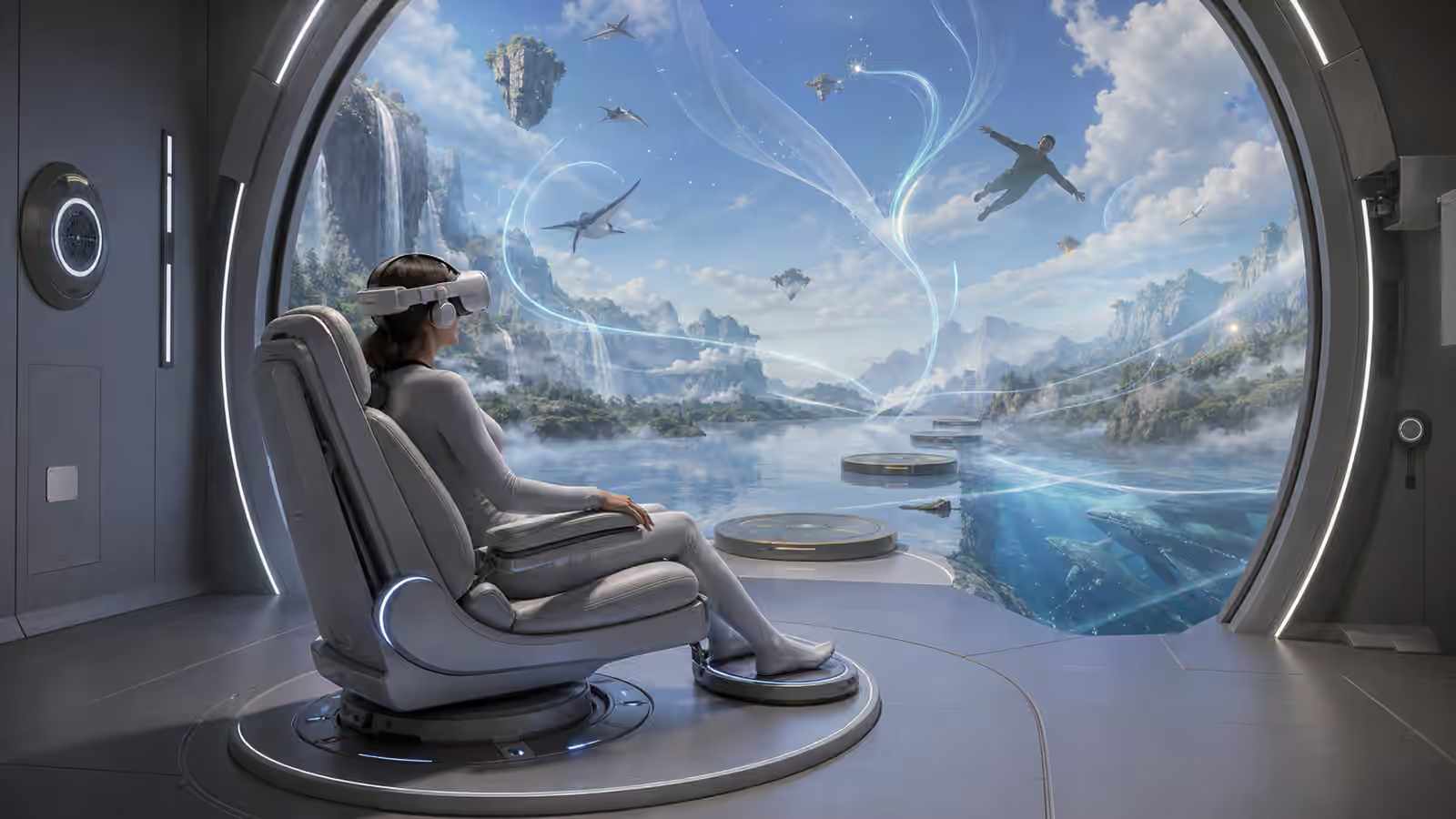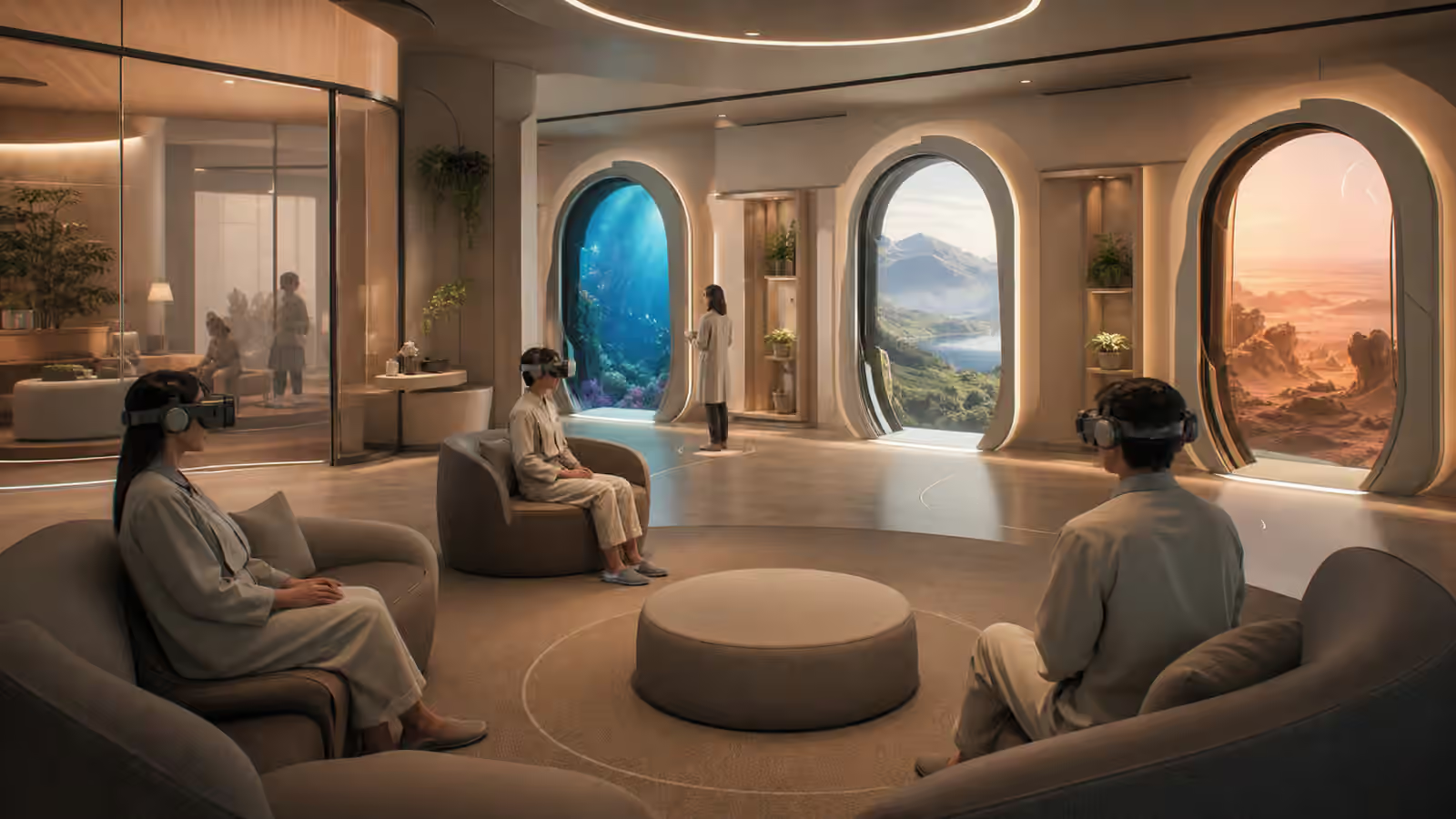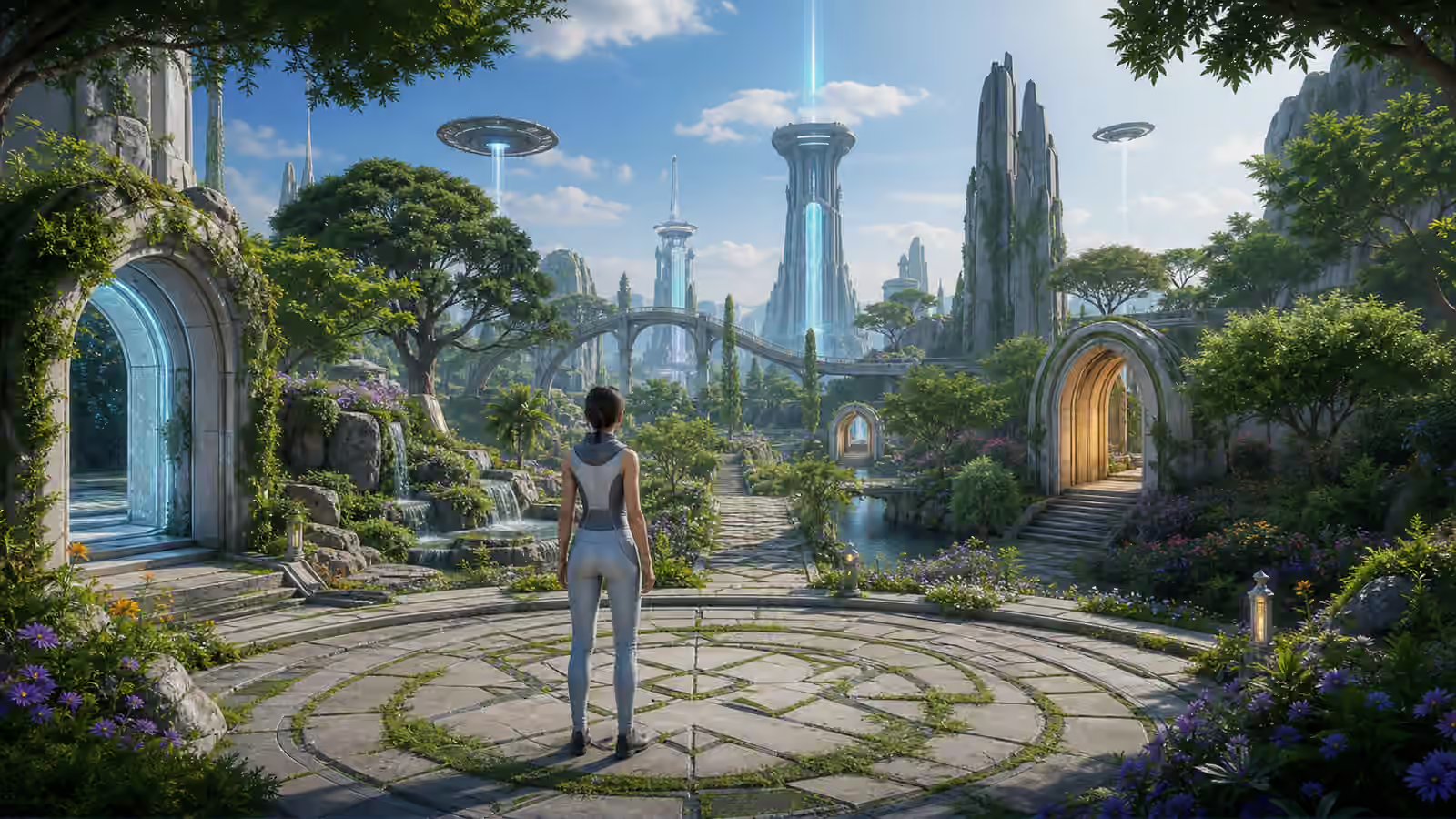
Presence is not enough if the user cannot find their way. A full dive world may feel vivid, but vividness can become pressure when every path looks important, every room changes shape, or the exit is hidden behind interface memory. Wayfinding is the craft of making a world understandable to the body, not only attractive to the eye.
Ordinary wayfinding uses signs, streets, doors, maps, light, sound, memory, and other people. Full dive VR can use those tools too, but it also has stranger options. A world might bend distance, shift scale, change the user’s body, or translate impossible geometry into sensation. That freedom makes clear orientation more important, not less.
World Authoring for Full Dive VR argues that creators are shaping sensory authority. Wayfinding is one of the places where that authority either respects the user or quietly dominates them. A world that controls direction controls confidence.
Landmarks Give the Body Something to Trust
A landmark is more than a pretty object. It gives the user a stable relationship to the place. A tower in the distance, a warm room at the center, a bridge with a distinct sound, a garden scent near the exit, or a familiar handrail can help the user know where they are without thinking in menu terms.
In full dive VR, landmarks should work across senses when possible. A user may not rely primarily on sight. They may be tired, overloaded, using a different avatar body, or navigating through a crowded social scene. A landmark can have acoustic character, tactile texture, air movement, or a consistent spatial rhythm. The goal is not to make every landmark loud. It is to let the world be read without forcing attention into one channel.
Accessibility in Full Dive VR belongs close to this topic. Different bodies and sensory ranges should not be treated as afterthoughts. A world that is navigable only through small visual detail is not deeply immersive. It is narrowly immersive.
Exits Should Be Part of the Architecture
The exit should not feel like a secret command. A full dive world can be fictional, beautiful, and strange while still making departure legible. The exit may be a threshold room, a recurring doorway, a gesture confirmed by the system, or a quiet path to reorientation. Whatever form it takes, the user should be able to find it when attention is tired.
This does not mean every scene needs a glowing door in the center. It means every scene needs a discoverable return logic. A forest can have a known clearing. A classroom can have an anteroom. A public square can have quiet side paths. A training simulation can have a stable pause station. The world can vary the fiction without hiding the right to leave.
Comfort and Reorientation in Full Dive VR makes exit design a safety issue. Wayfinding adds that the exit must be navigable before the user is calm, rested, and perfectly oriented. It has to work under the conditions that make people need it.
Maps Can Become Overload
Maps are useful, but full dive should not assume that more map equals more safety. A floating interface with dozens of labels may help an expert and overwhelm someone who is already disoriented. A miniature world view may be beautiful and useless if the user cannot translate it into bodily movement. A route line may be efficient and still make the world feel like a corridor.
Visual Attention and Overload in Full Dive VR is the warning. Navigation aids should reduce load. Sometimes the best aid is not a map but a calmer horizon, a consistent path texture, a sound that grows clearer as the user approaches home, or a companion that offers one simple direction and then waits.
Wayfinding should also preserve agency. A system that constantly corrects direction can make the user feel managed. A system that offers gentle orientation lets the user recover their own sense of place. The distinction matters in full dive because being guided through the body can feel more intimate than following a screen prompt.
Social Navigation Needs Its Own Cues
In shared worlds, finding a place often means finding people. The user may need to locate a friend, avoid a crowd, join a class, leave a conversation, or understand which areas are private. Social wayfinding should be readable without making everyone constantly visible.
Nonverbal Communication Cues in Full Dive VR explains that distance, gaze, posture, and silence carry meaning. A world can support social navigation by giving groups clear edges, conversations acoustic privacy, public spaces visible approaches, and private rooms thresholds that feel like thresholds. It can help a user approach without startling others and leave without turning departure into a scene.
This is not only politeness. It is consent design. If a user cannot tell whether a room is private, whether a person is available, or whether a path will force close contact, the world creates unnecessary social risk. Good wayfinding makes respectful behavior easier.
Impossible Worlds Need Stronger Anchors
Full dive VR will invite impossible places. A hallway may fold into a valley. A room may be larger inside than outside. A user may fly, shrink, split attention, or move through a world that ignores ordinary gravity. These experiences can be valuable, but they need anchors because the body still expects some order.
Sensory Translation for Impossible Worlds in Full Dive VR asks how impossible experiences can be made believable without overwhelming the person. Wayfinding is part of that translation. The world can keep a stable return direction, a consistent body reference, a known pause gesture, or a recurring sound that says the user is still connected to the path home.
Impossible architecture should not become a trick played on the user. Surprise can be beautiful when the user trusts the frame. It becomes hostile when the user loses the ability to predict how to leave, where others are, or what their body can safely do next.
Persistent Worlds Should Mark Change
A persistent world may change between visits. Friends may move objects. A synthetic caretaker may rearrange a room. An update may alter a familiar path. The user may return after weeks and find that their memory no longer matches the place. Wayfinding must handle that drift.
Persistent Worlds in Full Dive VR covers continuity and ownership. Landmarks are part of continuity. If they change, the world should acknowledge it. A familiar exit should not disappear without explanation. A private room should not be moved casually. A public square can evolve, but the world should help returning users reestablish orientation before asking them to behave as if nothing changed.
The best virtual places may feel generous because they let people get lost only when getting lost is the point. In ordinary use, the world should be readable, exits should be dignified, landmarks should carry memory, and the user’s body should never have to beg the interface to learn where it is.