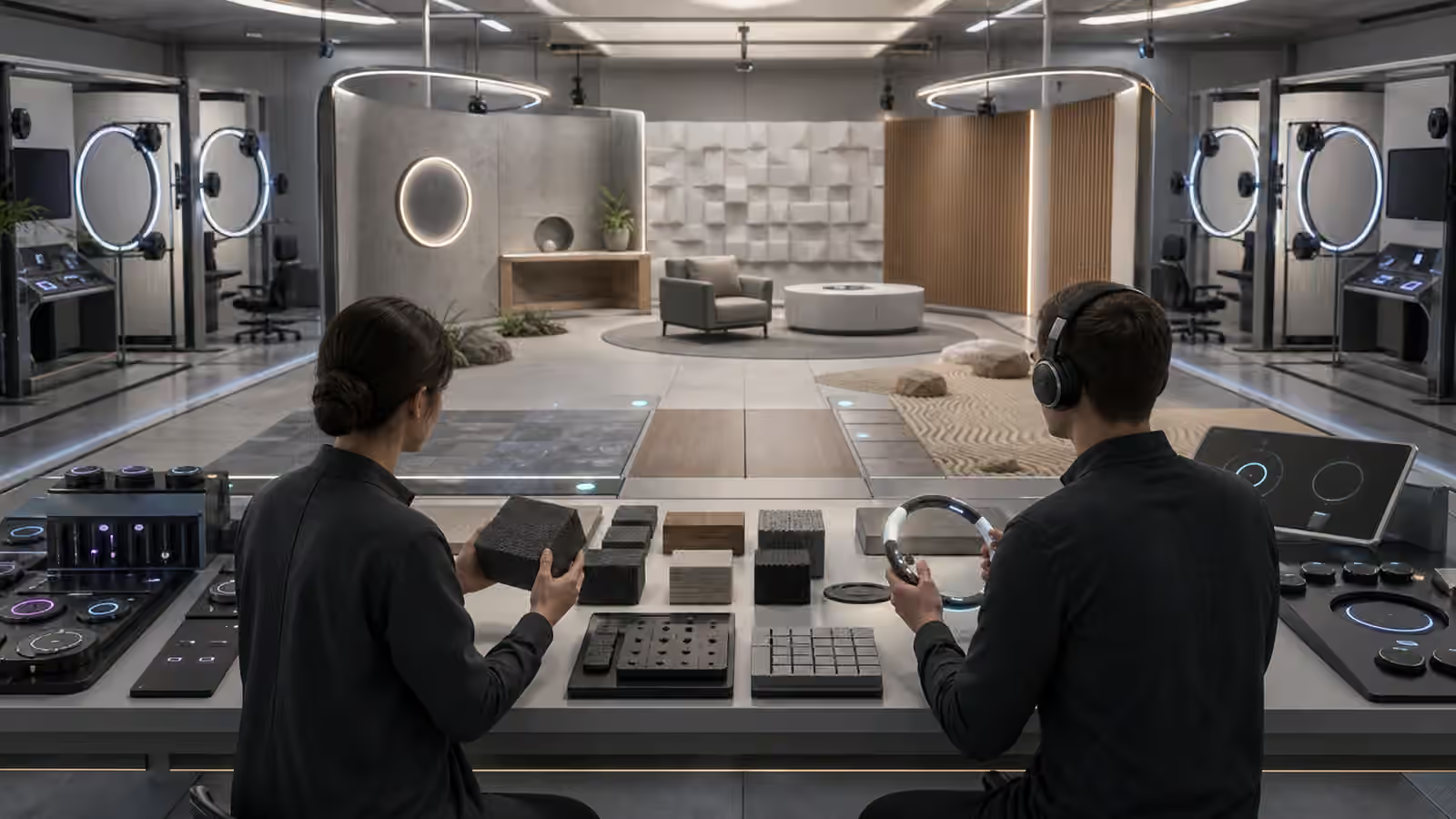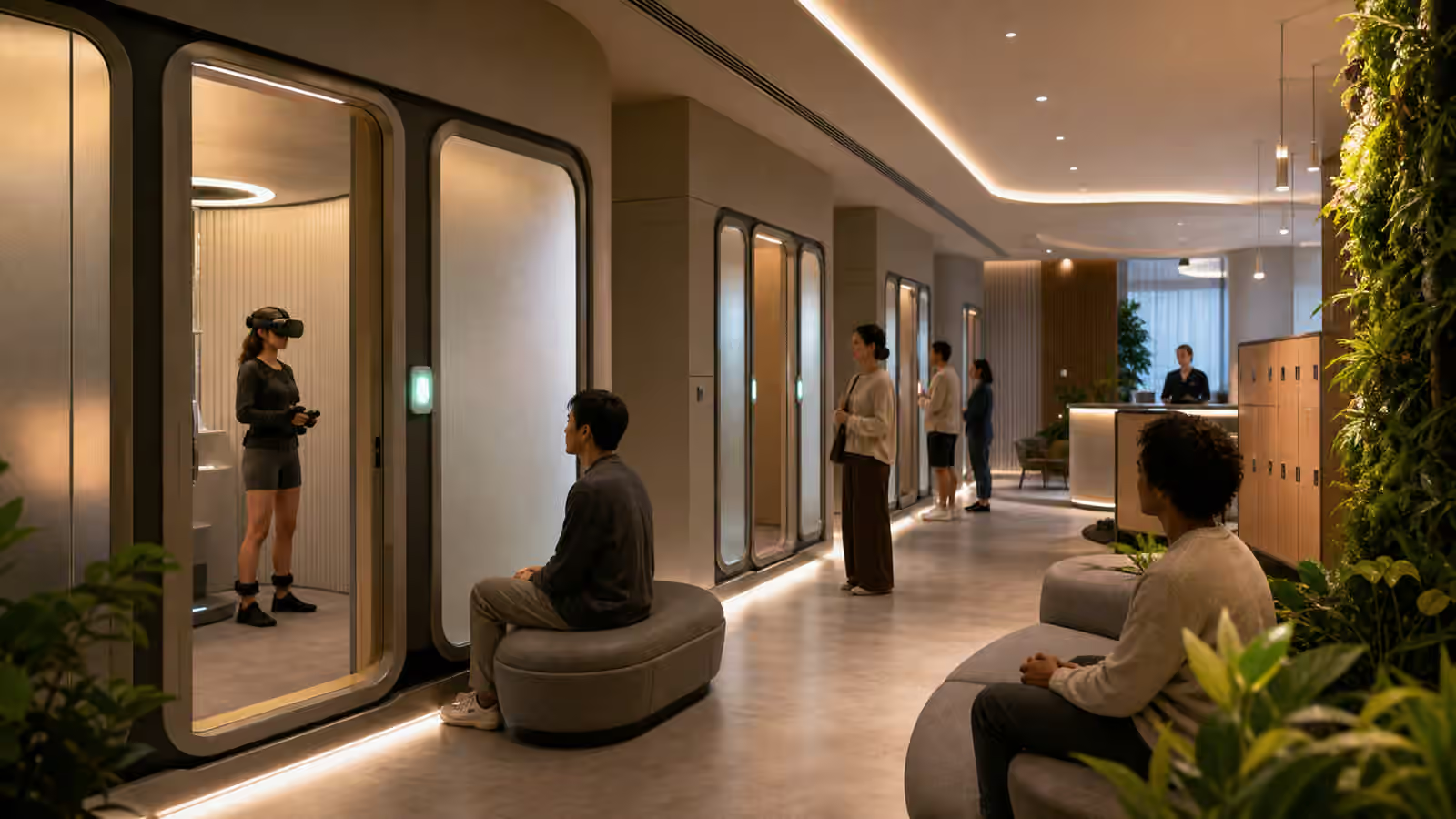
Software updates are ordinary until the software is the world. A patch can change a menu, fix a bug, improve timing, remove a feature, alter an avatar, rebalance a training scene, or move the furniture in a persistent room. In full dive VR, those changes may be felt through the body. A slightly different floor, grip cue, voice distance, or exit rhythm can matter more than a release note suggests.
Latency, Drift, and Trust in Full Dive VR shows how small mismatches can weaken confidence. Version changes create another kind of mismatch. The user returns to a familiar world with yesterday’s expectations, but the system behaves differently. Sometimes that is welcome. Sometimes it is disorienting. The update process should treat familiarity as part of the interface.
A Patch Can Change the Body
In ordinary software, a patch may change where a button sits. In full dive VR, a patch may change how a hand lands on a table, how a door feels, how a synthetic guide approaches, how quickly the world fades during exit, or how movement is damped. Even if the change is technically an improvement, the user’s body may need time to relearn it.
That is why sensory changes deserve more care than visual polish. A new haptic model can make tools feel heavier. A sound update can move voices closer. A locomotion change can alter balance expectations. A calibration improvement can expose that an old profile was compensating for hardware wear. None of these changes is automatically wrong. They are simply not invisible.
Contact, Weight, and Texture in Full Dive VR and Locomotion and Balance in Full Dive VR both imply the same operational rule: if the body learned a pattern, changing that pattern needs a threshold. The user should not discover a new sensory model in the middle of a high-stakes training task or an intimate shared room.
Familiar Rooms Need Change Notices
Persistent worlds turn updates into social events. The room the user built, the classroom that remembers a lesson, the workshop that preserves tool positions, or the memorial archive that holds family meaning may change because the platform improved rendering, reorganized storage, changed permissions, or retired an old feature. A small technical migration can feel like someone entered the room while the user was gone.
Persistent Worlds in Full Dive VR argues that changed places need history. Updates should participate in that history. The user does not need a developer changelog floating in every doorway. They do need to know when a familiar place has changed in a way that affects use, ownership, sensation, privacy, or memory.
The notice should be close to the experience. A calm threshold before entry may be better than an email the user ignored. A room can show that it has been updated, explain what kind of change occurred, and offer a preview or reduced-intensity first return. If the change affects shared authority, saved objects, or synthetic characters, the explanation should be more explicit. A world that changes silently teaches the user to doubt their own memory.
Testing Should Include Old Trust
Update testing often focuses on whether the new version works. Full dive VR also needs to ask whether returning users can trust it. A chair, scene, avatar, or room may pass technical checks while still violating expectations that made the experience comfortable. The system should test familiar paths, not only new features.
This is especially important for accessibility and calibration. A change that helps the average user may make a specific user’s profile worse. A new smoothing algorithm may reduce visible jitter while increasing the feeling that a hand is late. A new social proximity model may look better in demos while making personal space harder to read. Accessibility in Full Dive VR is a reminder that bodies vary, and updates should not flatten that variation into a single success metric.
Good testing includes regression in the ordinary sense, but it also includes sensory regression. Does the same user, with the same profile, in the same familiar room, receive a body experience that remains understandable? If not, the update may need a migration path instead of a surprise.
Rollback Is a User Experience
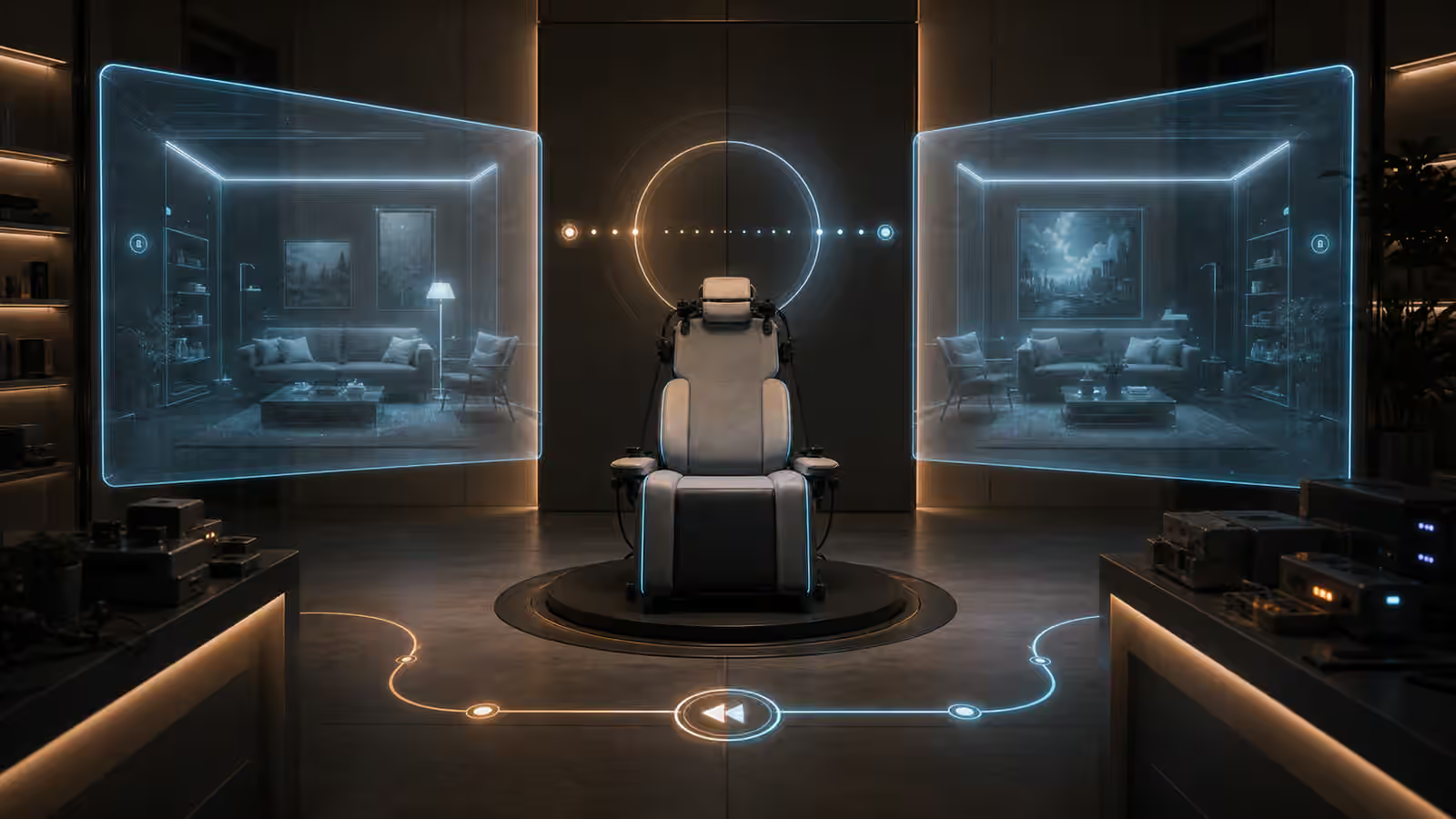
Rollback is often treated as an engineering tool. In full dive VR, it may become a user-facing safety feature. If a new version breaks comfort, changes a persistent world unexpectedly, or creates a social boundary problem, returning to a previous state may be the cleanest repair. But rollback is not simple when worlds are shared and remembered.
Rolling back a private calibration change is different from rolling back a public plaza. Rolling back a haptic model is different from rolling back a classroom assessment. Rolling back a synthetic character’s memory is different from rolling back a rendering bug. The system should explain what rollback affects and what it cannot undo. Session Logs and Incident Response in Full Dive VR matters here because a failed update can become an incident if it harms trust or records.
Rollback should also avoid humiliation. A user who says the new version feels wrong should not be treated as resistant to improvement. The body is reporting a mismatch. The platform can offer an older profile, a slower migration, a reduced-sensory mode, or a clear report path without making the user argue with a release note.
Downtime Should Be Honest
Full dive VR platforms may be tempted to hide downtime because continuity feels important. A persistent world should be available. A social room should stay open. A scheduled class should begin on time. Yet pretending that maintenance is not needed can push platforms toward rushed updates, partial failures, or quiet degradation.
Shared Equipment, Hygiene, and Maintenance in Full Dive VR shows the physical version of this truth. Hardware needs downtime. So does software. A platform that admits a room is unavailable for migration, safety review, or calibration repair may frustrate users briefly while preserving long-term trust. A platform that lets users enter a compromised world because the calendar says it should be open creates a deeper problem.
Honest downtime should give enough information to plan without exposing internal chaos. It can say that a feature is paused, a world is read-only, a sensory model is being reviewed, or a room will reopen after checks. The user should not have to learn from a strange body feeling that the update was incomplete.
Change Should Be Legible
A good update process does not freeze full dive VR in place. Worlds need repair, accessibility improvements, better safety defaults, more stable timing, and new creative tools. The goal is not to avoid change. The goal is to make change legible enough that the user can keep trusting the system while it improves.
That means sensory changes get thresholds. Familiar rooms get explanations. Profiles get migration paths. Shared worlds get visible history. Rollback is treated as repair, not embarrassment. Downtime is allowed to exist. The user’s memory of a place is respected as part of the design surface.
The future of full dive VR will depend on astonishing technical change. The experience of full dive VR may depend just as much on how politely that change arrives.