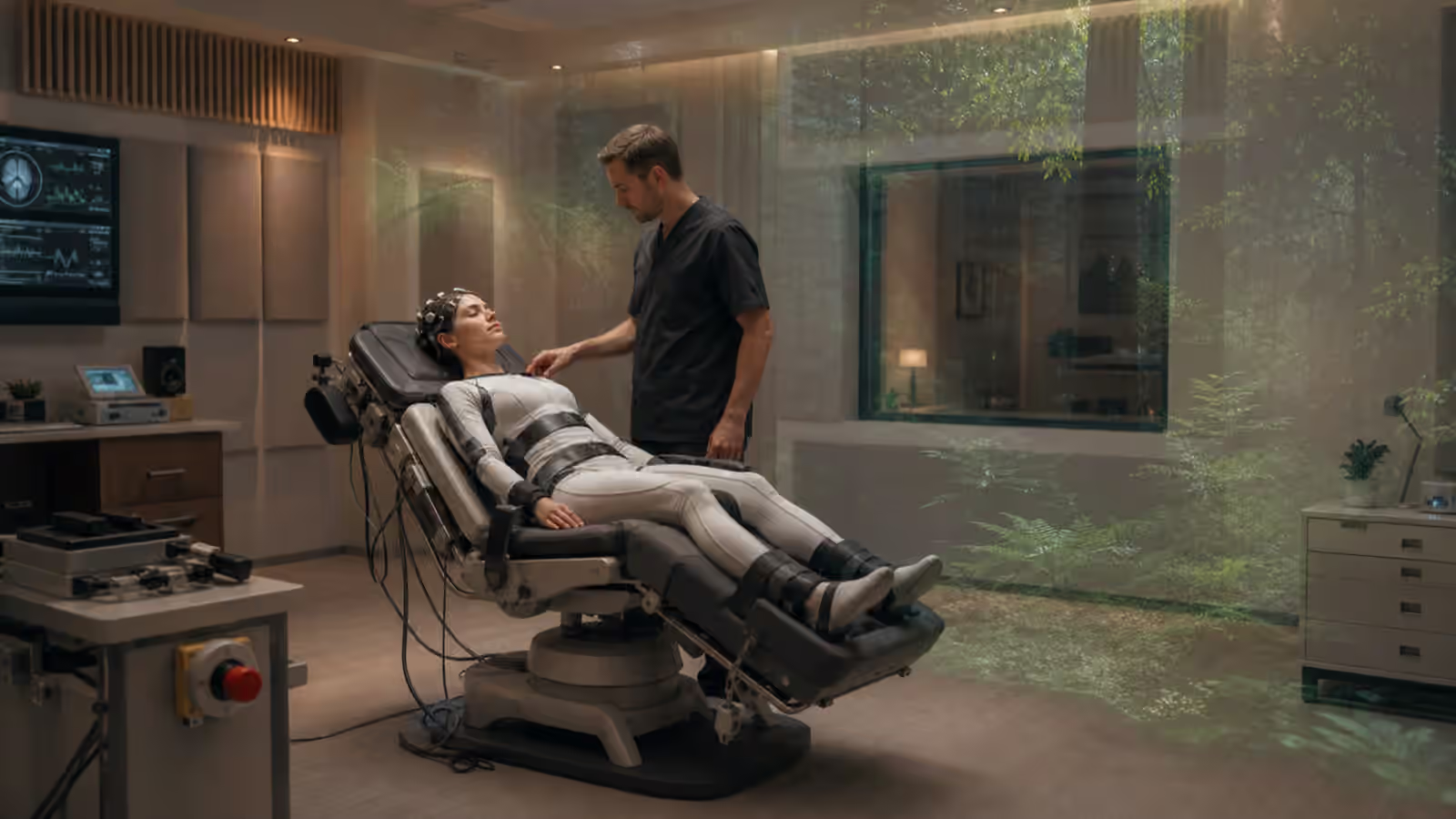
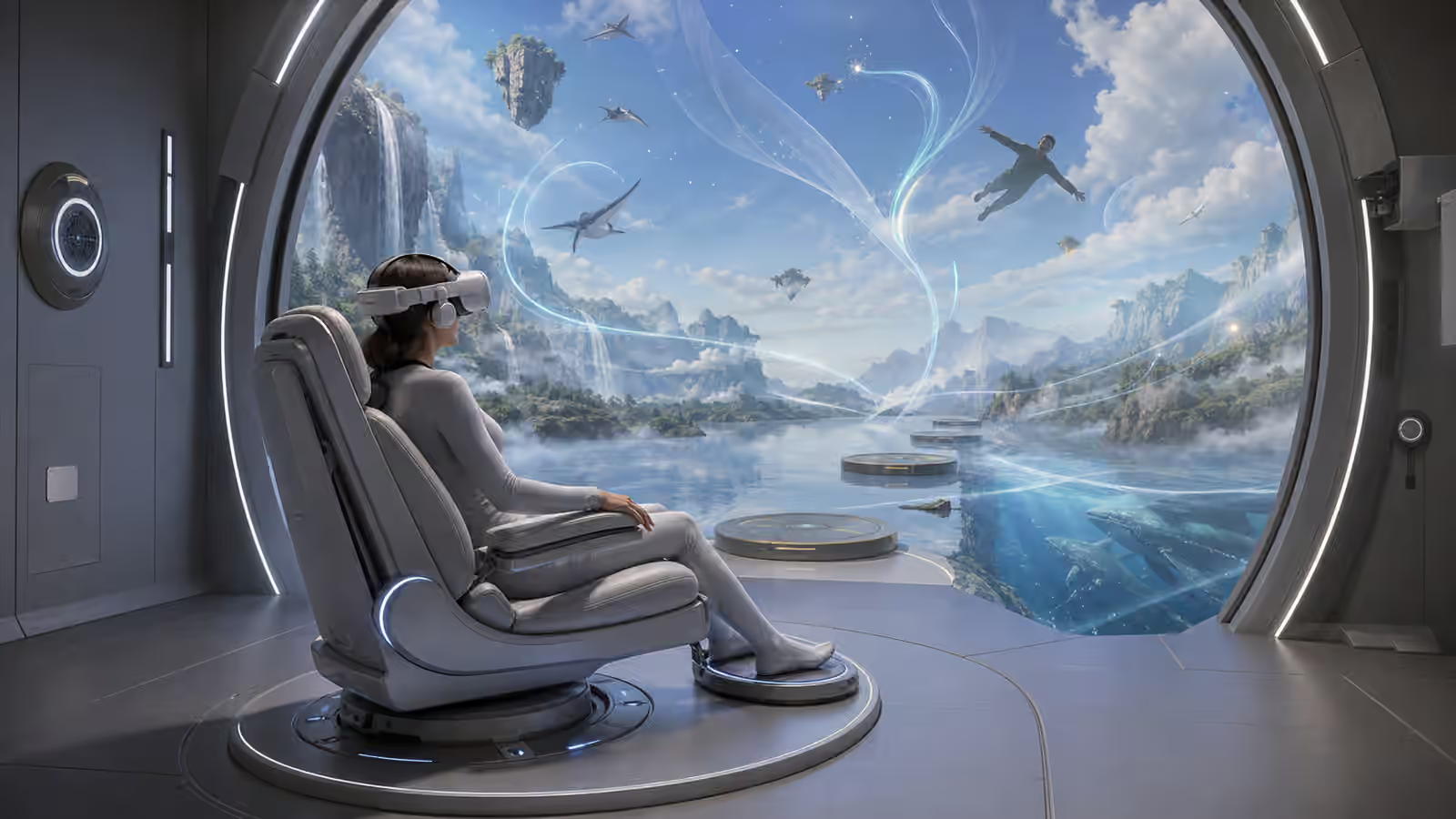
Full dive VR would not only change where a person feels present. It would change how long a place feels inhabited. A session that lasts forty minutes by the wall clock may feel like an afternoon if the world is dense, social, and emotionally active. Another session may take two hours and feel brief because the user spent most of it in a stable room, repeating a calm practice until the body settled into rhythm.
This is not an exotic problem saved for impossible future machines. Even ordinary games, films, conversations, naps, and focused work already bend subjective time. Full dive VR would make that bending more consequential because the system would address more of the body. It might control not only visual scene cuts, but voice, touch, balance, scent, memory cues, avatar continuity, and the pace of return. The clock outside the headset would still matter, but it would not be the only clock in the room.
Comfort and Reorientation in Full Dive VR treats coming back as part of the experience. Time and duration make the same argument from another direction. A session should not be judged only by how long it ran. It should be judged by what kind of time it asked the user to live through, how clearly that time was bounded, and how honestly the system helped the user return.
The Body Keeps More Than One Clock
Human time is layered. There is the clock on the wall, the body’s sense of fatigue, the rhythm of attention, the memory of sequence, the social expectation of when someone will return, and the practical schedule of meals, work, sleep, medication, child care, or a person waiting outside the room. A full dive system would enter the middle of all those clocks.
The simplest mistake would be to treat duration as a settings value. A user chooses a one-hour session, the system starts a countdown, and everything is considered handled. That is useful, but too thin. The same one-hour slot can be gentle or exhausting, private or socially demanding, clear or disorienting. A quiet architectural walk has a different time signature than flight training, a grief archive, a public festival, a competitive match, or a conversation with a synthetic person that remembers the user’s history.
The system should understand that fatigue does not always arrive at the scheduled ending. A user can become tired after twenty minutes of dense social contact and remain comfortable for longer in a slow workshop. A person who is physically still may still be spending effort on attention, emotional regulation, sensory filtering, balance, or avatar control. Accessibility in Full Dive VR is relevant because different bodies budget time differently. A session length that feels ordinary for one user may be too long, too bright, too noisy, too socially crowded, or too cognitively expensive for another.
Time Compression Should Be Treated Carefully
One of the obvious fantasies of full dive is time compression. Spend a short period outside and feel as if more time passed inside. Learn a language in a long virtual afternoon. Practice a procedure for what feels like a week. Visit a distant place before lunch. Live through a story that has the emotional shape of a season while the ordinary room advances by an hour.
Some mild version of this may be possible as design, even without any magical change to the brain. The system can remove waiting, compress travel, skip repetitive setup, accelerate feedback, and arrange scenes so memory receives a dense sequence of meaningful events. Training simulations already benefit from this kind of compression when they focus practice on the parts that matter.
The ethical problem begins when compression becomes a sales promise instead of a pacing tool. A world that makes a short session feel long may also make discomfort feel prolonged. A social obligation may feel harder to leave. A stressful lesson may feel larger than the clock suggests. A synthetic companion may seem to have shared far more history with the user than the outside world would recognize. The user’s memory may carry the weight of extended presence even if the platform reports a modest duration.
Memory Rights in Full Dive VR belongs beside this issue. Duration is not only a number in a log. It can become part of what the user remembers as lived time. If the system records, replays, summarizes, or edits a compressed session, it should not flatten the user’s experience into minutes consumed. It should respect that a short clock interval can still leave a long emotional trace.
Time Expansion Can Also Be a Boundary
Not every useful design makes time feel longer. Sometimes a full dive system should make time feel slower, simpler, and less crowded. A reorientation room can stretch the return so the body is not thrown from a dense world into ordinary obligations. A training simulation can pause after a mistake and let the user understand what happened before the next demand arrives. A social world can slow an approach or hold a doorway long enough for consent to be clear.
This kind of time expansion is not a gimmick. It is a boundary. The system gives the user a wider moment in which to choose, refuse, recover, or understand. Permission Boundaries in Full Dive VR asks what a world should be allowed to do. Time is one of the quiet places where permission is either respected or pressured. A system that rushes the user through consent, hides an exit under narrative urgency, or makes pauses feel socially costly is using time against the person inside it.
Good session design should include calm pauses that do not feel like failure. A user should be able to stop in a neutral room, review where they are, lower stimulation, change body settings, or end the session without the world treating the interruption as a dramatic event. The most trustworthy immersive systems may be the ones that give time back before the user has to fight for it.
Social Worlds Need Shared Time Etiquette
Time becomes social as soon as more than one person is present. A friend may expect a quick visit. A group may plan a two-hour build session. A teacher may need everyone returned and oriented before the next activity. A public world may keep running after someone leaves. The problem is not only scheduling. It is etiquette around presence, absence, delay, and return.
Shared Worlds in Full Dive VR explains why personal space and boundaries need to be designed into multiplayer immersion. Shared time needs the same care. If one user’s session is ending, the world should make that transition legible without exposing private details. If someone steps into a recovery pause, others should not be able to crowd the edge of that pause and demand attention. If a user returns late from a high-intensity scene, the system should not pressure them to explain before they are oriented.
Persistent places complicate this further. Persistent Worlds in Full Dive VR asks what remains when nobody is inside a world. Time is what makes that question practical. A garden can keep growing. A workshop can preserve unfinished work. A synthetic caretaker can report what changed. A community can expect members to return. These features can make a place meaningful, but they can also turn continuity into obligation.
A humane persistent world should distinguish between chosen responsibility and engineered pressure. If a user wants a simulation where crops wither, machines age, or social projects continue without them, that can be part of the world. But absence should not automatically become punishment. The ordinary life outside the session has its own claims on time, and a full dive platform should not treat those claims as competition to be defeated.
Session Endings Should Begin Before the End
The worst ending is the one that arrives all at once. A timer expires, the world disappears, the headset clears, and the user is expected to sit up, answer a message, talk to someone nearby, or make a decision. Even current VR can make that abrupt. A deeper system would need more care.
An ending should begin while the user is still inside the world. The environment can reduce intensity, close open loops, restore a familiar body, soften sound, stop adding new social demands, and give the user a clear sense of how much outside time remains. This should be done without turning the exit into a constant nag. The goal is orientation, not interruption.
Latency, Drift, and Trust in Full Dive VR shows why timing problems become trust problems. The session ending is one of the most important timing events. If the world cuts away while the user still feels mid-motion, mid-conversation, or mid-touch, the ordinary room may feel like an intrusion. If the system keeps the world vivid while the outside clock has become urgent, the virtual place may feel manipulative. The transition needs to tell the truth about both clocks.
Sleep, Rest, and Recovery in Full Dive VR adds another layer. A late session should not assume that the user can absorb intense stimulation and then sleep cleanly. A recovery-oriented design might reduce novelty near the end, avoid cliffhanger social hooks, stop synthetic companions from prolonging the goodbye, and return the user to a neutral sensory state. That does not make the system medically protective. It simply acknowledges that time after the session belongs to the body too.
Records Should Preserve Context, Not Just Length
Session logs will be tempting. Platforms may want to show minutes spent, lessons completed, rooms visited, social contacts, sensory settings, and replay markers. Some of that can help users understand their habits and keep boundaries. It can also become misleading if the record treats all minutes as equal.
A useful personal history might show that a user left early because the scene became too loud, that they spent most of a session in a recovery room, that they extended a workshop voluntarily, or that they declined a late social invitation. A harmful record might reduce everything to engagement time and reward the worlds that keep people inside longest. Privacy and Consent in Full Dive VR matters here because time records can reveal routines, fatigue patterns, relationships, work habits, emotional states, and avoidance.
The safest record may be partly user-owned and partly deliberately incomplete. Not every pause needs to be analyzed. Not every return delay needs to become a profile. Not every scene that held attention should be optimized into a retention strategy. A full dive system that measures time should be careful about what the measurement is for. Helping the user keep faith with their own boundaries is different from helping a platform stretch those boundaries.
The Real Test Is Return
The real measure of time design is not whether the world can make five minutes feel like an hour or an hour disappear. The measure is whether the user can return with a coherent sense of what happened, how long they were gone, what still needs attention outside, and what they are allowed to leave unfinished inside.
Social Reentry After Full Dive VR focuses on the people waiting after immersion. Time belongs there too. A person may need a few minutes before conversation. They may need to explain that a short session felt heavy, or that a long session was quiet and restorative. They may need the right not to narrate the experience immediately. People outside the system also need honest expectations. If a session may take time to exit well, that should be planned rather than treated as awkward delay.
Full dive VR will ask designers to build places, bodies, voices, memories, and social rules. It will also ask them to build humane clocks. Not clocks that merely count down, but clocks that help a person remain oriented across two forms of time: the time lived inside the world and the time still waiting outside it.
The dream of full dive is often described as going somewhere else. Time is what decides whether that journey feels like a visit, a trap, a lesson, a performance, a memory, or a place worth returning to. A good system will not try to win every minute. It will help the user spend time deliberately, end it cleanly, and come back with enough of themselves available for the life that did not pause while the world was running.