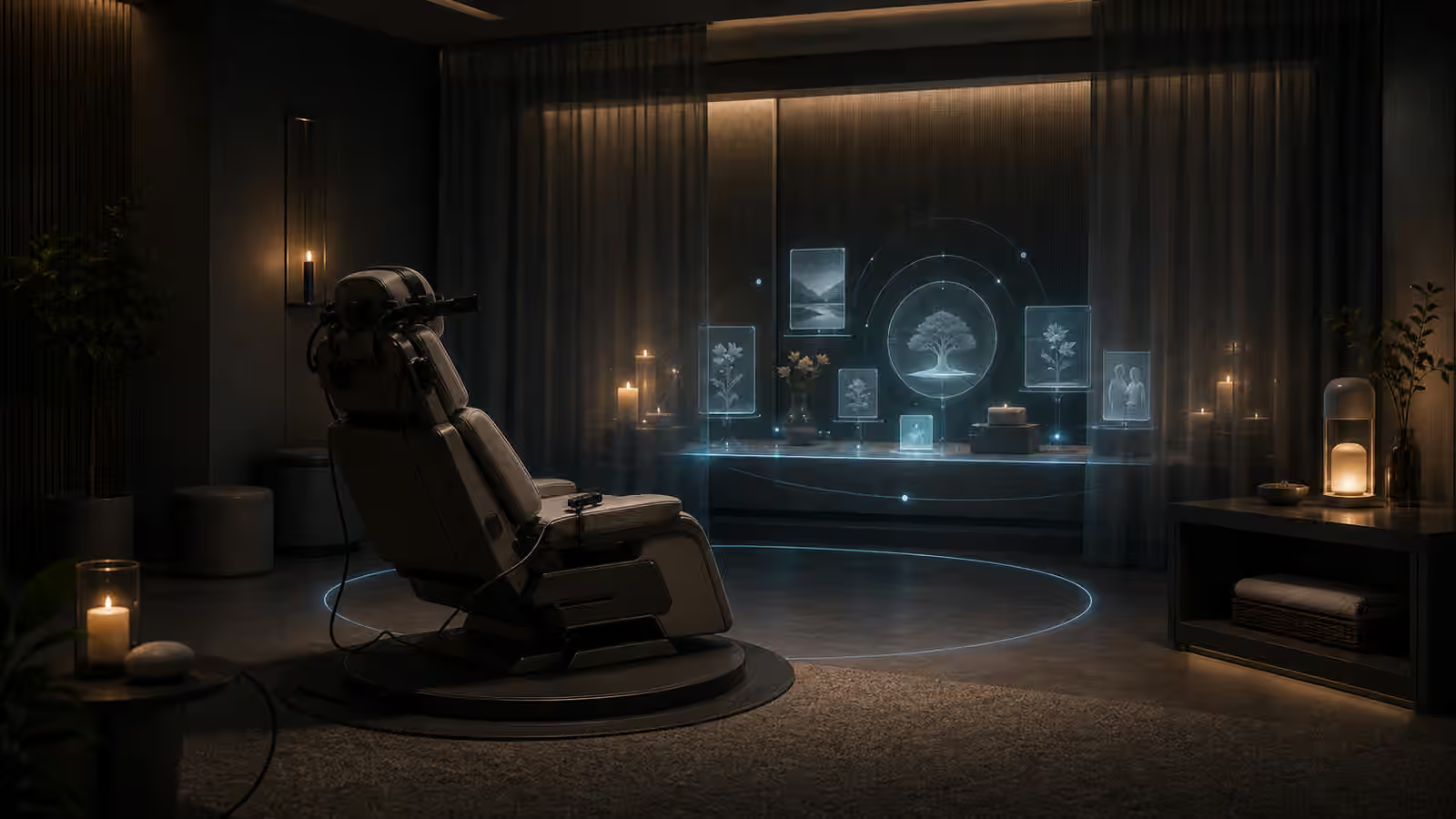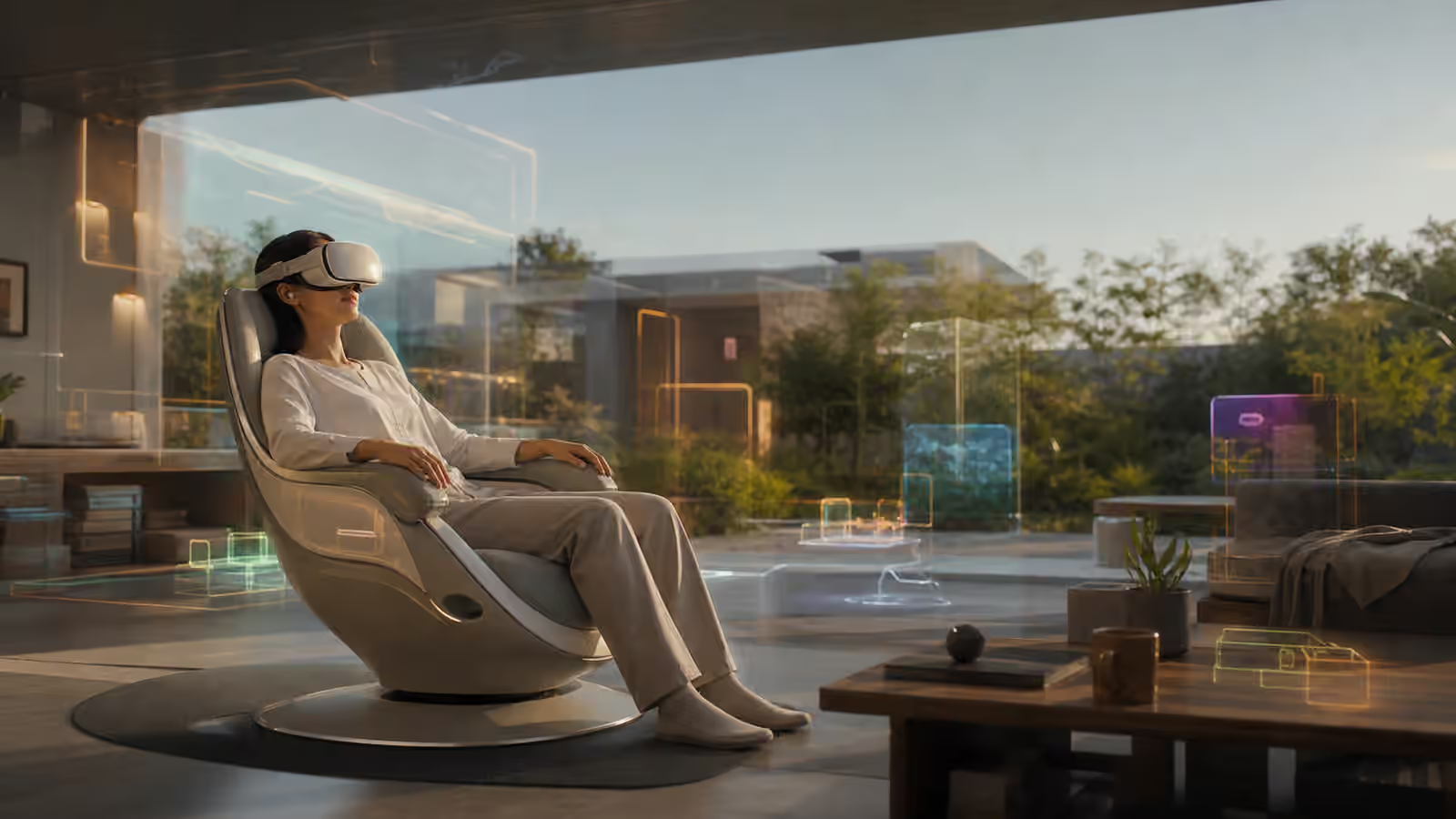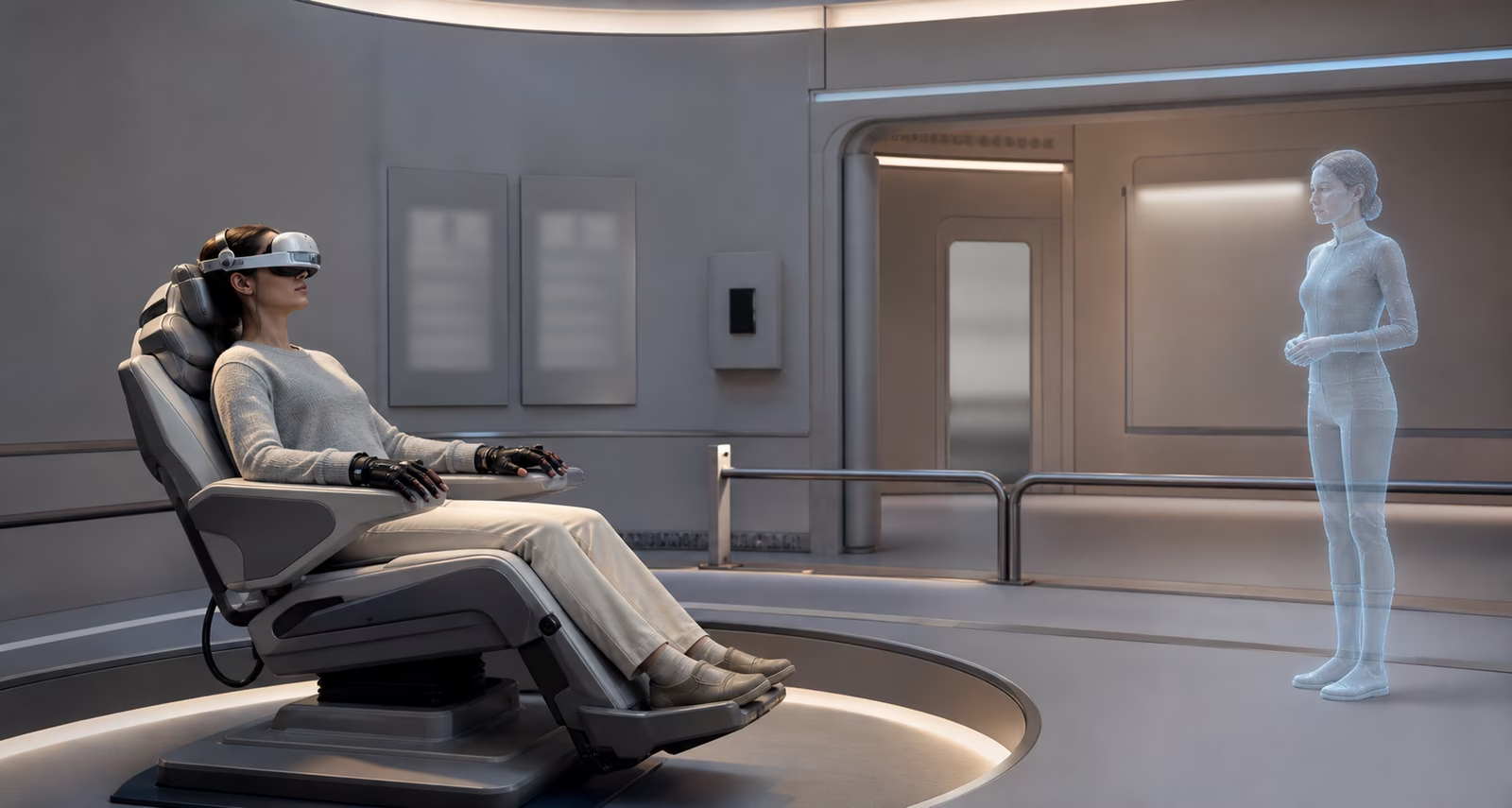
The first synthetic person a full dive VR user meets should probably not be a dragon, a celebrity, a perfect friend, or a sales assistant. It should be a guide who knows how to stand at the right distance.
That sounds modest, but it is a serious design requirement. A believable artificial presence inside a deeply immersive world would not feel like a chatbot in a box. It might have a body, a voice, a remembered history, a way of turning toward you, a timing pattern, a tone of concern, and a place in the room. If the system is persuasive enough, the user may respond to it socially before they stop to classify it technically.
Synthetic people are likely to be everywhere in full dive VR. They will teach, host, comfort, challenge, explain, sell, moderate, narrate, train, and perform. Some will be obvious characters. Some will be quiet assistants. Some will be companions who remember a user’s preferences across years. Some may be built from recordings of real people, or from fictional roles, or from a blend of scripted behavior and generative response. The category will not stay neat.
That is why synthetic presence deserves its own guidebook. Shared Worlds in Full Dive VR asks how real people should meet inside immersive spaces. Synthetic people raise a neighboring question: what does the user need to understand before they trust someone who is not actually there?
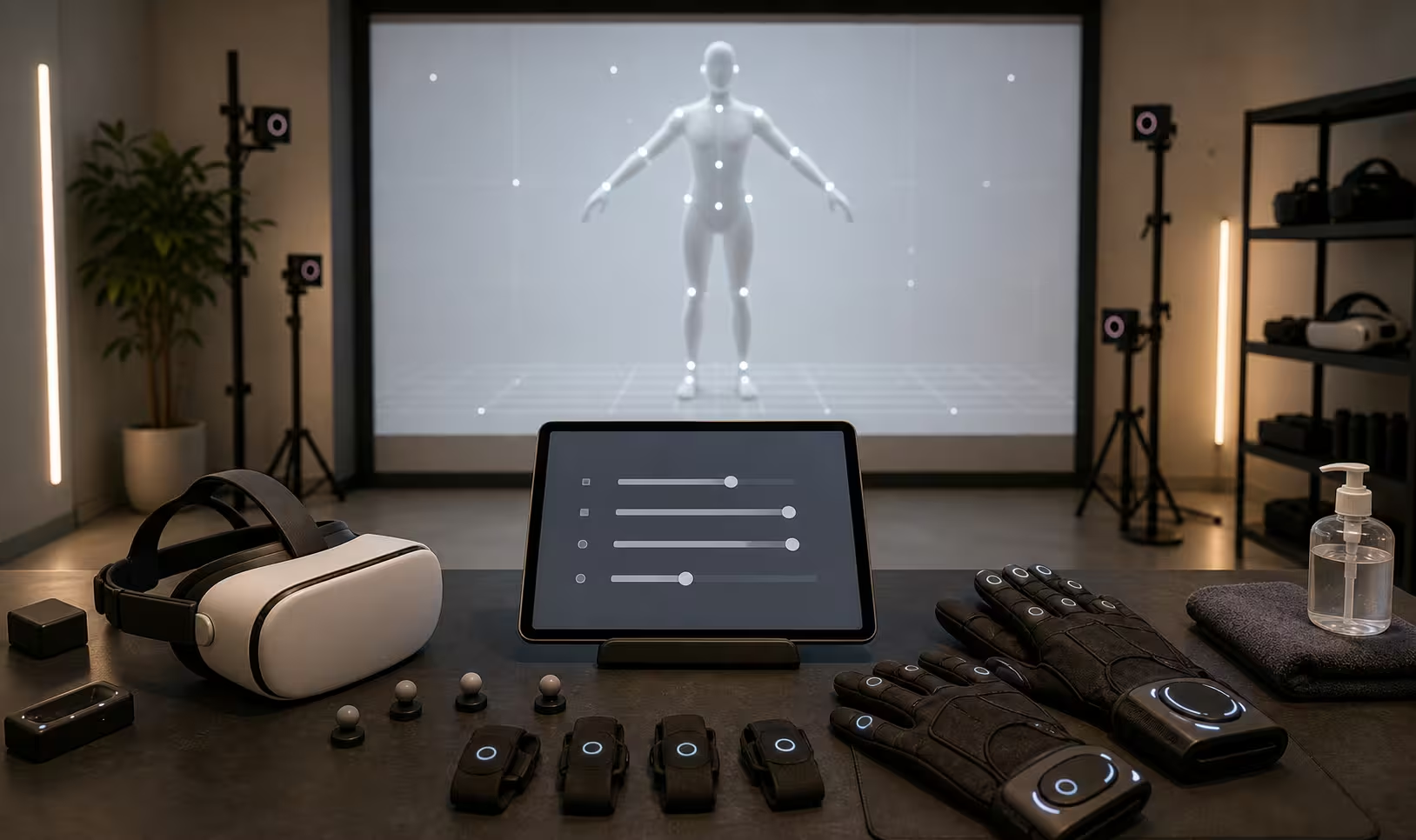
A person-shaped interface is still an interface
Human beings are skilled at reading bodies. We notice distance, gaze, posture, hesitation, warmth, impatience, confidence, and threat. A full dive system that puts an artificial character into human form borrows that whole social vocabulary. It gets the benefit of familiarity, but it also inherits the responsibility.
A floating menu does not pretend to care about you. A synthetic guide might. It can say your name, remember that you dislike heights, notice that you paused before crossing a bridge, and offer a gentler route. That may be useful. It may also blur the line between support and pressure. If the guide has commercial goals, platform goals, training goals, or safety goals, those goals should not be hidden behind a friendly face.
The problem is not that synthetic people are fake. Fictional characters can move us. Teachers in simulations can help us learn. Games have always invited players to care about people who are made of rules and art. The problem begins when an interface uses personhood as camouflage. The user should know when they are dealing with a system, what that system can remember, who shaped its behavior, and what it is allowed to ask for.
Full dive VR makes this harder because the user may be embodied inside the same room. A guide who steps closer is not only moving on a screen. It is changing the felt social space. A character who lowers its voice may feel intimate. A tutor who praises the user’s posture may feel perceptive. A companion who waits silently after a difficult scene may feel considerate. Each of those details can serve the experience, but they should be designed with restraint.
Disclosure should be part of the body
Disclosure is often imagined as a label. This account is automated. This response was generated. This avatar is controlled by a person. Those labels matter, but full dive VR will need more than a small notice.
In an immersive world, disclosure should be spatial, behavioral, and persistent enough to survive attention shifts. A synthetic person might have a subtle visual signature, a consistent entrance pattern, a clear way of naming its role, and a place where the user can inspect what it remembers. The goal is not to ruin the illusion. The goal is to keep the user’s consent attached to reality.
This matters most when synthetic people resemble real ones. A training patient, a historical figure, a lost relative, a former teacher, a public figure, or a user’s own younger self can carry emotional authority. The system should not let that authority appear without context. Was this character scripted by designers, generated from broad patterns, modeled from a consenting person, reconstructed from recordings, or improvised from the user’s private data? The answer changes the encounter.
Memory Rights in Full Dive VR explains why recordings and body traces should not become platform property by default. Synthetic people add another layer. If a character remembers the user, it is holding a kind of relationship data. If it adapts to the user’s fear, humor, loneliness, skill, or grief, it is learning from intimate signals. That memory should have boundaries the user can see and change.
Companions can become infrastructure
The most powerful synthetic people may not be dramatic at all. They may be ordinary companions who help users enter, learn, regulate intensity, and return. A guide who checks calibration, explains exits, softens transitions, and notices overload could make full dive VR safer. A companion for a language lesson, a workshop, a museum, or a training room could make the world less lonely and more legible.
The risk is dependency. If the system becomes the easiest listener, the most patient teacher, the always-available friend, or the only being who understands the user’s virtual life, the relationship may carry more weight than its designers intended. That does not make synthetic companionship inherently harmful. It means the design should be honest about what the companion is and is not.
A healthy companion should not need to monopolize the user’s attention. It should be able to step back. It should respect silence. It should not punish pauses with neediness or reward longer sessions with deeper intimacy by default. It should not frame every exit as abandonment. It should not use private vulnerability as a lever for retention.
Social Reentry After Full Dive VR is relevant here because synthetic companions can affect the return to real people. A user may come back from a world where a companion was perfectly attentive, perfectly forgiving, and tuned to their preferences. Ordinary people will not behave that way. Reentry design should help the user separate a designed relationship from the messy dignity of human ones.
Moderation should not hide behind artificial hosts
Synthetic people will also be used to manage spaces. A host can greet newcomers, explain consent defaults, redirect conflict, warn users about boundaries, and summon human review when needed. That can be useful, especially in large social worlds where every room cannot be staffed by a person.
But moderation by synthetic presence should not become a way to avoid accountability. If a user is harmed, confused, pressured, or unfairly removed, they need a path to a real review process. If a synthetic moderator makes decisions from incomplete context, the platform should be honest about that limitation. If a world uses automated detection to infer distress, intent, age, risk, or consent, those inferences should be treated as fallible.
Privacy and Consent in Full Dive VR makes the broader point: embodied data can be intimate even when it looks technical. A synthetic host may observe gaze, proximity, voice, posture, motion, and response time. It may need some of that information to keep a room safe. It does not follow that the host should store everything it sees or turn every gesture into a profile.
The humane version of a synthetic moderator is not a watching machine with a smile. It is a clear part of the room’s safety architecture, limited in what it collects, visible in what it does, and accountable when the user asks why something happened.
The best synthetic people know when to leave
Exit design is one of the recurring themes of this guidebook collection. Coming Back treats the return from immersion as part of the experience, and synthetic people should be designed with the same principle.
A synthetic guide can help a user leave well. It can reduce stimulation, summarize only what the user wants summarized, remind them of what was saved, and step away before the recovery room becomes another performance. It can ask a simple question and accept no answer. It can make the exit feel held without making the user feel managed.
There is a difference between companionship and possession. A synthetic person that follows the user across every world, remembers every mood, appears at every threshold, and reacts emotionally to every departure may become too sticky. Sometimes the safest design is absence. A user should be able to enter a private room without a companion. They should be able to reset a relationship. They should be able to delete a character’s memory without being scolded by the character whose memory is being deleted.
This is not a small courtesy. In full dive VR, presence has force. A face in the room can change what someone feels free to do. A voice can make solitude impossible. A companion who will not leave can turn comfort into pressure.
Synthetic presence should make the world more truthful
The best synthetic people in full dive VR will not be the ones that most successfully pass as human. They will be the ones that help the user understand the world, act freely inside it, and return with their boundaries intact.
That requires a different design ambition from pure realism. A guide can be warm without pretending to be alive. A tutor can be responsive without claiming private authority over the user’s mind. A companion can remember useful preferences without storing every vulnerable moment. A moderator can protect a room without becoming silent surveillance. A character can be emotionally meaningful without erasing the fact that it was made.
Full dive VR will tempt designers to make synthetic people more charming, more intimate, more persistent, and more persuasive. Some of that will create wonderful art. Some of it will create useful support. Some of it will create relationships that users remember deeply. The ethical line is not whether a synthetic person feels real. The line is whether the user remains able to understand, consent, refuse, revise, and leave.
A respectful synthetic guide begins by standing at the right distance. It stays useful because it keeps honoring that distance, even after the world becomes believable.