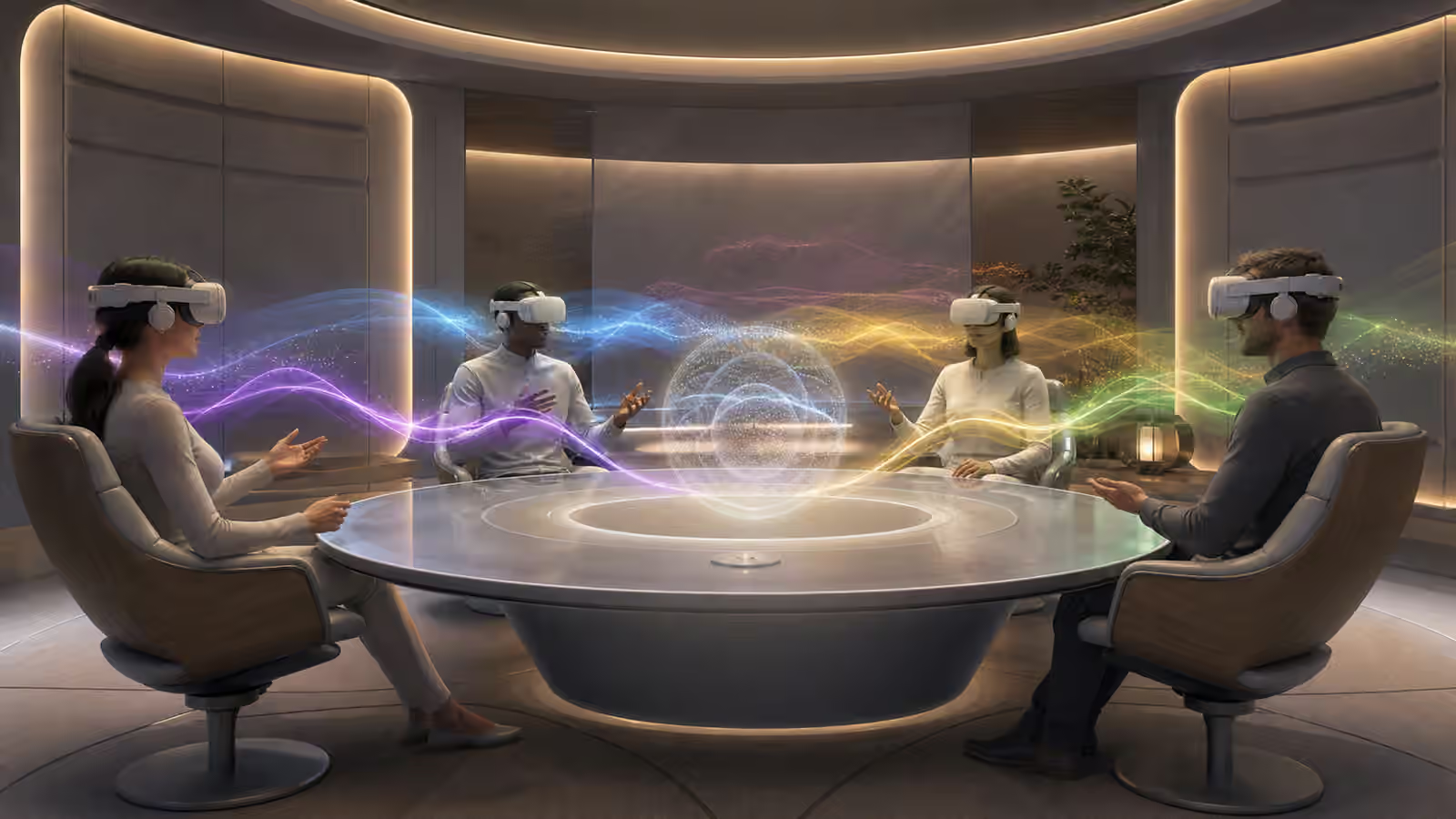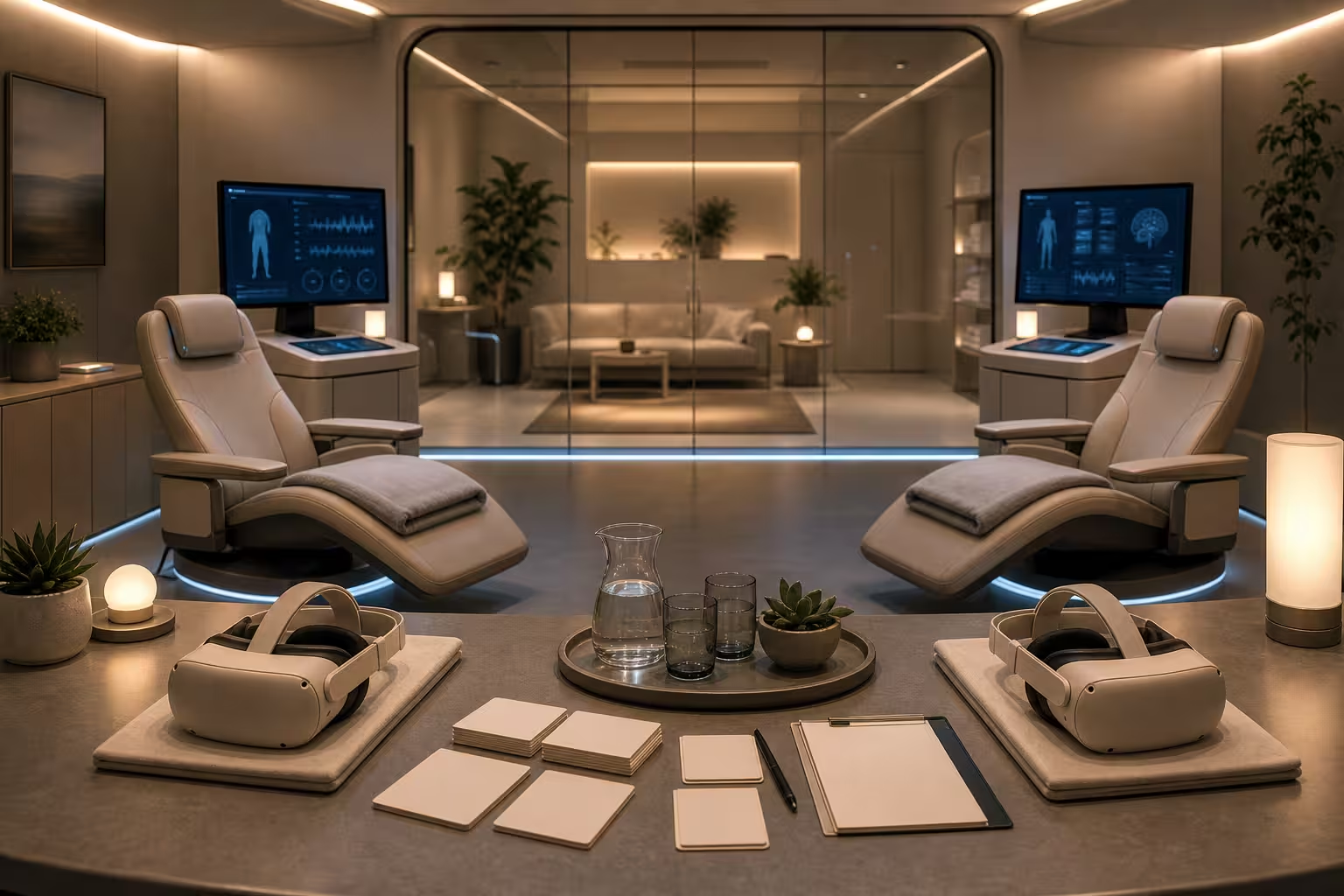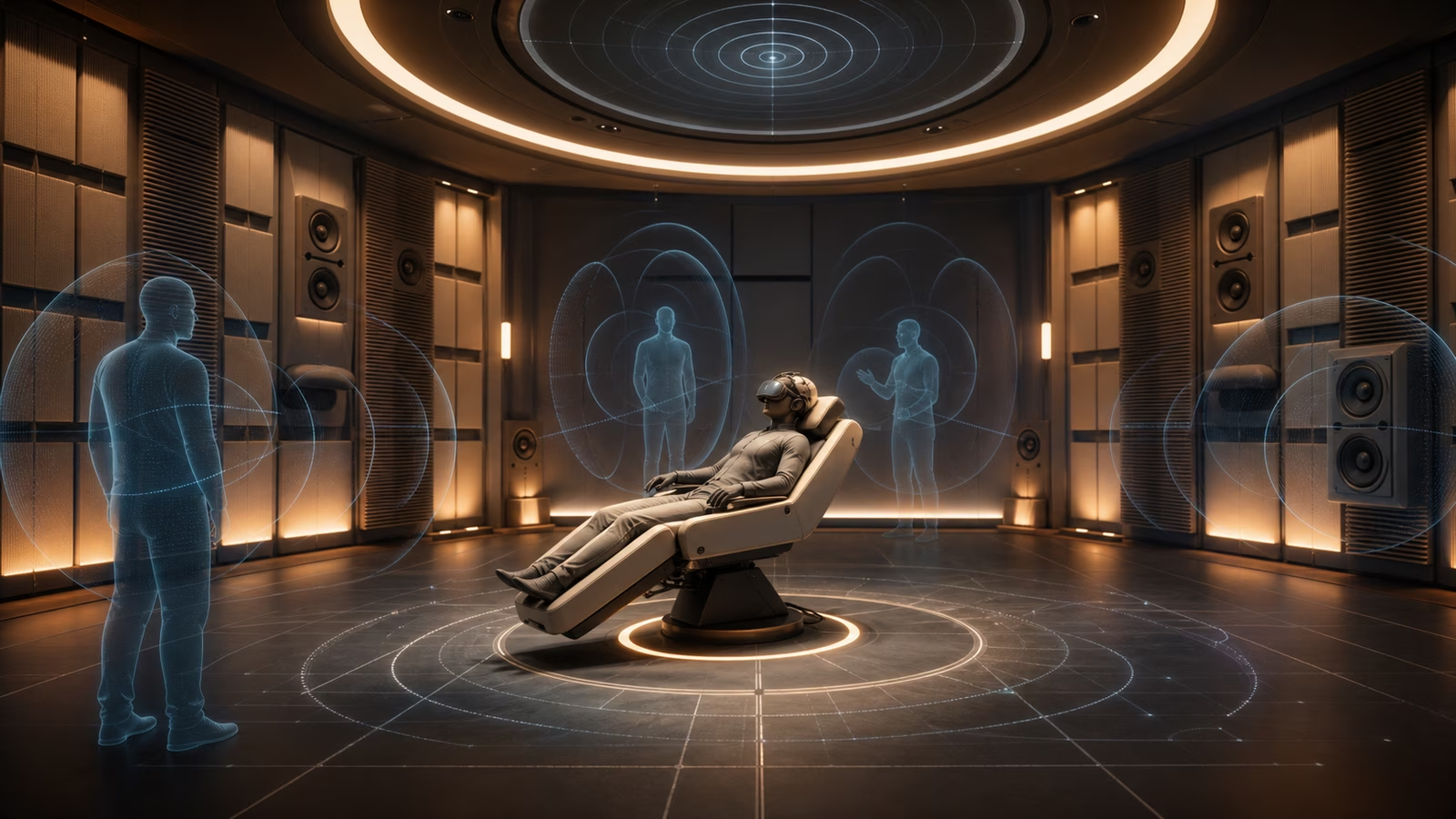
Full dive VR is usually imagined through sight and touch. People picture impossible landscapes, convincing hands, weight, texture, motion, and the shock of being somewhere else. Sound is quieter in the fantasy, which is strange because hearing is one of the fastest ways a room tells the body where it is.
A visual world can look convincing and still feel hollow if its sound behaves like a flat soundtrack. A person can stand behind you, but if the voice arrives from nowhere in particular, the body hesitates. A door can close, but if the room does not change its tone afterward, the wall feels imaginary. A crowd can surround you, but if every voice has the same distance and weight, the crowd becomes decoration instead of presence.
The acoustic layer matters because it reaches places vision does not. It works behind the head, around corners, through walls, and across social distance. It helps the user notice threat, intimacy, privacy, scale, and attention. In a deeply immersive system, sound would not be polish added after the world is built. It would be part of the body interface.
Hearing Builds the Room Before Sight Finishes It
A believable room has an acoustic character. A small padded booth, a tiled kitchen, a stone tunnel, and a forest clearing do not merely look different. They answer movement differently. Footsteps bloom or vanish. A voice becomes close, dry, echoed, or softened by leaves. Even when a user cannot name the difference, the body uses these signals to judge where it is.
Current VR already uses spatial audio to place sounds around the head. Full dive VR would have to go further because the system would be asking for a stronger form of trust. The sound of a hand brushing a sleeve, a floor flexing under weight, rain striking a roof, or a person breathing nearby would need to fit the rest of the sensory story. If haptics say an object is heavy but sound says it is weightless, the world starts to split.
This connects directly to the input and output problem described in How Full Dive VR Might Work . A system does not only have to send sound. It has to coordinate sound with vision, touch, balance, and intention. The timing of a knock, the distance of a voice, and the acoustic change when a user turns their head all become part of the larger contract between the world and the body.
Voice Is a Body Cue
Voice is not just information. It carries identity, distance, mood, attention, and social pressure. A familiar voice can make a place feel safe before anything else does. An unfamiliar voice can make a hallway feel occupied. A whisper can feel closer than a loud announcement. In full dive VR, voice would become one of the strongest signals that another person is present.
That power makes voice design sensitive. A user’s voice may be part of their identity, but it may also be something they want to change, mask, soften, or keep private. An avatar voice can reduce dysphoria, support roleplay, protect anonymity, or make communication easier across languages and abilities. It can also mislead others if disclosure is missing in a context where identity matters.
Synthetic people make the issue sharper. A guide, companion, tutor, or nonplayer character with a warm voice may feel more intimate than its visual design suggests. If it remembers the user, responds to hesitation, and speaks at close range, the voice becomes social. Synthetic People in Full Dive VR looks at disclosure and dependency. The acoustic version of that argument is simple: a synthetic voice should not borrow the trust of human closeness without clear boundaries.
Even ordinary multiplayer needs care. People use tone to negotiate consent, humor, seriousness, apology, and refusal. If a system compresses, stylizes, filters, or translates speech too aggressively, it may remove the cues people rely on to understand each other. Perfect clarity is not always the same as faithful presence.
Silence Is Part of the Interface
Immersive systems often treat silence as an absence, but silence is active design. A quiet room can help a user recover after overload. A private channel can let someone ask for help without broadcasting distress. A muted boundary can turn an unwanted social space back into a manageable one. Silence gives the user room to notice their own body again.
This matters because full dive sound could become invasive. A voice near the ear, a sudden impact, a persistent hum, or a simulated crowd may affect the user more strongly than a speaker in an ordinary room. The system should not assume that turning volume down is enough. The user may need distance controls, social muting, reduced dynamic range, fewer overlapping voices, softer transitions, and quick ways to make the world acoustically simple.
Shared Worlds in Full Dive VR explains why consent has to be built into multiplayer space. Sound needs the same treatment. A person should be able to decide who can speak close to them, which events may interrupt them, when voice is recorded, and whether a private room is genuinely private. An acoustic boundary that depends on every other user being polite is not much of a boundary.
Calibration Has to Include the Ears
People do not hear the same way. Hearing range, attention, processing speed, sensory sensitivity, tinnitus, language fluency, auditory memory, and fatigue all shape how sound lands. Some people rely on captions, visual signals, vibration, or slower speech. Some people need less noise to stay oriented. Some people need enough environmental sound to avoid feeling cut off from the world.
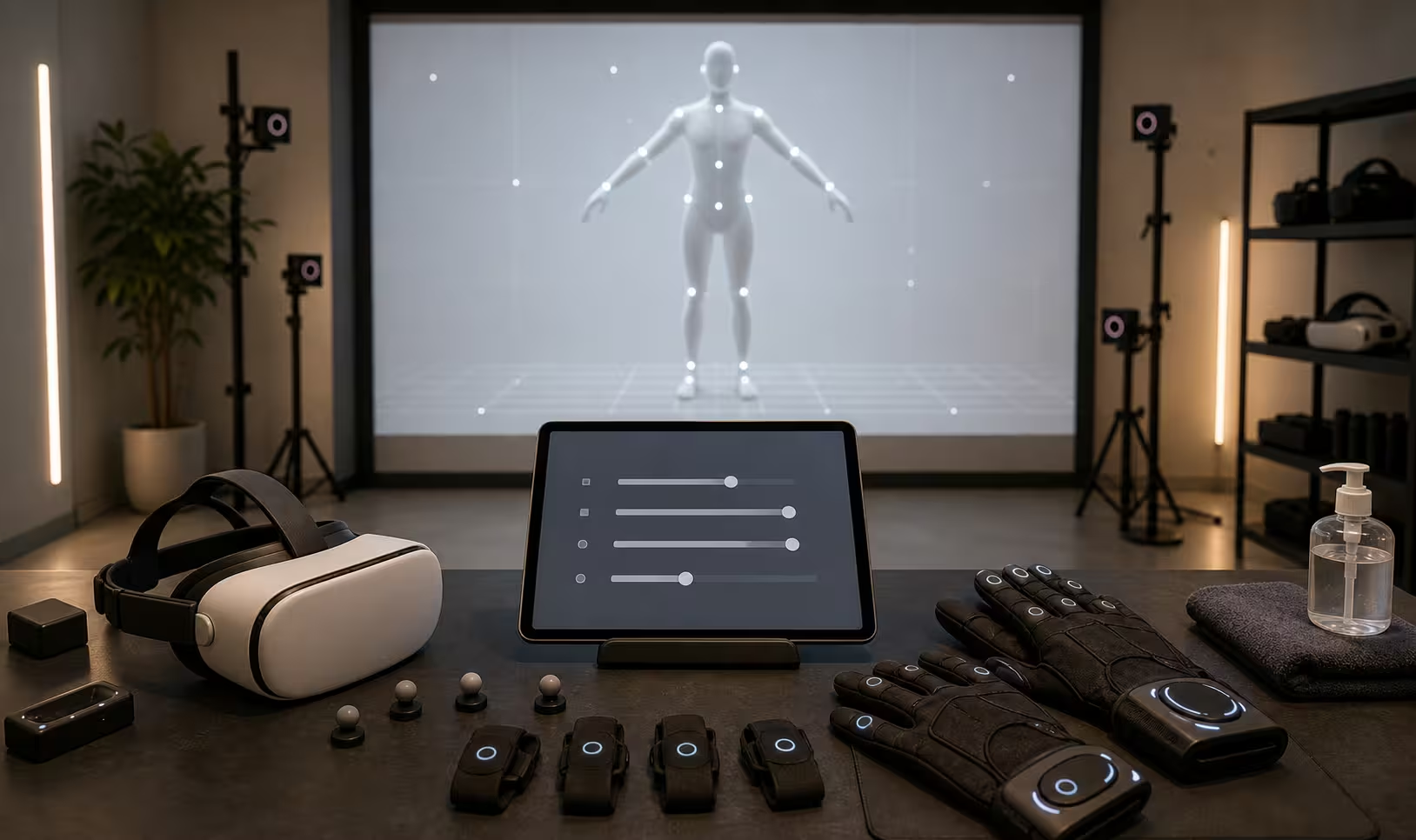
A serious full dive calibration room should ask about hearing as carefully as it asks about reach, balance, and touch. It could test direction, distance, loudness comfort, speech clarity, localization, startle response, and preferred alert styles. It could learn whether a user wants a voice slightly in front rather than directly beside the head. It could discover that a low-frequency rumble is grounding for one person and unpleasant for another.
The point is not to medicalize the experience. The point is to avoid treating a single hearing profile as normal. Accessibility in Full Dive VR argues that different bodies should be expected from the beginning. Sound is one of the places where that expectation has to become practical. A world that can only communicate through fast overlapping speech will exclude people long before it reaches the hard science fiction problems.
Good calibration should also be humble. A user’s hearing comfort may change during a session. Fatigue can make noise feel harsher. Emotional state can make voices feel closer or more demanding. A system that notices rising tension should not immediately dramatize the scene. Sometimes the better design choice is to lower acoustic density and let the user return to themselves.
Acoustic Privacy Is Privacy
Audio data can be personal in ways that are easy to underestimate. A voice can identify a person. A hesitation can reveal uncertainty. Background sounds can reveal a home, a workplace, a family member, a health device, or a private routine. In a full dive setting, acoustic traces could also include where a user listened, which voices they turned toward, which sounds startled them, and which environments helped them settle.
That makes audio part of the privacy layer, not merely the media layer. Privacy and Consent in Full Dive VR discusses body data, emotional inference, and replay. Sound belongs in that same category because it is often tied to attention and memory. A replay with spatial audio may reveal who approached whom, how close a voice came, what was said privately, and whether someone tried to leave a conversation.
Recording rules should be legible inside the world. If a conversation is being captured, the room should make that clear without relying on tiny interface labels. If a private conversation is not being recorded, the user should not have to guess. If moderation tools need access after a report, the system should avoid exposing unrelated speech and background sound whenever possible.
The hardest cases will involve shared spaces. One person’s memory aid may be another person’s surveillance. One person’s training review may include another person’s vulnerable reaction. Audio makes those conflicts feel immediate because speech carries social context that a silent log cannot.
Sound Has to Come Back to the Real Room
Reentry is often described through balance, vision, and body schema, but sound also has to return. After a dense virtual soundscape, the ordinary room may feel too quiet, too sharp, or oddly flat. After a long session with a different avatar voice, the user’s own voice may feel strange for a moment. After a world where every sound had useful meaning, real appliances, traffic, and conversations may feel messy.
Comfort and Reorientation in Full Dive VR treats exit as part of the experience. Acoustic reentry belongs there. The system can reduce layers gradually, restore the user’s ordinary voice monitoring, soften synthetic companions, and mark the difference between virtual alerts and real-world sounds. It should avoid ending a loud or emotionally intense scene by dropping the user directly into silence and notifications.
Social reentry matters too. A person may come out of a session still carrying the tone of a conversation that nobody else in the room heard. Social Reentry After Full Dive VR focuses on the return to real people. Sound is part of that return because voice is how people often ask for attention before the user is ready to give it.
The World Should Know When to Lower Its Voice
The best acoustic design in full dive VR may not be the loudest, richest, or most realistic. It may be the design that understands proportion. A training simulation may need precise cues. A shared social world may need clear distance and consent boundaries. A recovery space may need quiet that feels intentional rather than empty. A fantasy world may need voices and music that invite presence without crowding the user.
Sound can make a virtual world feel inhabited before the user sees who is there. It can make touch more believable, distance more legible, and privacy more fragile. It can also pressure, startle, expose, and exhaust. That is why the acoustic layer deserves the same seriousness as haptics, body schema, latency, and consent.
A full dive world that knows how to speak should also know how to pause. It should know when a voice is too close, when a room is too busy, when a recording is too revealing, and when silence is the most respectful feature available. Presence is not only what the system adds. Sometimes it is what the system has the discipline to leave out.