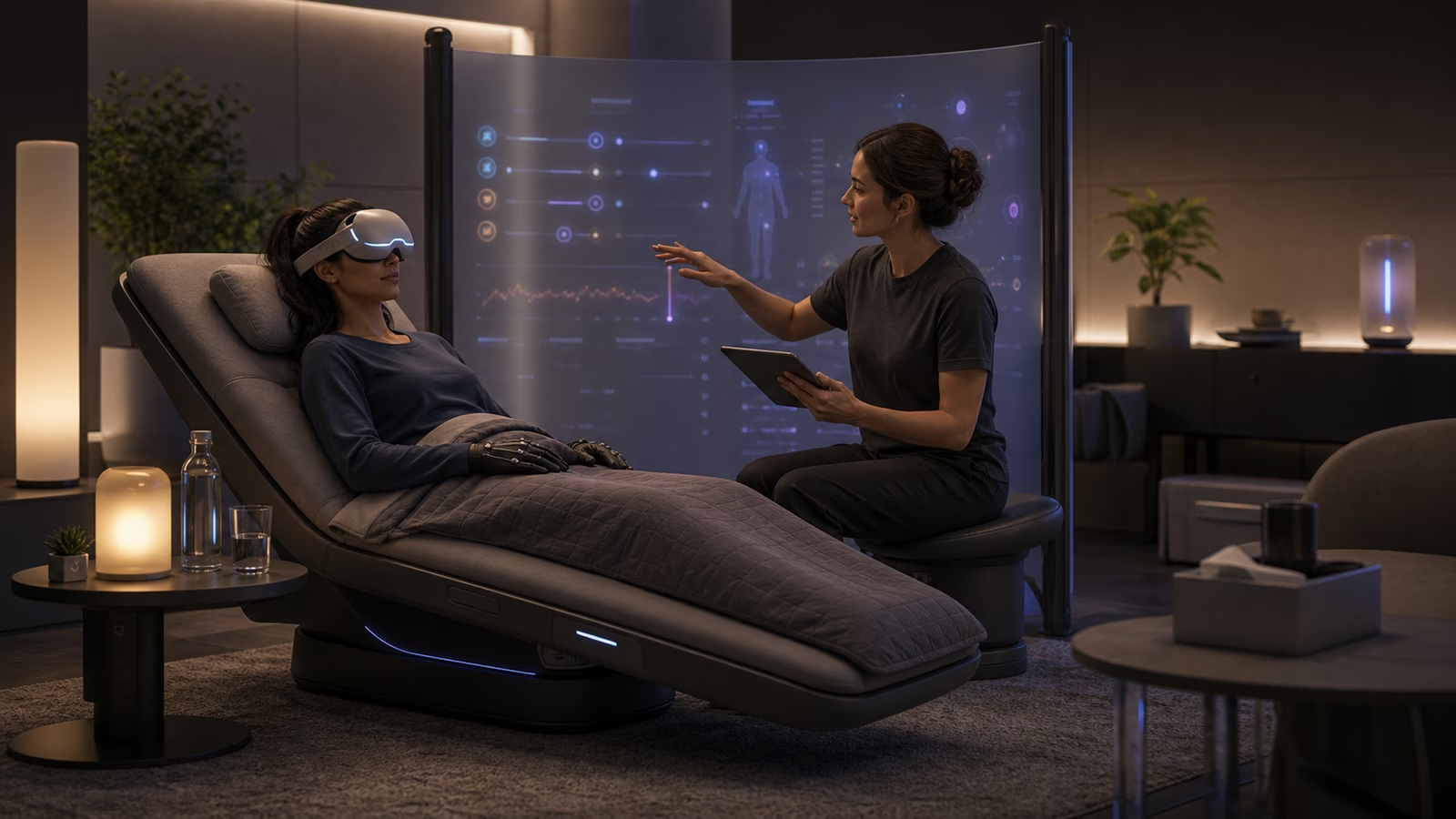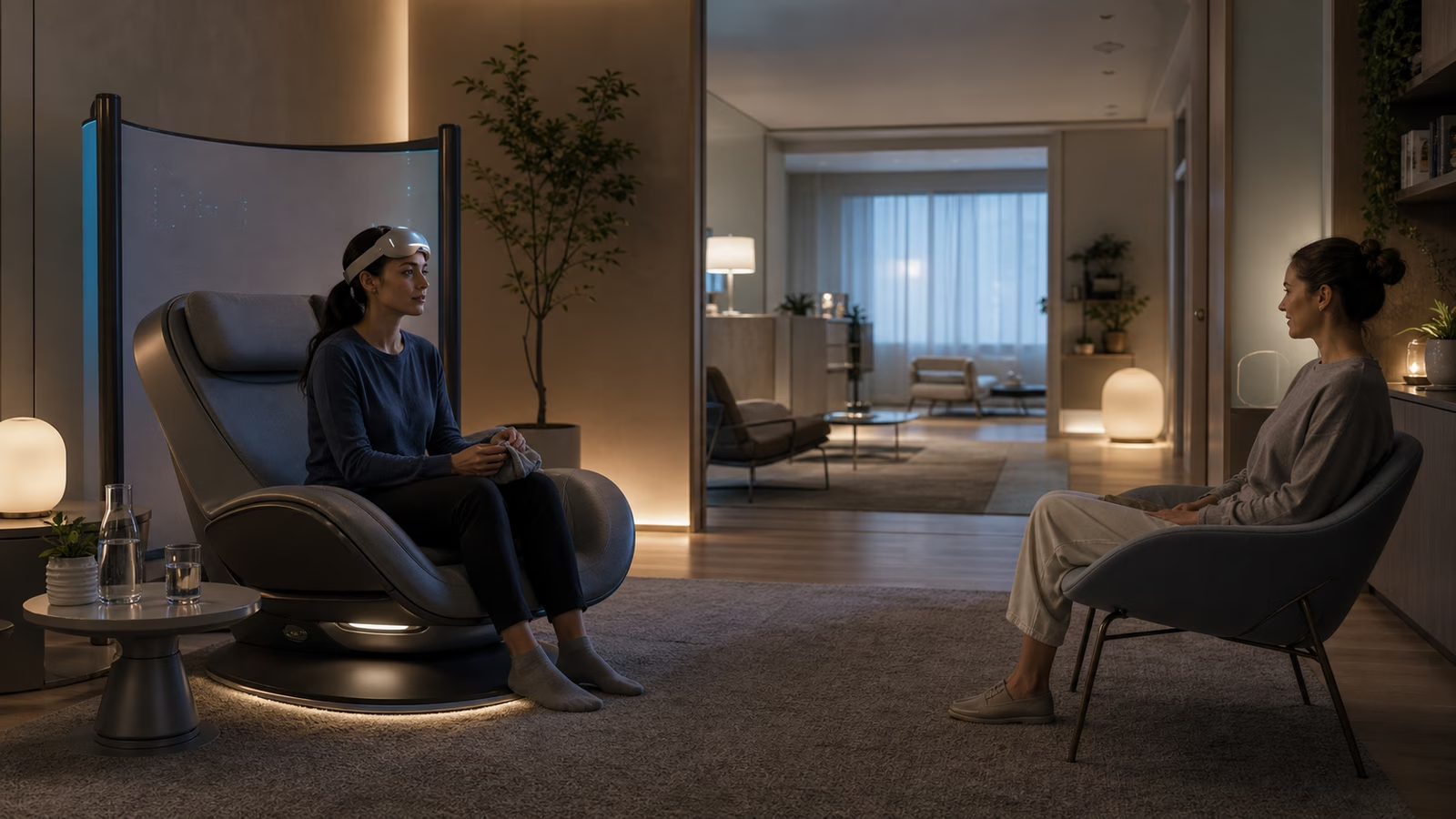
Full dive VR is usually imagined as a private threshold. The user enters, the world changes, and the ordinary room falls away. But nobody returns to ordinary life in a vacuum. A person comes back to a partner on the couch, a child asking a question, a roommate making dinner, a coworker waiting for a meeting, a clinician taking notes, or a friend who wants to know what it was like. Reentry is social before it is technical.
That social layer matters because immersive experiences do not always end when the display stops. A person may carry emotion, body memory, confusion, delight, grief, embarrassment, adrenaline, fatigue, or a strange quiet back into the room. If full dive systems ever become vivid enough to involve deep body schema, sensory substitution, memory-like scenes, or intense social presence, then the minutes after exit will deserve as much design as the entry sequence.
The question is not only how the user comes back to their body. It is how they come back to other people without being rushed, interrogated, exposed, or treated as if the experience were either meaningless entertainment or a revelation that must be shared immediately.
The First Conversation Should Not Be Forced
People often want a report. How was it? What did you see? Did it feel real? Were you scared? Did you remember everything? Would you do it again? Those questions may be innocent, but they can land too quickly. A person who has just left a powerful immersive session may not yet know what they want to say. They may need water, quiet, ordinary light, or a few minutes of not being watched.
A humane reentry system should protect that pause. It should not require the user to rate the session immediately, give verbal feedback while still disoriented, or explain an emotional response before they have returned to themselves. If another person is present, their role should be supportive rather than extractive. They can offer orientation without demanding confession.
This is especially important for social or therapeutic experiences. A user may have spoken to a synthetic person, practiced a difficult conversation, revisited a memory, inhabited another body, or trained under pressure. The person waiting outside does not automatically have a right to the details. Consent to enter an experience is not consent to narrate it afterward.
Emotional Carryover Is Real Enough to Respect
An immersive scene does not have to be physically real to create a real response. A frightening simulation can leave the body tense. A beautiful reunion with a synthetic person can leave grief behind. A training scenario can produce shame or pride. A social world can create attachment, conflict, jealousy, intimacy, or loneliness. The nervous system may not file all of that neatly under fiction.
Social reentry should make room for emotional carryover without exaggerating it. Not every strong feeling is trauma. Not every quiet exit is danger. People routinely carry emotion from films, books, games, dreams, arguments, and memories. Full dive could deepen that pattern because it may involve body-level presence rather than observation alone.
The practical response is steadiness. Give the user a way to name their state without performing it. Let them say they need time. Let them decline conversation. Let them ask for company without being analyzed. If a session was intense, the system or facilitator should normalize a gradual return rather than treating immediate cheerfulness as the only healthy outcome.
Shared Households Need Boundaries
If full dive moves into homes, reentry will become part of household life. One person may leave a vivid world and return to dishes, noise, children, pets, bills, or someone asking where the charger went. That contrast can be funny, grounding, or jarring. The household may also have its own concerns: how long sessions last, whether the user is available in an emergency, whether children can interrupt, whether guests can see the device, and whether session records are private.
Good household practice would need simple norms. A session should have visible availability rules. The user should have a way to be reached for true urgency without making every minor interruption possible. Other people should know whether the user wants quiet afterward. The user should not disappear emotionally for hours and then expect everyone else to absorb the return without context.
These are not only technical questions. They are relationship questions. A device that creates deep private worlds inside shared homes will need etiquette, not just safety warnings. The right norm will differ by household, but the need for a norm will not.
Reentry Rooms Should Feel Ordinary on Purpose
The physical room matters. A recovery space that is too clinical can make the user feel processed. A room that is too theatrical can extend the unreality. A room that immediately pushes notifications, ads, social sharing, or performance metrics can interrupt recovery. The best reentry room may feel almost boring: water, a chair, soft light, stable temperature, familiar objects, privacy, and time.
Ordinary objects are useful because they help the person rejoin the real environment. A cup of water has weight. A floor has pressure. A familiar voice has continuity. A window shows time of day. These things are not decorative. They are anchors.
If a facilitator is present, distance matters. Standing too close can feel like surveillance. Leaving too abruptly can feel abandoning. A respectful position says: you are back, you are not alone, and you do not have to explain yourself this second.
Social Data Should Not Leak by Default
Social reentry also raises privacy questions. The system may know what happened inside the session, how the user reacted, and whether the exit was smooth. Other people may be curious. Platforms may want summaries. Friends may want clips. Employers or schools may want proof of completion. Clinicians may need records under specific conditions. The temptation to turn private immersive experience into shareable data will be strong.
Default privacy should lean toward the user. A household member should not automatically see emotional metrics. A friend should not receive session highlights without consent. A workplace should not get body-response data because training was mandatory. A platform should not encourage sharing during the first vulnerable minutes after reentry.
The right to come back quietly may become one of the most important social rights in full dive. A person should be able to have an experience, end it, and decide later what it means.
Real Relationships Need Time Outside the World
Full dive could create powerful shared worlds. Friends might travel impossible places together. Families might meet across distance with more presence than a video call. Couples might inhabit dreamlike spaces. Support groups might gather in rooms designed for safety. These possibilities are not trivial.
But real relationships also need time outside the system. A person who always processes conflict through a designed environment may struggle with the ordinary mess of a kitchen conversation. A couple that prefers idealized avatars may have to return to tired bodies and chores. A friend group that meets only in heightened worlds may find ordinary silence harder. Reentry is where the glamour of immersion meets the maintenance of actual life.
This does not mean immersive relationships are fake. It means they need bridges. After a meaningful shared session, people may need ways to carry care back into ordinary routines: a message later, a quiet meal, a walk, a real apology, a practical plan. The virtual world can open a door, but the relationship still lives on both sides.
Coming Back Is a Social Skill
Future full dive systems may teach users how to enter, calibrate, navigate, and exit. They should also teach the social skill of return. That might mean setting expectations before a session, choosing whether someone waits nearby, deciding what can be shared afterward, planning decompression time, and respecting silence.
The best version is not dramatic. It is simple and humane. Before entering, the user knows who can interrupt. During exit, the system gives them time. Afterward, other people do not demand immediate access to the experience. Later, if the user wants to talk, the conversation happens with consent rather than pressure.
Full dive is often sold as escape from ordinary limits. Social reentry reminds us that ordinary life is not merely the thing to escape from. It is the place the user returns to, the place where trust is tested, and the place where the experience either becomes integrated or remains a private shock.
The future of immersion will depend not only on how real the other world feels. It will depend on whether people can come back to this one with dignity, privacy, and enough time to recognize the face across the room.