
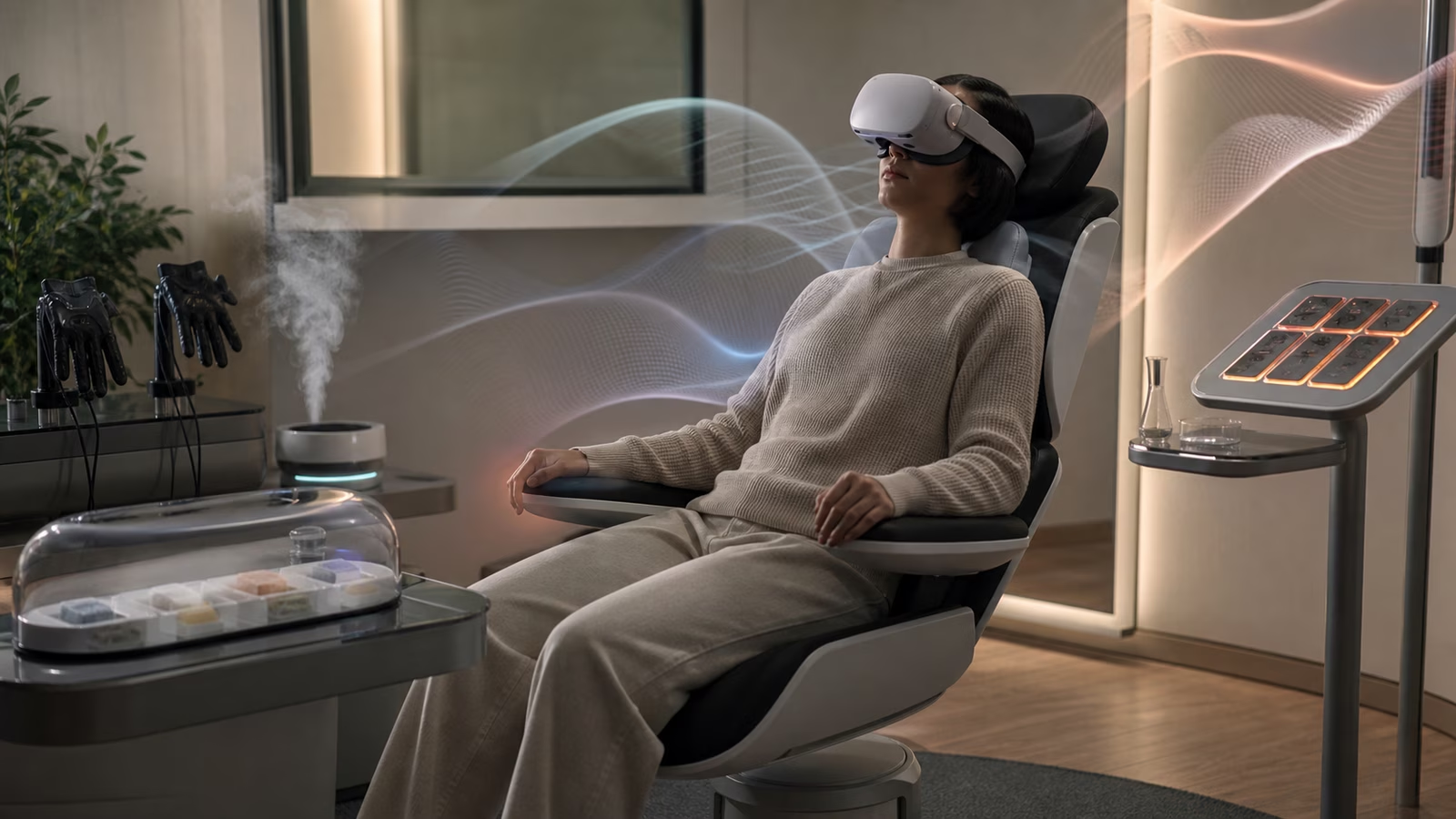
Full dive VR is usually described through sight, sound, touch, and movement. Those are the loud senses of the fantasy. The user sees another world, hears voices inside it, reaches with a virtual hand, and moves through a place that is not physically there. But some of the most convincing details may come from quieter channels: the warmth of a kitchen, the cold edge of a stone hallway, the metallic taste of fear in a training scene, the rain smell before a storm, or the stale air of a room that has been occupied too long.
Smell, taste, and temperature are easy to treat as decoration because they do not map cleanly onto screens and controllers. They are also easy to overdo. A visual effect can disappear when the user closes their eyes. A sound can be muted. A bad smell lingers. Heat and cold involve the body’s sense of risk. Taste belongs close to trust, hygiene, memory, and personal boundary. If full dive VR ever becomes persuasive enough to involve these senses, the design should be more careful than spectacular.
How Full Dive VR Might Work explains the larger input and output loop. The system reads intent and state, then writes sensation back to the user. Smell, taste, and temperature sit inside that writing problem, but they behave differently from pixels and speakers. They are slow, sticky, personal, and deeply tied to memory.
Smell makes a world feel older than the screen
Smell is one of the fastest ways to make a virtual place feel inhabited. A forest without scent can look beautiful and still feel like a rendered set. Add damp soil, pine resin, smoke from a distant fire, or the mineral smell after rain, and the scene gains a history. A workshop smells different from a train station. A hospital corridor smells different from a bakery before dawn. The scent does not need to be strong. In many cases, it should barely announce itself.
The trouble is that smell is hard to clear. A headset can change an image instantly, but a room cannot always remove one scent before another arrives. A platform that tries to make every location smell literal may create confusion, fatigue, or nausea. The user steps from a sea wall to a spice market to a spaceship engine room, and the body receives a muddy blend instead of clear context.
That is why scent in full dive should probably work more like punctuation than wallpaper. A faint cue at arrival can tell the body where it is. A shift during a scene can warn of danger, weather, food, machinery, smoke, or decay. A familiar scent can anchor a memory. But continuous scent streaming may be less useful than designers imagine. The nose adapts. The room accumulates residue. Some users are sensitive to fragrances, allergens, or associations that others never notice.
Accessibility in Full Dive VR belongs in this conversation because sensory richness is not the same as sensory intensity. A smell channel needs an off switch, lower-intensity modes, scent-free participation, and alternatives that do not mark the user as less present. A player who cannot or does not want to use scent should still understand that the air changed. A soft visual cue, an audio texture, or a haptic signal can carry the same information without making scent mandatory.
Taste should be rare, legible, and easy to refuse
Taste is even more intimate. It is not only a signal. It implies something entering the mouth, even when the mechanism is symbolic, electrical, thermal, or chemically minimal. That makes taste powerful in food scenes, survival training, memory work, and social rituals, but it also makes taste one of the easiest senses to mishandle.
A virtual meal may not need a fully simulated recipe. It may need texture, warmth, timing, smell, and a few convincing flavor anchors. A training simulation may use bitterness to signal contamination or fatigue, but it should not use unpleasant taste as a cheap proof of realism. A story may use sweetness to mark comfort or salt to mark ocean air, but it should not make the user’s mouth part of the scene without clear consent.
The important design question is not whether taste can be imitated perfectly. It is when taste earns its place. Many scenes would be better served by smell, temperature, visual detail, and social context. Taste should appear when it carries meaning the other senses cannot carry as well. It should be optional before the session starts and reversible while the session is running.
Pain and Discomfort Boundaries in Full Dive VR covers unpleasant sensation more broadly, and taste belongs near that shelf. Sourness, bitterness, dryness, heat, chemical sharpness, and nausea-adjacent cues can cross from information into punishment quickly. A humane system should describe these cues plainly. It should not hide them under a vague promise of realism.
Temperature is a trust signal
Temperature feels simple until it is wrong. A warm cup, cold rain, sun on the face, a draft under a door, or the heat near an engine can make a scene feel grounded. Temperature tells the body that objects have material reality. It also tells the body when to pay attention.
That is why thermal cues need restraint. Heat can suggest comfort, danger, illness, weather, intimacy, exhaustion, or warning. Cold can suggest freshness, fear, exposure, metal, water, altitude, or stillness. These associations are not neutral. A user may find a cold cue bracing, another may find it stressful, and another may have medical or sensory reasons to avoid it. The platform should not assume that a narrow temperature range feels the same to everyone.
In full dive, temperature also intersects with latency. A touch that warms a moment too late can feel artificial. A cold cue that continues after the virtual object is gone can feel like the world has leaked into the room. Latency, Drift, and Trust explains why small timing errors can become trust problems. Thermal feedback is a perfect example. It is slow enough to be convincing when handled gently and slow enough to become unsettling when the system loses synchronization.
Thermal design should probably favor gradients over shocks. A room can cool as a storm approaches. A handrail can feel slightly colder than the air. A campfire can warm the face from one direction while leaving the back neutral. These cues help the user understand the scene without turning temperature into a stunt.
Memory makes subtle senses powerful
Smell and taste are closely tied to memory. A scent can return someone to a childhood kitchen, a hospital visit, a school hallway, a former home, or a person who is gone. A flavor can carry culture, grief, comfort, embarrassment, status, and belonging. Temperature can remember a season, a fever, a beach, a basement, a winter commute, or the first room after waking.
That memory power can make full dive richer, but it also raises the standard for consent. A platform should be cautious when it uses personal scent or flavor profiles, especially in scenes involving grief, intimacy, therapy-like reflection, advertising, or synthetic people. A designed cue may reach deeper than the designer expects. The fact that a signal is subtle does not mean it is harmless.
Memory Rights in Full Dive VR argues that immersive records can become more like memory objects than ordinary media files. Scent and taste complicate that further. If a session saves the smell of a recreated home, who controls it? If a synthetic companion learns which scent calms the user, is that comfort data, relationship data, or persuasion data? If a platform discovers that a particular thermal cue keeps someone in a scene longer, should it be allowed to optimize around that?
The safest answer begins with modesty. Do not collect more than the system needs. Do not infer too much from a bodily response. Do not turn intimate preference into a targeting profile. Privacy and Consent in Full Dive VR is relevant because these senses can reveal habits, health-adjacent sensitivities, cultural background, emotional triggers, and private associations without the user intentionally declaring any of them.
Calibration should include the quiet senses
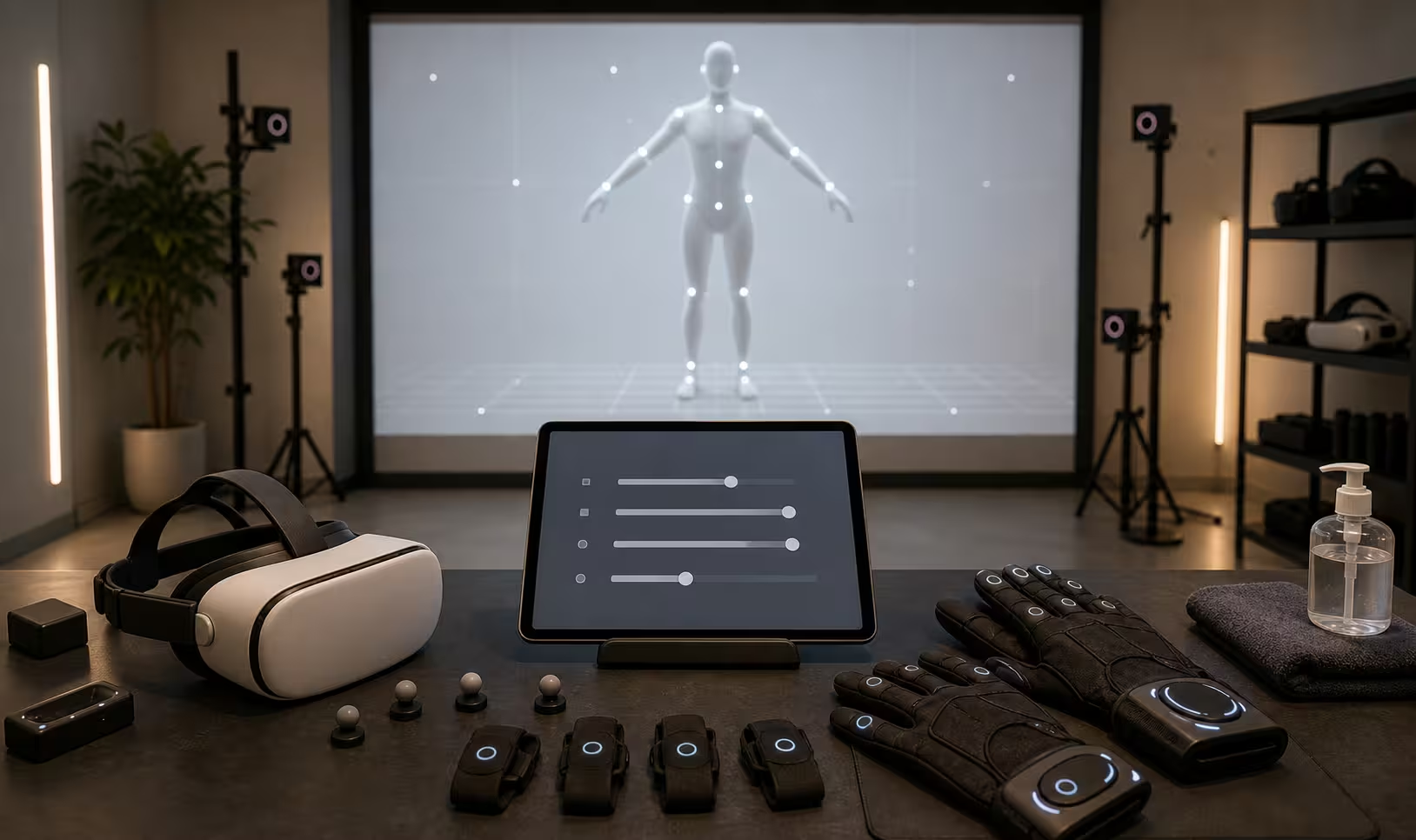
A full dive calibration room should not only ask whether the user can see clearly and move comfortably. It should also ask what the user wants omitted. Scent intensity, scent categories, flavor participation, mouth-related cues, heat, cold, humidity, air movement, and after-session clearing should be part of ordinary setup. The user should not have to wait until discomfort appears to discover that the system has assumed permission.
The Calibration Room treats calibration as the beginning of trust. Quiet senses make that trust practical. A user may enjoy forest smells but reject food smells. They may accept cool air but not facial warmth. They may allow temperature in private scenes but not in public social spaces. They may want scent turned off after a certain hour because it affects sleep or rest. These are not fussy preferences. They are the terms under which the body agrees to be addressed.
The system should also handle failure gracefully. A scent cartridge runs out. A thermal panel responds slowly. A taste cue is unavailable. The right response is not to fake certainty. The world can continue with reduced sensory channels and tell the user in plain, calm language if a cue matters for safety or comprehension. Presence is stronger when the system admits limits than when it pretends nothing changed.
Reentry means clearing the air
Coming back from full dive is not only a visual fade. The real room has to win again. If the air still smells like rain, smoke, sugar, or metal after the user exits, the session has not fully ended. If the body remains chilled or warm, the transition may feel incomplete. If taste lingers, the user may carry the world into ordinary conversation in a way they did not choose.
Comfort and Reorientation in Full Dive VR and Social Reentry After Full Dive VR both treat exit as part of the experience. Smell, taste, and temperature add a literal layer. The recovery room may need clean air, neutral temperature, water, time, and a clear break from the previous sensory palette. If another person is nearby, they should not have to guess why the user is quiet or uncomfortable because the system left a cue hanging.
The most mature use of these senses may be the least showy. It will not try to make every virtual object smell, every meal taste complete, or every landscape impose climate on the body. It will use the quiet senses where they clarify place, support memory, respect accessibility, and help the body believe just enough. It will leave them out when they would confuse, pressure, linger, or expose more than the user meant to share.
Full dive VR does not need to simulate every molecule to become meaningful. It needs to know which signals belong close to the self and treat them accordingly. The smell of rain, the warmth of a cup, and the trace of salt on the tongue can make a world feel real. They can also remind us that reality is not only vividness. It is timing, context, consent, and the right to return to clean air.


