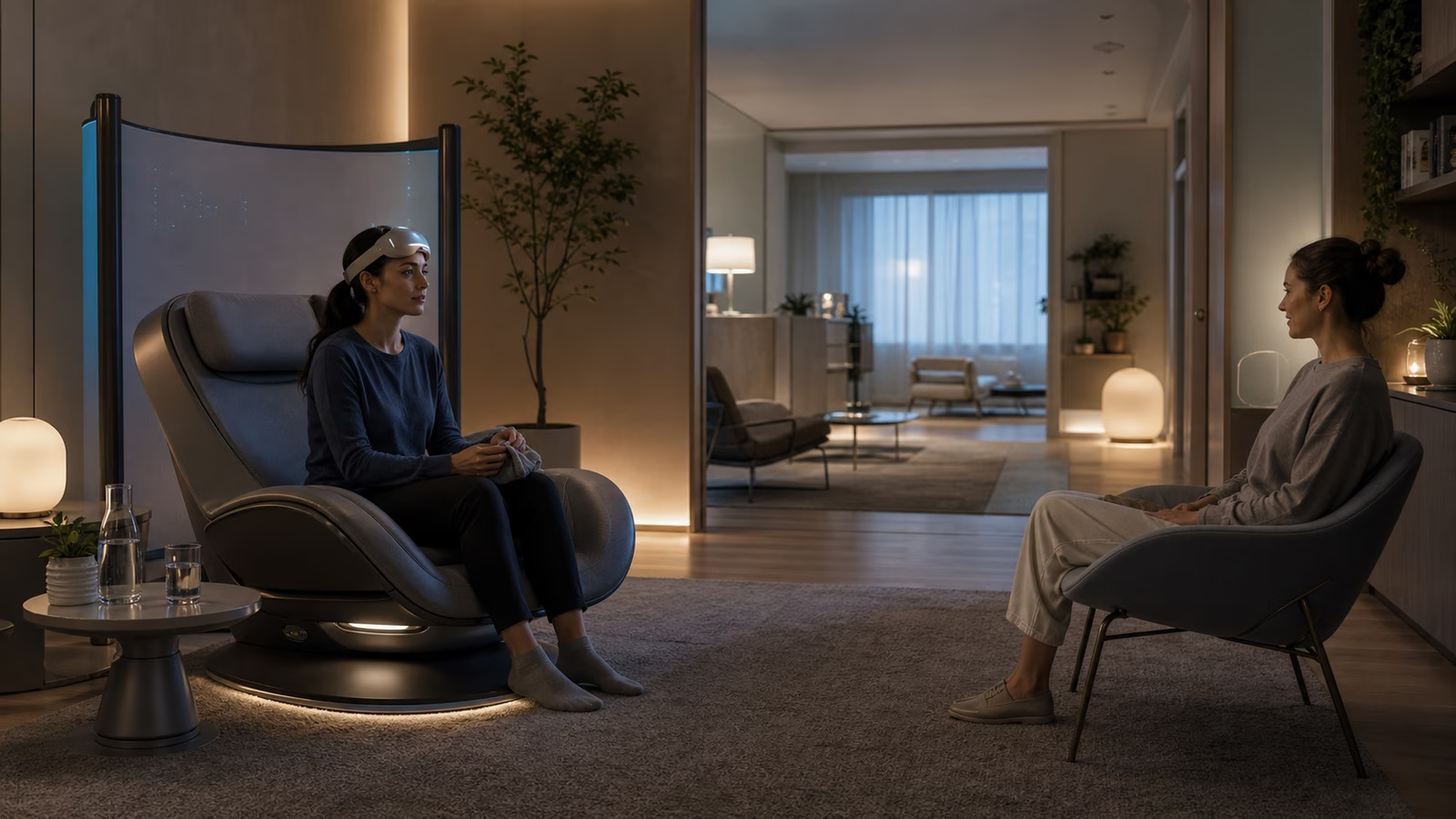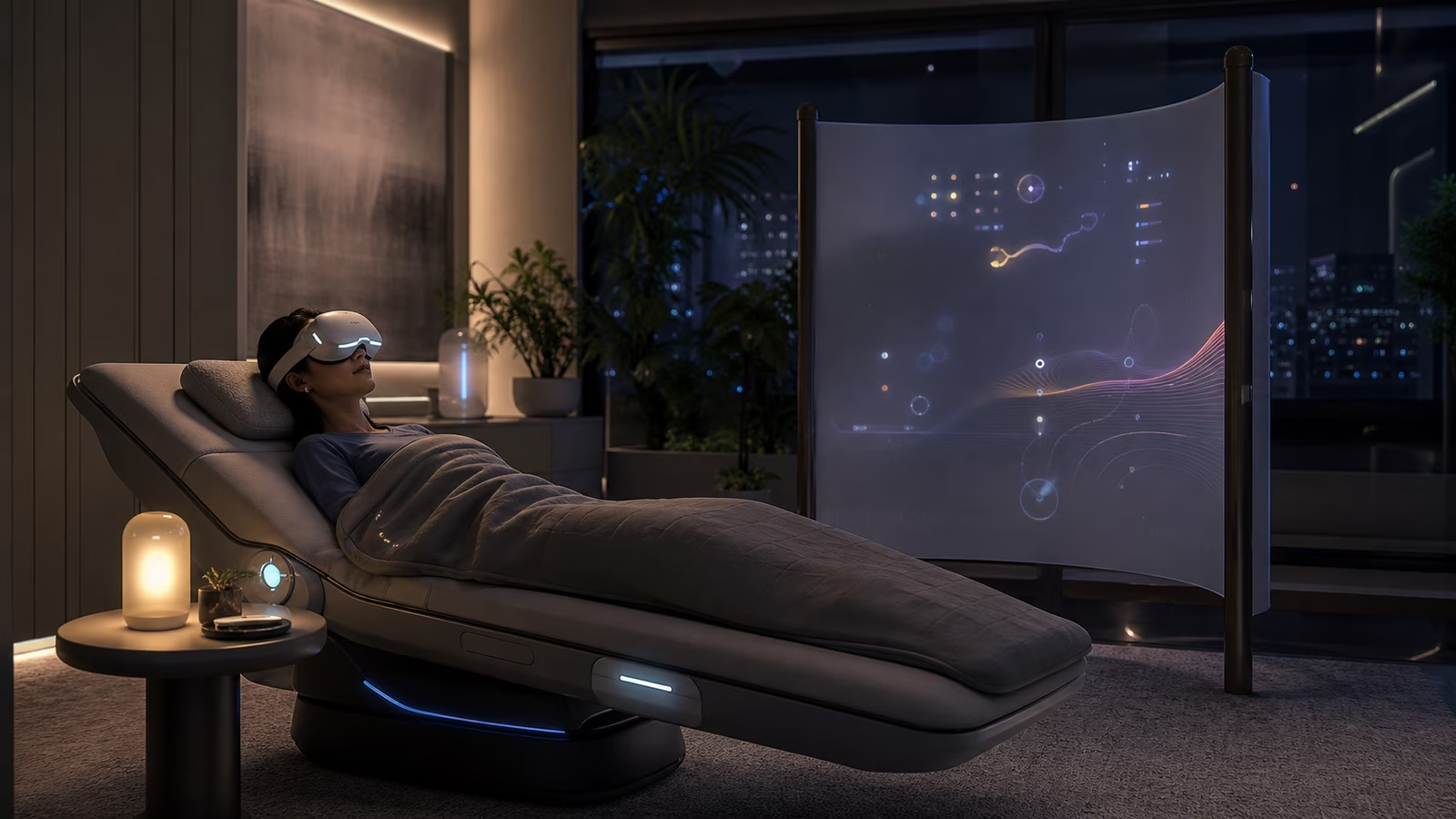
Full dive VR is usually imagined as an entry problem. How do you get in? How do you send sight, sound, touch, balance, and body position into a convincing world? How do you move without moving? How do you feel present somewhere else?
The quieter problem comes afterward. How do you rest after immersion? How does the body know the session is over? What happens when a virtual world is so convincing that the nervous system carries some of it into sleep? If full dive ever becomes real, sleep and recovery cannot be treated as passive downtime. They will be part of the safety system.
Current VR already hints at this. After an intense session, some people feel tired, overstimulated, slightly unsteady, emotionally charged, or mentally elsewhere. A headset experience does not have to be dangerous to leave a trace. A person may need a few minutes to reorient to the room, their body, and ordinary light. Full dive would likely make that transition more important, not less.
Rest Is Not Just Lack of Activity
A system designer might be tempted to call a session restful if the user is lying down. That is too shallow. A person can be physically still while cognitively and emotionally overloaded. A world can be beautiful and still demanding. A calm visual scene can still involve tracking, choice, social pressure, haptic feedback, memory, risk, and attention.
Rest is not simply the absence of running, fighting, or bright lights. Rest is a state in which the body and mind are allowed to settle. In a full dive context, that means sensory load, decision load, social load, and emotional load all matter. A gentle forest simulation may not be restful if the user is being evaluated. A quiet virtual room may not be restful if the user cannot leave. A low-motion experience may still be tiring if touch, balance, and body schema are being recalibrated the entire time.
This distinction matters because full dive would be marketed quickly as relaxation, therapy, sleep enhancement, memory practice, training recovery, and escape. Some of those uses may become helpful. Some may become exploitative. The difference will depend on whether systems measure rest by user well-being or by time retained inside the experience.
Sleep Mode Needs Strong Boundaries
The phrase “sleep mode” sounds harmless, but a full dive sleep mode would be one of the most sensitive features imaginable. Sleep is not an empty container for content. It is a biological process tied to memory, emotional regulation, immune function, hormone rhythms, learning, and recovery. A system that tries to blend immersion with sleep would need strict boundaries around what it can present, record, infer, and change.
At minimum, a sleep-adjacent experience should be easy to understand before it begins. The user should know whether the system will continue sensory output after they fall asleep, whether it will wake them, whether it will record body responses, whether it will adapt to dreams or movement, and whether another person or institution can review the session. These are not decorative consent screens. They are the terms of access to a vulnerable state.
The safest design may often be the least ambitious. A full dive system does not need to keep entertaining someone into unconsciousness. It may be better to help them wind down, gradually reduce intensity, return them to awareness of the real body, and then get out of the way. A technology that can simulate worlds should also know when not to.
Dream Overlap Is Not a Feature to Rush
The dream problem sits near the center of full dive ethics. Dreams already combine memory, emotion, sensation, fear, desire, and strange narrative without asking permission from the waking self. If immersive systems begin shaping pre-sleep experience, recording sleep-adjacent signals, or adapting to dreamlike states, they risk entering territory that is psychologically powerful and poorly governed.
It may be tempting to imagine controlled dreaming as the ultimate entertainment product. Choose a world, choose a body, choose a story, and carry it into sleep. But dream overlap raises hard questions. Does the user understand what is being influenced? Can they revoke consent afterward? How are disturbing experiences handled? Can a commercial system optimize for emotional intensity because intense dreams increase engagement? Can a workplace, school, clinic, or partner pressure someone into sleep-based training or monitoring?
A humane system should treat dream overlap as a boundary zone, not a playground. The closer an experience moves toward sleep, the more conservative it should become. The user should not be manipulated when ordinary reflective judgment is fading. Advertising, persuasion, social pressure, and experimental content should stay far away from that threshold.
The Body Needs a Return Sequence
Coming back from full dive should be designed with the same seriousness as entering it. The body may need a sequence: reduce virtual intensity, reintroduce real-body sensation, confirm orientation, restore ordinary sound, check balance, and give the user time before demanding choices. If the person has been lying still, they may need to sit up slowly. If the experience involved another body, scale, gait, or sensory range, they may need to feel their own body again before standing.
This is not only a comfort issue. It is a trust issue. A system that drops someone abruptly from a vivid world into a dark room has failed the return. A system that pressures the user to rate the experience, purchase an upgrade, answer messages, or rejoin another session before they are fully back has confused business goals with care.
The return sequence should be especially careful after emotional scenes, social conflict, intense training, fear, grief, or pain simulation. Even if the sensations were artificial, the user’s response was real enough to matter. The nervous system does not always care that a scene was rendered.
Recovery Data Is Sensitive
Recovery periods would generate valuable data. How long does someone take to settle after immersion? Which scenes leave them activated? What kind of body do they return from easily? Which voices calm them? Which stimuli make them tense? How does their sleep change after different experiences?
That data could improve safety. It could also become a map of vulnerability. A platform might learn when a person is easiest to influence. An employer might infer stress tolerance. An insurer might draw conclusions from sleep changes. A school might monitor attention recovery after training. A game company might optimize cliffhangers at bedtime.
Privacy rules should treat recovery data as intimate. The fact that information is useful for personalization does not mean it should be stored indefinitely, shared broadly, or used for persuasion. Local processing, short retention, user-readable summaries, and clear deletion rights become more important as systems approach sleep and recovery.
Rest Worlds Should Not Become Obligations
There is also a social risk. Once immersive recovery tools exist, institutions may begin to expect their use. A workplace might provide full dive decompression after stressful tasks while ignoring the causes of stress. A school might assign sleep-supported learning. A sports program might monitor recovery compliance. A platform might reward users for maintaining streaks in relaxation worlds.
Rest that becomes compulsory stops being rest. A recovery world should not become another place where a person performs wellness for a dashboard. The more intimate the technology, the stronger the right to refuse should be.
This applies inside families and relationships too. A person should not be pressured to share sleep logs, dream-adjacent experiences, calming routines, or post-immersion reactions just because the system can produce them. The boundary around rest is partly technical and partly cultural. People need permission to be unavailable, unrecorded, and unoptimized.
The Best Recovery Feature May Be an Ending
Full dive stories often celebrate endlessness. Infinite worlds. Infinite bodies. Infinite training. Infinite replay. Sleep and recovery remind us that humane systems need endings. A session should be allowed to finish. A world should release the user. A body should return to itself. A mind should have time in which nothing is being rendered for it.
This does not make full dive less interesting. It makes it more believable as a technology people could live with. The systems that earn trust will not be the ones that hold attention at all costs. They will be the ones that know when attention should be given back.
Sleep is the daily proof that humans are not always available for experience. We close the door, lose the room, and let the body do work that consciousness cannot supervise. Any future immersive system that approaches that door should do so with humility.
Full dive may one day offer extraordinary worlds. It should also protect the ordinary miracle of coming home tired, sleeping without being watched, and waking up as yourself.