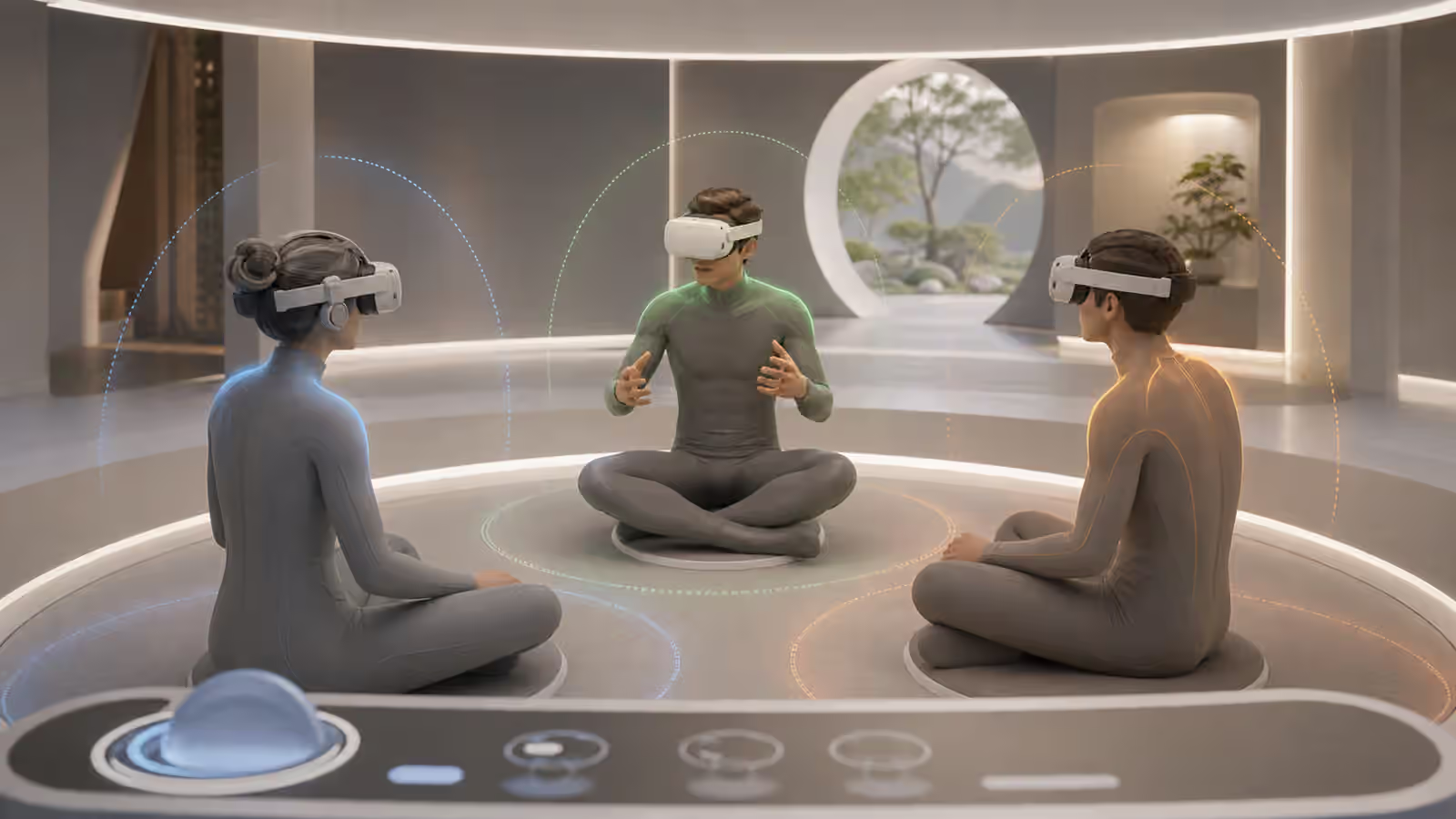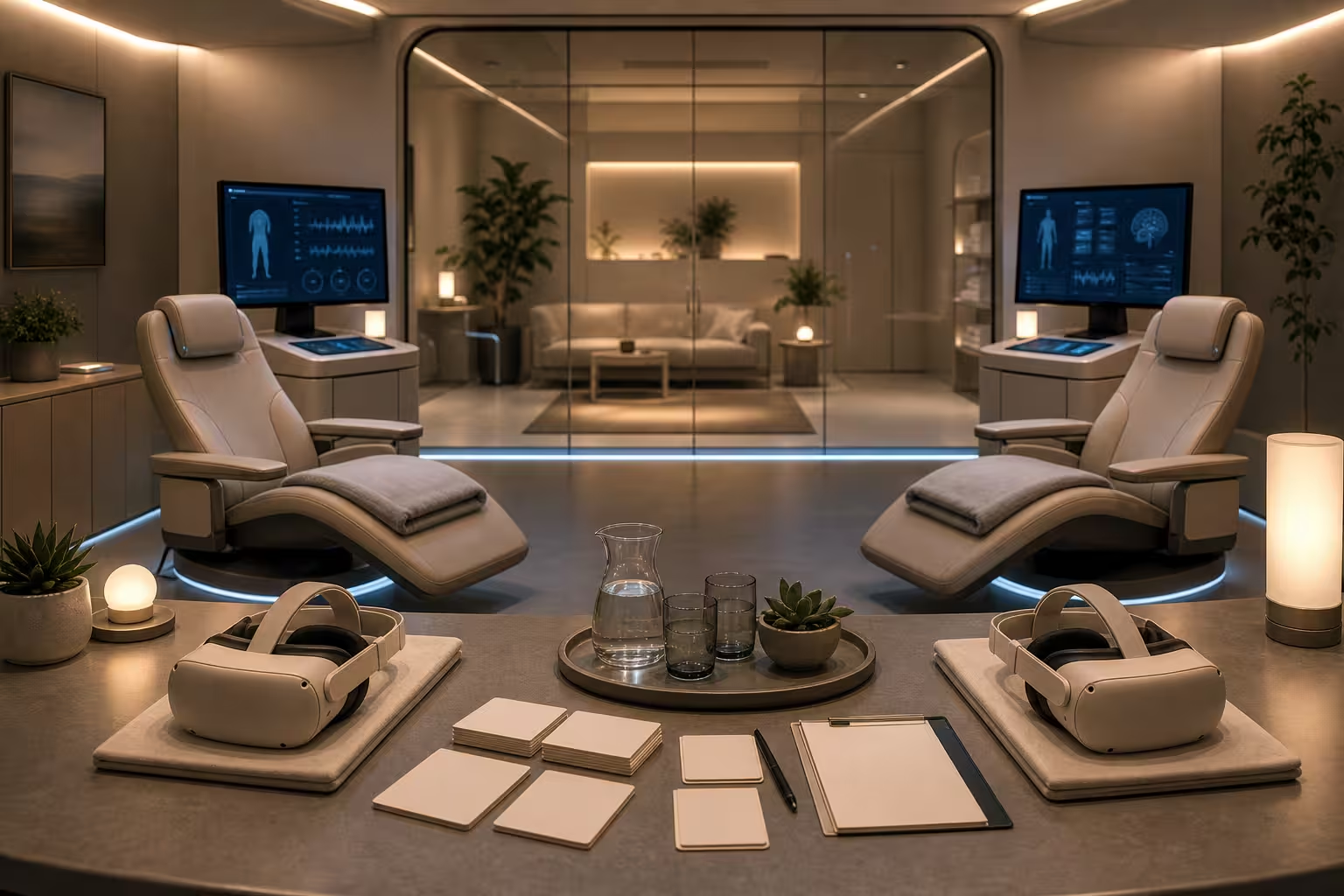
Full dive VR becomes much harder the moment another person enters the world.
A private simulation can be judged by comfort, sensory believability, memory, calibration, and safe return. A shared simulation has all of those problems plus the oldest problem in human life: other people. They bring intention, surprise, affection, pressure, awkwardness, status, deception, kindness, cruelty, and the need for boundaries that still work when the environment feels real.
That is why shared full dive VR should not be imagined as ordinary multiplayer gaming with stronger graphics. If a system can create convincing presence, touch, space, voice, body ownership, and memory, then social design becomes safety design. The question is not only whether two users can meet in the same virtual room. It is whether each person can remain meaningfully themselves while meeting there.
Presence changes the social contract
Today’s online worlds already create real social consequences. People form friendships, communities, rivalries, reputations, and grief around spaces that outsiders may call imaginary. Full dive VR would intensify that because presence is not only visual. It is bodily.
If your nervous system accepts a virtual room as a place, then distance matters. If your simulated body feels like your body, then touch matters. If sound, movement, and attention feel close to life, then embarrassment, intimacy, fear, and trust can become more powerful. A joke that works in a flat chat window may feel invasive in a full sensory environment. A stranger standing too close may not be a visual annoyance. It may feel like a body problem.
Designers often talk about immersion as if more is always better. Shared worlds prove that immersion needs boundaries. Believability without control can become a trap. The user needs to know where they are, who is present, what can happen, what cannot happen, and how to leave without negotiation.
Consent has to be built into the room
Consent in full dive VR cannot be reduced to a terms-of-service checkbox. The user should not have to read a legal wall before entering a world and then rely on memory once overwhelmed inside it. Consent has to be part of the room’s behavior.
A shared full dive system would need clear defaults for proximity, touch, private space, recording, identity display, sensory intensity, and emergency exit. It would need ways to grant permission gradually. Let someone approach. Let someone hear you. Let someone touch your avatar’s hand. Let a trusted friend enter a private scene. Let a therapist or trainer use a controlled protocol. Each permission should be understandable before it is granted and reversible after it is granted.
The deeper the immersion, the less acceptable it becomes to bury controls. A user should not need to navigate a complicated menu while distressed. The exit should be stable, simple, and always available. A boundary should not depend on whether the other participant behaves well. The system itself should enforce it.
This is not an argument against social immersion. It is the condition that makes social immersion humane.
Identity will be more than an avatar
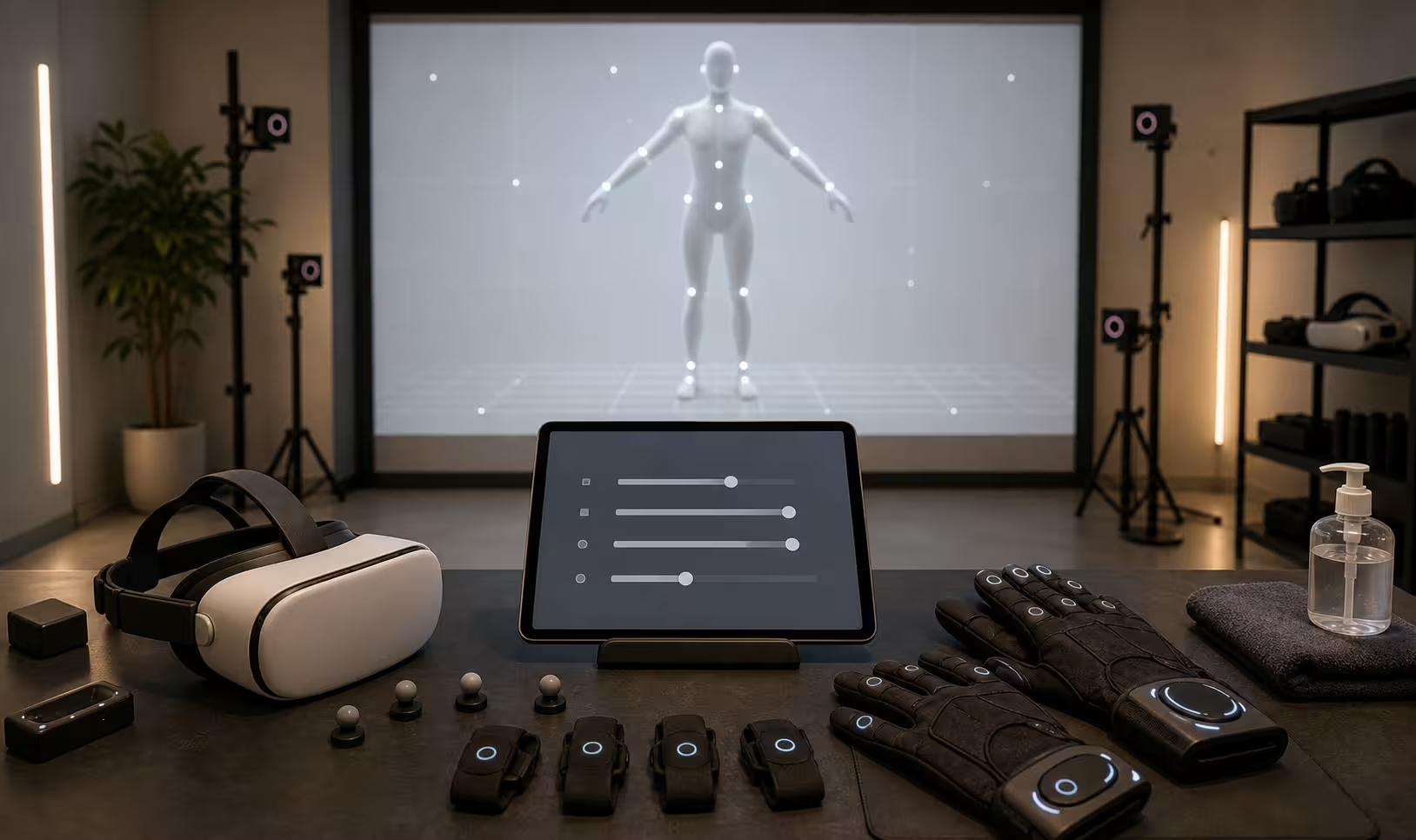
In ordinary virtual worlds, identity is already layered. A person has an account, a name, a voice, a style of movement, a friend network, a reputation, and sometimes a body they choose carefully. Full dive VR could add deeper signals: posture, reaction timing, comfort thresholds, biometric patterns, gaze behavior, emotional responses, and the memory trace of what someone experienced.
That makes identity both richer and more vulnerable. A user may want to appear as a different age, gender, species, body type, or entirely abstract form. That freedom can be liberating. It can also create confusion around trust, age-appropriate spaces, impersonation, harassment, and accountability.
The solution is not forcing everyone into legal-name realism. A world where every identity is flattened into paperwork would waste much of what virtuality can offer. But anonymity without structure can become unsafe. Shared full dive worlds need identity layers that fit context. A casual public plaza, a classroom, a medical therapy room, a workplace training simulation, and a private world with friends should not all use the same disclosure rules.
The guiding question is simple: what does another participant need to know to consent to this interaction, and what does the user have a right to keep private?
Moderation cannot arrive late
Moderation in full dive VR would have to operate before harm becomes severe. Waiting for a report after a frightening or invasive sensory event may be too late. The system should shape the possible behavior of the world, not only punish after the fact.
That might mean personal space buffers, default non-contact between strangers, quick muting and fading tools, context-aware exits, session recording rules that protect users without creating surveillance nightmares, and escalation paths that involve trained humans when necessary. It might also mean designing public spaces with social friction that helps people regulate themselves: visible entrances and exits, clear zones, and norms that are taught through the environment.
The hardest cases will not be obvious villains. They will be ambiguous pressure. A friend wants a longer session than you do. A group makes leaving feel rude. A teacher, boss, therapist, coach, or host has authority inside an immersive space. A romantic partner asks for access you once granted but no longer want. Full dive VR will need to respect the quiet difficulty of saying no.
Good moderation is not only enforcement. It is architecture that makes healthy choices easier.
Shared memory needs limits
A shared immersive session may leave traces. There may be logs, recordings, sensory summaries, biometric safety data, training metrics, or memory aids. Some traces are useful. A medical or therapeutic session may need documentation. A training simulation may need performance review. A social world may need moderation evidence. A user may want a personal record of a beautiful experience.
But memory rights become delicate when the experience felt lived. Who can replay a shared moment? Can one person export a recording that includes another person’s embodied reactions? Can a platform analyze emotional responses to improve engagement? Can an employer review hesitation, fear, or confusion inside a training world? Can a user delete a session trace after a relationship changes?
The more full dive VR resembles experience, the more recordings resemble memory. That means consent should apply not only to entering the world, but to what remains after leaving it.
The exit is part of the social world
Coming back from a full dive session should not be treated as a technical afterthought. In shared worlds, exit design also protects relationships. A user may need to leave because they are tired, overstimulated, uncomfortable, bored, afraid, or simply done. The system should not make that departure feel like a dramatic rejection unless the user chooses to explain.
A graceful exit might fade the user to a private reorientation room, notify others neutrally, summarize the session, and give the user a chance to block, report, save, delete, or reflect before returning to ordinary life. The point is not to make every session therapeutic. The point is to recognize that deep presence needs a landing.
If a world is easy to enter but hard to leave, it has failed a basic test.
The shared world worth wanting
The promise of shared full dive VR is not only spectacle. It is presence across distance. A grandparent might visit a remembered kitchen with a grandchild. A student might learn inside a historical reconstruction with classmates. Friends separated by oceans might sit together in a place that feels less like a video call and more like a room. Patients, artists, engineers, and players might share experiences that flat media cannot carry.
That promise is real enough to take seriously. It is also powerful enough to need restraint.
The future social room should not ask users to trust the platform blindly. It should show them the boundaries before the session begins, preserve those boundaries inside the world, and honor them after the session ends. Shared immersion will be judged not by how vividly it can make another person appear, but by whether it lets both people remain free to choose the encounter.
Full dive VR does not become social when two bodies appear in the same simulation. It becomes social when the world understands that bodies need dignity.