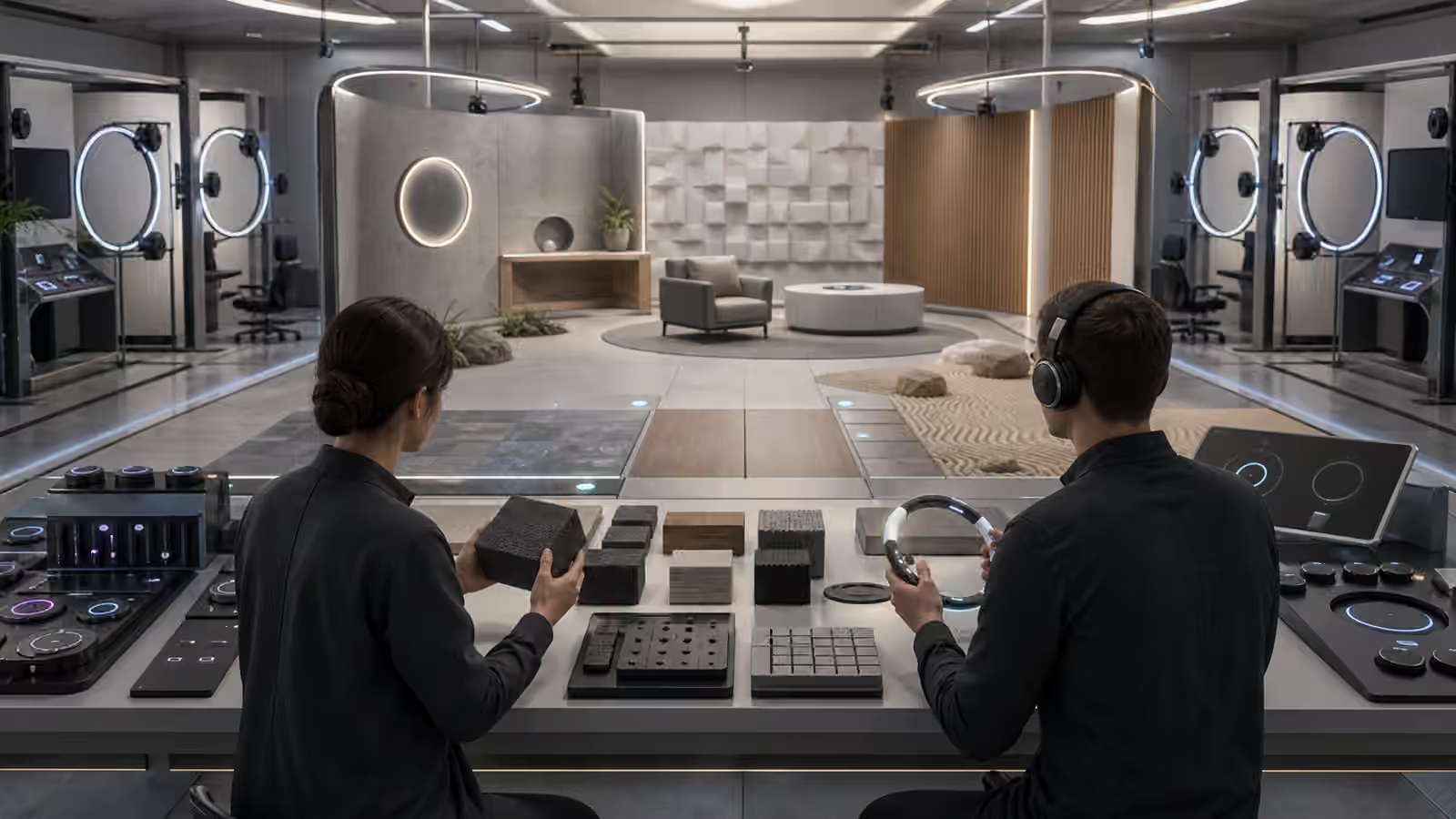
The least glamorous part of full dive VR may be one of the most important: the equipment has to be ready for the next body. Headsets, haptic gloves, sensor pads, chairs, straps, liners, neural-interface headbands, scent modules, thermal surfaces, audio seals, and room fixtures all age. They collect wear, sweat, dust, skin oils, hair products, cleaning residue, calibration history, and small mechanical changes that only become obvious when a session feels wrong.
The fantasy often begins with a doorway into another world. The real practice begins with a maintenance bench.
The Room Outside the World treats the physical room as part of immersion safety. Shared equipment belongs to that same physical layer. A full dive system can have excellent software and still lose trust if the glove fit is poor, the chair holds the previous user’s shape, a thermal pad responds slowly, or a headset smells like cleaning fluid. Maintenance is not separate from experience. It is the condition that lets experience begin without suspicion.
Shared Gear Changes the Social Contract
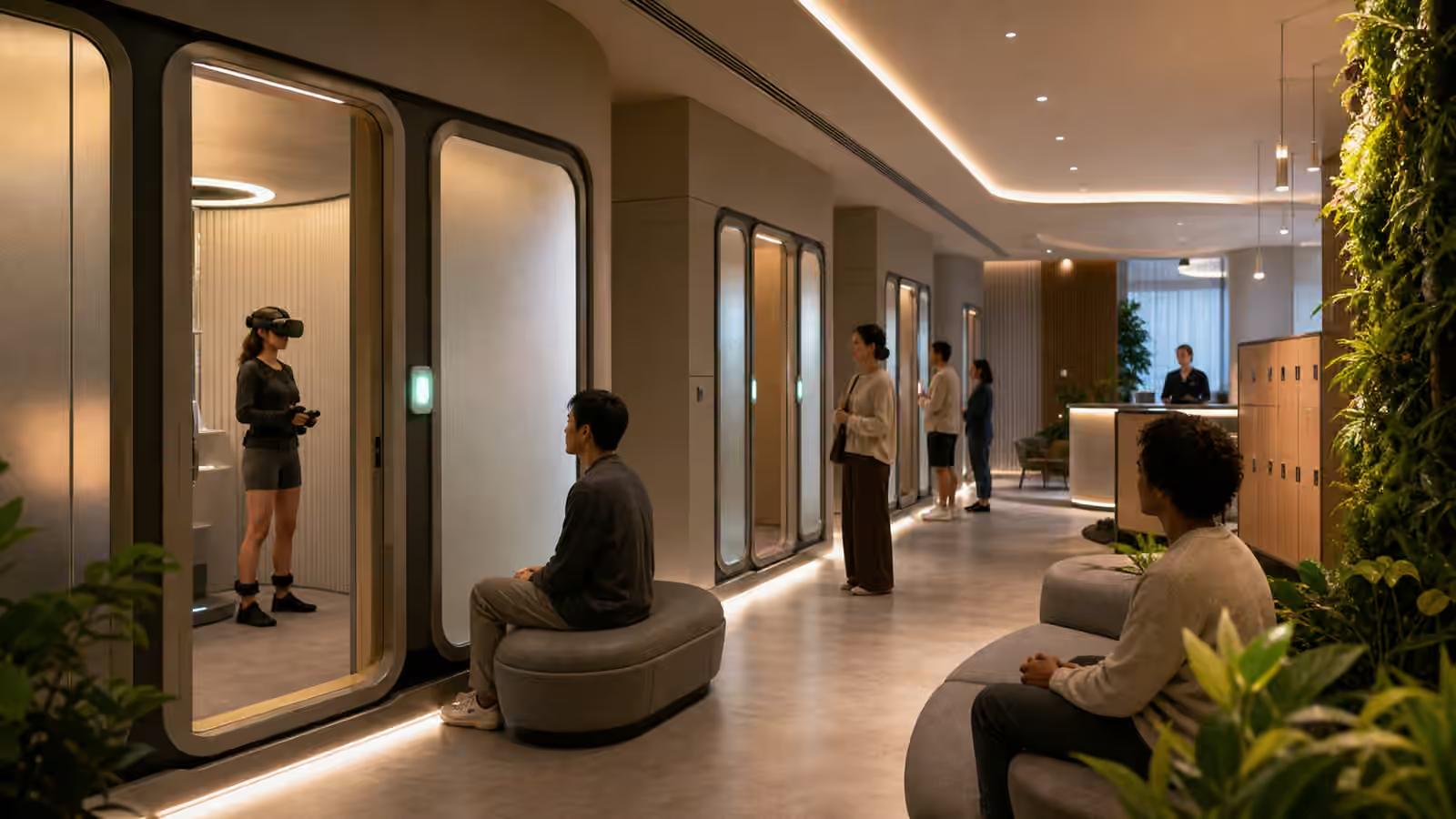
A personal device can adapt to one user over time. Shared gear has to welcome many bodies without making any of them feel like an exception. That is harder than it sounds. Hands differ. Hair differs. Skin sensitivity differs. Some people use mobility aids. Some need seated transfer space. Some cannot tolerate pressure on certain areas. Some need more time to put equipment on without being watched. Some need a scent-free or low-residue setup.
If shared equipment is treated like a costume rack, full dive VR will fail people before the world loads. The system should assume variation. Replaceable liners, adjustable supports, alternate input surfaces, cleanable materials, and visible readiness states all matter. So does the way staff talk about the equipment. A user should not have to apologize for needing a different strap, a larger glove, a lower chair angle, or a quieter sensory module.
Accessibility in Full Dive VR explains why different bodies need to be designed in from the start. Maintenance is where that principle becomes ordinary. It is not enough to have an accessible mode hidden in software. The physical kit has to be available, charged, clean, calibrated, and presented without drama.
Clean Does Not Mean Harsh
Hygiene is easy to oversimplify. Clean equipment should not feel damp, chemically loud, abrasive, sticky, or over-scented. A device that is technically sanitized but unpleasant to wear can make the user tense before the session begins. A strong cleaning odor can interfere with Smell, Taste, and Temperature in Full Dive VR or create discomfort for sensitive users. A residue on haptic gloves can change touch. A stiff liner can alter pressure.
The right standard is not theatrical cleanliness. It is dependable readiness. Materials should be chosen because they can be cleaned without degrading quickly or leaving confusing sensory traces. Parts that touch skin should be easy to inspect and replace. Staff should know when a component is ready, when it is drying, when it needs deeper service, and when it should be retired. The user should not need to guess.
This also affects dignity. No one wants to feel that their body is a contamination problem. Maintenance design should make cleaning routine and impersonal. The room resets because every session deserves a clean start, not because a particular user was difficult.
Fit Is a Safety Signal
Poor fit can look like a comfort issue while behaving like a safety issue. A loose hand tracker may create drift. A tight strap may distract the user from a social scene. A chair that supports one body well may strain another. A haptic surface that misses a fingertip can make virtual contact feel unreliable. Small physical mismatches can become immersive mistrust.
Latency, Drift, and Trust in Full Dive VR focuses on timing and calibration, but hardware fit is one of the places drift begins. The software may believe the glove sits correctly. The user’s hand may know otherwise. The system may compensate for a while, then fail during a reach, grab, or boundary cue. If that failure happens during a calm scene, it is annoying. If it happens during training, social touch, or an exit, it can become more serious.
Fit should therefore be checked as part of the session, not treated as a prelude everyone rushes through. The user should be encouraged to report pressure, looseness, smell, heat, sound leakage, or awkward contact early. A well-run full dive room would rather spend two extra minutes adjusting gear than spend twenty minutes explaining why the world felt wrong.
Calibration Drift Can Be Physical
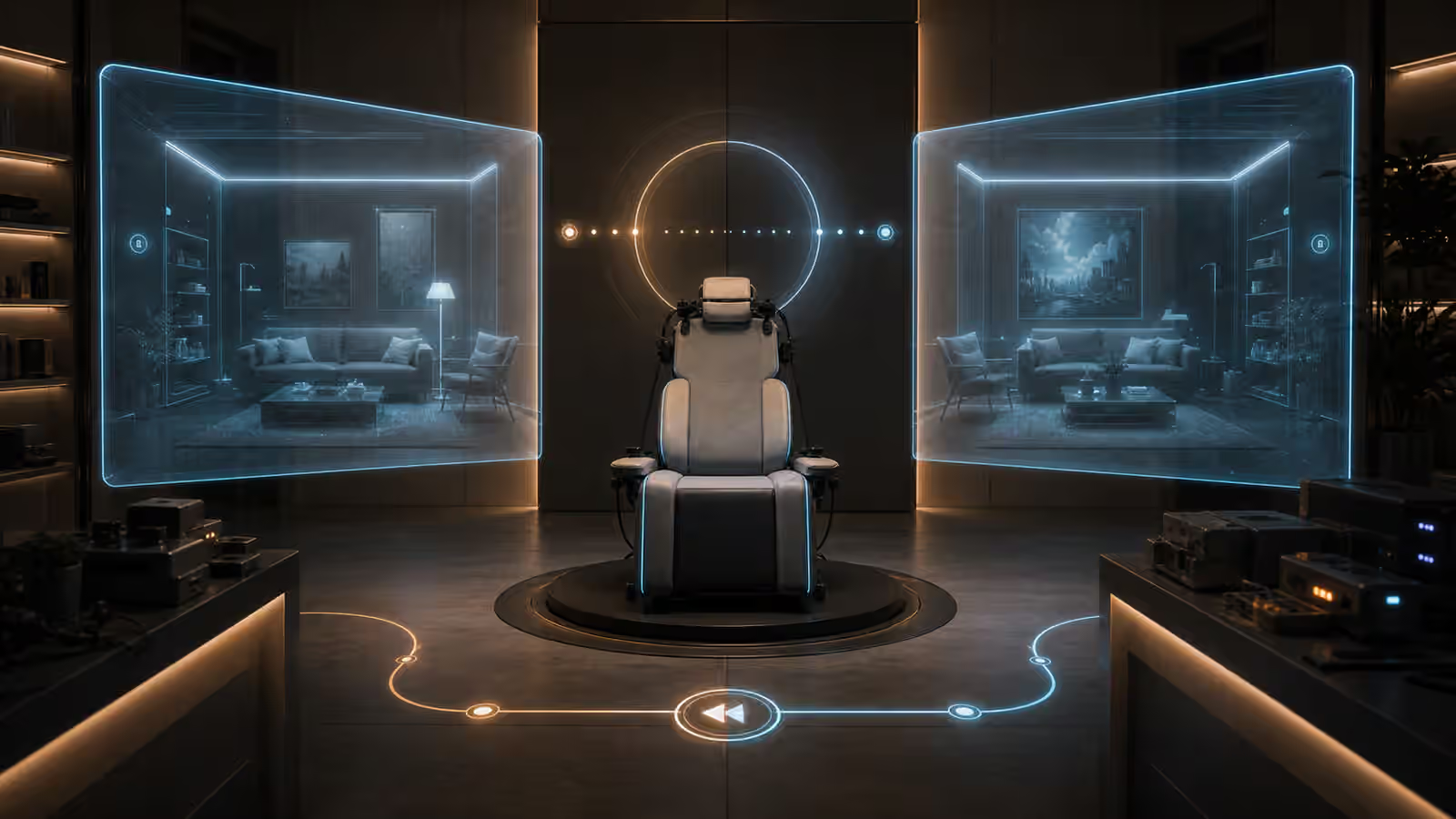
People often imagine calibration as a file. The system learns the user’s body map, sensory thresholds, reach, comfort settings, and preferred intensity. Calibration Profiles in Full Dive VR asks which parts of that profile should travel. Shared equipment adds a second question: what if the hardware has changed since the profile was created?
A glove sensor wears. A strap stretches. A pressure pad compresses. A thermal element slows. A scent module weakens. A chair motor becomes noisy. The profile says one thing, the hardware does another. The user may blame themselves because the system says calibration is valid, while the real problem is a small material change.
Maintenance records can help, but they should be scoped carefully. The room needs to know when equipment was serviced, cleaned, replaced, or flagged. It does not need to expose the identity or body details of prior users. The gear’s history should support reliability without becoming a social ledger of who used what.
Downtime Should Be Respected
A full dive facility that treats every device as always available will eventually pressure staff to use marginal equipment. That is a bad habit. Downtime should be part of the design. A haptic glove can be unavailable. A chair can require inspection. A scent module can be removed from service. A headset can fail a fit check. The user experience should handle that gracefully instead of quietly lowering standards.
This may mean offering a reduced-sensory session, moving to another room, rescheduling, or explaining that a feature is not available. A truthful limitation is better than a hidden compromise. Presence is fragile when the body is asked to trust hardware. If the system knows a component is uncertain, it should not pretend certainty.
Comfort and Reorientation in Full Dive VR argues that comfort settings are not a weakness in the experience. Maintenance limits are similar. They are signs that the platform understands its own material reality.
The User Should See Readiness, Not Backstage Chaos
There is a balance between transparency and burden. Users should know that equipment is clean, fitted, and appropriate for the session. They should be told if a feature is unavailable. They should have a way to reject a component that smells wrong, feels wrong, or looks worn. They should not have to audit the facility themselves or read a technical maintenance log before relaxing.
Good operations make readiness visible in simple ways. The room is orderly. Replacement parts are nearby. Staff move calmly. The equipment fits without a scramble. The session does not begin until the physical setup is stable. The user is not shamed for noticing a problem.
Full dive VR will be judged by its deepest illusions, but it will be trusted through ordinary care. A clean liner, a glove that fits, a chair that supports, a scent module that does not linger, and a staff member willing to pause for adjustment may do more for immersion than another layer of graphics. The world begins before the world appears.