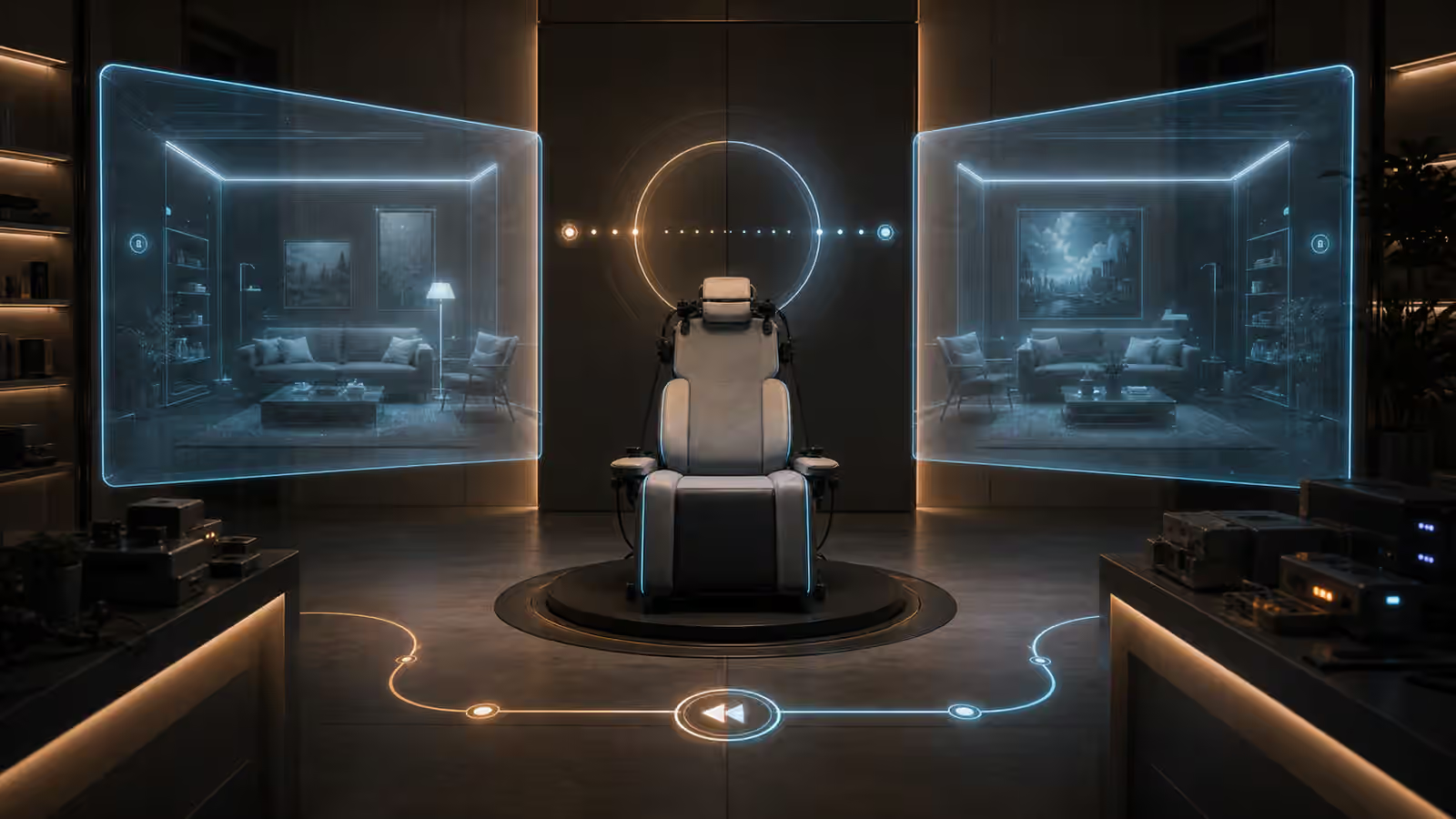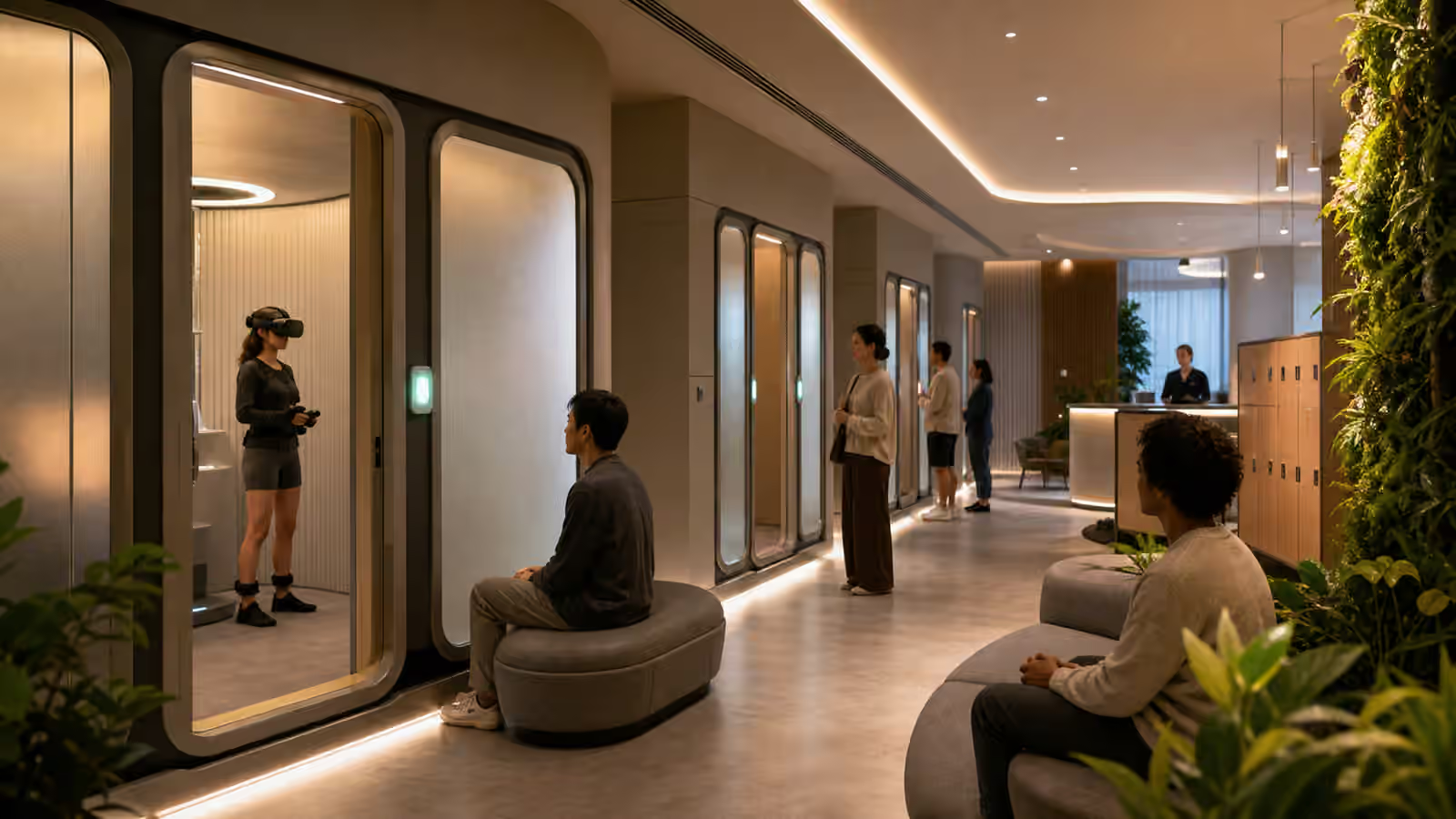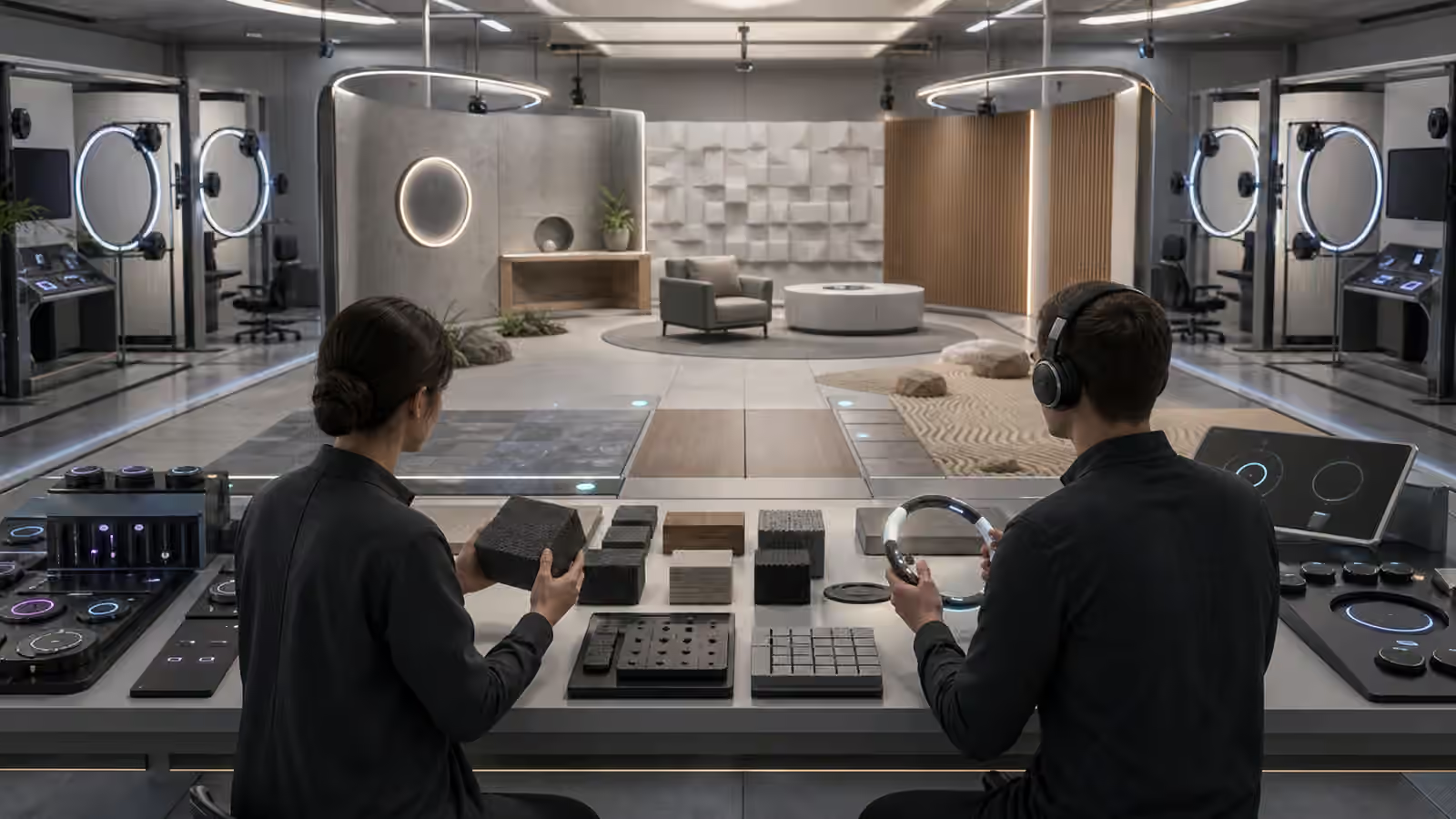
Full dive VR quality assurance would not be only a search for crashes. A world can load correctly and still be unsafe, exhausting, confusing, manipulative, or badly tuned for bodies unlike the designer’s own. The test plan has to include sensation. It has to ask what the scene does to attention, balance, touch, sound, timing, consent, reentry, and memory.
Research Prototypes and Beta Testing in Full Dive VR covers the responsibility of early trials. Sensory QA is the quieter discipline that should exist before a world reaches ordinary users. It is the craft of asking whether the experience behaves as promised across bodies, sessions, settings, and updates.
A Scene Can Fail Without Breaking
Software teams are used to bugs that announce themselves. A button does not work. A server returns an error. A model gives an impossible state. Sensory failures can be subtler. A sound may be technically correct but tiring after twenty minutes. A touch cue may arrive slightly late and make the virtual hand feel untrustworthy. A reentry room may work for calm sessions but feel abrupt after a conflict. A warning may exist but appear after the user has already crossed the relevant boundary.
Latency, Drift, and Trust in Full Dive VR shows how small timing errors can damage trust. QA needs to treat those errors as first-class issues. The question is not only whether a feature functions. It is whether the user’s body can rely on it.
This changes the shape of testing. A sensory test should include repetition, duration, transition, and recovery. It should test the opening minute and the thirtieth minute. It should test the first exposure and the return after familiarity. It should test the scene after an interruption, after a network drop, after a changed calibration profile, and after a user reduces intensity.
It should also test the ordinary moments between set pieces. Many failures hide in transitions that no trailer would show: waiting in a lobby, turning toward a friend, standing still while a world loads, listening to a synthetic host repeat instructions, or moving from a bright scene into a quieter one. These moments teach the body what kind of place it is in. If they are rushed, noisy, or inconsistent, the later dramatic scene inherits that unease.
Intensity Needs Version Control
Full dive creators will tune intensity constantly. A sound gets sharper. A haptic texture becomes more detailed. A visual transition becomes faster. A synthetic guide stands closer. A temperature cue lasts longer. Each change may seem small in isolation. Together, they can alter the character of a world.
Updates and Version Changes in Full Dive VR argues that patches can change trust. Sensory QA should make those changes visible. A release note saying “improved immersion” is not enough if the improvement means stronger touch, faster motion, more persistent eye contact, or a shorter exit ramp. Users need to know when the body-facing behavior of a world changed.
Internally, teams need sensory version control. They need to compare old and new scenes not only by assets and code, but by intensity, pacing, and consent surface. If a calm room becomes brighter, louder, and more socially demanding, that is a product change even if every screen still passes.
Accessibility Is Not a Final Pass
Accessibility cannot be something QA checks near the end. A full dive world may affect people differently based on sensory processing, mobility, fatigue, vision, hearing, trauma history, attention, pain, culture, age, and many other factors. Some of those differences are private. The test plan should not require users to disclose intimate details in order to find basic options.
Accessibility in Full Dive VR belongs beside QA from the first scene. Testers should ask whether important cues are available in more than one channel, whether intensity can be reduced without making the world unusable, whether social participation survives seated use, and whether refusal tools remain reachable under stress. These are not extras. They are part of whether the world works.
Good accessibility testing also avoids a narrow idea of “average.” A scene that works only for the calibration profile of its designer is not robust. A scene that lets different bodies negotiate comfort without humiliation is closer to release.
Logs Should Explain Without Exposing
QA needs evidence. When a tester reports that a scene felt wrong, the team needs enough context to repair it. But full dive logs can expose body data, attention patterns, emotional inference, and private reactions. Session Logs and Incident Response in Full Dive VR is the broader guide to this tradeoff.
For QA, the principle should be narrow evidence. A log can record that a haptic cue exceeded a threshold, that an exit prompt appeared late, or that a transition produced repeated discomfort reports. It does not need to preserve every raw body trace by default. If deeper traces are needed for a specific investigation, the collection should be deliberate, limited, and visible to the people involved.
The same restraint should apply to tester feedback. Sensory QA can become intimate because testers are describing how a world felt in their bodies. Teams should create a culture where testers can name discomfort, confusion, boredom, fear, or overload without being treated as weak instruments. If the world depends on testers hiding their reactions, the world is not ready.
Release Criteria Should Include Restraint
Full dive worlds will face pressure to ship impressive sensations. Stronger haptics, denser scenes, more reactive synthetic people, and deeper personalization will be easy to market. QA should have the authority to slow that pressure. A sensory feature is not ready because it works on a demo machine for a rested employee. It is ready when it behaves predictably, can be refused, degrades safely, and leaves the user able to return.
World Authoring for Full Dive VR describes the creator’s responsibility. QA is where that responsibility becomes operational. Someone has to ask whether the scene still respects the body after the excitement of making it has worn off.
The best sensory QA will feel unglamorous. It will involve repeat sessions, careful notes, conservative defaults, awkward bug reports, and release meetings where a beautiful effect is delayed because it is not yet humane. That is not a failure of imagination. It is how an immersive world earns the right to be believed.