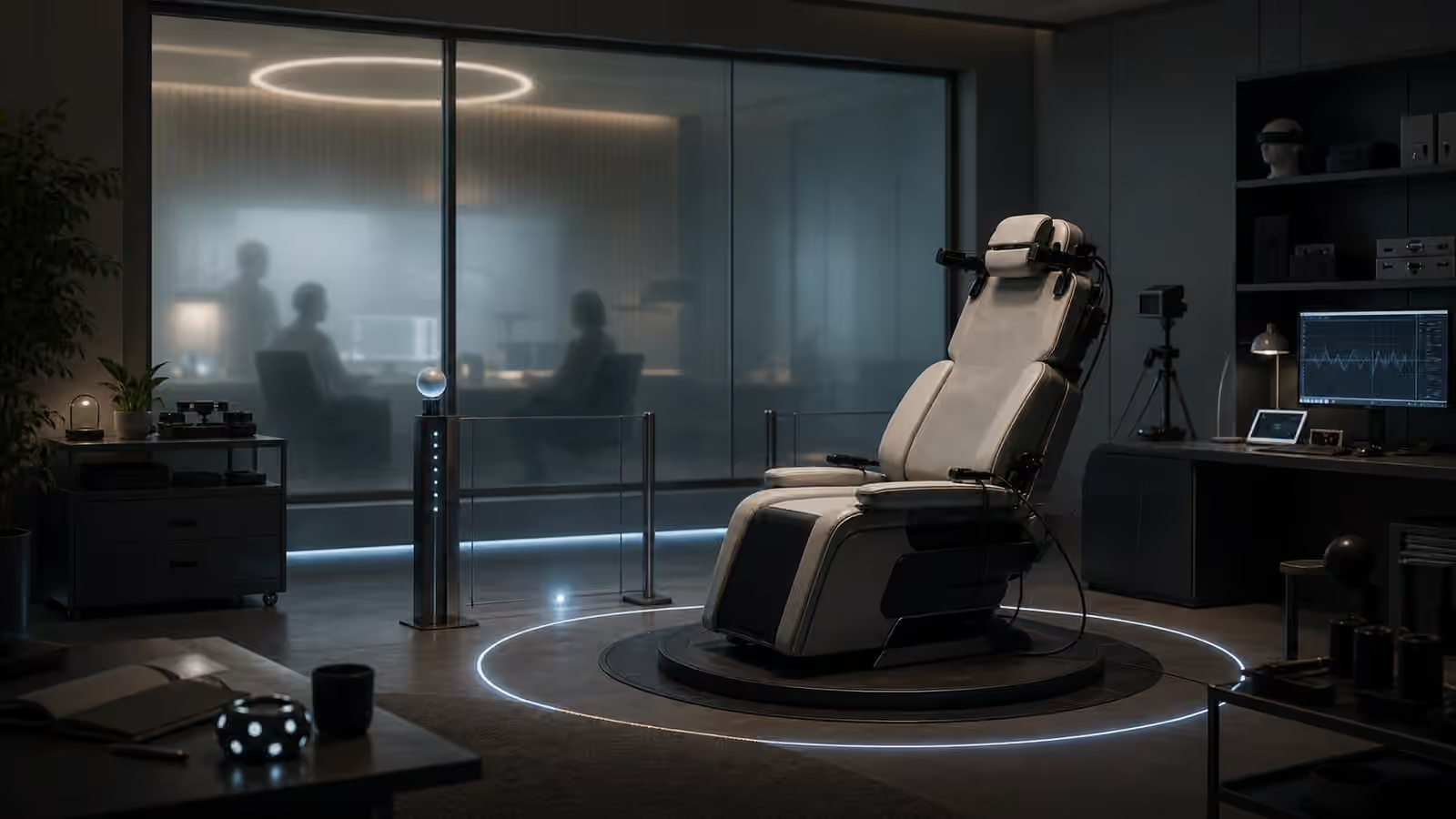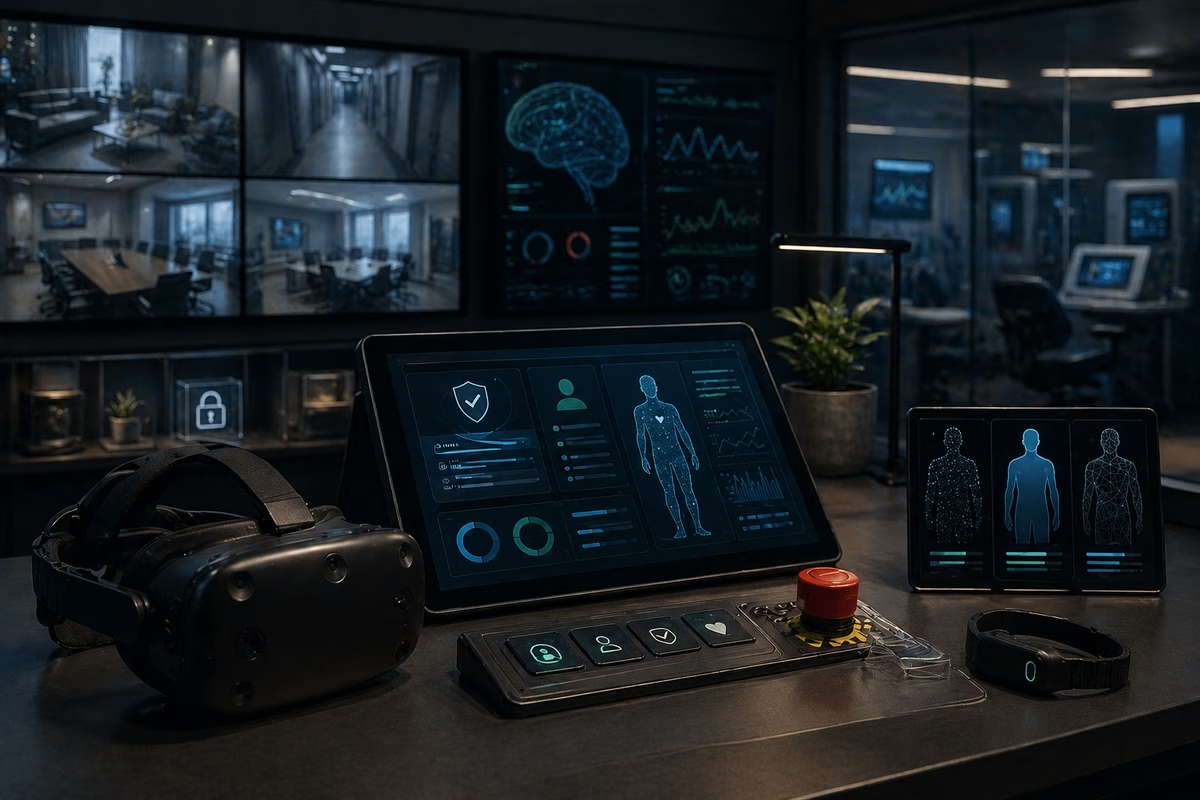
The most important full dive VR feature may not be graphics, haptics, or neural input.
It may be the exit button.
That sounds unromantic, but deeper immersion changes the safety problem. A normal game can annoy you, scare you, or waste your time. A deeply embodied virtual experience could affect balance, identity, stress, memory, social trust, and the user’s sense of control. If future systems directly read or stimulate the nervous system, the stakes rise again.
This does not mean full dive VR is bad. It means the safety design has to grow with the power of the illusion.
Safety Starts Before the Session
A good immersive system should not begin by throwing the user into a world.
It should begin with fit, calibration, boundaries, and expectations. The user should know what senses are involved, what data is being collected, how to stop, whether other people are present, and what kind of experience they are entering.
For ordinary VR, this might mean checking the play area, headset fit, battery, comfort settings, and motion style. For deeper systems, it could mean checking health status, sensory intensity limits, haptic permissions, identity settings, and recovery time after the session.
The boring ownership accessories matter because they remove avoidable friction. A VR headset carrying case protects lenses and controllers between sessions, and lens protectors are a cheap way to avoid turning a good headset into a blurry one.
This is not paperwork for its own sake. The moment a user feels trapped or confused, trust collapses. Good onboarding prevents that.
The Exit Has to Be Stronger Than the World
Every immersive system needs an exit. Full dive needs several.
A menu option is not enough. Menus assume the user can see clearly, think calmly, move normally, and use the interface. That may not be true during panic, sickness, overload, harassment, or a software failure.
A serious system should have layered exits:
- A physical control.
- A voice command.
- A gesture.
- Automatic distress detection.
- A timeout option.
- A trusted-person override for supervised contexts.
- A way to fade down sensory intensity before full removal.
The exit should not ask the virtual world for permission. It should sit beneath the world, like a circuit breaker. If the simulation fails, the exit still works.
Motion Sickness Is a Design Warning
VR sickness is not a minor inconvenience. It is feedback from the body.
When the eyes, inner ear, muscles, and expectations disagree, some users feel nausea, dizziness, headache, disorientation, or fatigue. Different people have different thresholds. Content style matters. Frame rate matters. Latency matters. Acceleration matters. User control matters.
Full dive VR cannot treat sickness as user weakness. It has to treat it as a design constraint.
Comfort tools may include:
- Stable horizons.
- Snap turning.
- Teleport movement.
- Cockpit frames.
- Reduced acceleration.
- Session breaks.
- Gradual acclimation.
- Clear warnings before intense motion.
The deeper the system, the more carefully it must handle mismatch. If a future device can influence balance or body sensation, comfort design becomes safety design.
Identity Gets Complicated Fast
In flat media, identity is mostly a username, profile photo, and account. In embodied VR, identity includes voice, face, movement, posture, personal space, and body shape.
Full dive makes this more intense. If a system can reproduce how someone moves, sounds, reacts, or touches, impersonation becomes more dangerous. A fake avatar that looks like a friend is one thing. A fake avatar that sounds like them, moves like them, and shares a remembered private space is another.
Future platforms need clear identity signals:
- Is this person verified?
- Is this a recording?
- Is this an AI-controlled character?
- Is this a modified avatar?
- Is voice or motion being transformed?
- Can a user prevent their likeness from being copied?
The more convincing the world becomes, the more visible truth needs to be.
Consent Has to Include the Body
Consent in full dive VR is not only about joining a room. It is about what can happen to your virtual body and your sensory field.
Can another user touch your avatar? Can an experience simulate pain, pressure, heat, restraint, height, falling, intimacy, injury, or body transformation? Can a horror game override your comfort settings? Can an educational simulation show traumatic scenes? Can a social platform allow strangers to stand inches from your face?
These questions need user controls, not vague policies.
Useful consent design might include:
- Personal space bubbles.
- Touch permissions by person and context.
- Sensory intensity limits.
- Content labels that describe body effects.
- Easy muting, blocking, and exiting.
- No forced social proximity.
- Strong defaults for minors and vulnerable users.
The rule should be simple: deeper embodiment requires clearer consent.
Neural Data Is Not Ordinary Data
Full dive discussions often treat neural data as if it were just another input stream. That is a mistake.
Even simple signals can become revealing when combined with time, context, identity, and behavior. Eye tracking can show attention. Biometric signals can show stress. Muscle signals can show intended movement. Neural signals may reveal patterns the user does not understand and cannot easily hide.
A responsible platform should collect as little as possible, process locally when possible, and explain what leaves the device. Users should not need a law degree to know whether a company is storing their reactions, training models on their body signals, or sharing data with advertisers.
For full dive, privacy is not a settings page. It is part of the product’s moral structure.
Medical and Entertainment Uses Are Different
Some of the most important neural-interface work is medical. A person who cannot move or speak may accept risks that would make no sense for a healthy entertainment user. Restoring communication, control, or sensation can be life-changing.
Consumer full dive should not blur that line.
If a device is implanted, stimulates nerves, or affects core body systems, the question is not “is this cool?” The question is “what benefit justifies this risk?” For medical users, the answer may be strong. For a game, the answer should be much harder to satisfy.
This distinction protects everyone. It respects medical users, and it prevents entertainment companies from borrowing medical seriousness without medical responsibility.
Addiction and Escape Are Real Design Questions
A full dive world could be beautiful, social, creative, and healing. It could also become a place people use to avoid pain, responsibility, loneliness, or ordinary life.
The lazy version of this concern says, “VR will be addictive.” The better version asks which designs increase or reduce unhealthy use.
Risky patterns include:
- Infinite variable rewards.
- Social pressure to stay logged in.
- Punishments for leaving.
- Artificial scarcity tied to long sessions.
- Emotional dependency on simulated companions.
- Blurred boundaries between therapy, friendship, and commerce.
Healthier patterns include:
- Natural stopping points.
- Session summaries.
- Break prompts that users can trust.
- Real-world reorientation.
- Honest time tracking.
- No penalty for leaving.
- Tools for friends and families to set boundaries together.
The goal is not to make immersive worlds dull. It is to make them livable.
Children Need Stronger Defaults
Children are not just smaller adults. Their bodies, judgment, social understanding, and sense of identity are still developing.
Any future full dive system should treat minors with extreme care. Strong defaults should limit session length, sensory intensity, stranger contact, data collection, identity copying, and adult content. Parents should not need to configure thirty hidden menus to create a basic safe environment.
This is one place where “move fast” is the wrong instinct.
What a Trustworthy Full Dive System Feels Like
A trustworthy system would feel calm before it feels amazing.
You would know what it is doing. You would know who is present. You would know how to leave. You would know what sensations are allowed. You would know when an avatar is real, recorded, or synthetic. You would know what data is stored. You would know what happens if something goes wrong.
The world could still be astonishing. It could still let you fly, learn, build, perform, explore, and meet people across distance. But the foundation would be control.
Full dive VR has a chance to become one of the great human interfaces. For that to happen, safety cannot be the appendix. It has to be the spine.
How to use this guide well
A strong guide is not only a reference page. For Full Dive VR Safety, Identity, and Consent, the useful work is to connect the idea to a real choice, routine, object, place, or conversation. Read the page once for orientation, then return to the part that changes what you will do next.
Start with the situation in front of you. What are you trying to decide, fix, buy, compare, build, maintain, or understand? The clearer the situation, the less likely you are to treat every detail as equally important.
Then look for the tradeoff. Most good Full Dive Vr decisions involve comfort, cost, effort, timing, skill, maintenance, risk, or taste. A guide becomes practical when it shows what you gain, what you give up, and what evidence would change your mind.
Keep one small note after you act. Write what you tried, what happened, and what you would repeat. That habit turns the guide from a page you read into a skill you carry.
Full Dive VR Safety, Identity, and Consent should leave you with more than facts. It should make the next step easier to see and easier to do.
What to notice after you use this guide
Once you have worked through this guide to safety, identity, and consent, choose one next action that can be observed. A guide becomes more valuable when it changes a real choice, not only when it adds more facts.
Name the context. Where are you, what are you trying to improve, and what would count as a good result? The answer keeps the advice grounded in daily life.
Change one variable first. A small controlled change teaches more than a dramatic reset because you can tell what mattered.
Keep one note. Write the date, the choice, the outcome, and the thing you would repeat. The note can be plain and still useful.
Look for tradeoffs. Better full-dive VR decisions often involve cost, time, maintenance, comfort, fit, risk, or skill. Seeing the tradeoff makes the decision calmer.
If the result is unclear, wait before adding another fix. Some lessons need a second use, a different day, or a quieter comparison.
If the stakes are high, use qualified sources and professional guidance where appropriate. A guide can organize the question, but it should not pretend to replace expertise.
The goal is practical confidence. Full Dive VR Safety, Identity, and Consent should make the next step easier to choose and easier to repeat.