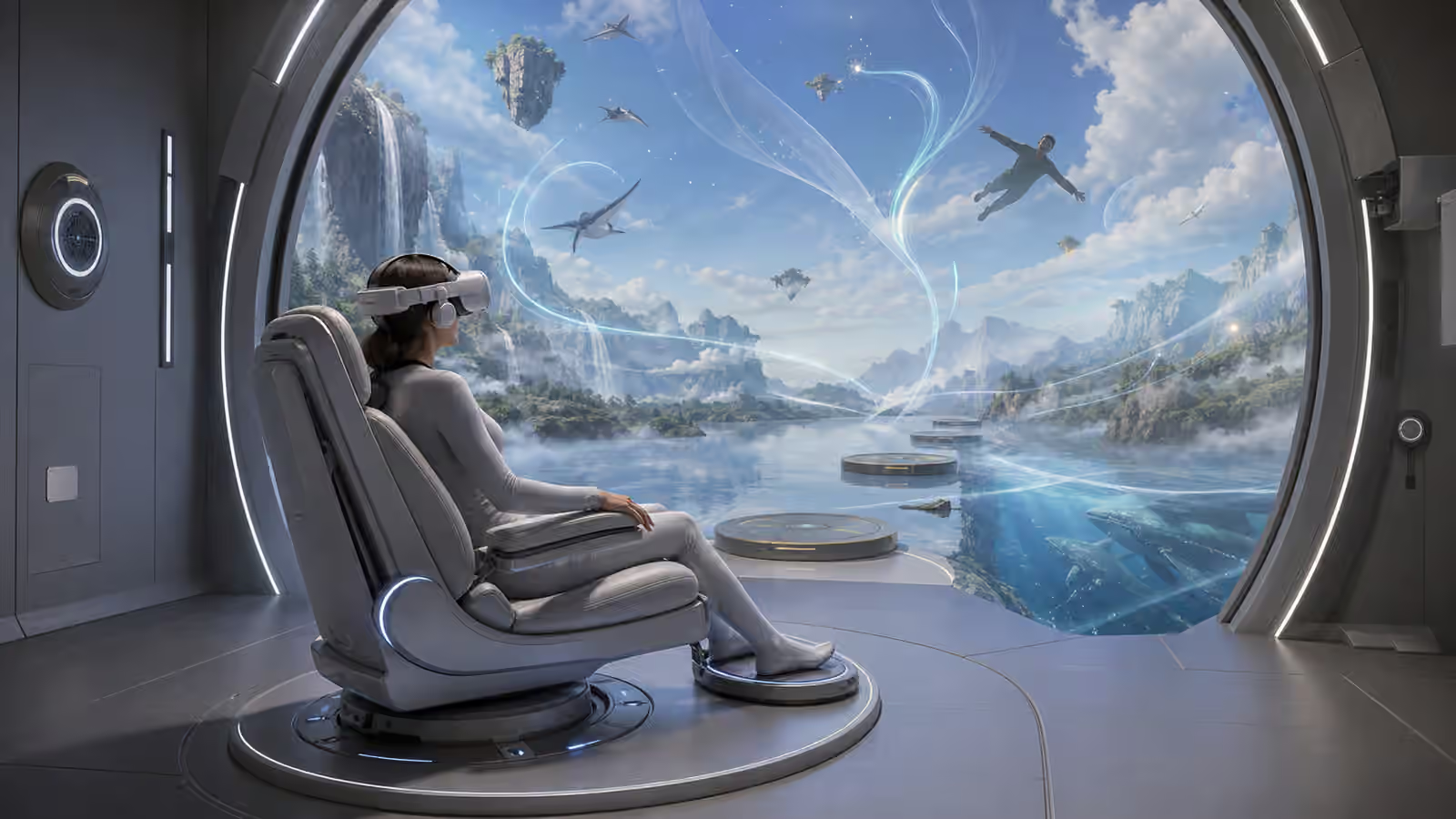
Full dive VR is usually imagined from the inside. The user opens their eyes in another place. A forest breathes around them. A classroom becomes a workshop. A friend appears across a table that is not physically there. The fantasy is so vivid that the ordinary room can vanish from the story.
The ordinary room should not vanish from the design. Even the most convincing immersive world would still have a real body somewhere, held by a chair, bed, harness, suit, or clinical-looking piece of equipment. That body would still have joints, skin, breathing, circulation, fatigue, temperature, and a need to return slowly enough that the world outside makes sense again. A full dive system that forgets the room outside the world is not more advanced. It is less honest about where the user actually is.
The Calibration Room treats the first room as a place where the system learns the user’s body. This guide looks at the same problem from the other side. Once the user is immersed, who protects the body left behind? What should the physical environment do? What authority should a facilitator have? How should privacy survive when someone may need help before the user can ask for it?
The Body Is Not Offline
It is tempting to describe full dive as if the physical body were parked while the mind goes elsewhere. That image is convenient and wrong. The body is still participating, even if the virtual world is carrying most of the user’s attention. Muscles may relax or tense. Hands may twitch. Breathing may change with excitement or stress. A shoulder can sit badly against a support. A strap that was comfortable during setup can become irritating after time passes. Heat, pressure, hydration, light, sound, and the need for ordinary rest do not stop being relevant because the forest feels real.
This matters because deep immersion can make small physical problems harder to notice. In a shallow headset experience, a user can lift the visor, adjust a sleeve, or step away. In a stronger system, the user may be less able to inspect the real body directly. They may also be reluctant to interrupt a scene, especially if other people are present or a training sequence is underway. The physical room must therefore carry some of the protective work that attention would normally do.
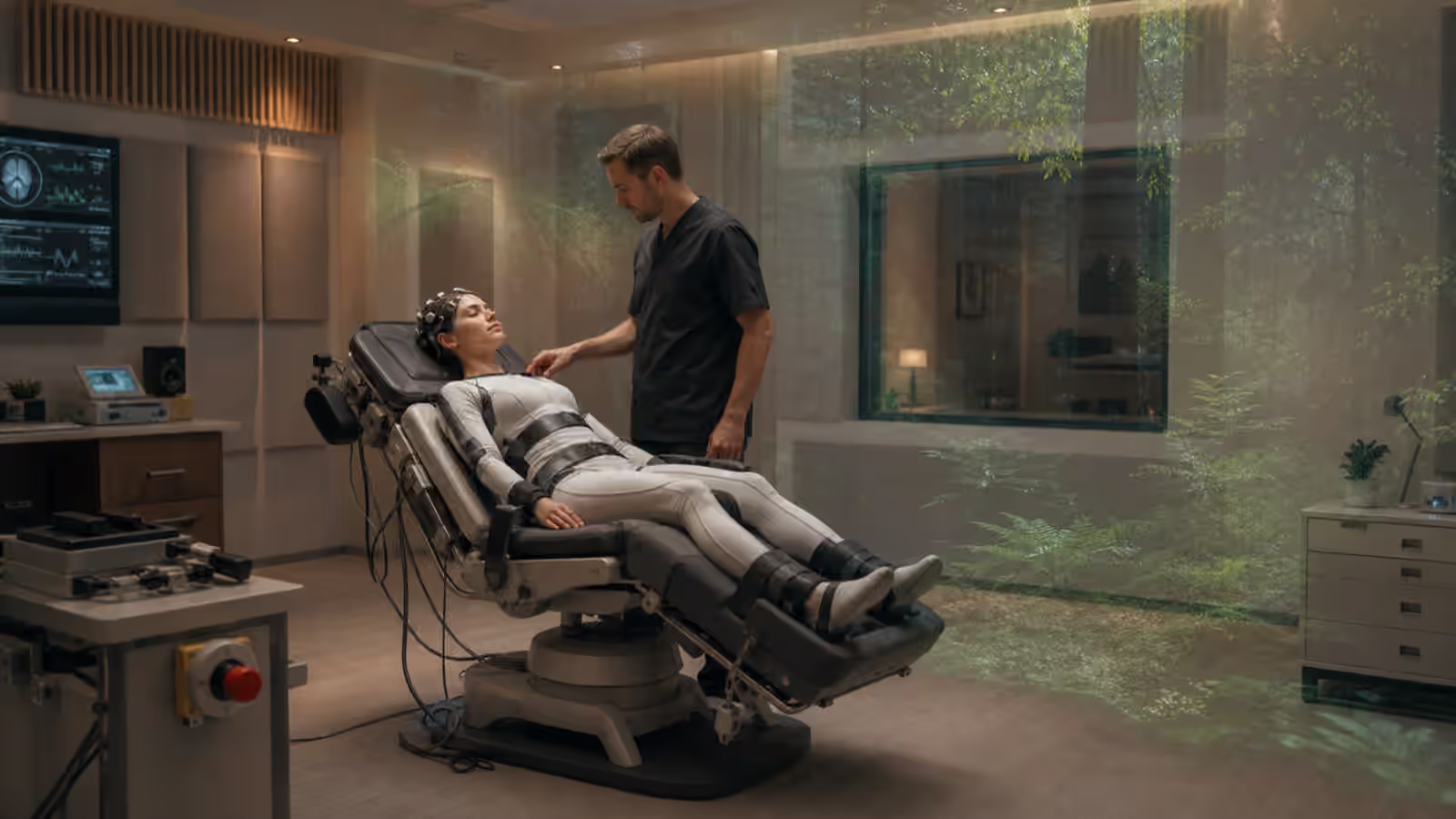
That does not mean every session needs a hospital atmosphere. It means the support surface, restraints, cables, clothing, ventilation, and monitoring should be designed as part of the experience rather than as hidden infrastructure. The chair is not merely furniture. It is the user’s floor while the virtual floor is elsewhere. The room is not a backstage area. It is the safety envelope around the user’s ordinary life.
A Good Room Reduces Decisions
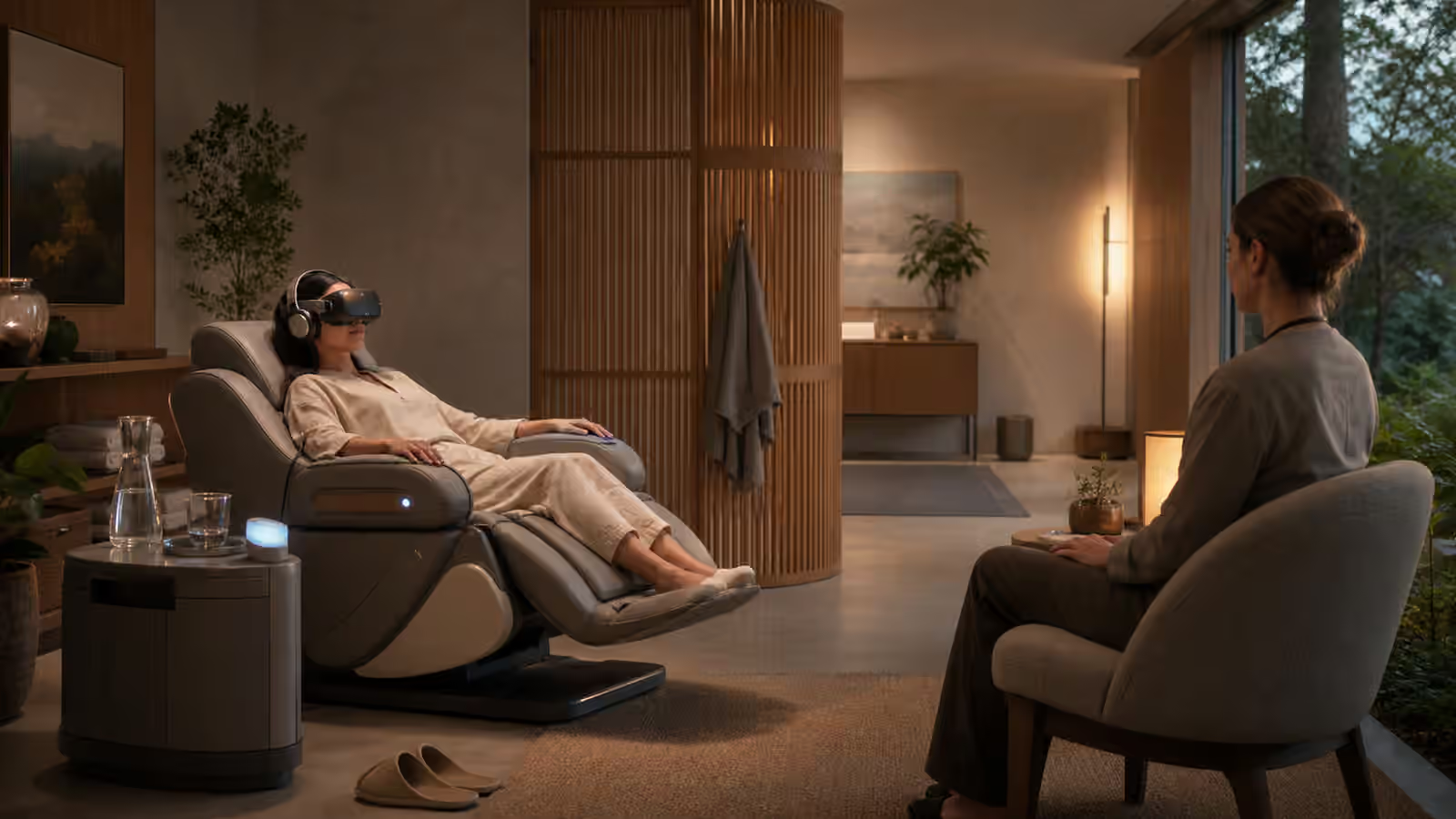
A serious full dive room should make safe behavior easier than unsafe behavior. The user should not have to negotiate tangled cables, bright glare, awkward entry steps, exposed equipment, or a setup that requires trust in improvisation. The room should be calm before the world begins because the user’s last clear memory of the physical environment will matter during return.
The best version of that room would be boring in ways that are useful. Surfaces would be easy to clean. Supports would be adjustable without drama. Emergency controls would be reachable by staff and, when appropriate, by the user before immersion begins. Sound would be controlled enough that outside voices do not leak into the session by accident. Lighting would help the body settle before entry and reorient after exit. The path away from the chair would be clear because a person coming back from a convincing world should not be asked to navigate clutter.
The room should also make status legible without turning the user into a display object. A facilitator may need to know whether a session is active, paused, exiting, or in recovery. They may need to see whether the system is confident in its timing and body model. They do not need a theatrical wall of intimate data. Privacy and Consent in Full Dive VR already argues that body data is close to the self. The physical room should reflect that by showing what is operationally necessary and hiding what would only satisfy curiosity.
Facilitators Need Clear Authority
Some full dive sessions may be private and self-managed. Others may need a facilitator, especially during training, testing, accessibility setup, medical-adjacent rehabilitation, intense multiplayer events, or early experimental systems. The facilitator role should be defined carefully. A person who can stop a session, adjust equipment, or observe the body has real authority. That authority should protect the user without turning the user into a passive object.
A good facilitator is not a spectator. They are not there to watch the user’s reactions as entertainment. They are not a secret moderator inside the user’s experience unless that has been disclosed. Their job is to preserve the conditions under which the user can consent, continue, pause, or return. That may mean checking fit before entry, confirming boundaries in plain language, watching for equipment problems, maintaining the quiet of the room, and initiating a gentle exit if the system or the user appears to need it.
The difficult part is intervention. If the user is inside a convincing scene, the facilitator may have to interrupt something that feels meaningful. They may also have to decide whether a signal is urgent, ordinary, or ambiguous. The system should not leave those choices to personality alone. It should give facilitators clear states and limited tools: pause, reduce intensity, switch to a known safe room, call for help, or begin a reorientation sequence. Permission Boundaries in Full Dive VR matters here because facilitator powers are permissions too. The user should know before entry what a facilitator can do and what they cannot do.
Emergency Stops Should Be Designed Above the Fiction
Every immersive system needs a way out. Full dive makes that requirement sharper because the fiction can become socially, emotionally, and bodily persuasive. A world may ask the user to wait, finish the scene, save progress, reassure another person, or complete a training task. The emergency stop must sit above those requests. It cannot be just another object inside the virtual room that the story can obscure.
There are several layers to this idea. The user needs a reliable exit method that does not depend on perfect speech, perfect movement, or perfect calm. The facilitator needs a separate method that can halt the session if the user cannot. The system needs automatic conditions under which it reduces intensity or exits because timing, body mapping, or safety confidence has fallen. The room needs physical access for assistance without requiring a scramble around equipment.
An emergency stop also needs manners. A hard cut may be necessary in a true emergency, but most exits should not throw the user from a vivid world into a bright room without preparation. Comfort and Reorientation in Full Dive VR and Coming Back make this point from the user’s side. The physical room extends it. The lights, voice prompts, posture support, and facilitator behavior should help the user reassemble where they are, what just ended, and what is expected next.
Privacy Has to Survive Care
The room outside the world creates a privacy tension. On one hand, the user may be vulnerable. Someone may need to know whether they are physically comfortable, whether equipment has shifted, or whether an exit is needed. On the other hand, deep immersion can expose intimate reactions. A participant may speak, cry, flinch, laugh, confess, rehearse, or return from a scene they do not want to explain.
Care should not become a license to observe everything. The room can be designed with privacy layers. Some signals can be processed locally and shown only as simple operational states. Some moments can be shielded from nonessential staff. Some sessions can require a chosen support person rather than a rotating observer. Some recordings should simply not exist unless the user has agreed to them for a clear reason.
This is especially important after exit. A user may need quiet before conversation. They may not want the facilitator’s interpretation of their face, voice, or body language. They may need water, time, and a plain statement of what happened operationally: the session ended normally, paused early, hit a timing issue, or required assistance. Social Reentry After Full Dive VR focuses on returning to other people. The first other person may be standing in the physical room, and their restraint can shape the whole return.
The Outside Room Shapes the Inside World
Designers sometimes treat physical setup as separate from virtual design. In full dive, the two will constantly affect each other. If the real body is reclined, the virtual opening should not assume the user has just been standing for an hour. If the room is shared, the virtual entry should not create false privacy. If a facilitator can intervene, the world should have graceful ways to explain pauses and exits. If the user’s physical body has limited movement, the avatar and locomotion model should respect that without turning every accommodation into a visible label.
Locomotion and Balance in Full Dive VR shows why movement is not only a control problem. The physical room sets the baseline for those choices. A seated or reclined body may support some experiences well and make others unwise. A room with strong supervision may allow more complex training than a private home setup. A quiet recovery suite may make emotionally heavy scenes more responsible than a noisy booth in a public venue.
The outside room should therefore be part of the content rating of a full dive experience. A world is not just safe or unsafe in the abstract. It is safe under certain conditions, with certain support, for certain users, at certain durations, with certain exit options. That may sound less romantic than a universal portal, but it is closer to how trust is actually built.
Return Is a Physical Event
Reentry is not finished when the virtual scene fades. The user may need to feel the chair under them, move fingers and toes, hear the room tone, understand who is present, and decide whether to speak. The facilitator should not rush that sequence because the next appointment is waiting. The physical room should not demand immediate performance from someone whose attention has just crossed worlds.
This is where the most ordinary details become serious. A dim light that rises gradually may help more than a dramatic announcement. A familiar voice may be better than an automated flourish. A simple privacy screen may matter more than an expensive display. The user may need to sit before standing, and they may need to leave without giving an emotional report. A room that respects those needs teaches the user that exit is not a failure of immersion. It is part of the contract.
The room outside the world is easy to ignore because it is less spectacular than the world itself. It has no floating cities, no impossible bodies, no synthetic companions, and no perfect horizon. It has chairs, doors, cables, surfaces, lights, quiet, and people with limited authority. Those details are not secondary. They are the place where the promise of full dive VR either becomes careful enough for human use or reveals that it only understood the dream from the inside.