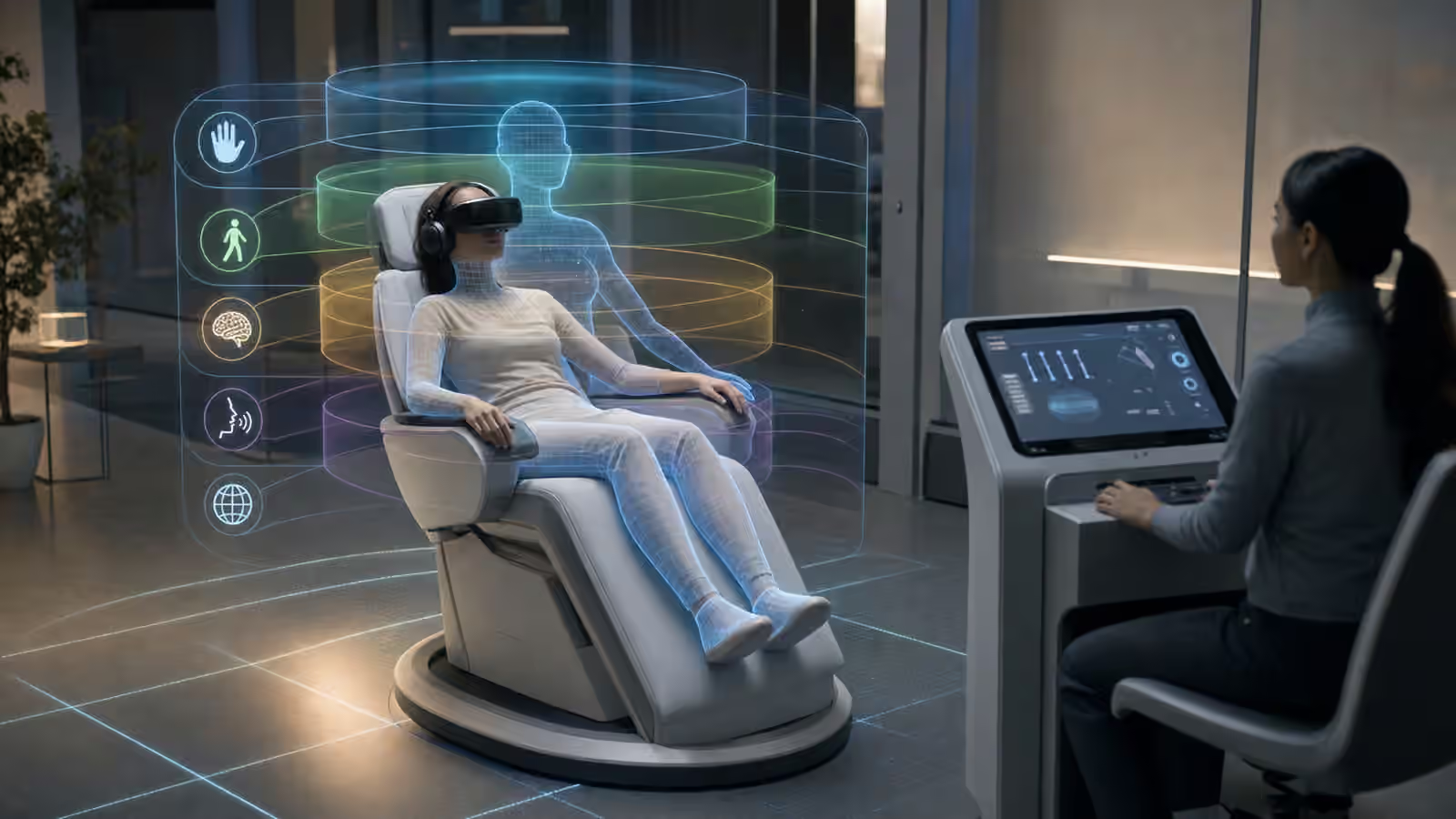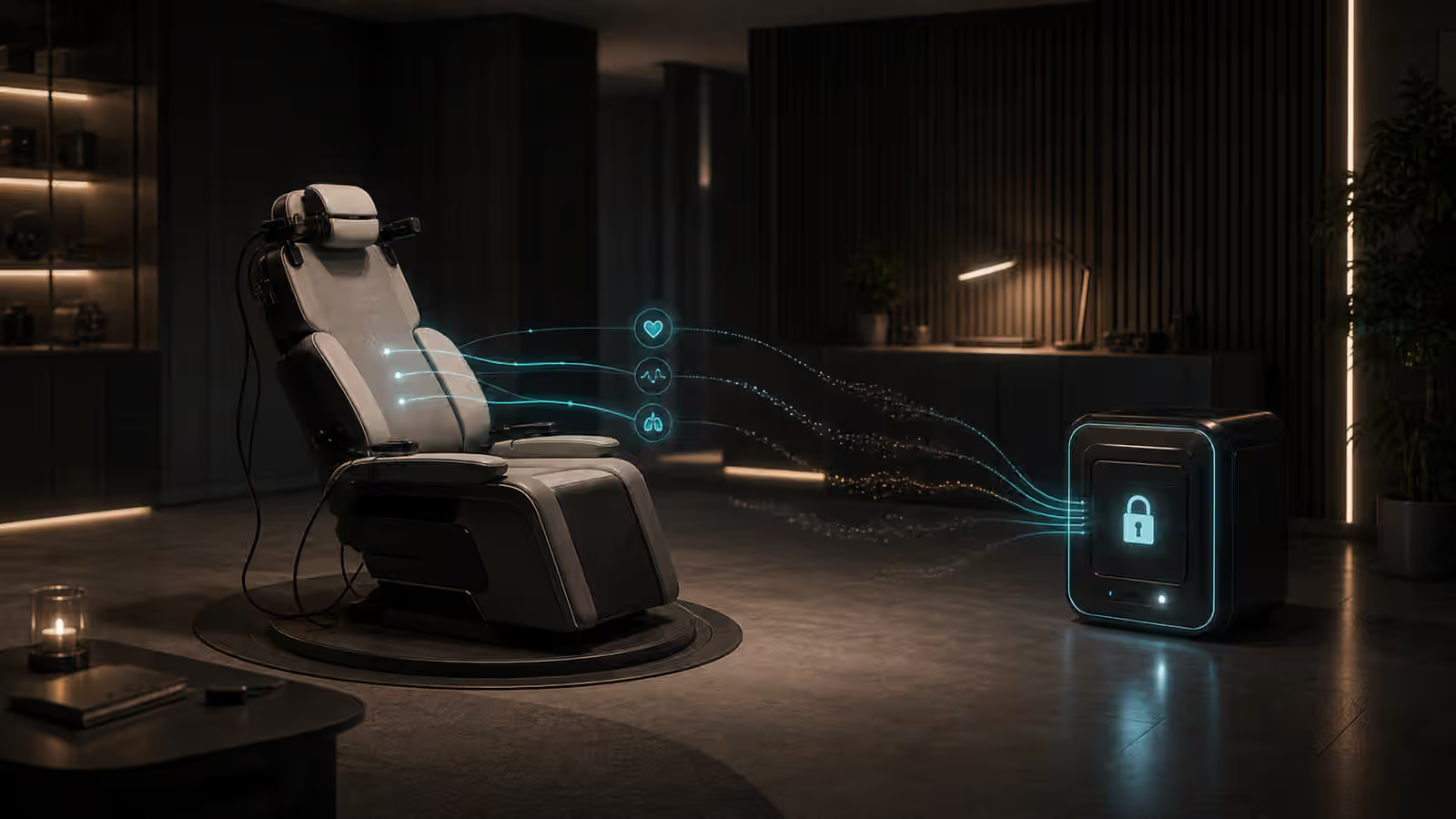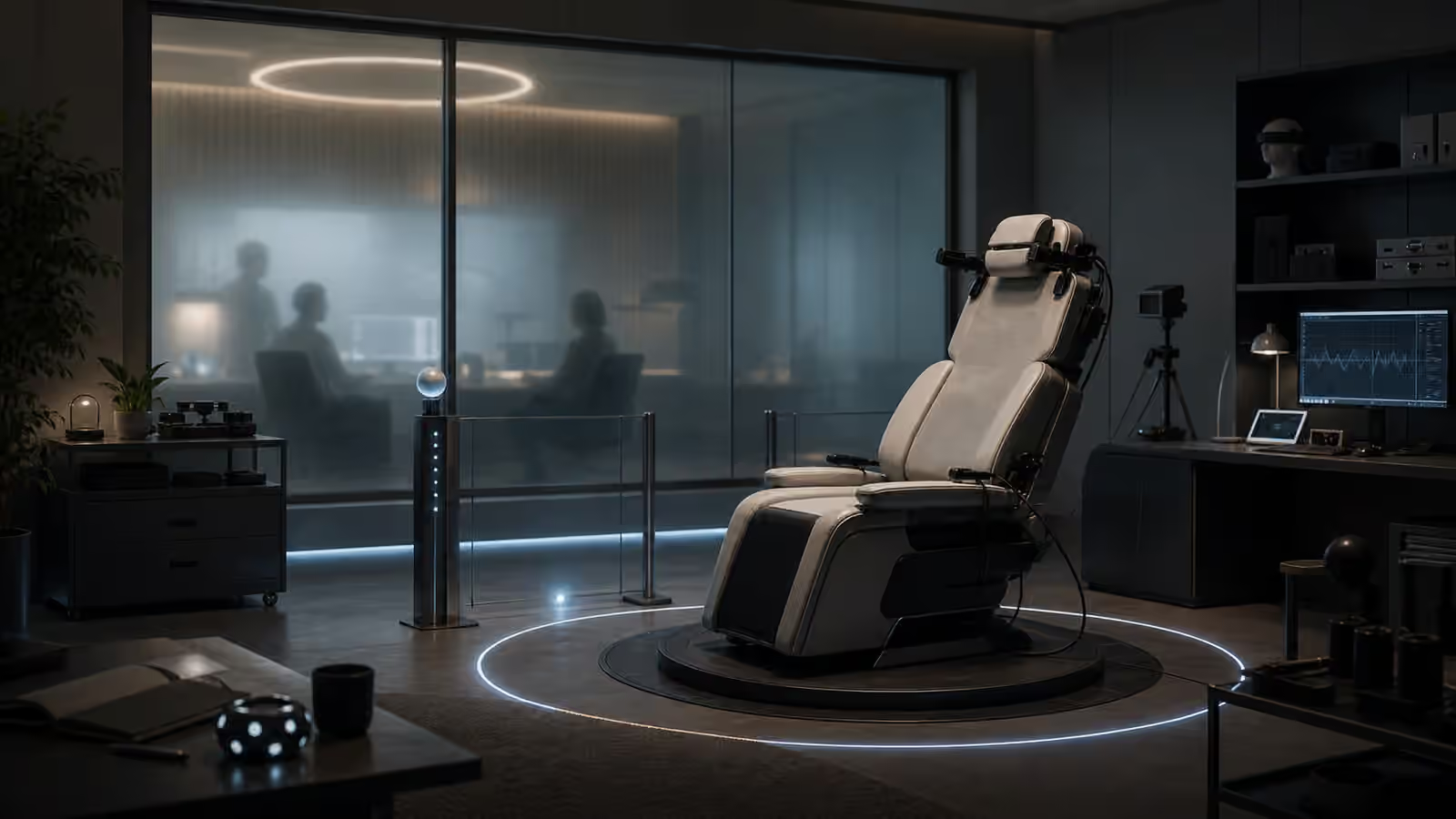
Full dive VR will not arrive fully formed. Before any polished consumer world exists, there will be prototypes, lab studies, demos, limited betas, training pilots, facility trials, creator previews, and awkward sessions where the system works just well enough to reveal what still fails. Those early experiences matter because they teach designers what the body will tolerate, but they also involve people whose trust can be spent too cheaply.
Full Dive VR Safety, Identity, and Consent is the foundation. Prototype testing asks how those principles survive before the system is mature. A test session is not safer because it is temporary. A beta world is not more ethical because users are excited to join. The unfinished state of the technology should make the boundaries clearer, not blurrier.
A Prototype Should Admit What It Is
A prototype has a narrower purpose than a product. It may test one haptic cue, one locomotion method, one calibration flow, one shared-world boundary, or one return sequence. When a prototype presents itself as a doorway into the future, users may forgive confusion that should have been named in advance. A responsible test begins by saying what is being tested and what is not ready to be trusted.
That clarity protects both sides. The user can decide whether the session fits their comfort, time, and privacy expectations. The research or product team can interpret feedback without pretending that every failure is a surprise. If the test is about hand contact, the team should not collect broad emotional inference unless it has a strong reason. If the test is about reorientation, the team should not evaluate social persuasion on the side.
Onboarding and First-Session Pacing in Full Dive VR belongs here because a first encounter with an unfinished system can shape a person’s expectations for the whole medium. Slow pacing is not a lack of ambition. It is how a prototype earns enough trust to produce useful evidence.
Consent Has To Survive Excitement
Early adopters often want access. They may be willing to tolerate rough edges, long setup, failed sessions, and strange sensations because they care about the field. That enthusiasm is valuable, but it can make consent fragile. People may downplay discomfort to avoid losing access. They may agree to data collection they do not fully understand. They may confuse being selected for a test with being protected by the system.
Consent in prototype testing should be repeatable. The user should be able to pause, ask what is being collected, withdraw from a particular segment, or end the session without being treated as someone who wasted the opportunity. The team should not rely on a single pre-session form to cover every new sensation, social condition, or recording layer that appears later.
Sensory Ratings and Content Warnings in Full Dive VR can help prototype sessions become more honest. A test can say that a scene includes mild balance challenge, synthetic social presence, strong spatial sound, or experimental touch cues. The point is not to drain curiosity from the room. The point is to let curiosity stay voluntary.
Test Sessions Need Narrow Goals
A full dive prototype can generate more data than the team needs. The system may observe posture, timing, facial movement, voice, attention, physiological signals, object contact, and exit behavior. If the test goal is narrow, collection should be narrow too. A session designed to compare two floor textures should not quietly become a broad body-profile study.
Narrow goals also improve feedback. A user who is asked to judge everything may produce polite generalities. A user who knows that the team is testing whether a soft exit cue felt understandable can answer with better detail. They can say where the cue arrived too late, whether the room made sense, and whether the body had enough time to follow. The test becomes a conversation rather than a harvest.
Body Data Minimization in Full Dive VR is the relevant privacy discipline. Prototype teams may argue that they need to keep more data because they do not yet know what matters. Sometimes exploratory work is real. But exploratory does not mean unlimited. The team can bound retention, separate raw signals from summaries, and avoid collecting intimate traces that cannot plausibly answer the test question.
Observation Should Have Boundaries
Research rooms often involve observers. A facilitator watches posture. An engineer watches telemetry. A designer watches the scene. A safety lead watches for distress. In full dive VR, observation can become intrusive because the experience is embodied and sometimes emotionally revealing.
The user should know who is observing, what they can see, and why they are present. A person responsible for physical safety may need a different view from a designer studying world pacing. A developer debugging timing may not need voice content. A facilitator helping with reentry may not need private replay access. Observation should be divided by role rather than granted as a general backstage pass.
Facilitators and Operator Roles in Full Dive VR makes this division practical. Defined roles help prototypes avoid the casual overreach that comes from everyone standing around a test station with good intentions. The user should not have to wonder which strangers saw their hesitation, heard their private comment, or reviewed their body data after the session.
Beta Communities Need Slower Promises
Beta communities can become powerful. Members share discoveries, build habits, form friendships, report bugs, and start treating unfinished worlds as real places. That can help a platform mature. It can also create pressure to keep systems open before they are ready, because closing or changing the beta now affects people’s social lives.
A responsible beta should make its limits part of the community culture. Worlds may reset. Features may change. Logs may be reviewed under defined conditions. Synthetic characters may not keep memory forever. Purchases, if any exist, may have special restrictions. Social spaces may be paused if moderation cannot keep up. Those terms should be repeated in the experience, not buried in a launch post.
Habit and Attachment Boundaries in Full Dive VR is important because beta users can become attached before the platform has earned permanence. That attachment is not foolish. It is a predictable result of presence. The platform should not exploit it to avoid making hard safety decisions.
Responsible Testing Ends With Repair
A prototype session does not end when the headset, chair, or neural-interface device comes off. The user may need reorientation, a chance to report delayed discomfort, an explanation of what happened, and a clear path to withdraw data where that is possible. If something went wrong, the team should treat follow-up as part of the test, not as customer support after the fact.
Session Logs and Incident Response in Full Dive VR gives the repair frame. The team should know how to preserve enough evidence to understand a failure while protecting the user’s privacy. It should tell the user what will change, what cannot be changed, and whether they should avoid similar sessions until a fix exists.
Prototype work is necessary. It can be careful, generous, and genuinely collaborative. But the unfinished state of full dive VR is not a permission slip. It is a reason to move slowly, collect less, explain more, observe with boundaries, and treat every volunteer or beta user as a person helping the medium learn what it must never take for granted.