A full dive system that can make another place feel present has to answer a deceptively plain question: how does the user know where they are?
The answer should not depend on panic, suspicion, or a hidden settings page. It should be woven into the room. If a virtual beach feels warm, if a synthetic guide remembers a private conversation, if a training scene leaves the hands tense, and if a long session seems shorter than the clock says, the user needs reliable ways to check the edge between the world and the world outside it.
This is not a warning that full dive VR would be a dream machine with no exits. The Dream Problem already shows why dreams are useful but incomplete comparisons. A designed system can do things a dream cannot do. It can label transitions, preserve consent, keep a trusted record, and give the user back the outside room in a consistent way. Reality testing is the discipline that makes those promises feel practical rather than theatrical.
Belief Needs a Boundary
Presence is usually treated as the prize of immersive design. The floor feels stable. The avatar body answers intention. A voice has direction and distance. A tool has weight. The user’s attention stops translating everything into screens and controls, and the place begins to feel directly available.
That achievement creates a responsibility. A world that can be believed should also make its status legible. It should not require the user to keep a skeptical narrator running in the background at all times. If every beautiful scene must be mentally discounted, the experience becomes tiring. If nothing is ever labeled, the experience becomes harder to trust. The useful middle ground is a world that can be entered deeply while still carrying recognizable boundaries.
Current VR already uses simple forms of this. A guardian boundary appears when the user nears a wall. A pause menu reminds the user that a simulation is running. A controller vibration says that a real device, not a virtual hand, is being held. Full dive VR would need more subtle tools because the point of the system is to reduce the visible machinery. The boundary cannot be only an overlay, but it also cannot disappear.
One useful design pattern is a trusted threshold. Before the user enters a strong scene, the system presents a stable place that belongs neither entirely to the fiction nor entirely to the physical room. It might contain the user’s ordinary avatar hands, a clear exit direction, a clock-like rhythm, and a few familiar anchors from outside. Comfort and Reorientation in Full Dive VR treats exit as an airlock. Reality testing asks for a similar airlock at the edge of belief.
Anchors Should Be Ordinary
Grounding does not have to be dramatic. In fact, dramatic grounding can make the user feel as if something has gone wrong. The strongest anchors may be ordinary objects, ordinary timing, and ordinary body facts.
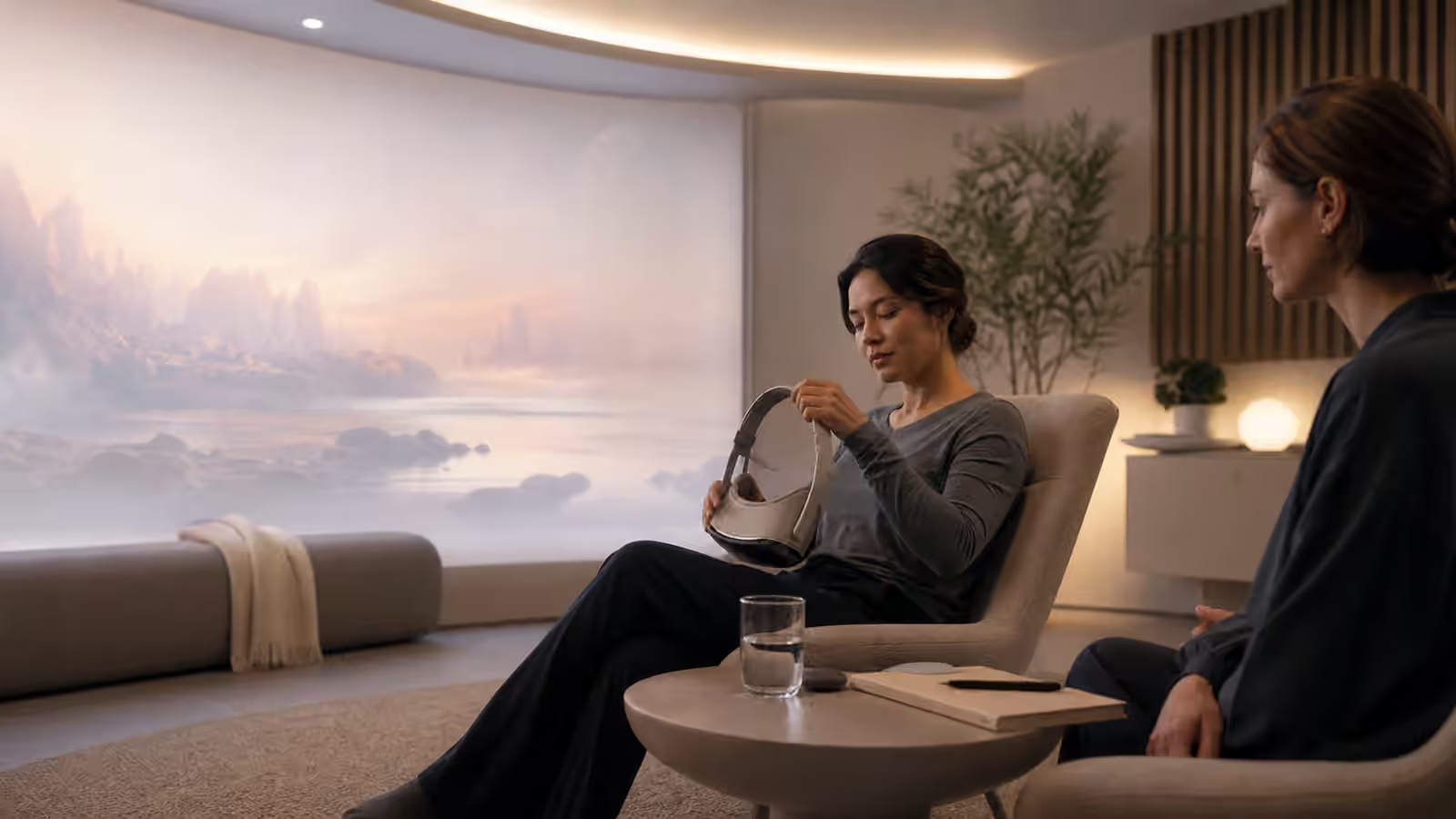
A water glass on the real table can become a matched object in the threshold room. A blanket over the user’s legs can appear as a gentle weight cue before a session begins and after it ends. A soft wall light can mean that the outside room is quiet and available. A tone, breath rhythm, or simple hand posture can tell the user that they are still connected to the body in the chair. These cues are not exciting, which is exactly why they work. They do not compete with the world. They make the world accountable.
The system should also avoid turning anchors into surveillance theater. A user does not need to see every sensor, metric, or confidence score while they are trying to feel oriented. Too much data can become another form of disorientation. The better question is what the body and attention need to know at this moment. Is the user seated or standing? Is the outside room occupied? Has the session been paused? Is recording active? How much time has passed? Is the next scene private, shared, or authored by someone else?
Time and Duration in Full Dive VR matters here because subjective time can become one of the slipperiest parts of immersion. A session that feels like ten minutes but lasts an hour may be pleasant in a game and serious in a workplace, classroom, or family setting. A grounding system should make elapsed time available without nagging. A clock does not need to dominate the sky. It can appear at thresholds, pauses, and reentry, and it can be requested without breaking privacy.
Memories Need Clear Edges
The hardest reality tests may arrive after the session. A user may remember a place vividly, remember a synthetic person with emotional force, or remember a body that did not match the one waiting outside. That does not make the memory false in the ordinary sense. The person really had the experience. The question is what kind of experience it was, who can replay it, who can edit it, and how it should be labeled later.
Memory Rights in Full Dive VR argues that immersive records can behave more like memories than files. Grounding adds a practical layer to that argument. The user should be able to tell the difference between a personal recollection, a system-generated replay, an edited reconstruction, a training assessment, and a synthetic character’s remembered version of events. Those things may all point back to the same session, but they are not the same artifact.
If a world offers replay, it should mark when the replay begins and ends. If a guide summarizes a session, it should distinguish what was observed from what was inferred. If a memory archive lets the user revisit a scene, it should make clear whether other participants are present, simulated, or represented by saved traces. The label should be calm and persistent. It should not appear only in legal text before entry.
This matters for emotional reasons as well as evidentiary ones. A person may cherish a virtual place, grieve a synthetic relationship, or feel unsettled by a scene that was technically fictional. Grounding should not mock those reactions by saying, in effect, that none of it was real. It should give the experience a proper frame: real as experience, designed as environment, bounded as record, and returnable as memory only under rules the user understands.
Grounding Should Not Shame the User
Reality testing can sound clinical, but full dive systems should not make grounding feel like failure. Users should not have to prove that they are confused before they can ask where they are. They should be able to request a body check, a time check, a privacy check, or a return cue as naturally as they might adjust volume.
This is especially important for people who are tired, young, grieving, anxious, disabled, deeply absorbed, or coming out of a long session. Accessibility in Full Dive VR makes the broader point that different bodies need different defaults. Grounding belongs in that same family. Some users may want frequent cues. Some may prefer sparse thresholds. Some may need a tactile anchor because visual prompts are tiring. Some may need sound reduced before they can read the room.
The system should also respect users who intentionally want a strong fiction. A performer, gamer, artist, or student may want the world to feel seamless for long stretches. That desire is legitimate. The boundary does not have to interrupt every moment. It only has to remain reachable, recognizable, and honest. A locked-away exit is not immersion. It is poor design.
Shared Worlds Need Shared Reality Rules
Reality testing becomes harder when other people are present. In a shared world, the user may need to know whether another avatar represents a live person, a delayed recording, a synthetic person, a moderator, or a saved trace. Identity Continuity and Impersonation in Full Dive VR covers the trust problem in detail. Grounding turns it into a moment-by-moment interface problem.
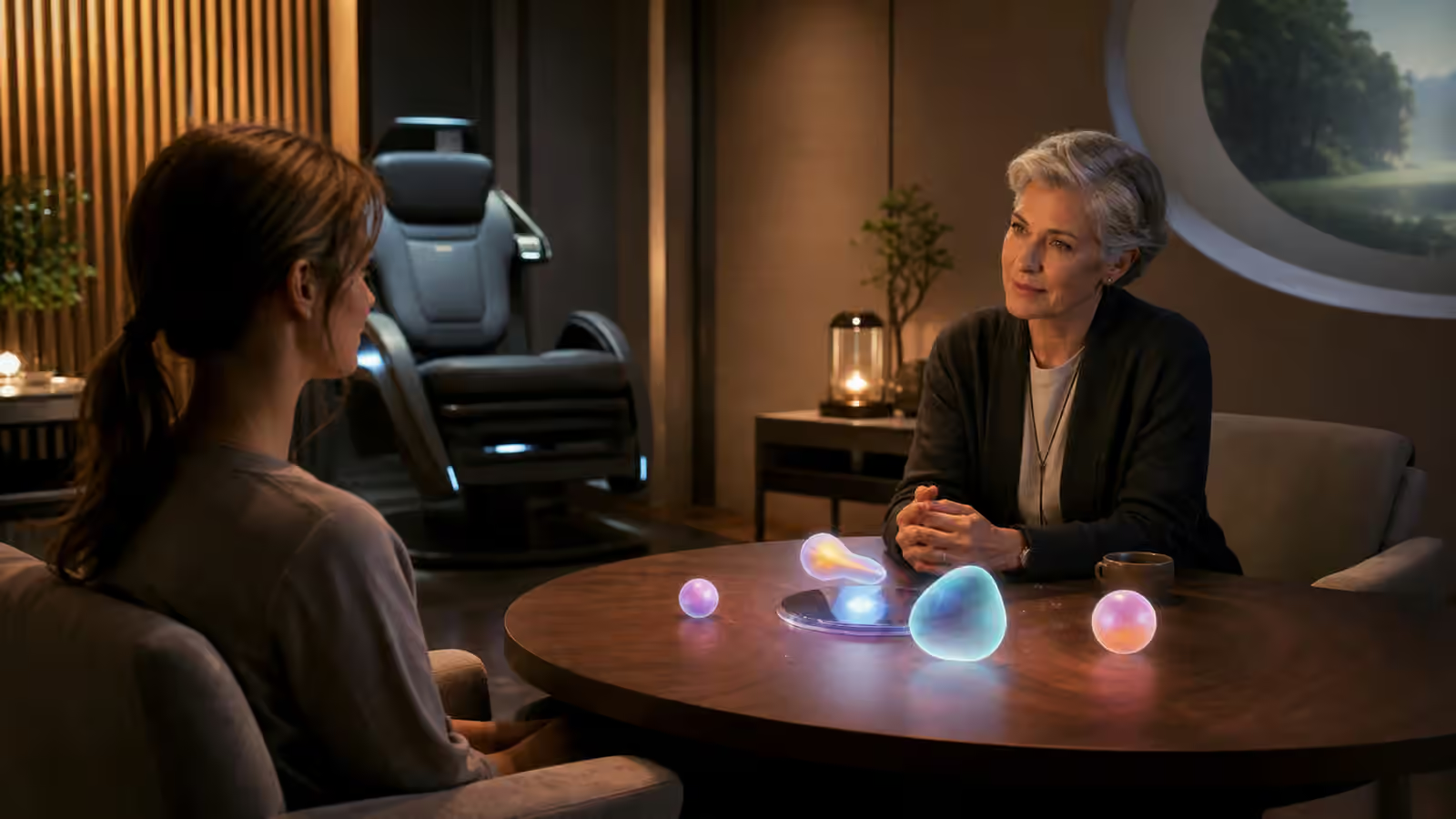
A social room should not require awkward interrogation before basic facts are clear. If a friend is present live, that status can be visible in a restrained way. If a synthetic host is managing the room, the host’s authority should be known. If an absent person’s saved avatar appears as part of a memory, the system should not let that presence masquerade as a live consent event. The user should not have to guess whether a private conversation is happening now, being replayed, or being staged by the world.
The same principle applies to synthetic people. Synthetic People in Full Dive VR argues that companions and guides need disclosure and limits. Grounding makes that disclosure durable. A synthetic guide can be warm, helpful, and memorable, but it should not blur its status when the blur gives it more influence over the user. It can belong to the experience without pretending to be outside the experience.
The Outside Room Should Remain a Right
The final reality test is simple: can the user get back to the room that holds their body? Not merely exit the app, but return with enough orientation to know the chair, the floor, the time, and the people nearby.
The outside room does not need to intrude constantly. A strong full dive session may properly occupy attention for a while. But the outside room should remain a right rather than a surprise. The user should be able to ask for it. The system should bring it back gradually when needed. If another person outside pauses the session for safety, the user should learn what happened in plain terms. If the system loses confidence in timing, body tracking, or consent state, it should prefer a grounded threshold over theatrical continuity.
Good reality testing will not make full dive VR less immersive. It will make immersion less brittle. A person can go farther into a world when they trust the path back. They can let a place feel vivid because the system has not asked them to abandon ordinary checks on time, body, identity, and memory. The deepest worlds may therefore be the ones with the clearest edges.