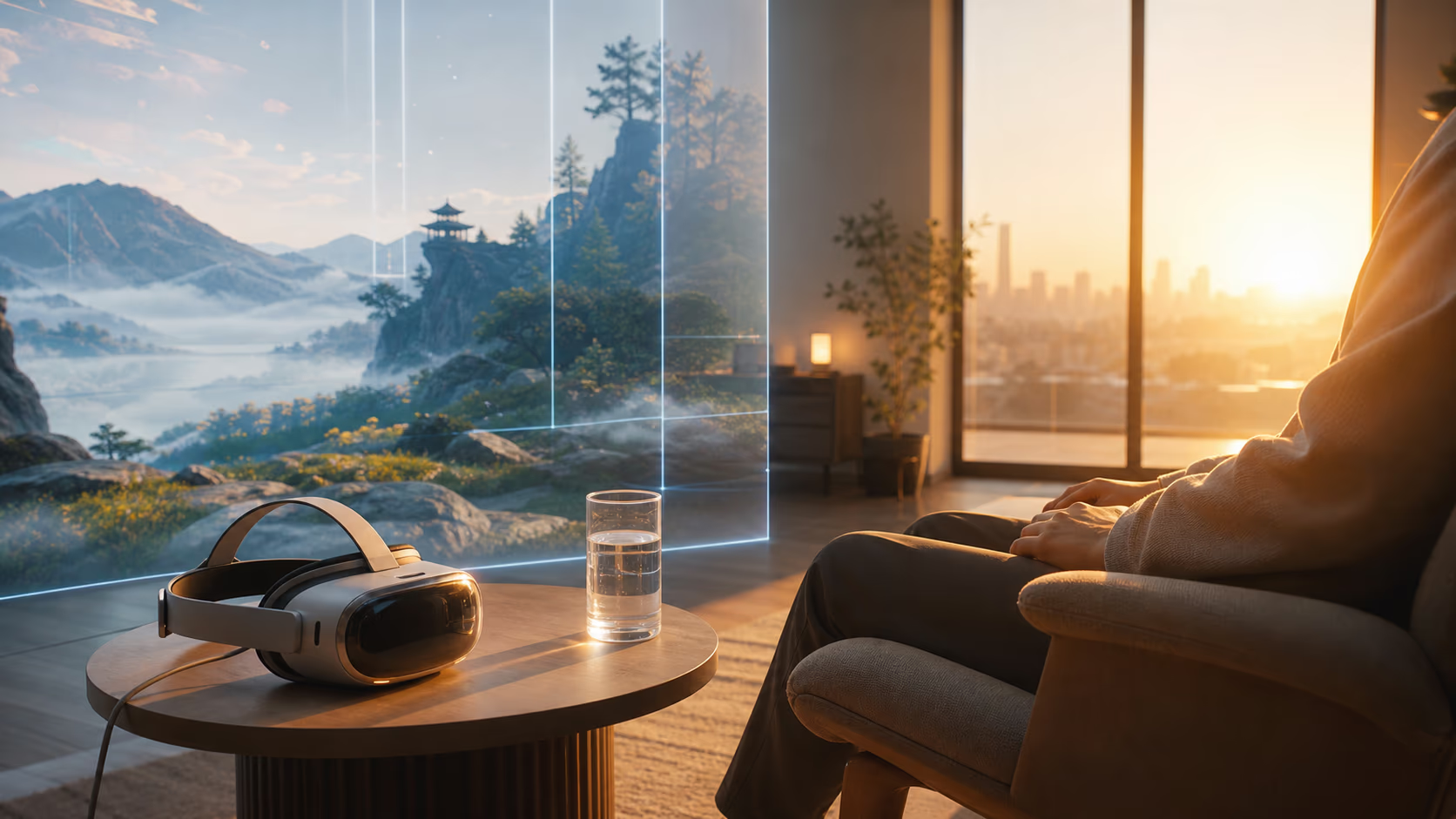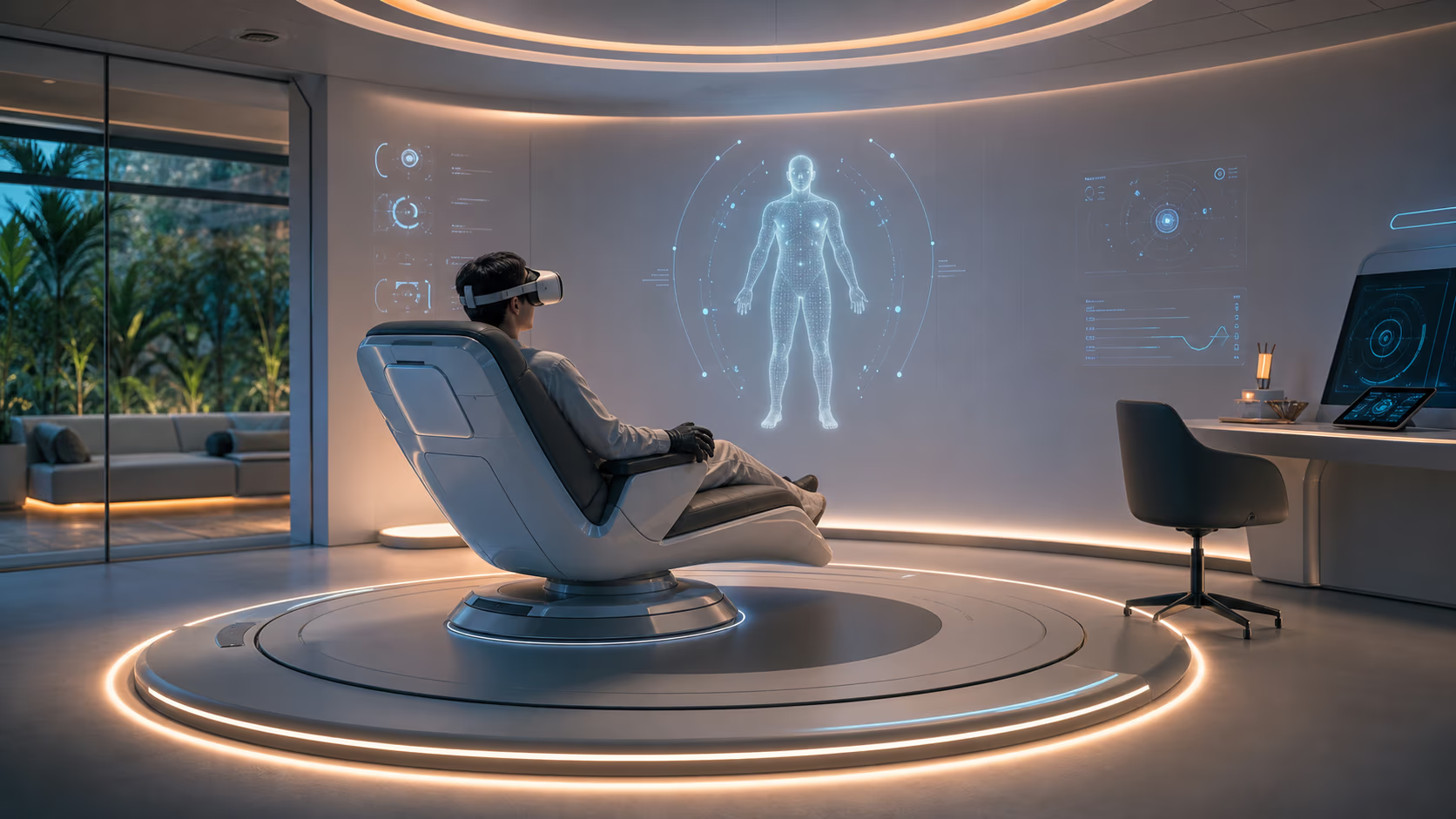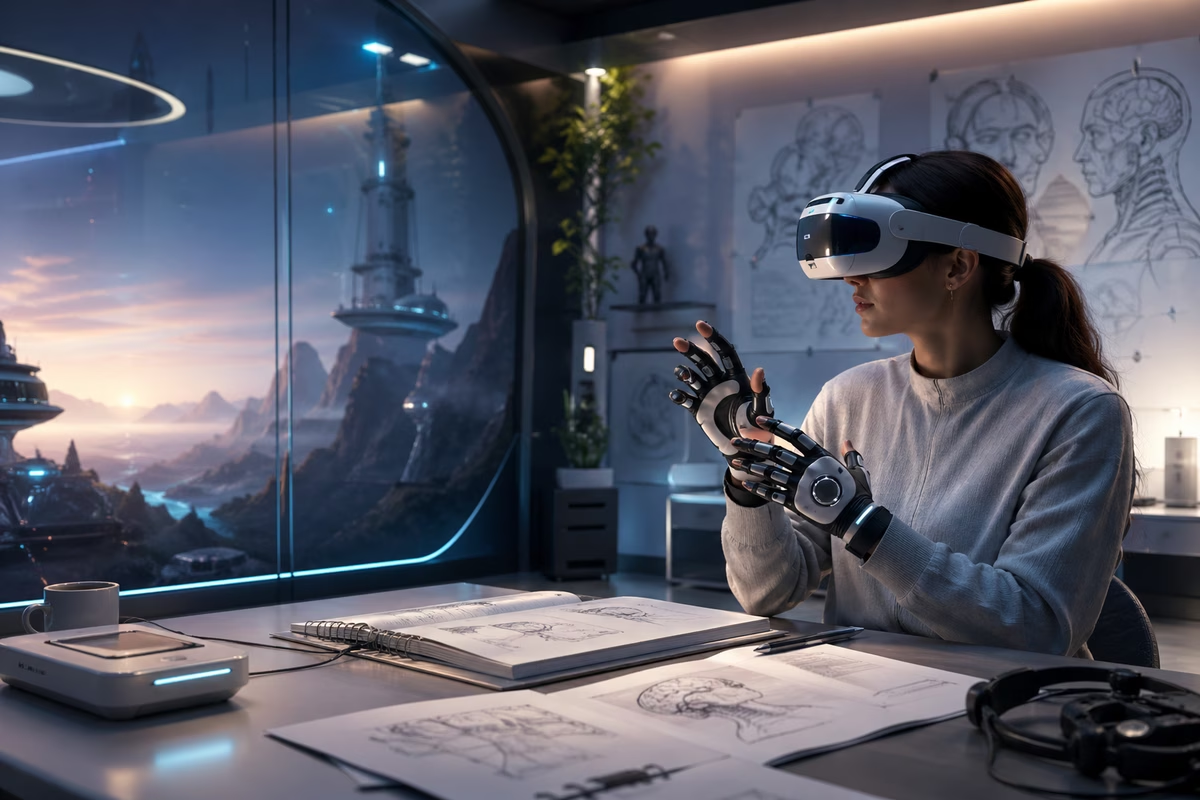
Full dive VR is the idea of entering a virtual world so completely that your brain accepts it as a place. Not just seeing it on a screen. Not just hearing it through headphones. Fully being there, with a body that can move, touch, feel, and act inside a world that is not physically around you.
That sentence is easy to write. Building the thing is brutally hard.
Today’s VR mainly talks to your eyes and ears. It can track your head, your hands, your gaze, and sometimes your legs or body. It can vibrate a controller, rumble a vest, or push back against your fingers with haptic gloves. It can create presence, which is the feeling that a virtual space is around you. But it does not replace the body’s whole sensory loop.
Full dive would need to go much deeper. It would need to read what you intend to do, send believable sensory information back to you, keep your real body safe, and make the experience feel stable instead of nauseating or confusing. If the system is invasive, it also has to meet medical-level safety expectations. If it is non-invasive, it has to work through noisy signals and limited bandwidth.
The point of this quickstart is to give you a usable map.
The Simple Definition
Full dive VR means a virtual reality system that can create a complete-enough experience of being inside another world.
That usually implies four things:
- You can perceive the world through more than a flat display.
- You can act in the world naturally, without thinking about controllers.
- Your virtual body feels connected to you.
- The system manages the mismatch between your real body and your virtual body safely.
Notice the phrase “complete enough.” A perfect simulation of every nerve signal is not the only imaginable path. Humans are adaptable. Our brains already fill in gaps all day. A believable full dive system might not need to reproduce every detail of reality. It might need to reproduce the right details at the right moments.
That is still a huge task.
What Today’s VR Already Does Well
Modern VR has solved more than people give it credit for.
Head tracking is fast enough that when you turn your head, the world updates almost immediately. Good spatial audio can place a sound behind you or above you. Hand tracking can make your fingers part of the interface. Eye tracking can make graphics sharper where you are looking. Mixed reality passthrough can blend digital objects into a room.
Those pieces matter because full dive is not going to arrive as a magic door. It will probably grow out of many smaller improvements.
If you are shopping while you learn, start with a current standalone headset comparison instead of speculative “full dive” gadgets. For most readers, that means comparing Meta Quest 3 and Meta Quest 3S , then budgeting for a battery head strap if comfort or session length matters.
Here is what current VR is already good at:
- Visual presence: giving your eyes a world that feels spatial.
- Head and hand motion: letting the scene respond to your movement.
- Social presence: making another person’s avatar feel like someone sharing a room.
- Training simulations: letting people practice tasks without the full cost or danger of the real setting.
- Embodied games: using motion, posture, and timing instead of only buttons.
That is real progress. It is also not full dive.
What Today’s VR Does Not Do
Current VR does not take over your entire nervous system. It does not make you forget your real body for long. It does not safely let you sprint, fall, fly, swim, or fight without real-world constraints. It does not provide ordinary touch with the richness of skin, pressure, temperature, pain, balance, and muscle feedback.
Most importantly, today’s VR still has a body problem.
Your eyes may say you are moving while your inner ear says you are standing still. Your hands may grab an object that has no weight. Your virtual legs may run while your real legs are on a floor. Your avatar may be six feet tall while your physical body is not. Every mismatch has to be hidden, softened, or designed around.
This is why locomotion is such a big deal in VR. A boring menu about comfort settings is actually a window into the deepest problem in the field: the senses have to agree enough that the brain does not reject the illusion.
The Two Big Jobs: Reading and Writing
A full dive system has two jobs.
It has to read from you. What are you trying to do? Move your hand? Look at someone? Speak? Walk forward? Pick up a cup? Relax? Pull away?
It also has to write to you. What should you see, hear, feel, and sense in response? Did the cup touch your fingers? Did the floor slope under your feet? Did another avatar stand too close? Did the wind change direction?
Reading is input. Writing is output.
Most current VR reads through cameras, controllers, inertial sensors, microphones, and eye trackers. It writes through displays, speakers, vibration motors, fans, and haptic devices. A future full dive system might also read neural signals or write information directly to nerves or brain regions. That is where the subject becomes both fascinating and serious.
Reading intent from the nervous system is hard. Writing sensation into it is harder. Doing both safely, for millions of ordinary users, is a different scale of difficulty altogether.
Invasive vs Non-Invasive
People often talk about brain-computer interfaces as if they are one category. They are not.
Non-invasive systems sit outside the body. They might use EEG caps, optical sensors, muscle sensors, eye tracking, or other external measurements. They are safer and easier to imagine as consumer technology, but they usually get weaker and noisier signals.
Invasive systems put hardware inside the body. Some interfaces sit near nerves. Some sit near or in the brain. These can offer better signal quality, but they introduce surgery, infection risk, durability problems, regulation, long-term monitoring, and hard ethical questions.
For medical uses, those risks may be worth considering when the goal is restoring communication or movement for someone with paralysis. For entertainment, the bar should be much higher.
That distinction matters. A future medical BCI that helps a person control a cursor is not the same thing as a consumer full dive entertainment rig. The technologies may overlap, but the risk-benefit equation is completely different.
The Four Levels of Immersion
It helps to think in levels instead of one giant leap.
Level 1: Screen VR
This is the normal headset world. You see and hear a virtual space. You use controllers, hand tracking, or body tracking. Your real body remains clearly involved.
Level 2: Strong Embodiment
The system tracks more of you and gives better feedback. Gloves, suits, treadmills, eye tracking, face tracking, and better avatars make the virtual body feel more like yours.
Level 3: Neural Assistance
The system begins reading intent or state more directly. It might detect attention, imagined movement, stress, fatigue, or simple commands. This does not mean full mind reading. It means useful signals that improve control or comfort.
Level 4: Full Dive
The virtual world becomes the primary sensory frame. The system reads intent and writes enough sensation that the virtual body feels natural, while the real body is protected. This is the dream. It is also the least solved level.
The Most Important Caveat
Full dive VR should not be judged only by whether it can fool someone.
A system that can overwhelm your senses can also confuse, pressure, exhaust, or manipulate you. The better the illusion gets, the more important consent, exit controls, logging, privacy, and safety become.
A good full dive system would need a boring, reliable escape hatch. It would need to know when the user is distressed. It would need strong rules around identity and memory. It would need to prevent other people from trapping, impersonating, harassing, or coercing a user inside an experience.
The future is not only a graphics problem. It is a trust problem.
Where to Start
If you want to understand full dive VR without getting lost, keep three questions in mind:
- What senses does this technology actually address?
- Is it reading the body, writing to the body, or both?
- What happens when the illusion fails?
Those questions cut through hype quickly.
Current VR is already worth studying. Haptics are worth studying. Brain-computer interfaces are worth studying. Accessibility technology is worth studying. So are game design, motion sickness, neuroscience, medical device regulation, and online safety.
Full dive VR sits at the intersection of all of them. That is why it is so compelling, and why it deserves more careful thinking than “when will it be real?”