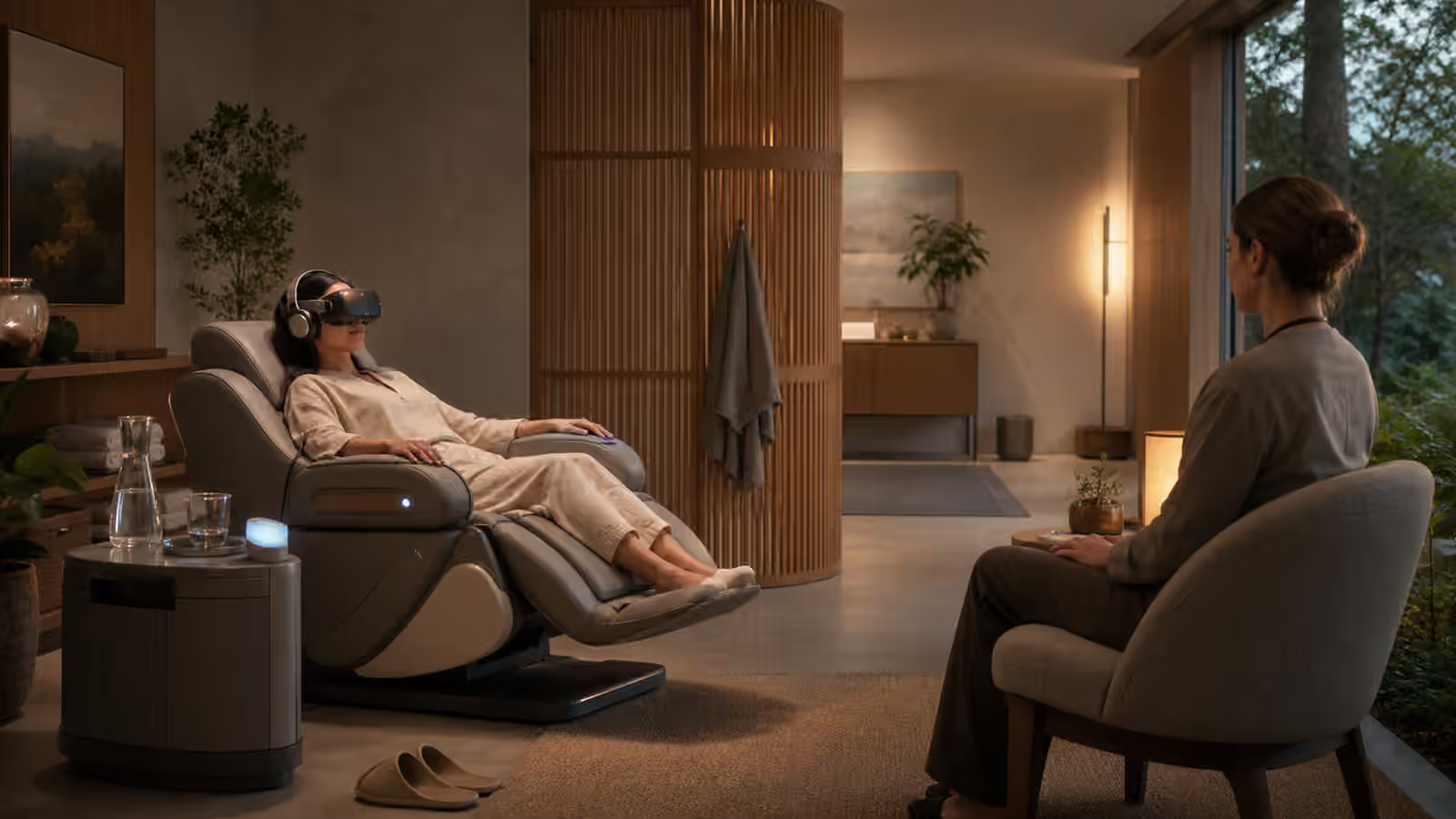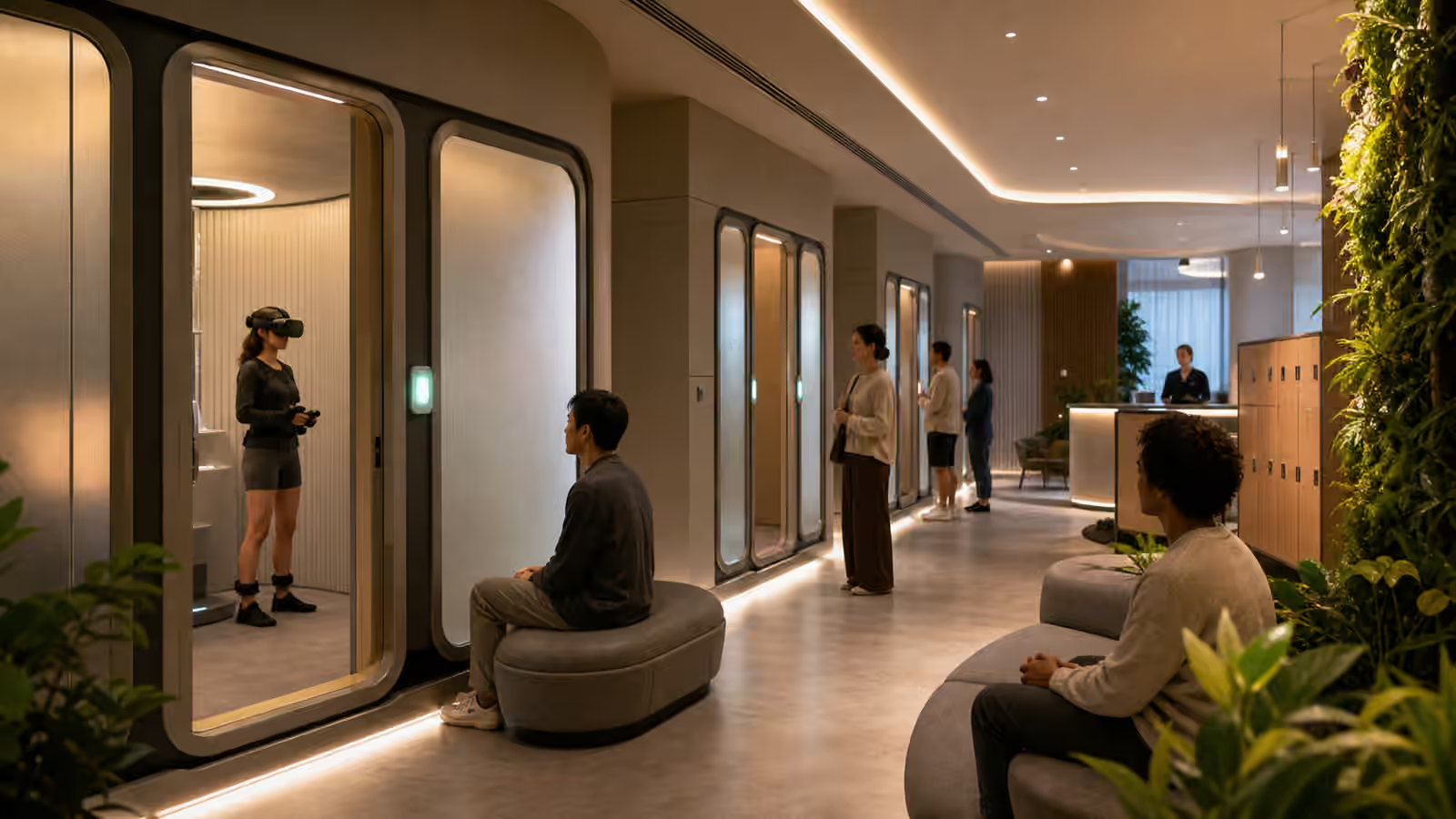
Full dive VR is often imagined as a private device, something entered at home or in a carefully supervised lab. Public access would make the problem more ordinary and more difficult. A full dive room in an arcade, library, campus, hotel, clinic-like wellness space, museum, training center, or travel lounge would have to protect a person who is deeply immersed while other people are nearby, waiting, cleaning, operating equipment, or simply passing through the building.
The Room Outside the World explains why the physical room remains part of immersion. A public venue adds strangers, schedules, shared hardware, staff turnover, noise, payment pressure, and different expectations of privacy. The question is not only whether the virtual world is safe. It is whether the whole place behaves as if a temporarily unavailable person deserves dignity.
A Public Room Is Not a Bigger Home Setup
Home use has its own boundaries, especially when family members, roommates, and household interruptions are involved. Home Use and Household Boundaries in Full Dive VR looks at those domestic pressures. A public venue has a different shape. The user may not know the staff. The staff may not know the user’s habits. The equipment may serve many people in a day. The next appointment may be visible on the schedule. The room may sit inside a noisy building that was not designed for reorientation.
That changes trust before the session begins. A public full dive space should not feel like a row of booths where people are processed quickly. It should feel like a place with clear custody of the boundary between the immersed person and the surrounding building. The door, chair, locker, status light, facilitator desk, cleaning rhythm, and waiting area are all part of that custody.
A user should be able to understand who can enter the room, who can pause a session, what happens if the booking runs late, where personal belongings stay, and how return is handled. These are operational details, but they are also consent details. A person who cannot tell how the public room works may feel social pressure to continue anyway.
Arrival Should Reduce Pressure, Not Create It
Public venues are built around arrival. People check in, wait, move through corridors, ask questions, and notice what others are doing. Deep immersion does not fit well with a rushed entry line. The user may need time to read the session terms, choose sensory limits, adjust equipment, ask for a private setup, and decide not to enter without embarrassment.
Thresholds, Lobbies, and Waiting Rooms in Full Dive VR already treats the lobby as part of the world. In a public venue, the lobby also protects refusal. A user should not have to reject strong haptics, public sharing, scent cues, or a crowded social scene while a line forms behind them. The venue can offer quiet setup areas, plain status displays, and staff language that makes delay normal.
This matters for accessibility too. Some users may need extra time for transfer, fit, translation, sensory reduction, or communication. A public venue that treats all setup time as inefficiency will make those users feel like problems. A mature venue builds variation into the rhythm of the place.
Privacy Has To Survive the Building
Public full dive rooms need privacy without secrecy. Staff may need to know whether a session is active, paused, exiting, or in trouble. They do not need a live theater of the user’s face, body signals, private speech, or emotional inference. Other visitors need even less.
Privacy and Consent in Full Dive VR and Body Data Minimization in Full Dive VR become practical venue rules here. A support console should show operational status, not curiosity data. A door indicator can say the room is occupied without revealing the session title. A facilitator can receive a pause request without seeing why the user asked. A maintenance worker can know the room needs reset without seeing who just used it.
The same restraint applies to sound and layout. Thin walls, open recovery areas, visible check-in lists, loud staff explanations, and public incident handling can all expose more than the user chose to share. Full dive reentry can leave a person quiet, disoriented, moved, embarrassed, or simply not ready to talk. The venue should not turn that moment into a hallway event.
Staff Need Narrow, Rehearsed Authority
Public rooms require staff authority, but authority should be bounded. Facilitators and Operator Roles in Full Dive VR frames operators as stewards rather than owners of the session. A public venue should make that role visible. Staff can help with fit, explain boundaries, initiate a calm pause, respond to equipment faults, and protect the room from interruption. They should not improvise private access, watch sessions for entertainment, or treat the user as content.
The hard cases should be rehearsed before they happen. A user does not respond to a prompt. A fire alarm sounds elsewhere in the building. A friend demands entry to the room. A session runs beyond its booking. A staff member notices a hardware fault. A guest claims the user gave permission. The venue needs scripts, escalation paths, and conservative defaults that protect the immersed person first.
That does not mean staff should be frightened of every session. It means their powers should be legible. The user should know what a facilitator can do, what requires consent, and what happens in an emergency. Public trust depends on boring consistency.
Shared Equipment Changes the Standard
Shared Equipment, Hygiene, and Maintenance in Full Dive VR is especially important in venues. Equipment that feels acceptable at home can feel suspicious in a public room if cleaning, fit, and readiness are not visible. A headset liner, haptic glove, chair support, scent module, audio seal, or thermal surface can carry traces of previous use physically and socially.
The venue should make reset ordinary. Clean parts should not smell harsh. Replacement parts should be available without a scene. A user should be able to reject a component that feels wrong. Staff should be able to remove equipment from service without being punished by the schedule. If a feature is unavailable, the session should shrink honestly instead of pretending the room is fully ready.
This is not only hygiene. Poor fit and worn parts can affect calibration, latency, and trust. A public room that runs marginal gear because the next booking is waiting is choosing throughput over presence.
Reentry Needs a Place to Land
Public venues often optimize exits: finish, pay, leave, make room for the next person. Full dive reentry asks for a different pace. Social Reentry After Full Dive VR focuses on returning to real people. A public venue may be the first real social space the user meets. The design should offer a buffer between the private intensity of the session and the ordinary public corridor.
That buffer can be modest. A quiet seat, water, low light, a plain operational summary, and no demand for immediate explanation may be enough. The user should be able to gather belongings without being watched as a spectacle. If something went wrong, the venue should handle it privately and clearly. If the session was beautiful, the venue still should not assume the user wants to perform delight for a review prompt or waiting audience.
Public full dive venues could make advanced immersion accessible to people who cannot own expensive equipment or dedicate a room at home. That access is valuable only if the venue treats immersion as a temporary vulnerability as well as an entertainment or training product. The room has to protect the person while they are away, welcome them back without rushing, and remember that public access is not the same thing as public exposure.