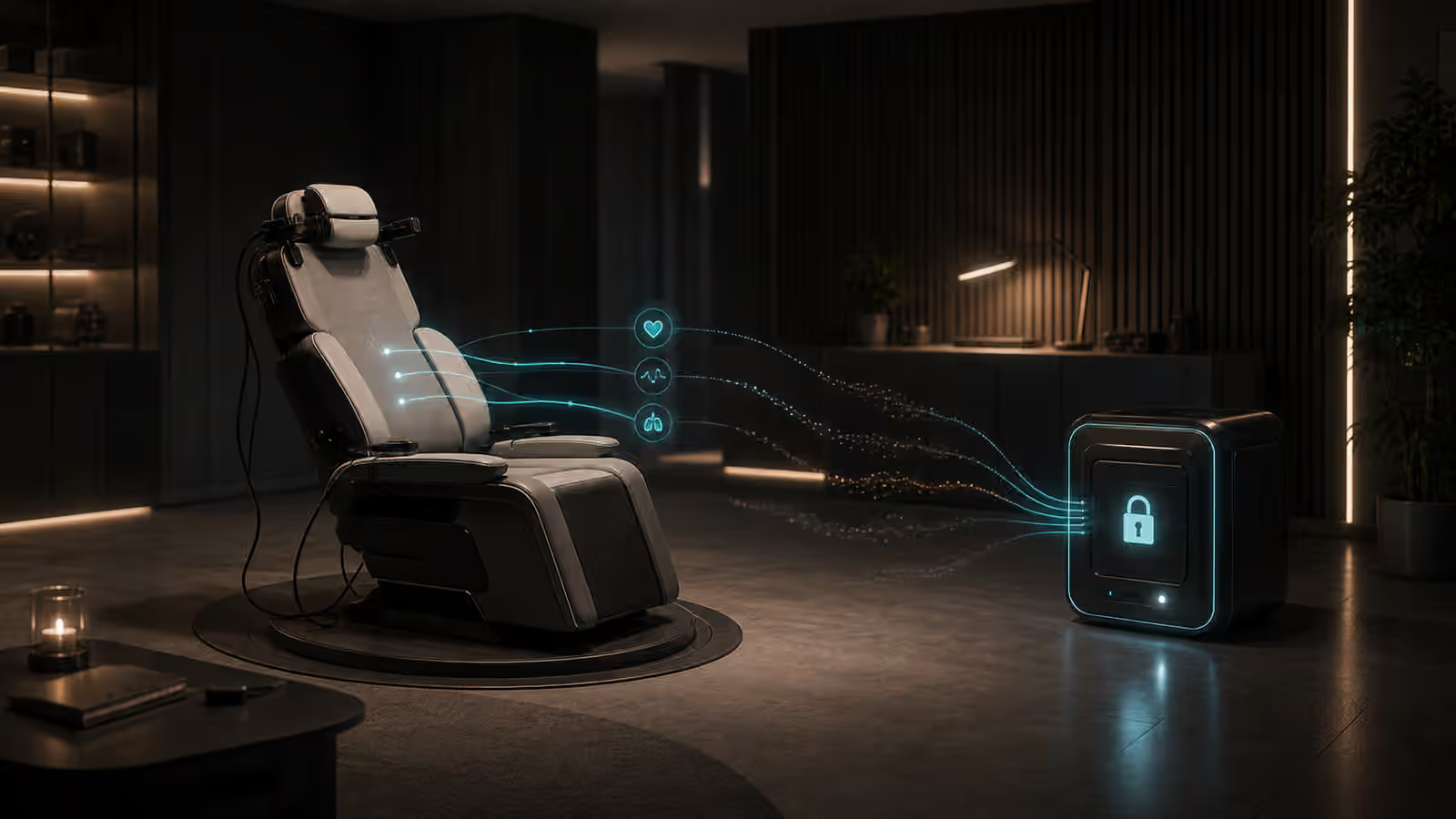
Privacy in full dive VR cannot be treated like another settings menu. The data is too close to the self. A normal app may know what you clicked, where you paused, what you searched, and which messages you opened. An immersive system may know how you moved, where you looked, when you flinched, how quickly you calmed down, which body felt natural, which scene made you hesitate, and which synthetic person you trusted.
That is before true full dive enters the picture. If future systems can read or write more directly to sensation, motor intention, body schema, or perception, the privacy stakes become even higher. The question is no longer only whether a company can track behavior. It is whether a system can record the signals and responses that make a person feel present in a body and a world.
The fantasy of full dive often begins with escape: enter another world, become another body, experience impossible places. The governance problem begins with the opposite: how do you protect the person who returns?
Body data is not ordinary usage data
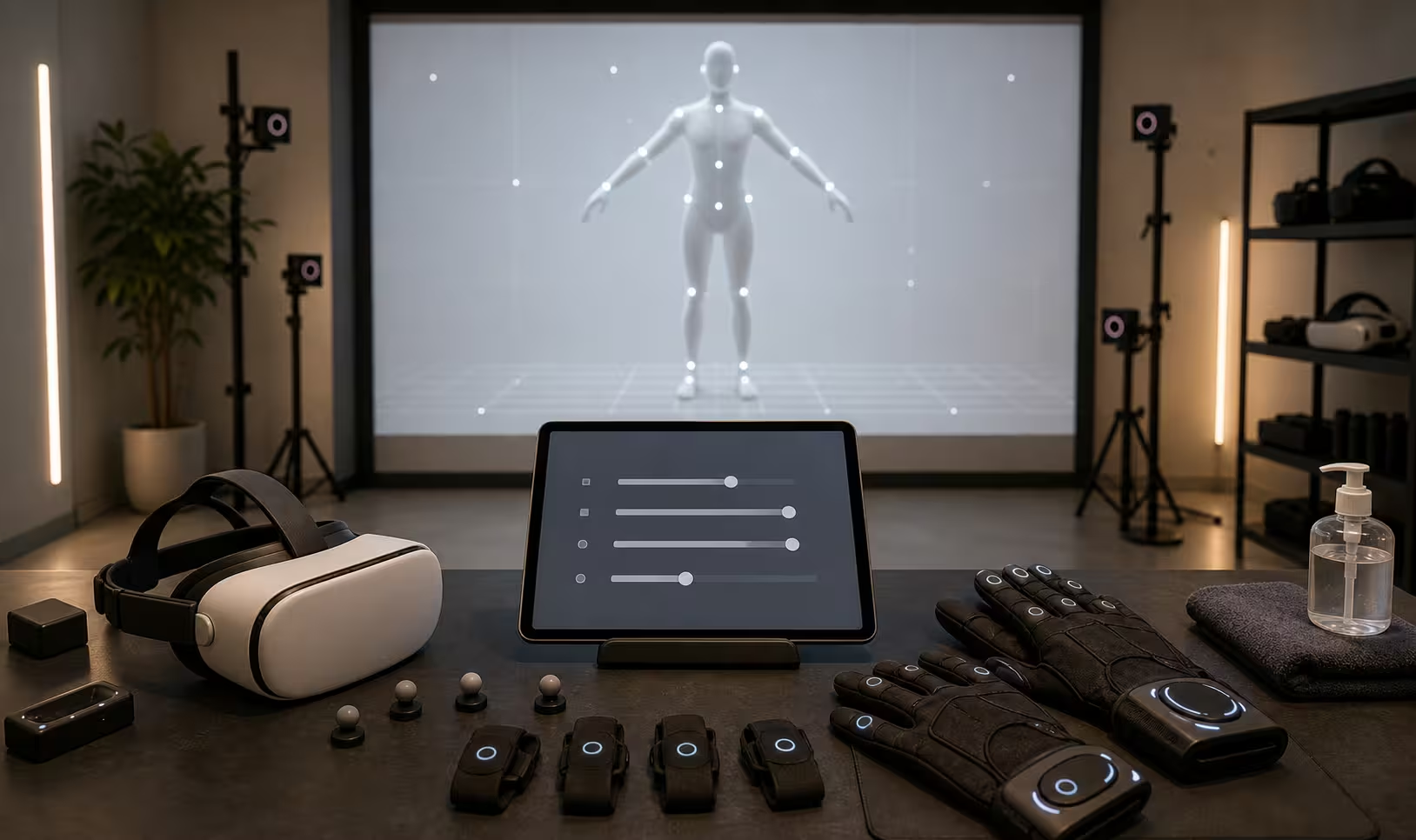
Immersive systems already collect forms of body data. Head position, hand movement, eye direction, gait, reach, posture, reaction time, voice, and play style can all reveal more than a person intends. Even without names attached, patterns can become identifying. A person’s movement can be as distinctive as a signature. Their comfort zones, fears, habits, and abilities may be visible in the way they inhabit a virtual room.
Full dive would deepen that concern. A system that calibrates touch, balance, pain avoidance, temperature, proprioception, or motor intention would need intimate information to function well. Some of that data may be necessary for safety and personalization. The danger is letting necessary calibration become unlimited collection.
A responsible system should distinguish between data needed in the moment, data useful for improving the experience, and data someone wants to keep because it has commercial value. Those are not the same category. The user may consent to one and refuse another. If the system cannot explain the difference, consent becomes theater.
Consent has to be specific and reversible
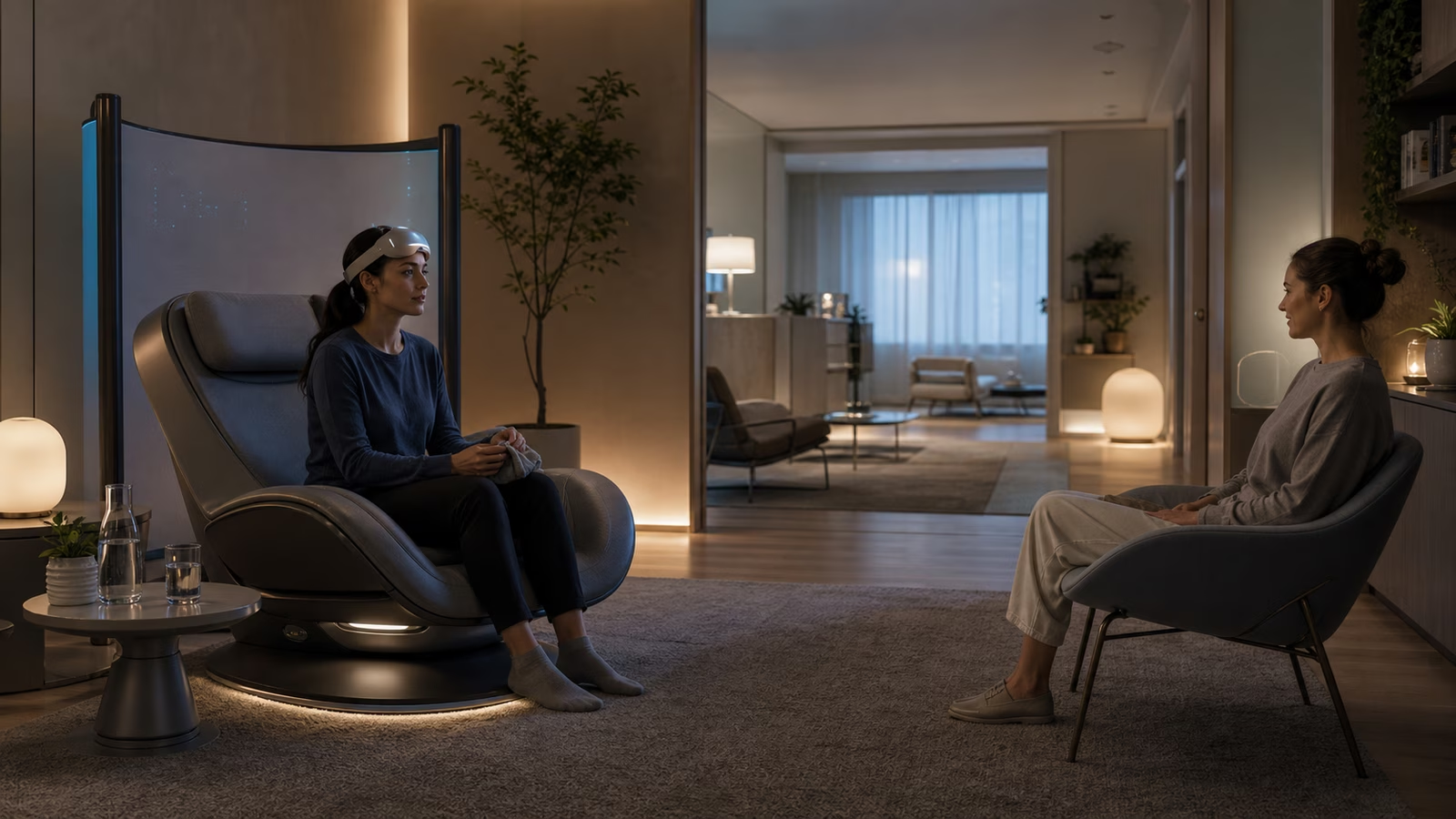
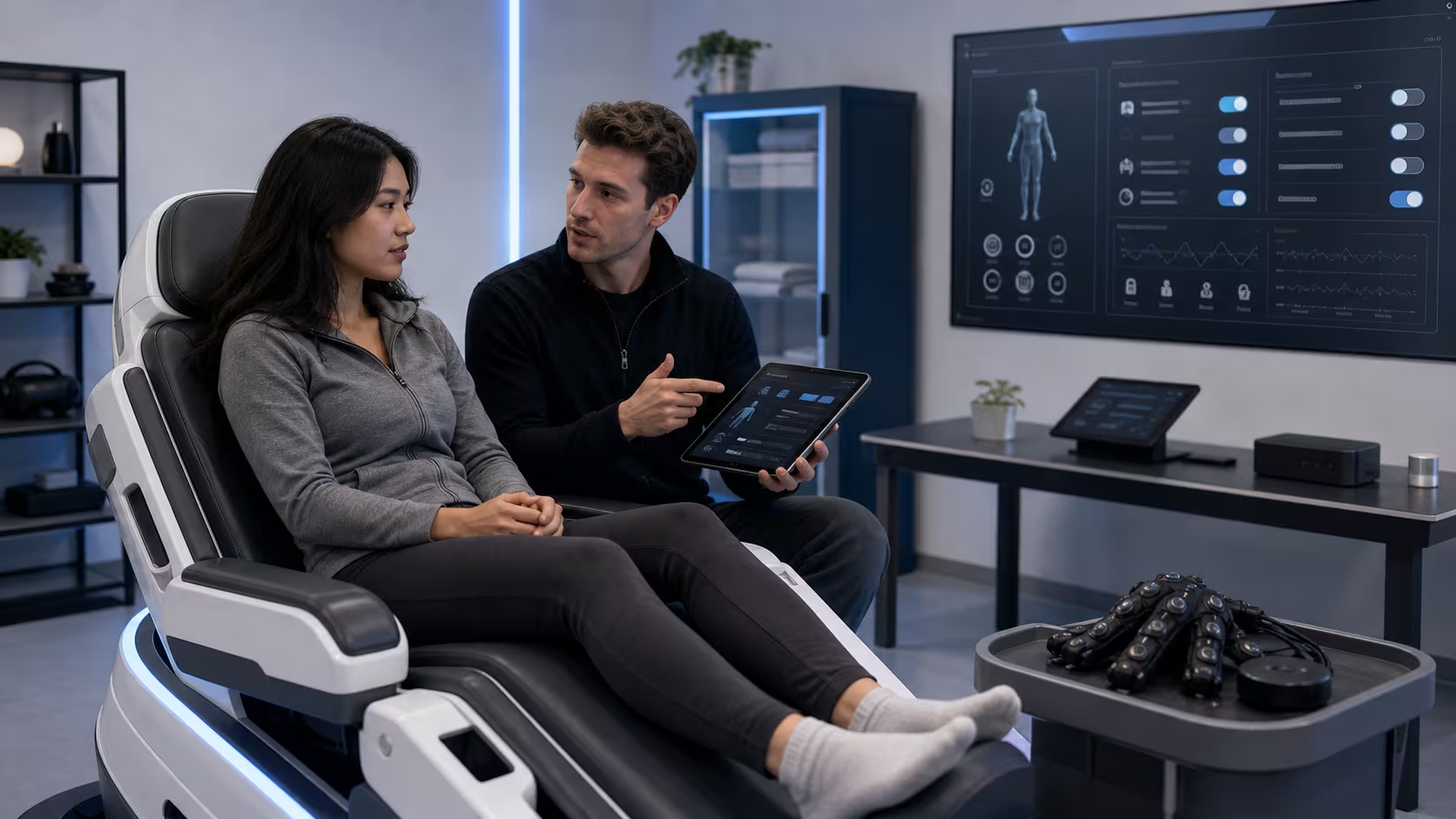
Consent in immersive worlds should not be a single button at the beginning of a long relationship. A person may be comfortable sharing motion data for calibration but not for advertising. They may allow a session recording for personal review but not for platform training. They may consent to haptic contact in one environment and reject it in another. They may want a trusted friend to see a replay but not a moderator, employer, insurer, or school.
Specific consent matters because full dive experiences can blur categories. A training simulation, therapy-like environment, workplace meeting, game, social space, and education platform may all use similar hardware while carrying very different expectations. A person should not have to become a privacy lawyer to understand what they are giving away.
Reversibility matters too. People change their minds after they understand an experience. A user may agree to record a session, then realize the replay captures something more intimate than expected. A system should offer deletion, retention limits, export controls, and clear consequences. Not every deletion request can undo every derived model or shared copy, which is exactly why the rules should be clear before collection happens.
Replays are memory objects
Full dive replays would not be ordinary video clips. They could become memory objects: records of where you looked, what you felt, how your body moved, what others did near you, and how the world responded. A replay might help someone learn a skill, revisit a beautiful place, resolve a dispute, or report abuse. It might also become a tool for humiliation, surveillance, manipulation, or grief that cannot end.
Memory Rights in Full Dive VR explores this problem directly, but privacy belongs beside it. A replay should not be treated as platform property simply because the platform rendered the world. The user was there in the only way that mattered to their nervous system. Their participation gives the record personal weight.
Shared worlds make this harder. If two people inhabit the same session, who controls the replay? Can one person delete their body trace while another preserves the environment? Can a moderator inspect a scene without exposing private gestures unrelated to the complaint? Can a child later revoke access to recordings a parent saved? These questions do not have easy universal answers. They need design, law, and cultural norms before the archive becomes too large to govern.
Emotional inference is still inference
Immersive systems may tempt companies to claim they know what a user felt. The person hesitated, so they were afraid. Their gaze lingered, so they desired something. Their pulse changed, so they were excited. Their posture shifted, so they were uncomfortable. Some of these inferences may be useful for safety or accessibility. They may also be wrong.
Bodies are noisy. People freeze for many reasons. They look away for many reasons. They laugh when nervous, quiet down when overwhelmed, and move differently when tired. A system that converts body signals into emotional labels can create a false authority over the user’s inner life.
Privacy rules should treat emotional inference cautiously. The raw signal may be sensitive, and the inferred label may be more sensitive still because it can be used against a person while pretending to be objective. A platform should not casually turn embodied behavior into personality scores, risk labels, romantic predictions, productivity judgments, or targeted persuasion.
The user should remain the primary witness to their own experience.
Safe worlds need private exits
Consent is not only about data before entry. It is also about control during the experience. A person needs a way to pause, mute, leave, block, report, or reduce intensity without turning the action into a public spectacle. In a full dive setting, an exit is not just a button. It is a safety right.
Some experiences may involve teachers, employers, clinicians, coaches, parents, or moderators. That makes private exits complicated. If a student leaves a simulation, does the teacher see why? If an employee mutes a stressful environment, does a manager get a record? If a patient pauses a session, who receives the data? The answers should protect safety without punishing vulnerability.
A good system lets people recover dignity. It does not make every boundary visible to the whole room. It does not force someone to explain distress while still distressed. It does not bury the exit because retention metrics prefer friction.
Privacy should be designed into the room
The worst version of full dive privacy is paperwork pasted over extraction. The better version is spatial and operational. The room itself shows what is being recorded. The interface makes sharing visible. The session begins with understandable choices. The system uses local processing where possible. Sensitive calibration data expires unless the user renews permission. Social spaces show when replays are active. Private zones are truly private.
This design work will not be glamorous. It will involve defaults, storage rules, audit logs, interface language, device indicators, moderation tools, age controls, and boring governance. That is exactly why it matters. Privacy that depends on heroic user vigilance will fail.
Full dive VR asks for trust at the threshold of the body. If the industry treats that trust as a resource to mine, people will be right to resist. If it treats privacy and consent as part of the medium’s foundation, the technology has a better chance of becoming humane.
The deepest promise of full dive is not that we can become anyone, anywhere. It is that we might do so and still come back with ourselves intact.