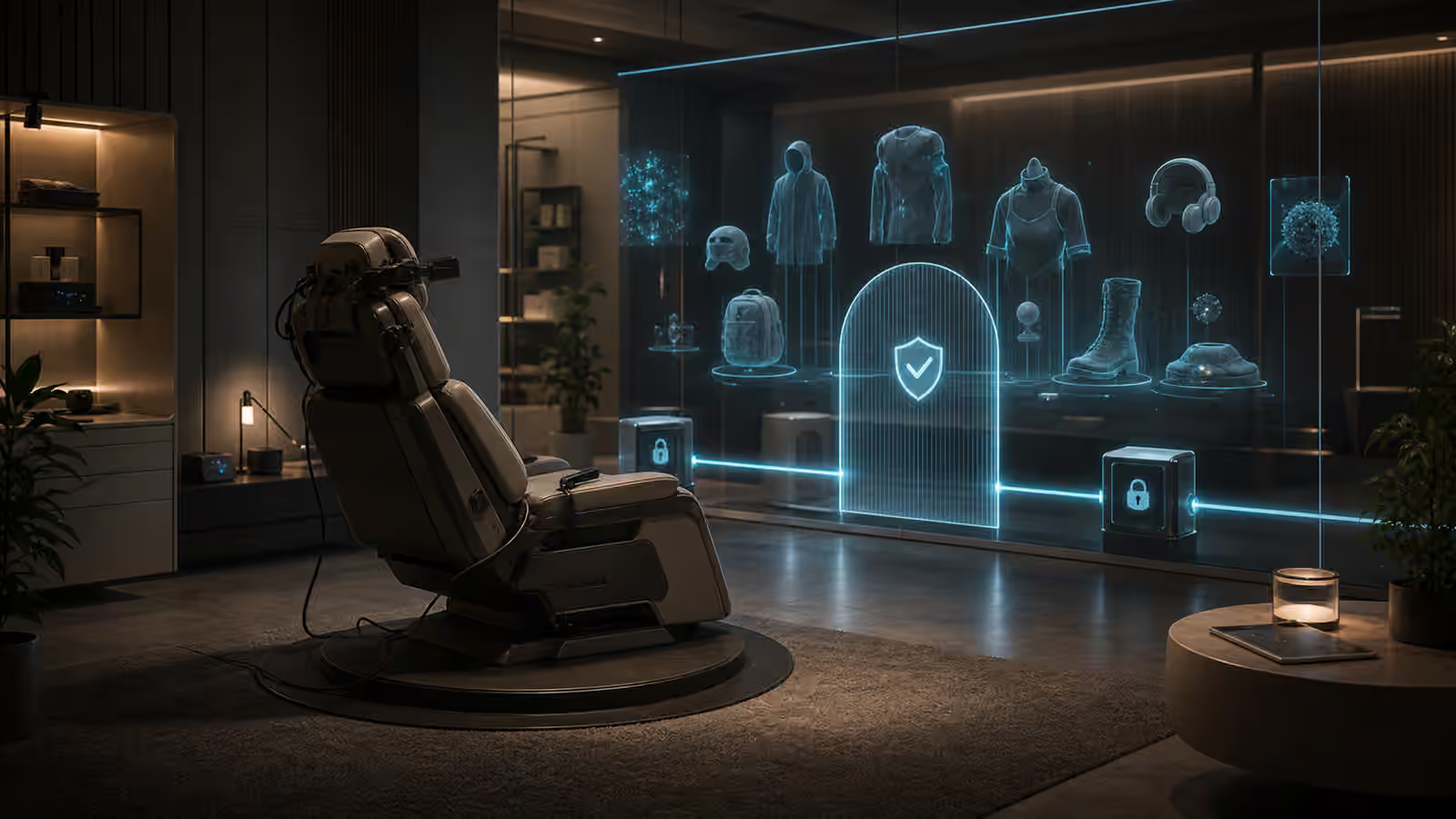
Leaving a virtual world sounds simple until the world has history. A user may have a calibrated body profile, friendships, saved rooms, purchased objects, accessibility settings, sensory preferences, training records, private memories, synthetic companions, and a reputation that only exists inside one platform. The exit is no longer just a button. It is a question of what the person can take with them.
Portability is often discussed as a technical feature. Can one system export a file that another system can import? Can an avatar move between worlds? Can a purchased object keep its appearance? Those questions matter, but full dive VR adds a more personal layer. If the world touched the user’s body map, memory, and relationships, being unable to leave becomes more than inconvenience.
Persistent Worlds, Ownership, and Continuity in Full Dive VR covers the promise and risk of worlds that keep going. Portability asks what happens when continuity becomes confinement. A world can feel meaningful because it remembers. It can also become hard to leave because it remembers only on its own terms.
Profiles Are Not Just Settings
A full dive profile may include height, reach, posture, sensory thresholds, comfort limits, preferred exit style, accessibility needs, haptic tolerances, privacy choices, and the calibration history that makes a virtual body feel natural. Calling that a settings file makes it sound small. It is closer to a practical map of how the system should treat a person.
Calibration Profiles in Full Dive VR explains why profile travel is difficult. Some data is useful across systems. Some is too intimate to move casually. Some may depend on hardware that another system does not have. A profile that works in one haptic chair may be misleading in another. A profile that protects privacy in one world may reveal too much if exported without context.
The right question is not simply whether everything can be portable. It is which parts should be portable, which parts should stay local, and how the user understands the difference. Comfort preferences should not be trapped to punish switching. Sensitive body traces should not be exported just because a format allows it.
Memories Need Selective Exit
Users may want to bring memories with them. A training session, a family room, a personal ritual, a beautiful landscape, or a difficult incident report may have value outside the platform that hosted it. But full dive memories are not ordinary screenshots. They may include other people, body data, voice, touch, gaze, emotional inference, and synthetic characters whose rights or rules are uncertain.
Memory Rights in Full Dive VR argues that immersive records behave like memory objects. Portability makes that idea operational. A user might export a low-detail souvenir, a private text summary, a technical training record, or a full sensory replay. Each carries different risks. A platform should not force the most invasive version because it is easiest to monetize or lock in.
Selective exit matters. The user may want to take proof of completion without taking the whole experience. They may want a room layout without conversation history. They may want an incident record without exposing unrelated private behavior. The export tool should respect the difference between remembering and extracting.
Ownership Should Survive Without Becoming a Trap
Virtual objects can create attachment. A home, instrument, workshop, garden, vehicle, costume, or tool may represent time and care. If those objects cannot leave a platform, the user may stay because leaving feels like losing part of a life. That pressure will grow as worlds become more embodied.
Portability does not require every object to work everywhere. A complex sensory artifact built for one world may not translate to another. A scent garden, gravity-defying room, or social ritual may depend on local rules. But the user should know what kind of ownership they have. Are they buying access, a transferable design, a world-bound license, a personal archive, or only temporary use?
Advertising and Persuasion Boundaries in Full Dive VR becomes relevant when platforms use attachment to keep users paying. A world that makes leaving emotionally costly should be honest about what is portable before the user invests months or years of care.
Interoperability Has Safety Edges
Interoperability is attractive. People want friends, identities, accessibility settings, and creative work to travel. But full dive VR cannot treat all movement between worlds as harmless. A body profile from one system may be unsafe in another. A haptic object may exceed another platform’s comfort limits. A synthetic companion exported from one environment may behave differently under another platform’s incentives. A moderation history may protect a community or unfairly follow someone forever.
This is where Access Control and Account Recovery in Full Dive VR matters. Portable identity needs recovery, authentication, and limits. A stolen account in a full dive ecosystem could expose more than purchases. It could carry body settings, private rooms, and social trust.
Good interoperability would include translation, not blind copying. A receiving world should explain what it can preserve, what it must simplify, what it refuses for safety, and what requires renewed consent. The user should not discover after entry that their boundaries were flattened into default settings.
The Right to Leave Should Be Designed Early
Platforms rarely design exit generously after lock-in succeeds. Full dive VR should not repeat that pattern. The right to leave should be part of the architecture before worlds become socially and emotionally dense. Export tools, deletion tools, account transfer, profile separation, local backups, and memorial handling are not afterthoughts. They are trust features.
Habit and Attachment Boundaries in Full Dive VR explains why repeated immersion can shape attachment. Portability is one way to keep attachment from becoming captivity. If a person knows they can leave with meaningful parts of their life intact, staying becomes more voluntary.
Leaving also includes temporary absence. A user may need a break without losing a home, social standing, or companion history. A platform that punishes absence through decay, social pressure, or irreversible loss may be designing habit instead of community. Persistent worlds can change, but they should not make rest feel like abandonment.
A Door Is Not Enough
The visible exit from a session matters. Coming Back shows why reorientation is part of safety. Portability is the larger version of that exit. It asks whether the user’s relationship to the world remains voluntary after the session ends.
A humane full dive ecosystem would let people carry practical settings, protect intimate traces, export meaningful records, understand ownership, recover accounts, refuse surveillance, and leave without being treated as disloyal. It would admit that some things cannot travel cleanly while refusing to use that complexity as an excuse for captivity.
The deepest sign of trust may not be how convincingly a world welcomes someone. It may be how cleanly it lets them go.