The most important thing about a full dive world may be what happens when nobody is inside it.
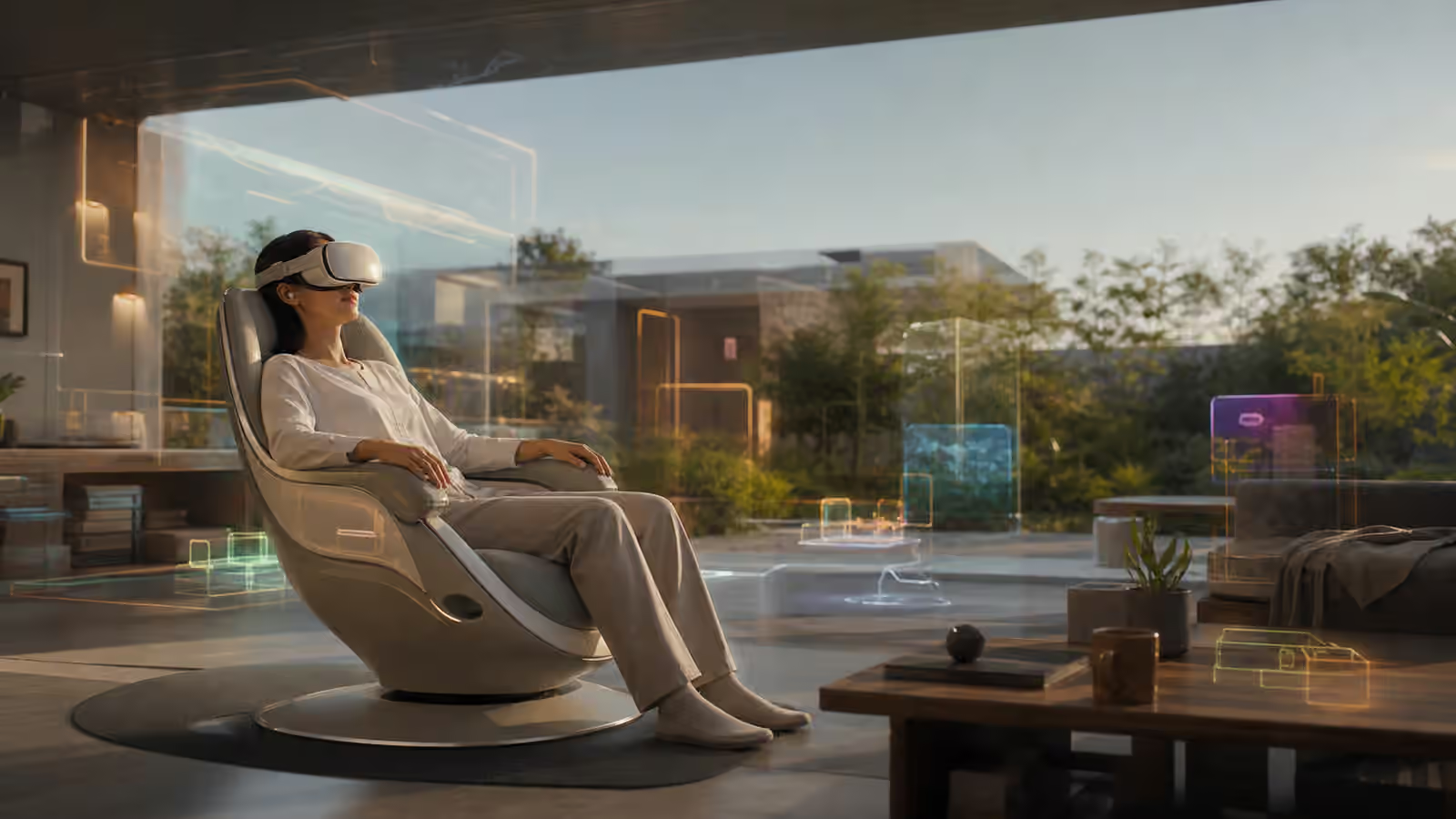
A short simulation can begin, run, and vanish like a stage set. A persistent world behaves differently. The garden you built last week is still there. The chair you moved remains by the window. A friend leaves a note in a room you share. A synthetic guide remembers where the lesson stopped. A training workshop keeps the damaged machine in the same condition so the next session can start honestly. A memorial apartment keeps its photographs turned away because the family agreed they should not be examined.
That continuity is part of the appeal. A place that remembers can become more than an experience. It can become a home, a studio, a classroom, a club, an archive, a workshop, or a shared project. But persistence also changes the safety problem. A world that keeps state can keep secrets. It can preserve mistakes. It can carry social pressure forward. It can make a virtual object feel owned, borrowed, stolen, repaired, inherited, or contaminated by memory.
Shared Worlds in Full Dive VR asks how people should meet inside immersive spaces. Persistence asks what remains after they leave.
Persistence Turns Space Into Relationship
A temporary scene asks the user to trust the moment. A persistent place asks the user to trust a relationship over time. That relationship may be with the platform, with other people, with a synthetic person, with an avatar body, with a private archive, or with the user’s own past choices.
In ordinary software, saved state is convenient. A document opens where it was left. A game remembers progress. A chat room preserves messages. In full dive VR, saved state becomes more bodily. If the user experienced a room as a place, then changes to that room may feel closer to changes in a real environment than edits to a file. A workshop table that has been rearranged without permission may feel like intrusion. A private room that silently gained a visitor log may feel exposed. A training simulation that resets injuries, mistakes, or tool positions without telling the learner may distort what the session taught.
The world does not need to be photorealistic for this to matter. Continuity gives objects and rooms a history. A simple bench can become meaningful if two friends always meet there. A doorway can become tense if it once led to a difficult scene. A shelf can become private if it stores body settings, sensory preferences, or unfinished work. The persistent world accumulates significance through use.
That significance should not be treated as decorative. It is part of the interface.
Saved Objects Need Clear Authority
Virtual ownership sounds simple until the object is embodied. A user places a cup on a table. Another user picks it up. A teacher edits a student’s training model. A platform updates a shared apartment. A synthetic assistant organizes a room while the user is away. The object may be made of data, but the experience of control can feel real.
Full dive does not need to copy physical property law to respect ownership. It needs clear authority. Who can move this object? Who can duplicate it? Who can delete it? Who can feel its haptic properties? Who can inspect its history? Who can use it to trigger a memory, open a room, summon a character, or change the environment? The answers may differ between a public plaza, a private home, a family archive, a classroom, a therapy-like rehearsal room, and a workplace simulation.
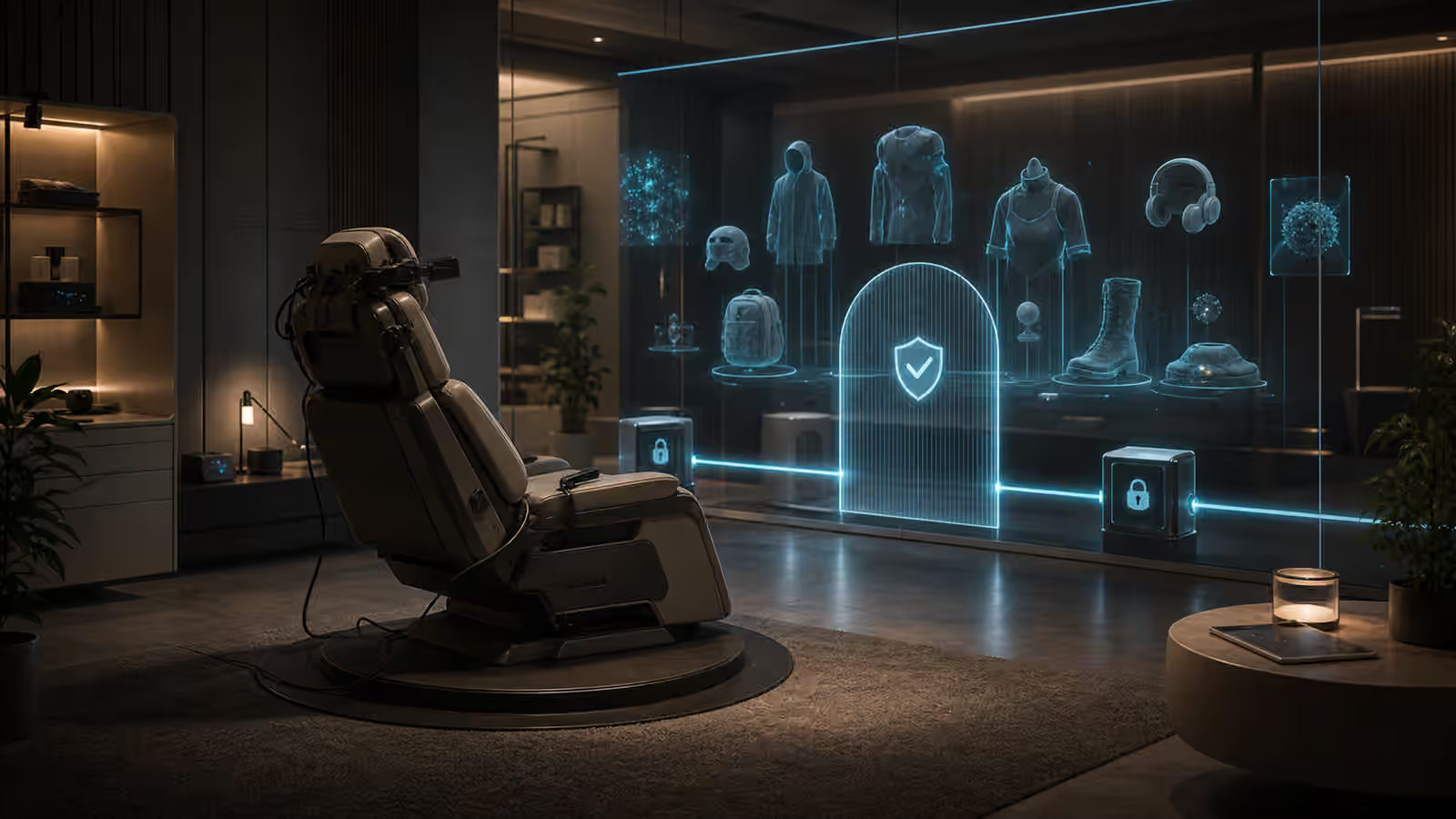
Memory Rights in Full Dive VR covers recordings, replays, and body traces. Persistent objects sit beside that problem because they can become memory containers. A virtual jacket may not only be clothing. It may store the body shape used during a particular period of life. A tool may remember the user’s training progress. A room key may control who can enter a shared world. A toy in a family space may carry a child’s voice, movement pattern, or creative work.
If the system treats those objects as ordinary assets, it will miss their social weight. The right design should make authority visible without turning every interaction into paperwork. A user should be able to tell when an object is private, shared, borrowed, copied, archived, or temporary. They should be able to understand whether a change affects only their view or the world’s shared state.
Change Needs a History
Persistent worlds need memory, but they also need legible memory. A place that changes while the user is gone should not behave as if nothing happened.
Imagine returning to a shared studio and finding the walls repainted, a table moved, and a synthetic assistant waiting with a new task. The user may like the changes. They may not. What matters first is whether the world can explain itself calmly. Who changed the room? Was the change automatic, collaborative, moderated, or imported from another version? Can the user compare the previous state? Can they restore their private arrangement without undoing someone else’s work?
Version history may sound like a software feature, but in full dive it becomes an orientation feature. A sudden changed room can be disorienting, especially if the place has emotional weight. A visible history helps the user rejoin the world instead of feeling that the world moved behind their back.
The history should be scaled to the context. A public market does not need to explain every moved chair. A private therapeutic rehearsal room may need a careful record of what changed and why. A child’s creative space may need guardian controls and gentle explanations. A multiplayer construction world may need authorship markers so credit and responsibility remain understandable. A grief archive may need stricter rules because an accidental edit can feel like damage to memory.
Continuity without history can become gaslighting by interface. The room insists it has always been this way, while the user’s memory says otherwise.
Rollback Is Not Always Repair
When something goes wrong in a persistent world, the obvious answer is rollback. Restore the room. Undo the edit. Return the object. Delete the copy. Reset the session. That will sometimes be necessary, especially after harassment, accidental damage, data corruption, or a platform error.
But rollback is not morally simple in a shared immersive place. One person’s restoration may erase another person’s legitimate work. A world may contain overlapping claims: a shared mural, a classroom model, a memorial room, a training score, a synthetic character’s memory, and the user’s private annotations. Returning everything to yesterday may solve one problem while creating another.
The system should distinguish technical recovery from social repair. Technical recovery restores data. Social repair explains what happened, who was affected, what remains changed, and what permissions need to be revised. In a deep immersive system, that explanation matters because people may remember the event as something they lived through. Quietly deleting evidence may protect a room’s appearance while damaging trust.
Privacy and Consent in Full Dive VR is relevant here because repair often requires records. A platform may need enough logs to investigate a harmful change, but not so much that every private movement becomes permanent surveillance. A healthy persistent world keeps the minimum history needed for consent, safety, authorship, and recovery. It does not turn continuity into an excuse to remember everything forever.
Synthetic Caretakers Should Have Limits
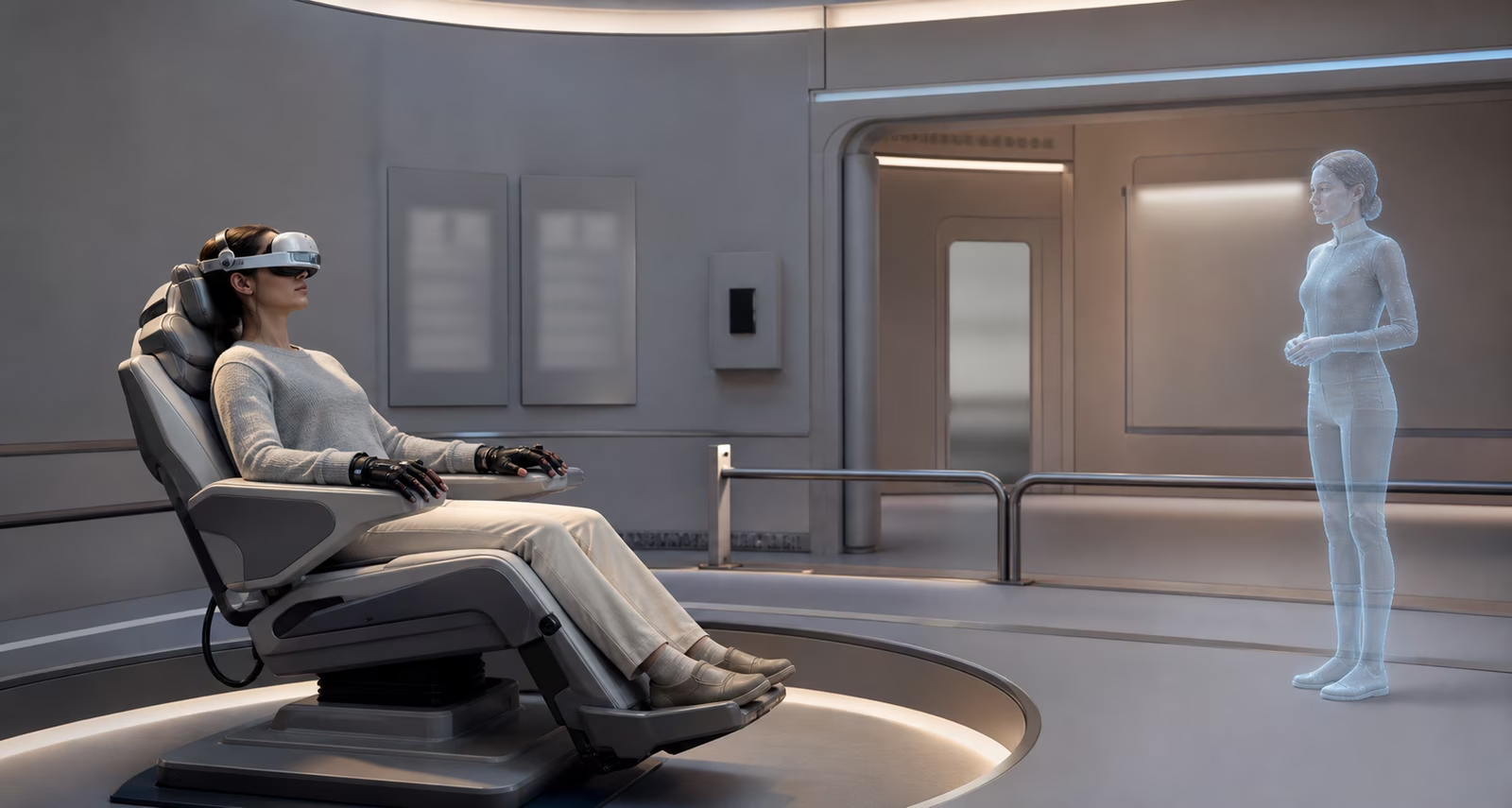
Persistent worlds will invite caretakers. Some will be human moderators or collaborators. Many will be synthetic people. A guide can keep a classroom ready, tidy a workshop, preserve a user’s preferences, warn about unresolved conflicts, and help a returning user understand what changed since the last visit.
That role can be useful. It can also become too powerful. A synthetic caretaker that manages the room may quietly decide what belongs where, which memories are surfaced, which unfinished tasks are prioritized, and which relationships remain active. If it speaks with warmth and remembers the user’s habits, its authority may feel natural before the user has considered it.
Synthetic People in Full Dive VR argues that artificial presence should be disclosed and bounded. Persistence makes the same point through infrastructure. A caretaker should show what it changed. It should separate suggestions from actions. It should let the user enter a room without being greeted every time. It should not treat silence as permission to reorganize private space.
The most respectful caretaker may behave less like a host and more like a careful librarian. It can preserve, explain, and retrieve. It can mark uncertainty. It can refuse unsafe requests. It can step away when the user wants to be alone. Above all, it should not become the invisible owner of a world that users believe is theirs.
Persistence Should Not Trap the User
A persistent world can create pressure to return. Plants need tending. Friends leave traces. A class project continues. A synthetic companion waits. A workshop deteriorates. A guild expects help. A memorial room changes on an anniversary. Some of that continuity can be beautiful. It can also turn presence into obligation.
Humane persistence needs endings inside it. A user should be able to pause a world, archive a room, transfer responsibility, leave a shared project, close a relationship with a synthetic person, and mark an object as finished. The system should not design every saved state as a hook. A place that remembers should also know how to release.
This connects to Social Reentry After Full Dive VR because the user’s ordinary life has its own continuity. The physical home, family, work, sleep, and body do not become less real because a virtual garden needs attention. A persistent full dive platform should not punish absence by letting meaningful spaces decay unless the user knowingly chose that kind of simulation. Even then, it should offer humane controls around timing and responsibility.
The same applies to identity. A person should be able to change an avatar, retire a room, or leave a community without losing every memory or carrying every previous version forward. Continuity should support growth, not freeze the user inside an old self.
A World Worth Returning To
The best persistent full dive worlds will probably feel ordinary in the best sense. They will keep the chair where the user left it. They will show when a friend has visited. They will preserve a workshop without pretending the platform owns the craft. They will let a classroom continue between lessons without turning students into data sources. They will keep memorial spaces tender, explicit, and limited. They will make shared objects understandable before conflict begins.
That requires technical design, but it also requires manners. A persistent world should knock before entering private memory. It should label changed rooms. It should make ownership visible. It should keep rollback honest. It should let synthetic caretakers help without taking possession. It should understand that a saved place can become part of someone’s emotional geography.
Full dive VR often asks how real a virtual world can feel. Persistence asks a more practical question: can a virtual world remain meaningful over time without becoming presumptuous?
The answer will depend less on perfect simulation than on trust. A world that remembers too much, changes silently, or treats every object as platform inventory will feel unstable no matter how beautiful it looks. A world that remembers carefully, explains change, honors shared authority, and lets users leave without penalty may become something rarer than a convincing illusion. It may become a place people can return to without surrendering control of what return means.