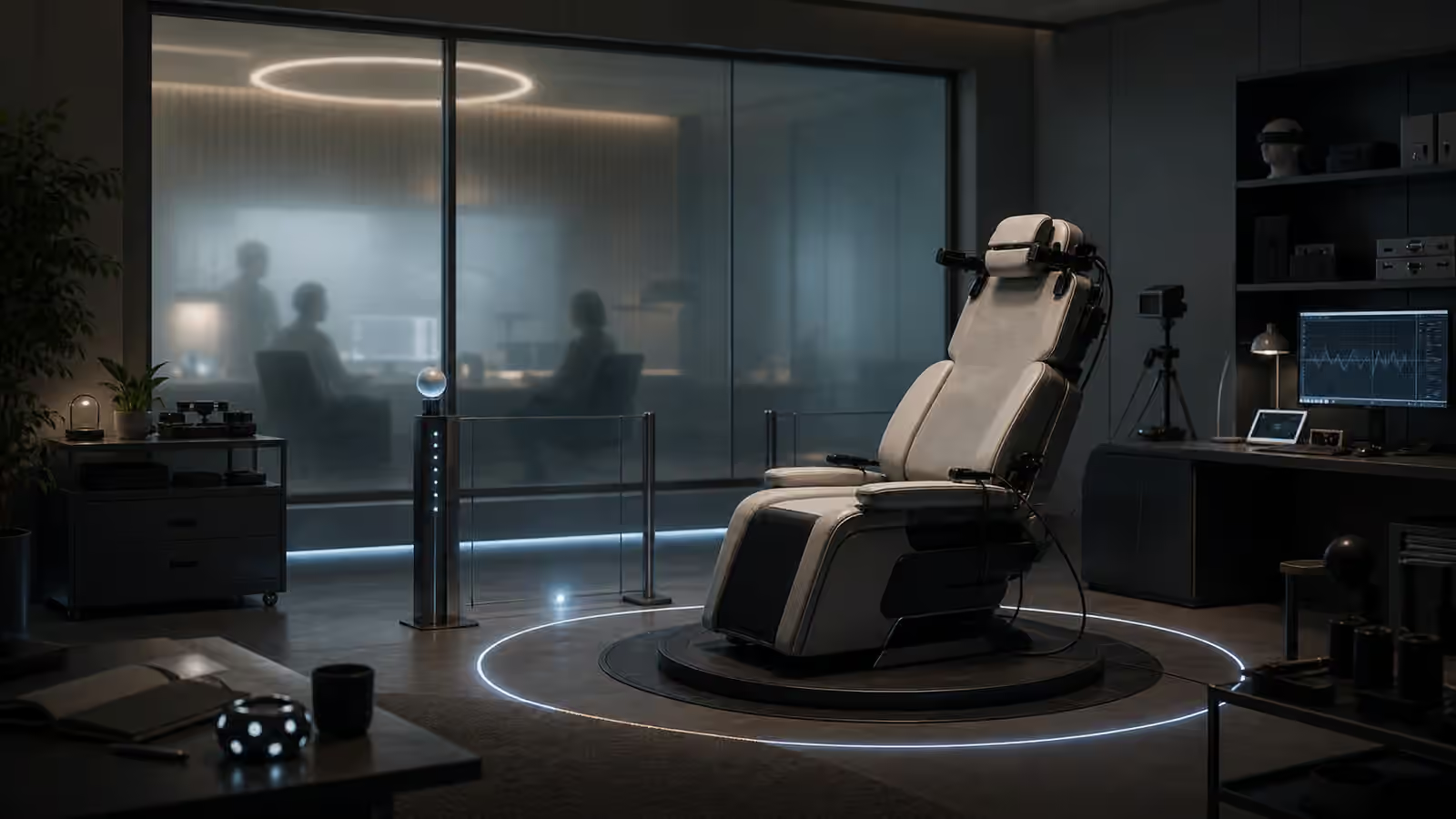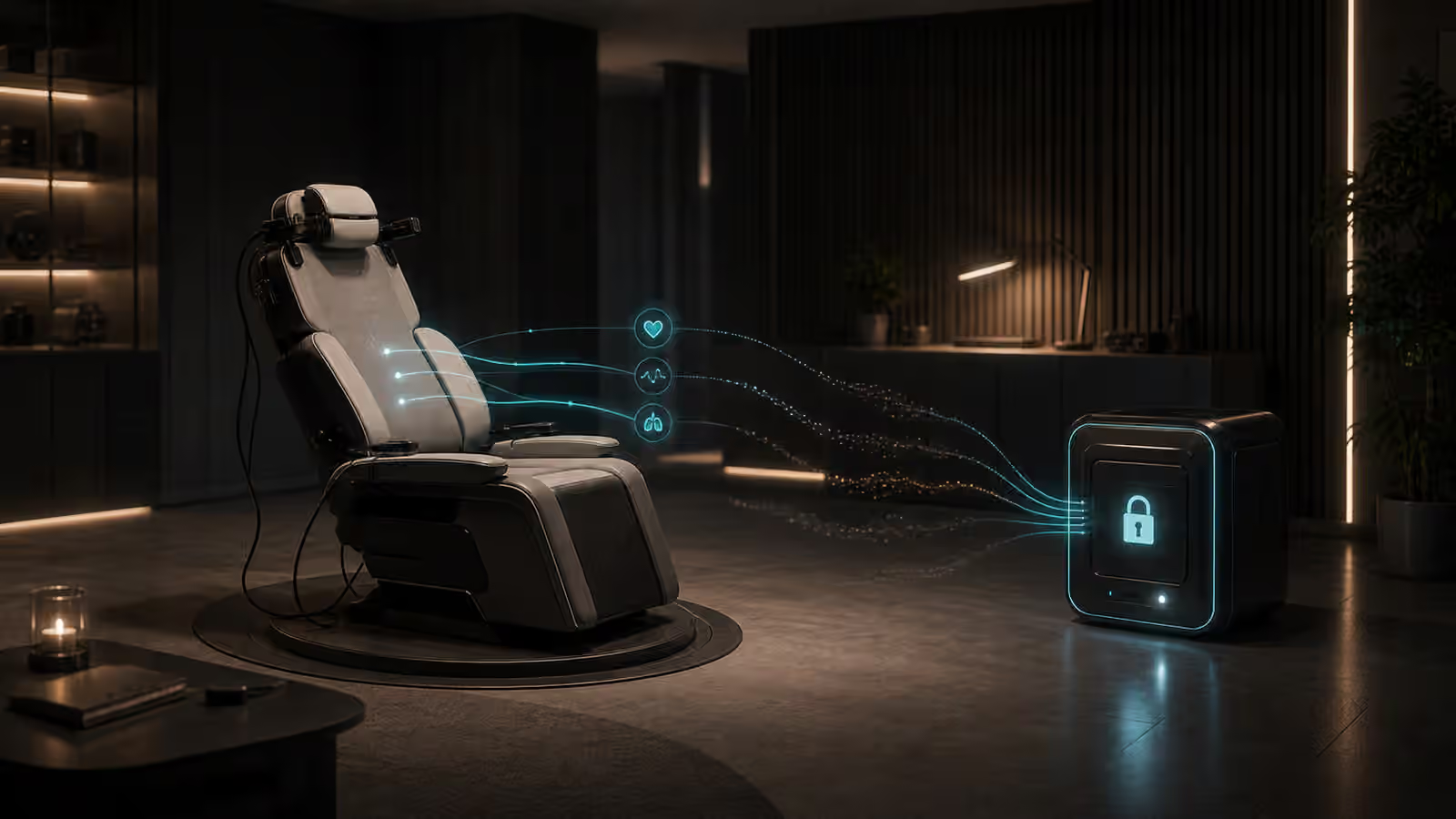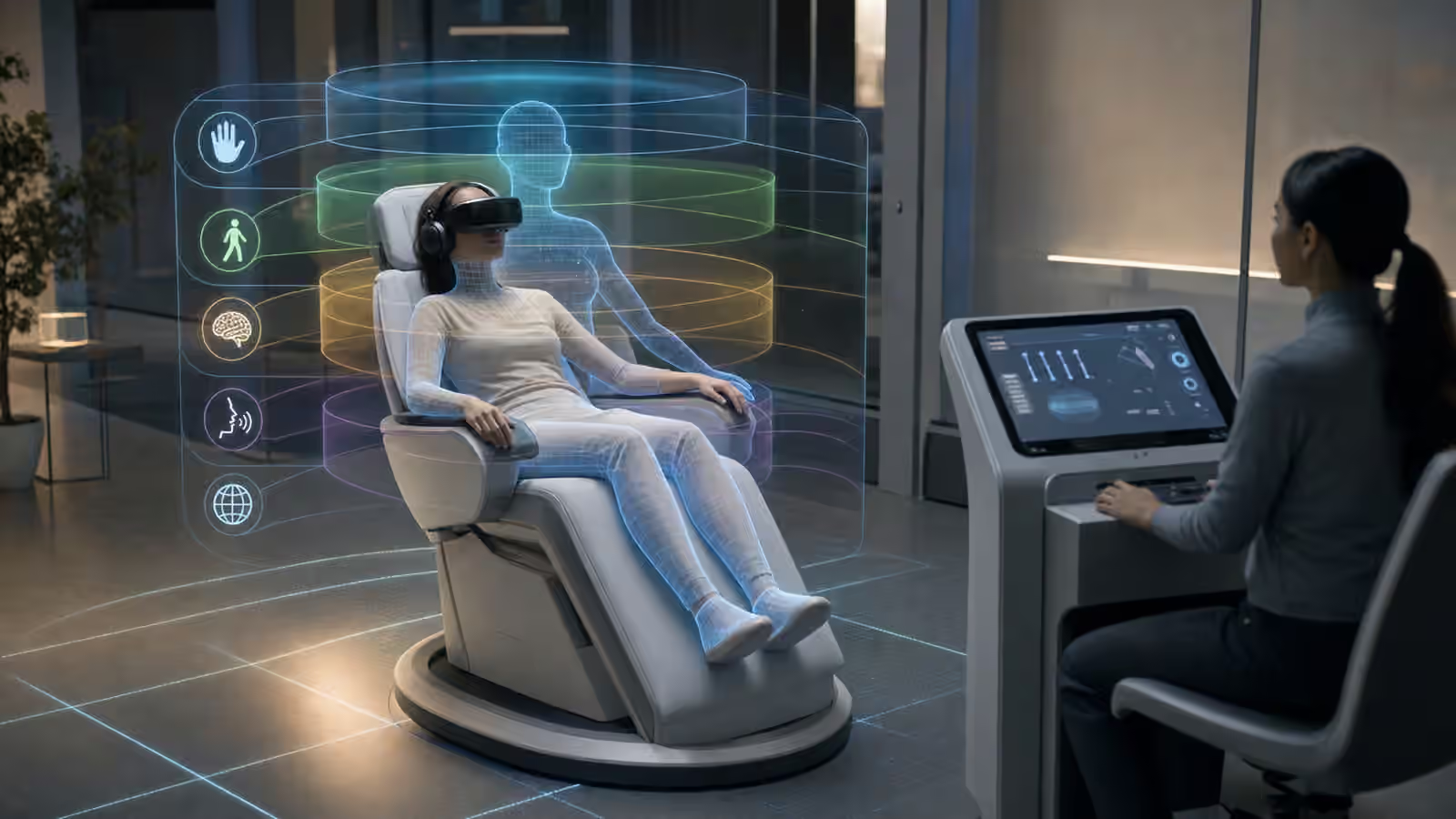
Permissions sound like a software problem until the software reaches the body. A phone app asks for the camera, the microphone, location, contacts, or notifications. A full dive world might ask for touch, balance cues, emotional adaptation, body transformation, session memory, synthetic companionship, voice proximity, and the right to keep running while the user rests. The vocabulary looks familiar, but the stakes are not.
The basic question is simple: what should a world be allowed to do? The answer cannot be hidden in one long acceptance screen before entry. It has to be built into the room, the body model, the social rules, the archive, and the exit. Full dive VR would need permissions that are understandable while the user is calm, enforceable while the user is immersed, and reversible after the session has ended.
This guide sits between several others in the collection. Privacy and Consent in Full Dive VR asks what embodied data should be collected and retained. Shared Worlds in Full Dive VR asks how people should meet inside immersive spaces. Avatar Bodies and Body Schema asks what happens when the body itself becomes part of the interface. Permission boundaries are the operating layer beneath those questions. They define which parts of the person, the room, and the record a world may touch.
A permission is not a waiver
Many digital permissions are framed as a choice, but they often behave like a toll gate. Accept everything and enter. Refuse and leave. That model is already weak for ordinary apps. It becomes dangerous for immersive systems because the user may not understand what a permission means until they have felt it.
A request for haptic access, for example, is not one thing. It might mean a light vibration when a tool is picked up. It might mean pressure from another person’s hand. It might mean simulated heat, impact, resistance, texture, or restraint. A request for voice access might mean spatial conversation, private whispering, recording, synthetic voice imitation, translation, moderation, or emotional analysis. A request for body access might mean changing height, smoothing movement, correcting posture, mapping a disability accommodation, or allowing a game mechanic to alter the user’s felt shape.
Those differences matter. A responsible permission system would not ask for “full sensory access” as if realism were a single switch. It would separate kinds of access, intensities, contexts, and durations. The user should be able to allow gentle texture in a craft room without allowing simulated injury in a combat scenario. They should be able to allow close voice from invited friends without allowing a synthetic host to lean into their personal space. They should be able to try a temporary avatar change without making that body profile available to every world they visit.
Permission should also be treated as a continuing relationship, not a contract signed at the door. The system should show what is active, reduce access when confidence falls, and make refusal ordinary. If saying no breaks the whole experience, the design has made consent theatrical.
Sensory access needs a boundary map
Full dive permission design begins with sensation because sensation is how the world gets close. Vision and sound are only the obvious channels. Touch, balance, proprioception, smell, taste, temperature, and pressure can all become part of the system’s output problem. How Full Dive VR Might Work describes that loop in broad terms: the system reads intent and state, then sends coordinated feedback. Permissions decide when that feedback is allowed to happen.
A boundary map would describe the user’s allowed sensory range in plain terms. It would know which sensations are always off, which are allowed only at low intensity, which require a fresh prompt, and which are safe for a given context. It would understand that a user might enjoy cool air in a mountain scene but reject facial warmth, food smells, sudden touch from strangers, or balance tricks late at night. It would let accessibility preferences and safety boundaries live in the same architecture instead of treating one as a customization menu and the other as a legal disclaimer.
This is not about making worlds timid. It is about making them trustworthy. A haptic city can still have rain, railings, fabric, steps, tools, and crowds. The Haptic City works because touch becomes a language, not a shove. Permission boundaries give that language grammar. They tell the world which forms of contact are welcome, which require warning, and which should never be attempted.
The map also needs to change with state. A user who is tired may want lower intensity. A user who has just left an emotional conversation may not want a loud festival scene. A user recovering from drift or latency problems may need simplified feedback until trust returns. Latency, Drift, and Trust in Full Dive VR makes this practical: a sensation delivered at the wrong time can feel like a violation even when the content itself was allowed.
Body changes should ask more carefully than costumes
Changing an avatar’s appearance is familiar in games. Full dive makes it stranger because the body may not be only visible. It may be felt. A taller body changes reach and balance. A smaller body changes scale and vulnerability. A faster body changes impulse. A many-limbed or weightless body changes attention. A beautiful body, damaged body, young body, old body, animal body, machine body, or copied body can carry meanings that are not cosmetic.
The permission system should treat body changes as active modifications to the experience, not as skins. Some changes can be temporary and playful. Others require training, gradual calibration, or a protected room. A world should not surprise a user by altering felt height, voice, face, strength, pain threshold, or social presentation because a story beat demanded it. The system may be fictional, but the user’s response is real enough to deserve notice.
There is also a difference between a change the user chooses and a change another party applies. In a shared world, can a game master shrink a participant? Can a teacher lock a student’s viewpoint to demonstrate a concept? Can a friend pull someone into a dance, carry them, freeze them, or dress their avatar? Can a synthetic character mirror the user’s younger face to create intimacy? The answer may be yes in some designed contexts, but it should never be assumed from the fact that the user entered a world.
The cleanest rule is that body authority starts with the user. Avatar Bodies and Body Schema explains why the body map is delicate. Permission boundaries make that delicacy operational. They decide who may request a change, how the request is presented, how long it lasts, what happens when the user refuses, and how the ordinary body is restored before exit.
Recording permissions should follow the person home
A full dive session can leave records behind. Some records are technical: calibration states, error logs, timing corrections, comfort settings. Some are social: who entered a room, who approached whom, who spoke, who touched, who left. Some are memory-like: replays, saved places, body traces, synthetic relationships, training progress, and private reactions. A permission system that only governs the live session misses half the problem.
Recording should have its own boundaries. A user might allow local calibration data but reject platform analytics. They might allow a personal replay but not a shareable replay. They might allow a moderator to inspect a disputed moment but not unrelated private gestures. They might want a synthetic tutor to remember skill progress but forget emotional disclosures. These distinctions are not fussy. They are the difference between using memory to support the user and using memory to quietly accumulate power over them.
Memory Rights in Full Dive VR argues that immersive records can become memory objects rather than ordinary media. Permissions should respect that weight. The right question is not only who owns a recording. It is who can create it, who can sense that it is being created, who can search it, who can derive models from it, who can delete it, and what remains after deletion.
The answer should be visible before the session and reviewable afterward. Aftercare should not mean scrolling through a legal export. It should mean the user can see, in ordinary language, what was saved and what was not. If something could not be deleted because it was shared, copied, or transformed into an aggregate safety record, the system should say that plainly. Trust weakens when the archive behaves like a secret room.
Shared worlds need enforceable consent
Permission boundaries become harder when other people enter the room. Social presence is powerful because people are not just content. They improvise, misunderstand, pressure, comfort, tease, teach, and test limits. A full dive platform that relies only on social norms will leave users to negotiate embodied boundaries while already exposed.
A shared world needs enforceable consent. Personal space should not depend on everyone being polite. Touch should not depend on after-the-fact apology. Voice proximity, following, blocking, recording, object manipulation, and avatar copying should all have system-level rules. The world should know the difference between a public square, a private room, a classroom, a performance, a clinic-like session, and a close friendship. The same gesture can mean different things in each setting.
Enforcement should be graceful when possible. If one user approaches too quickly, the world can slow the interaction, create visible distance, soften contact, or prompt both people before allowing closeness. If synchronization is uncertain, the system can reduce interaction rather than letting a delayed gesture cross a boundary. If a user blocks another user, the block should affect touch, voice, following, replay access, and synthetic intermediaries, not only chat.
This is where permission design meets moderation. A report button is not enough. Reports matter after harm or confusion. Permissions reduce the chance that every boundary has to be defended personally. They let the system carry some of the social load without pretending that all conflict can be automated away.
Synthetic people should inherit stricter limits
Synthetic people complicate permissions because they may feel responsive, patient, and personal. A guide that remembers where the user hesitated can be helpful. A companion that learns what calms the user can be comforting. A tutor that adapts to frustration can teach better. The same abilities can become manipulative if the user cannot see what the character knows, what it is allowed to do, and who benefits from its memory.
Synthetic People in Full Dive VR focuses on disclosure and relationship boundaries. Permission design adds a conservative default: synthetic people should not receive more access than necessary simply because they are part of the environment. A synthetic host does not need unrestricted body data to greet someone at a doorway. A tutor does not need private social replays to explain a tool. A companion should not borrow voice closeness, haptic comfort, or memory persistence without explicit permission.
The user should be able to distinguish between a character that is present only in the current scene, a character that remembers across sessions, a character that adapts locally, and a character connected to a larger platform model. Those categories may sound technical, but the experience can be simple. Does this person remember me? Can it touch me? Can it quote me later? Can it tell others what happened? Can it change my environment while I am away? Those are human questions, and the interface should answer them before intimacy develops.
Exits are permissions too
The most important permission may be the permission to stop. A user should not have to justify a pause, negotiate an exit, or finish a scripted moment before the system gives back control. Full dive makes this nonnegotiable because the experience may be too persuasive for ordinary willpower to feel simple. The world can be beautiful, social, urgent, or emotionally tuned. Leaving can feel rude, costly, or narratively wrong. That is exactly why the exit must be designed above the world, not inside it as a favor.
Coming Back and Social Reentry After Full Dive VR treat exit as part of the experience. Permission boundaries make exit a standing right. The user can pause sensation, mute social presence, hide from nonessential contact, stop recording, restore the default body, or move to a recovery room. Some contexts may need observers or facilitators, but observation should not turn every vulnerable moment into a public record.
A trustworthy system will sometimes interrupt its own ambition. It will reduce access when the user is disoriented. It will stop a scene when permissions become unclear. It will ask again when a world tries to cross from visual drama into bodily sensation. It will protect a user who leaves without demanding an explanation first.
The promise of full dive VR is not only deeper presence. It is deeper presence under conditions the user can understand. Permission boundaries are how a world proves that it knows the difference between invitation and intrusion. Without them, realism becomes pressure. With them, a world can get close and still leave the person in charge of the self that returns.