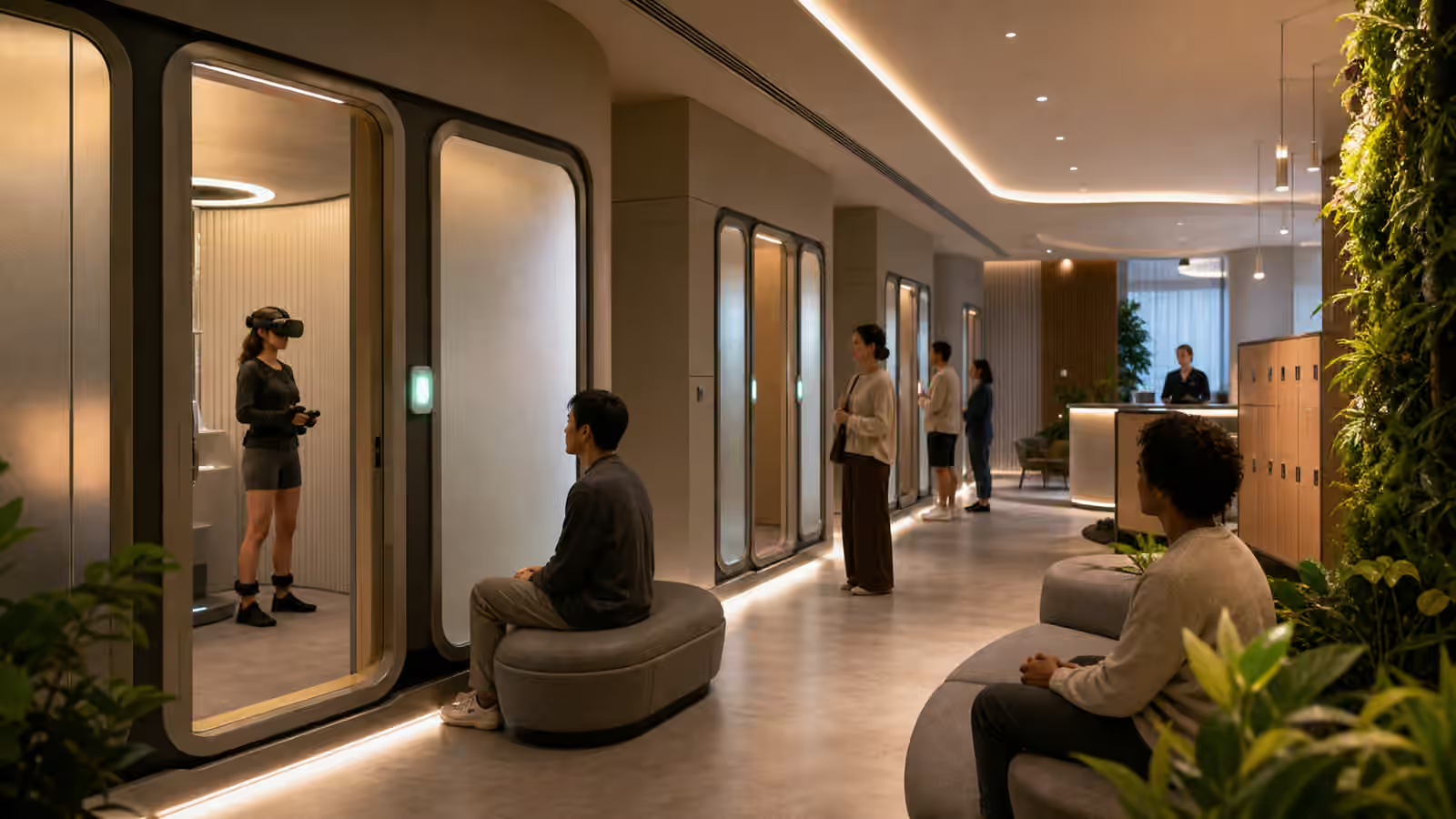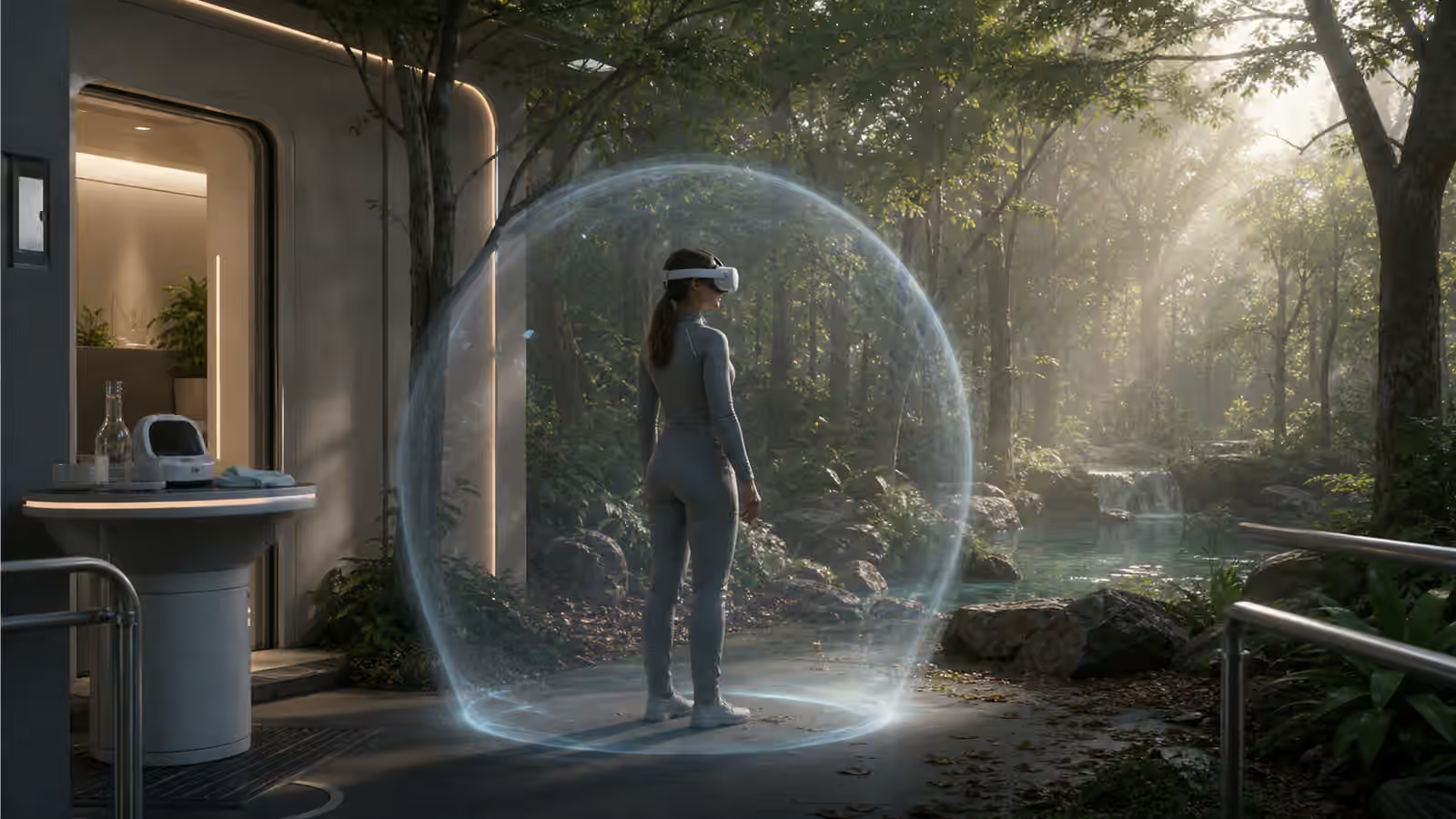
In ordinary media, pause is simple. The video stops, the game freezes, the call goes quiet, or the page waits. Full dive VR would need a richer idea of pause, because the system may be coordinating body model, sound, social presence, haptics, balance cues, synthetic characters, and the path back to the room. Stopping all of that badly could be as disorienting as continuing badly.
A pause in full dive should be an active safety state, not a frozen accident. It should know what to quiet, what to preserve, what to tell other people, what to save, and what needs fresh consent before the session resumes. It should also recognize that not every pause is an emergency. Sometimes a user needs a breath, a doorbell rings, a facilitator checks fit, or a scene becomes too intense for the moment.
Physical Interruptions and Attention Handoff in Full Dive VR explains why the outside world needs a dignified way to reach the user. Pause design is the matching inside-world discipline. It keeps interruption from becoming rupture.
Pause Should Reduce Intensity Before It Explains
When a user asks to pause, the first responsibility is not to deliver a clever message. It is to make the situation easier to inhabit. Motion can slow. Haptics can soften. Crowds can step back. Synthetic characters can stop approaching. Audio can become clearer and less spatially busy. The user’s body can return to a familiar posture or neutral form.
This ramp-down matters because the user may have asked to pause precisely because they are overloaded. A system that responds with dense prompts, loud alerts, or social exposure has missed the point. The pause state should lower the cost of thinking.
Visual Attention and Overload in Full Dive VR makes this clear for sight, but the same idea applies across senses. The user should not need to solve a busy interface while recovering from a busy world. Pause should feel like the room taking one step back.
A Hold State Is Different From an Exit
Not every interruption should throw the user out. A hold state can keep the session available while removing time pressure and sensory demand. The world may dim, save current context, withdraw social contact, and give the user a stable place to decide what comes next. The user might return in a minute, wait longer, or convert the hold into an exit.
This distinction matters for trust. If every pause becomes a full exit, users may avoid pausing because they do not want to lose the session. If every pause keeps the world too active, they may feel unable to rest. A good hold state sits between those extremes. It says the world is still here, but it is no longer pressing on you.
Offline Failover in Full Dive VR describes what happens when the system loses capability. Hold design describes what should happen when the user or environment asks for a temporary stop while the system still works. Both need a local, stable floor. Both should be calmer than the event that caused them.
Social Presence Needs Manners During Pause
Pausing alone is one thing. Pausing in a shared world is harder. Other people may be mid-conversation, waiting for a decision, standing close, or relying on the user’s participation. The system should not leave the user’s avatar frozen in a vulnerable pose, repeat old gestures, or keep voice open by accident. It should also avoid turning every pause into public drama.
A polite pause state can show absence without exposing private cause. It can withdraw touch permissions, dampen gaze expectations, and prevent others from crowding the paused user. In a private conversation, it can tell the other person that the user is unavailable without revealing whether the cause is discomfort, household interruption, or a simple need to think.
Shared Worlds in Full Dive VR and Nonverbal Communication Cues in Full Dive VR both matter here. In full dive, posture, gaze, distance, and silence may carry social meaning. Pause should prevent those cues from being misread. The system should not make a person look attentive when they are absent, or make absence look like rejection when it is only a hold.
Resume Should Not Pretend Nothing Happened
Resuming is not just unfreezing. The user may need context. What changed while they were paused? Did anyone speak? Did a timer continue? Did the world save state? Did a synthetic character make choices? Were permissions suspended? Did the user’s body state change enough to require recalibration?
A thoughtful resume gives a small bridge back. It might replay only the relevant last moment, summarize changes plainly, or ask whether the user wants to continue from the same intensity. The goal is not to make pause invisible. It is to make it understandable.
Persistent Worlds in Full Dive VR raises similar questions at a larger scale. Worlds that keep changing need honest continuity. A pause is a small gap in continuity, and small gaps can still matter when a scene is social, emotional, or instructional.
Some Pauses Need Fresh Consent
If a world was about to introduce strong sensation, close contact, unusual movement, recording, or a sensitive conversation, pausing may change the meaning of consent. The user who returns after interruption is not always the same user in the same context. They may be tired, distracted, embarrassed, or newly aware of the outside room.
Permission Boundaries in Full Dive VR is useful here because consent is operational, not decorative. Resume can be a consent checkpoint. The system does not need to ask about everything again, but it should know which permissions are too intimate or too context-dependent to carry forward silently.
This is especially important after involuntary pauses. A network issue, facilitator intervention, sensor drift, or household alarm can break the scene’s rhythm. The user should not be dropped back into high intensity as if the interruption were irrelevant. A mature system asks less when the stakes are low and asks again when the scene is about to get close.
Emergency Stops Should Be Plain and Boring
Emergency pause design should be deliberately unglamorous. The command should be reliable, memorable, and available without fine motor performance or complex thought. The resulting state should reduce sensation, protect privacy, and move toward reorientation. The system should not demand that the user justify the stop before honoring it.
Pain and Discomfort Boundaries in Full Dive VR makes the ethical point. If a simulated sensation, social scene, or body transformation becomes too much, the user’s stop should outrank the world’s plan. Latency, Drift, and Trust in Full Dive VR adds the engineering point. If the system is uncertain, it should simplify before it argues.
The best pause design may be remembered only when it is missing. Users notice when a world will not let them breathe, when a frozen avatar creates embarrassment, when resume loses the thread, or when a stop command feels hidden behind spectacle. A good pause makes full dive less brittle. It tells the user that the world can wait, that presence is not a trap, and that continuing is meaningful only when stopping remains easy.