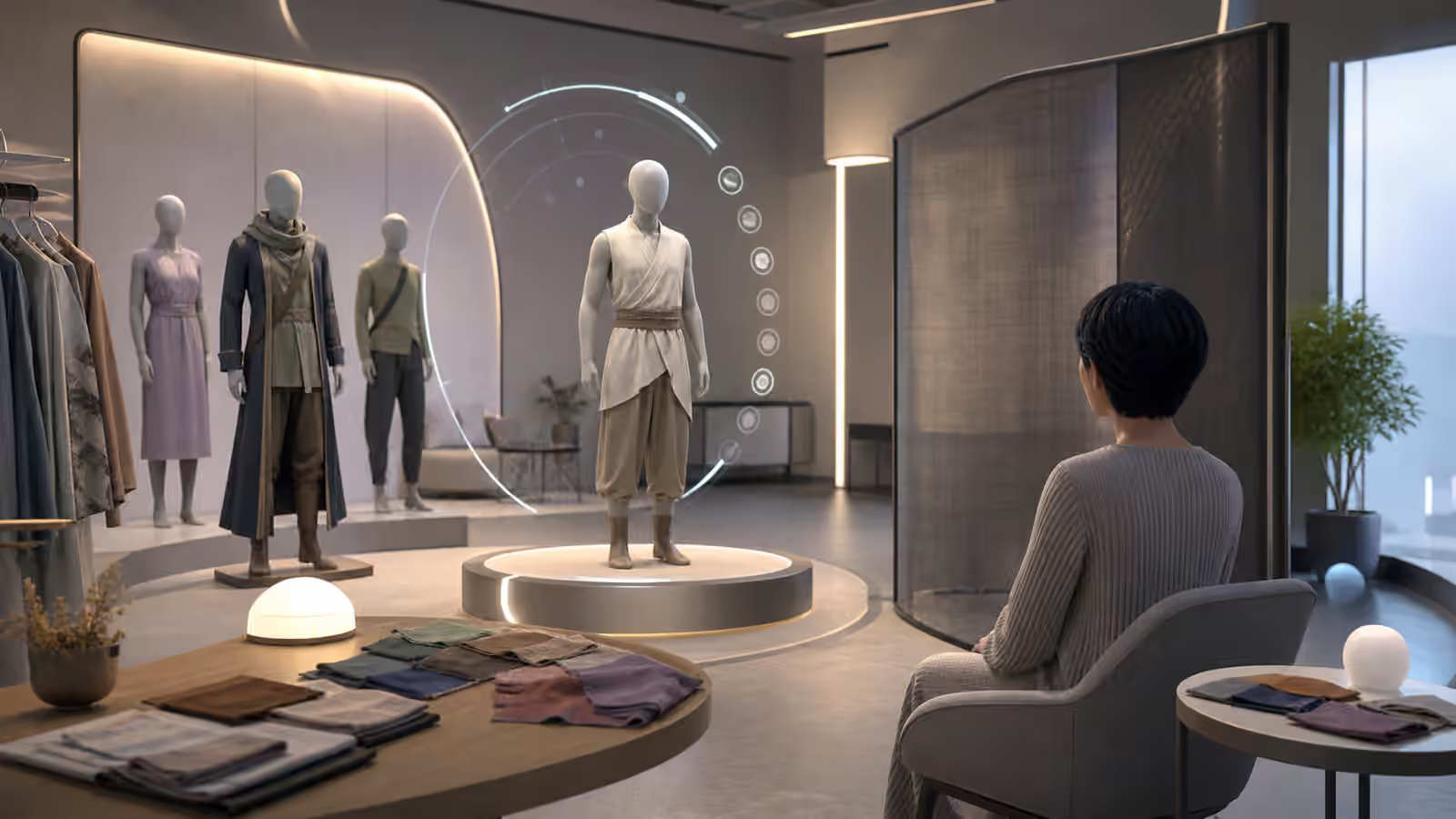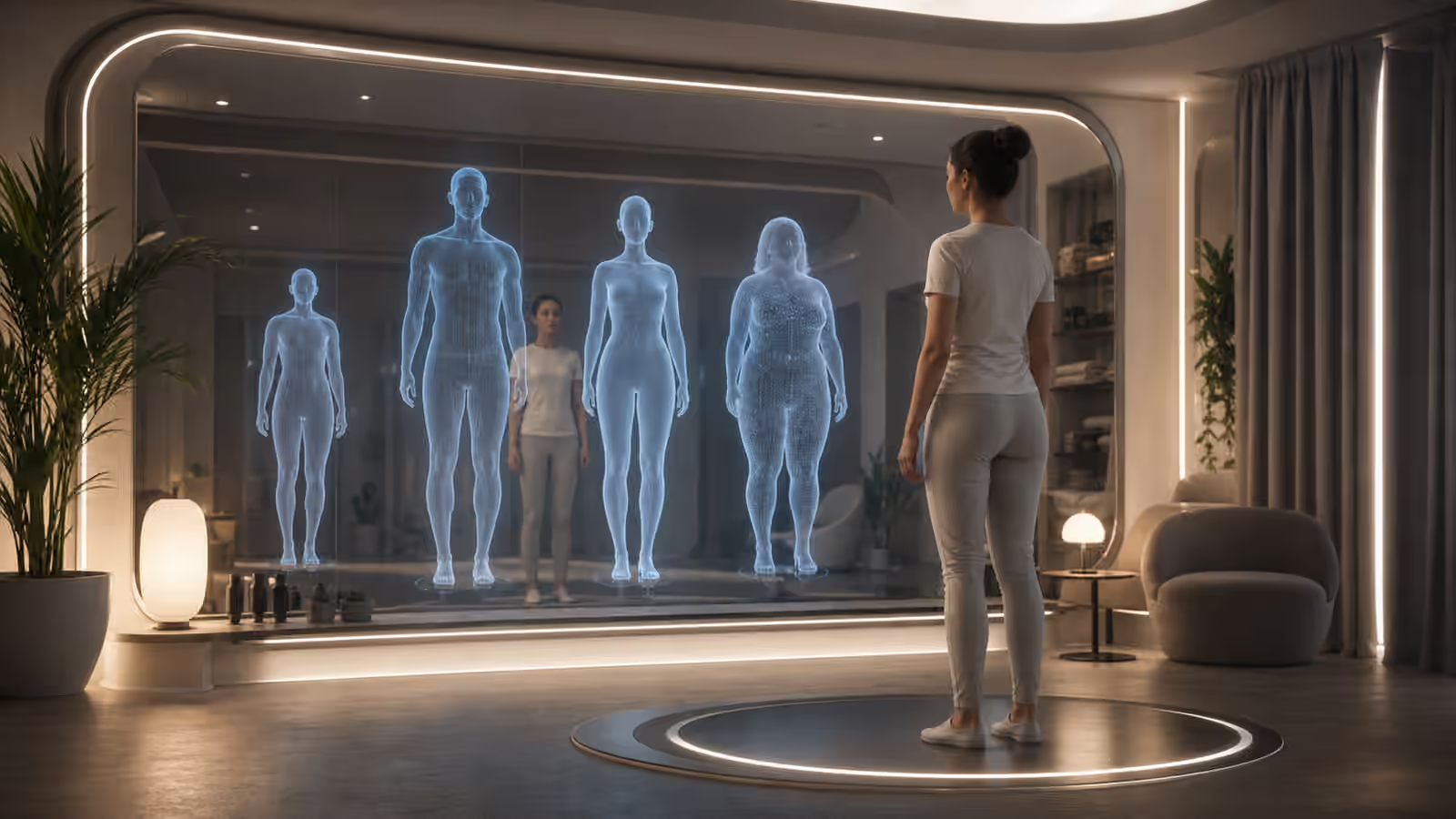
Avatar choice is often treated like appearance. Pick a body, adjust a face, change clothing, enter the world. Full dive VR would make that too shallow. If a system can make a body feel inhabited, switching avatars is not only changing how others see you. It is changing how reach, balance, voice, scale, attention, social expectation, and memory fit together.
Many users would want more than one avatar. A person might use one body for work, another for a public social world, another for creative practice, another for accessibility, another for privacy, and another for play. That variety can be freeing. It can also become confusing or coercive if the system treats every body as equally safe, equally calibrated, and equally connected to identity.
Avatar Bodies and Body Schema explains why a virtual body has to negotiate with the user’s felt map of self. Multiple avatars multiply that negotiation. The question is not only whether one body fits. It is how the user moves between bodies without losing agency.
Each Body Is a Contract
An avatar in full dive should come with terms. What senses does it use? How does it move? How tall is it? How close can others stand before the body feels crowded? Does it include touch, altered balance, different strength, a different voice, or nonhuman movement? What happens to clothing, personal space, and social signals? These are not cosmetic details when the body is felt from inside.
A system can help by treating each avatar as a contract with the user. Before a body is used in a meaningful scene, the user should understand its range. A tall avatar may change eye contact. A small avatar may change proximity. A body with wings, wheels, extra limbs, or unusual balance may require rehearsal. A professional role body may carry workplace expectations. A private body may need stronger privacy rules.
Permission Boundaries in Full Dive VR is relevant because body change is sensory access. A world should not casually place the user in a body that changes movement, social exposure, or touch without clear permission. The body is not a costume hanging outside the person. In full dive, it is part of how the world reaches them.
Switching Needs Transition Space
Moving from one avatar to another should not be a snap unless the user has chosen that intensity and the system has reason to trust it. A transition space can let the body settle. The user can see the new scale, test reach, hear voice changes, understand movement limits, and decide whether the avatar is suitable for the next scene.
This is especially important when the switch changes role. Going from a playful social body to a workplace body, from a memorial presence to an ordinary self, or from a training role to a private home body carries emotional context. The system should not treat the change as inventory management.
Thresholds, Lobbies, and Waiting Rooms in Full Dive VR belongs beside this idea because avatar switching often happens at thresholds. A lobby can protect the user from entering a public room in the wrong body, carrying the wrong permissions, or being seen before they are ready.
Social Context Travels With the Body
People may recognize different avatars differently. A friend may know one body as intimate and another as public. A coworker may expect a professional avatar. A community may distrust frequent changes because of impersonation risk. A user may want to explore identity without being permanently sorted by every experiment.
Identity Continuity and Impersonation in Full Dive VR covers the trust problem. Multiple avatars add nuance. The system should let people prove continuity when needed without forcing every body to expose the same identity in every room. It should also prevent deceptive copying of another person’s embodied cues, especially voice, gait, proportions, and habitual gestures that others use as trust signals.
Social labels should be careful. A user may want to show that two avatars belong to the same account in a trusted workplace setting and hide that connection in a public creative world. They may want a temporary role body for facilitation, teaching, performance, or accessibility. The platform should support context rather than flatten all bodies into one permanent public identity.
Calibration Should Follow Use, Not Novelty
Some avatar switches are low risk. A small clothing change or visual style change may require little recalibration. Other switches are serious. Height, limb length, locomotion, balance, tactile range, voice, and sensory emphasis can all alter how the user inhabits a world. Calibration should respond to those changes.
Calibration Profiles in Full Dive VR asks what should travel with the user. Multiple avatars complicate the answer. A single profile may not fit every body. The user may need per-avatar limits, context-specific touch preferences, or a record of which bodies have been tested for which kinds of scenes.
The system should resist novelty pressure. Just because a user can preview a dramatic body does not mean it should be available for a crowded room, high-speed movement, or intimate scene without practice. A careful platform can let experimentation happen in low-stakes spaces before it asks the body to trust the result.
Role Bodies Can Create Hidden Power
Some avatars will carry authority. Instructor bodies, facilitator bodies, employer bodies, synthetic host forms, moderator forms, and official service bodies can change how others respond. Full dive makes that authority more embodied. A tall calm avatar, a warm voice, or a body that controls the room can persuade before words are spoken.
Workplace Boundaries in Full Dive VR is one place where this matters. An employer should not use avatar design to make monitoring feel friendly or pressure feel natural. Facilitators and Operator Roles in Full Dive VR makes a similar point for support roles. Authority should be disclosed through behavior and permissions, not smuggled through embodiment.
Users also need protection from being assigned a body that changes how they are treated. A training program, school, family setting, or workplace may prefer standardized bodies for convenience. That convenience can erase accessibility, dignity, cultural expression, or personal comfort. A role body should serve the task without taking unnecessary ownership of the person.
Memory Should Know Which Body Was There
Memories from full dive may be tied to embodiment. A conversation held in one body may feel different from the same conversation held in another. A skill practiced with one reach or balance may not transfer cleanly. A private world visited as an experimental body may not belong in the same memory shelf as ordinary social life.
Memory Rights in Full Dive VR applies here because session records should identify body context without exposing more than necessary. The user may need to know which avatar was used, which permissions were active, and which sensory limits applied. They may not want every role experiment linked forever in a visible archive.
Reentry should also account for switching. After a long session in a different body, the user may need help returning to ordinary proportions, voice, posture, and social name. Social Reentry After Full Dive VR reminds us that coming back is relational. The person does not only return to a room. They return to people who may or may not understand what body they just left.
Multiple avatars can make full dive richer, kinder, and more expressive. They can let people practice, play, adapt, protect privacy, and meet different contexts with different forms. But the freedom is real only when switching is designed with calibration, consent, identity, social meaning, and return. A body that can be changed easily still deserves to be treated carefully.