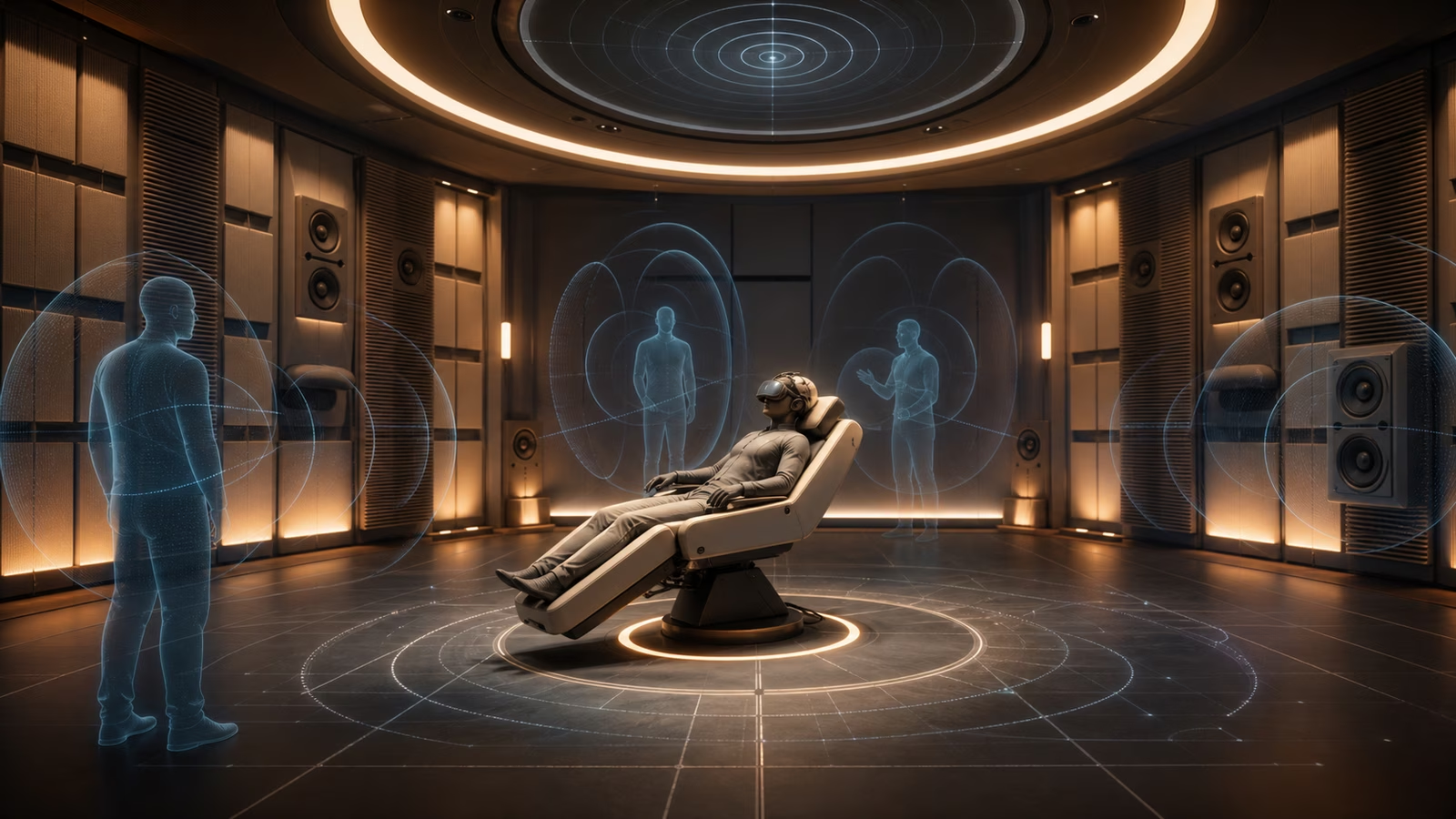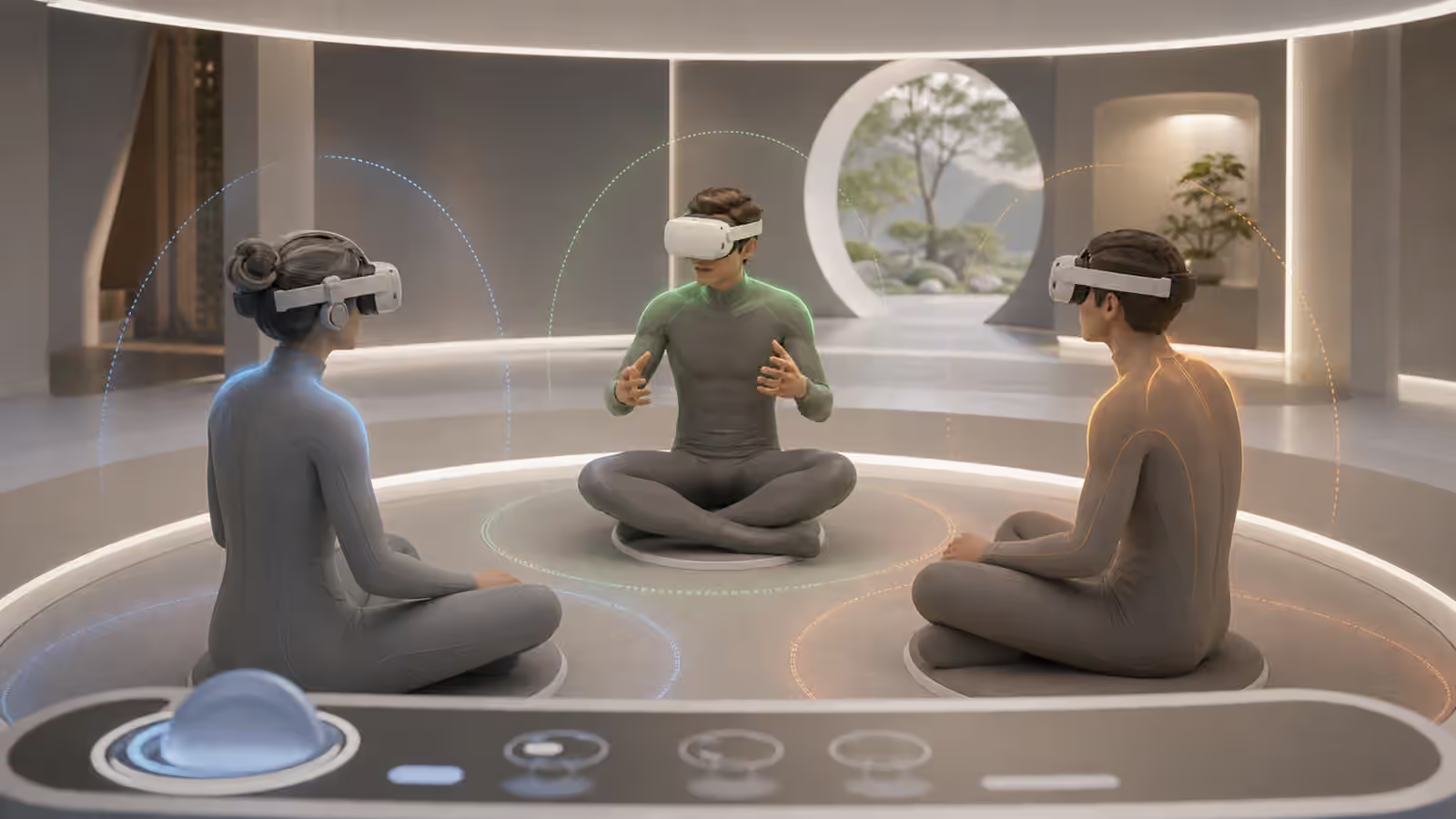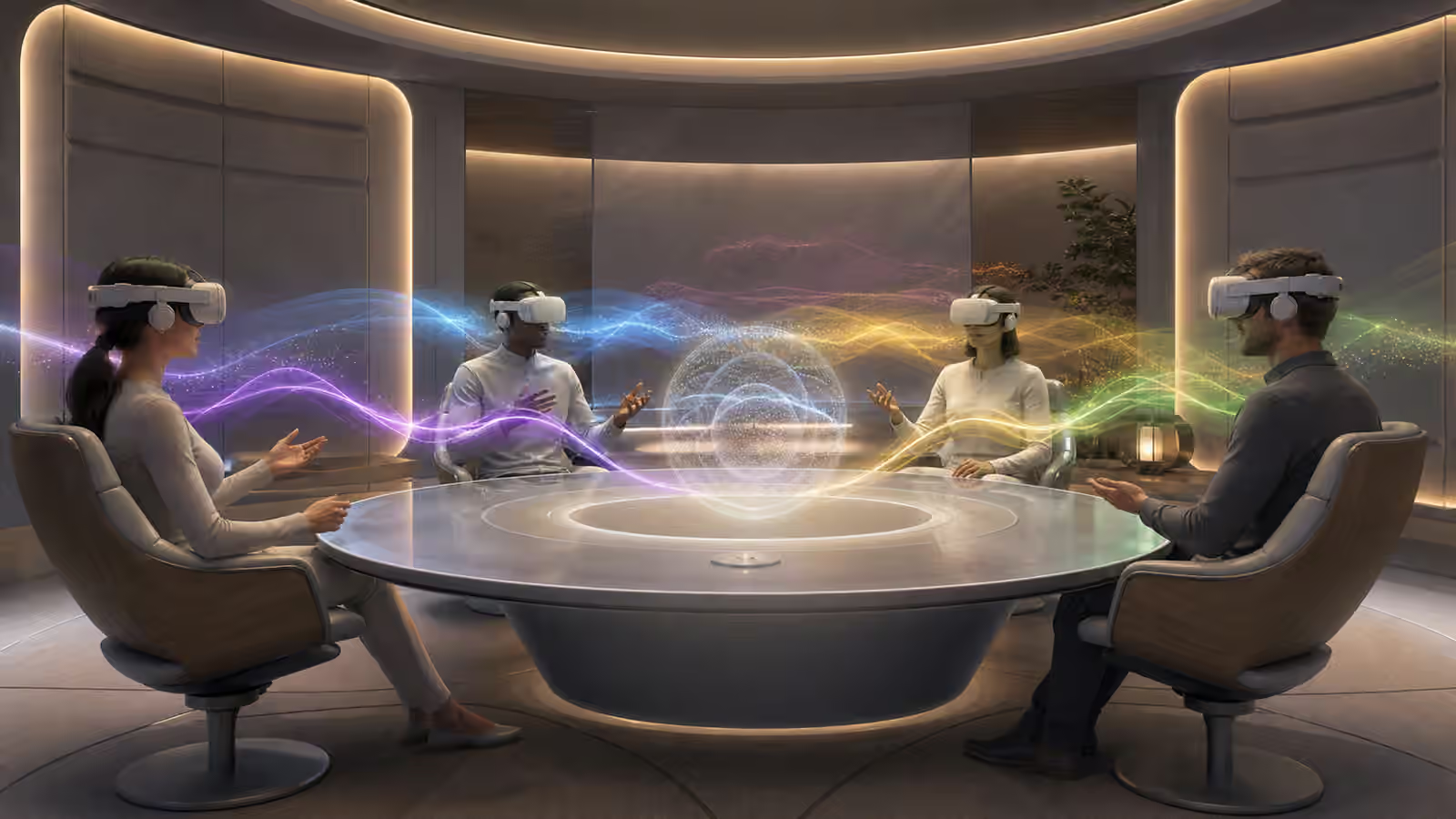
A multilingual full dive room should not feel like a conference call with prettier walls. Language in immersive space is carried by voice, timing, distance, gesture, facial expression, social status, and the atmosphere of the room. If translation is handled poorly, people may understand the words and still lose the person.
Sound, Voice, and Silence in Full Dive VR explains why voice is part of the acoustic body. Translation adds another layer. A system may need to preserve meaning across languages while deciding what to do with accent, emotion, hesitation, humor, volume, rhythm, and identity. The goal is not only to make sentences available. The goal is to let people remain themselves across the gap.
Translation Changes Presence
In ordinary translation, a slight delay is expected. In full dive VR, delay can change presence. If a friend’s face reacts before the translated voice arrives, the room may feel out of sync. If a joke lands three seconds late, the listener may feel outside the circle. If a heated conversation is smoothed into polite language, the conflict may become harder to resolve because the emotional temperature was edited away.
This does not mean translation must be instant at all costs. Latency, Drift, and Trust in Full Dive VR already shows that timing affects trust. Multilingual systems may need to choose between speed and fidelity depending on the setting. A casual game can tolerate more paraphrase. A safety briefing, consent negotiation, workplace review, or grief conversation may need slower, clearer turns.
The room should make that mode visible without making it awkward. Participants should know whether they are hearing live speech, near-live translation, summarized meaning, or a synthetic voice rendering. Translation that hides its own limits invites misplaced confidence.
Voice Is Not Just Audio
A voice carries identity. It carries age cues, mood, cultural history, personality, fatigue, authority, intimacy, and sometimes vulnerability. If a translation system replaces every voice with the same polished neutral tone, it may make communication easier and humanity thinner. If it clones a person’s voice across languages without consent, it may preserve presence while creating a new form of impersonation risk.
Identity Continuity and Impersonation in Full Dive VR matters here. A person should control how their translated voice represents them. They may want their own timbre approximated, a clearly synthetic interpreter voice, or a simple spatial caption substitute in worlds that support it. They may want different choices for friends, public rooms, work, and anonymous support spaces.
Accent deserves care too. Removing accent can sometimes reduce prejudice in a hostile room, but it can also erase identity. Preserving accent can support recognition, but it can also expose someone to bias. There is no single humane default for every context. The system should give people choices without making them responsible for everyone else’s bias.
Meaning Needs Social Grounding
Translation systems are good at words and weaker at relationships. A phrase may be polite in one language and cold in another. A direct refusal may be expected in one setting and harsh in another. Honorifics, humor, religious references, family terms, workplace hierarchy, and regional idiom can all matter. Full dive VR adds gesture, distance, and environment to that mix.
This is where Nonverbal Communication Cues in Full Dive VR becomes a companion topic. A translated sentence may need to arrive with a gesture cue, a hesitation marker, or a privacy-preserving note that the speaker chose softer wording. The system should be careful, though. It should not pretend to know motives. It can preserve uncertainty rather than flatten it.
For example, a user may say something that could be a joke, a warning, or a flirtation depending on tone and relationship. A responsible translation might keep the ambiguity when the stakes are low, or ask for clarification when the stakes are high. The worst version confidently chooses a meaning and lets the social consequences fall on the speaker.
Privacy Begins Before the Transcript
Multilingual translation may require capturing speech, voice features, gesture context, and sometimes body signals. That makes it a privacy system, not merely a language feature. A platform should not keep every multilingual conversation because the translation engine processed it. It should not use intimate conversations to improve commercial models without clear consent. It should not expose raw voice data when only translated meaning is needed.
Privacy and Consent in Full Dive VR gives the broader frame. In translation, the user may need separate controls for live processing, retained transcripts, voice-style modeling, replay translation, and moderator access. A replay translated after the fact can feel very different from the original conversation. It may reveal meaning to people who were not able to understand it in the moment. That can be helpful for accountability and dangerous for trust.
The system should also respect private language. People use language choice to create intimacy, signal belonging, protect a side conversation, or step away from a public room. Automatic translation can break that boundary if it treats every utterance as available to everyone nearby. Presence in a room should not automatically mean access to every language spoken in it.
The Translator Should Have a Place in the Room
Human interpreters often have social presence. People know when someone is interpreting, can ask for a repeat, and can notice when a phrase was difficult. A full dive translation layer should have its own legible place too. It might appear as a subtle acoustic texture, a visible turn-taking rhythm, or a participant-level setting. It should not pretend to be magic.
When translation fails, users need repair tools. They need to ask, “Did you mean that literally?” without embarrassment. They need to replay their own sentence before it is sent in a sensitive room. They need to slow the pace. They need to mark a phrase as personal, quoted, ceremonial, fictional, or uncertain. These tools sound small until a misunderstanding happens in a world that feels real.
Multilingual full dive VR could let people share rooms that would otherwise stay separate. That is worth building carefully. The measure of success will not be frictionless speech alone. It will be whether people can cross language boundaries without surrendering voice, privacy, timing, or the right to be misunderstood honestly and repaired respectfully.