You leave the virtual house, but the house does not leave you.
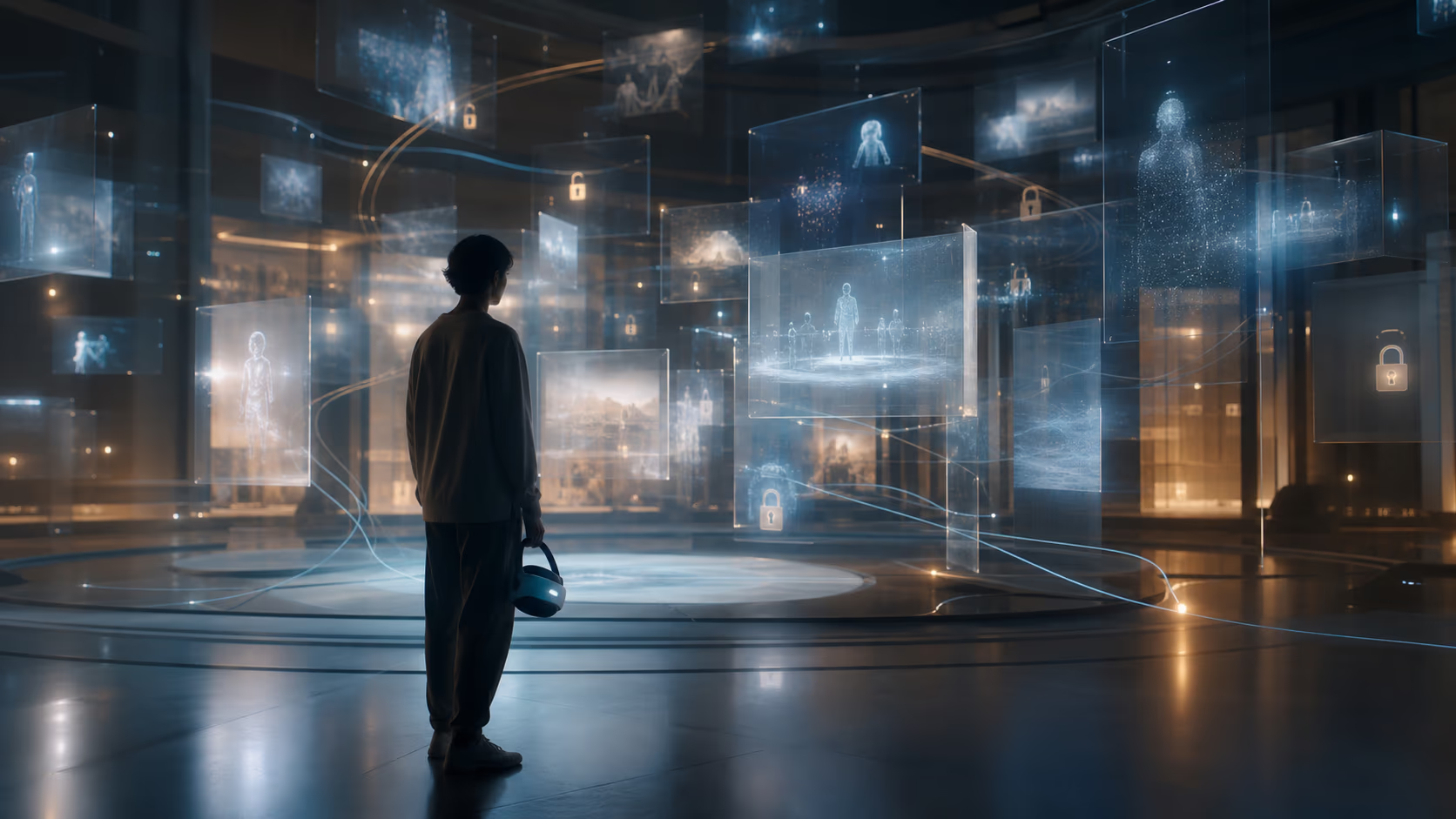
That is the strange promise of full dive VR. A deep enough experience might not feel like media you consumed. It might feel like somewhere you went. A conversation with an avatar could stay in your body like a real conversation. A frightening hallway could return in a dream. A training simulation could become muscle memory. A beautiful place could become part of your emotional geography.
That is powerful.
It also raises a question that ordinary software mostly avoids:
Who owns the afterlife of the experience?
Not just the saved file. Not just the screenshot. The gaze record, body trace, voice pattern, stress markers, social proximity map, sensory settings, avatar reactions, and session memory. Full dive VR may create data that looks technical to a company and intimate to the person who lived it.
Memory rights are the rules that should protect that intimacy.
A Recording Is Not Just a Replay
In a normal game, a replay shows what happened on screen. In deeper VR, a replay could show where you looked, how close you stood, when you hesitated, how your hands moved, what you avoided, how your voice changed, and what your body did when the world surprised you.
That kind of recording is not neutral.
It can reveal fear, desire, confusion, skill, disability, trauma response, social preference, and attention. Even if the platform never reads thoughts directly, behavior inside an embodied world can be revealing. If future systems include biometric or neural data, the sensitivity increases again.
A full dive replay should not be treated like a harmless highlight clip by default.
Users should know when a session is recorded, what channels are included, who can access them, and whether the replay can be used to train systems, moderate behavior, advertise products, or recreate a person later.
The deeper the capture, the stronger the consent should be.
Body Traces Are Personal Data
Your walk is a signature. So is your reach. So is the timing of your laugh, the way you turn away from conflict, the distance you keep from strangers, and the micro-pause before you accept a virtual hand.
Full dive platforms may be tempted to call these things telemetry.
They are more than telemetry.
A body trace can identify a person. It can train an avatar. It can reveal health changes. It can make a synthetic copy feel more convincing. It can be used to personalize comfort, which is good, or to personalize manipulation, which is not.
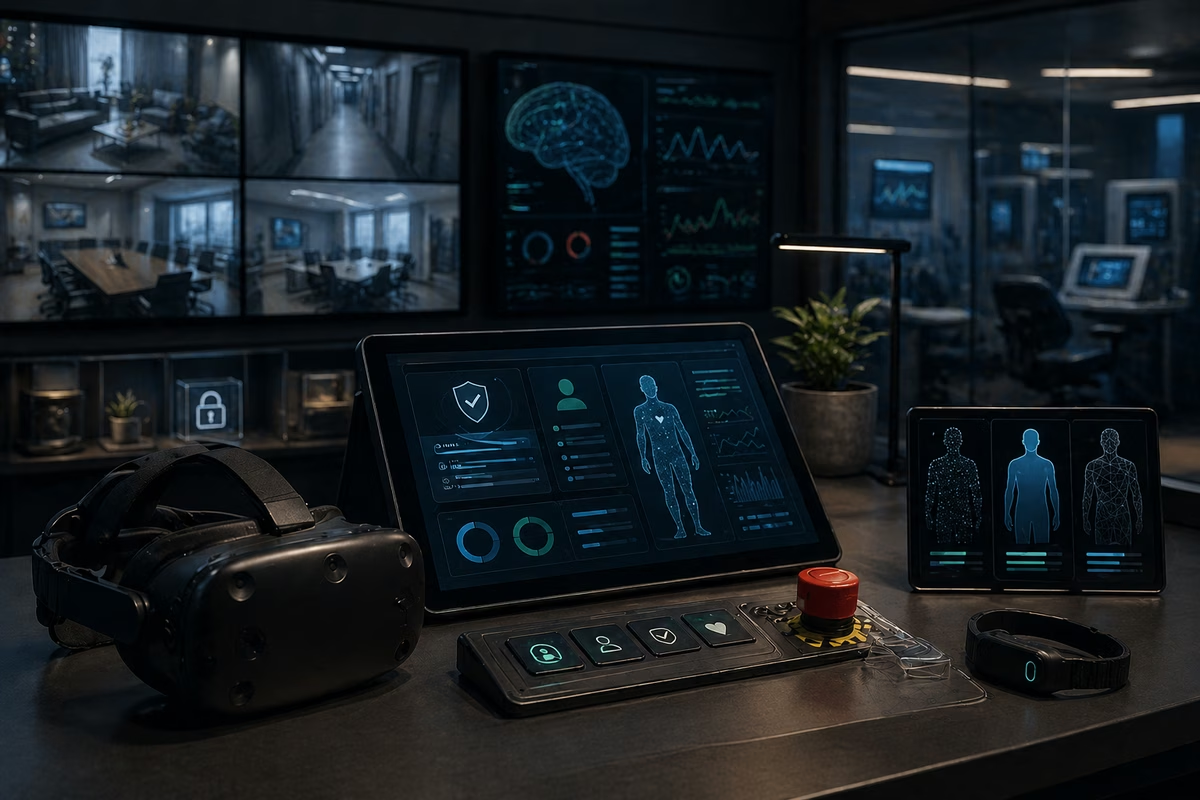
A trustworthy system should separate helpful body modeling from broad surveillance. It can keep local calibration data for comfort without letting every app harvest the user’s movement profile. It can allow a training simulation to record performance without letting that recording become a permanent identity asset.
The rule should be simple: data gathered because the body is vulnerable should not be repurposed because the market is curious.
Consent Should Survive the Session
People often think of consent as something that happens at the beginning. Accept terms. Enter room. Start experience.
Full dive needs consent after the session too.
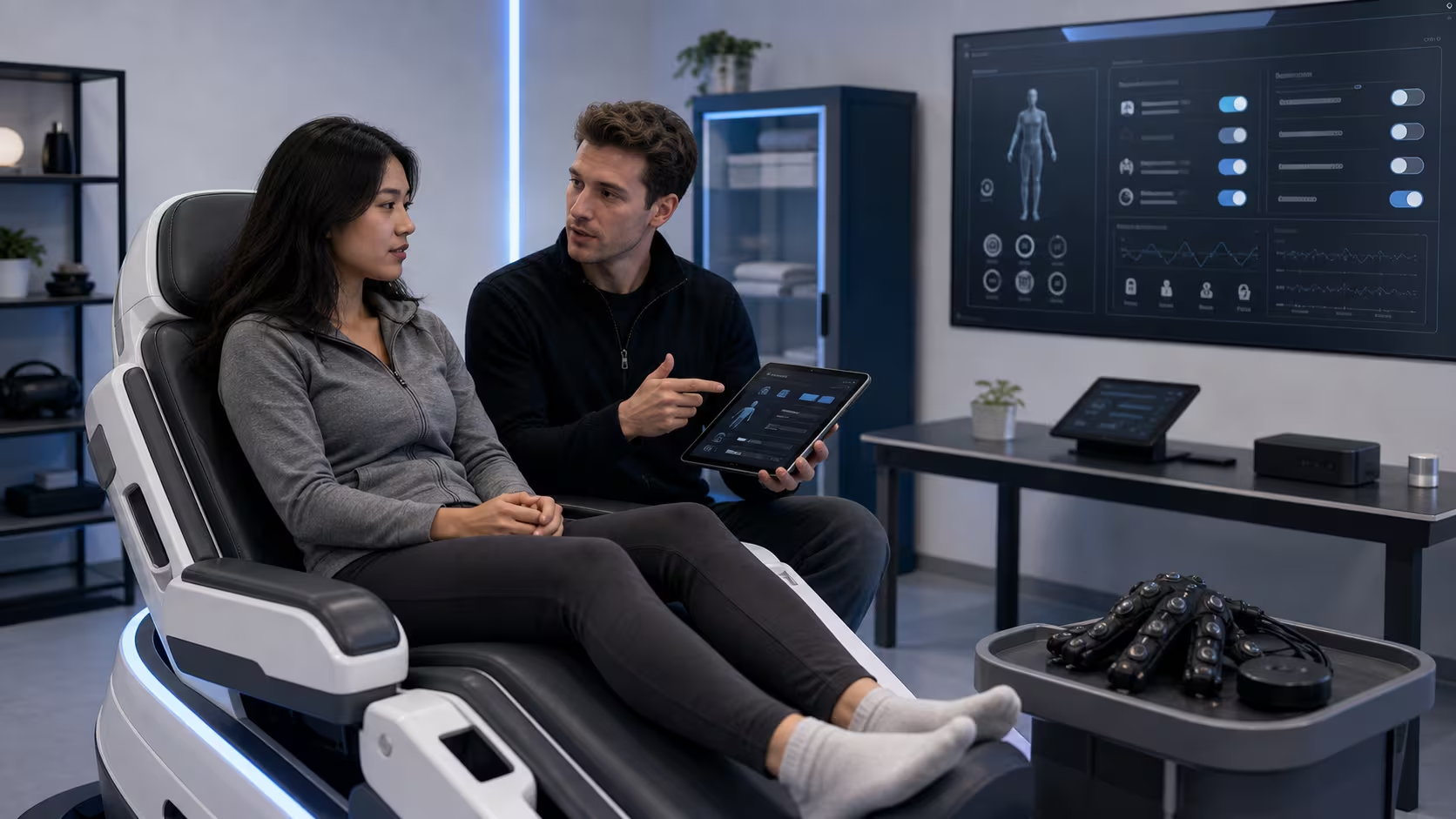
Imagine finishing an intense historical simulation, a therapy rehearsal, or a social event with friends. Before the session disappears into storage, the system offers a clear choice:
- Save a normal summary.
- Save a private replay.
- Save only skill metrics.
- Delete sensory and biometric traces.
- Share a clip without body data.
- Report a problem before logs expire.
That choice matters because users may not know what they are willing to preserve until after they have lived the experience.
Some sessions should be easy to remember. Some should be easy to forget. Some should leave behind only the minimum record needed for safety or progress. The user should have meaningful control over which is which.
Shared Memories Need Shared Rules
Full dive will not only create private memories. It will create shared ones.
You and a friend might build a room together. A class might visit an ancient city. A family might meet across distance in a virtual version of a kitchen that no longer exists. A team might train for dangerous work. A couple might keep a private world that carries emotional weight.
Who can save that world? Who can replay it? Who can invite someone else in? What happens if one person wants a memory deleted and another wants to keep it? Can a platform use the room as a model for future environments? Can an AI character trained there appear somewhere else?
These questions are uncomfortable because shared memory is already complicated in real life. Full dive adds technical handles to it.
A healthy platform would make the rules visible before people create something intimate together. It would allow different levels of shared ownership. It would distinguish public events from private spaces. It would make export, deletion, and replay permissions part of the world design, not hidden account plumbing.
Synthetic People Make Memory Harder
Full dive worlds will almost certainly include AI-controlled characters.
Some will be obvious non-player characters. Some will be assistants. Some may imitate historical figures, fictional characters, celebrities, teachers, relatives, or versions of the user. The more embodied the medium becomes, the more emotionally persuasive these characters can be.
Memory rights should include synthetic presence.
Was the character live, recorded, scripted, or generated? Did it remember you from previous sessions? Did it use your private data to shape the encounter? Can it quote you later? Can someone else meet a version of it that has learned from your behavior?
The system should not rely on users to guess.
In deep VR, a synthetic person can become part of someone’s memory. That does not make the synthetic person human, but it does make the experience meaningful. Meaning deserves labels.
Forgetting Can Be a Feature
Technology usually treats retention as success. Save everything. Sync everything. Mine everything later.
Human life does not work that way.
Forgetting is protective. Context fades. Emotional intensity cools. Embarrassing moments lose their edge. A private conversation does not become searchable infrastructure. A strange dream dissolves.
Full dive systems should learn from that.
Some data should expire by default. Some session traces should be local only. Some replays should require renewed consent before sharing. Some worlds should be designed to vanish. A user should not need to become a privacy engineer to have an ordinary temporary experience.
The right to delete is important. The right not to record in the first place may be more important.
The Platform Should Remember Less Than You Do
The best full dive experiences may become unforgettable.
That does not mean the platform should remember everything.
There is a difference between a person carrying a memory and a company storing a complete behavioral archive. The first is part of being human. The second is a product decision.
A mature full dive platform would treat memory with restraint. It would keep enough data to maintain safety, consent, continuity, and user-chosen progress. It would avoid turning every movement into a permanent asset. It would give users understandable controls before and after the session. It would mark synthetic people clearly. It would make shared ownership explicit.
Full dive VR asks the mind to accept a virtual world as meaningful.
That is an extraordinary invitation. The least the platform can do is leave the deepest parts of the visit where they belong: with the person who went there.