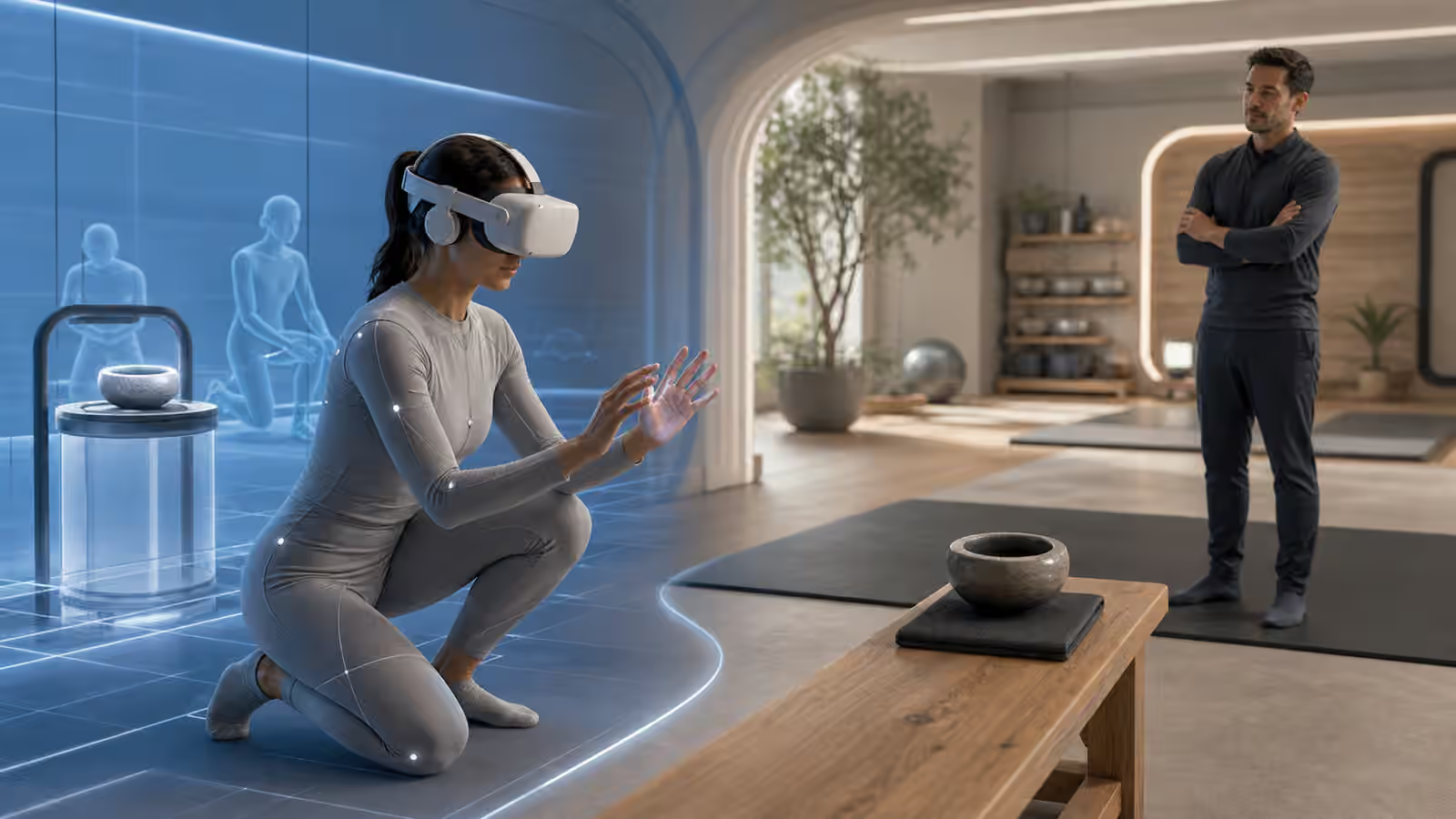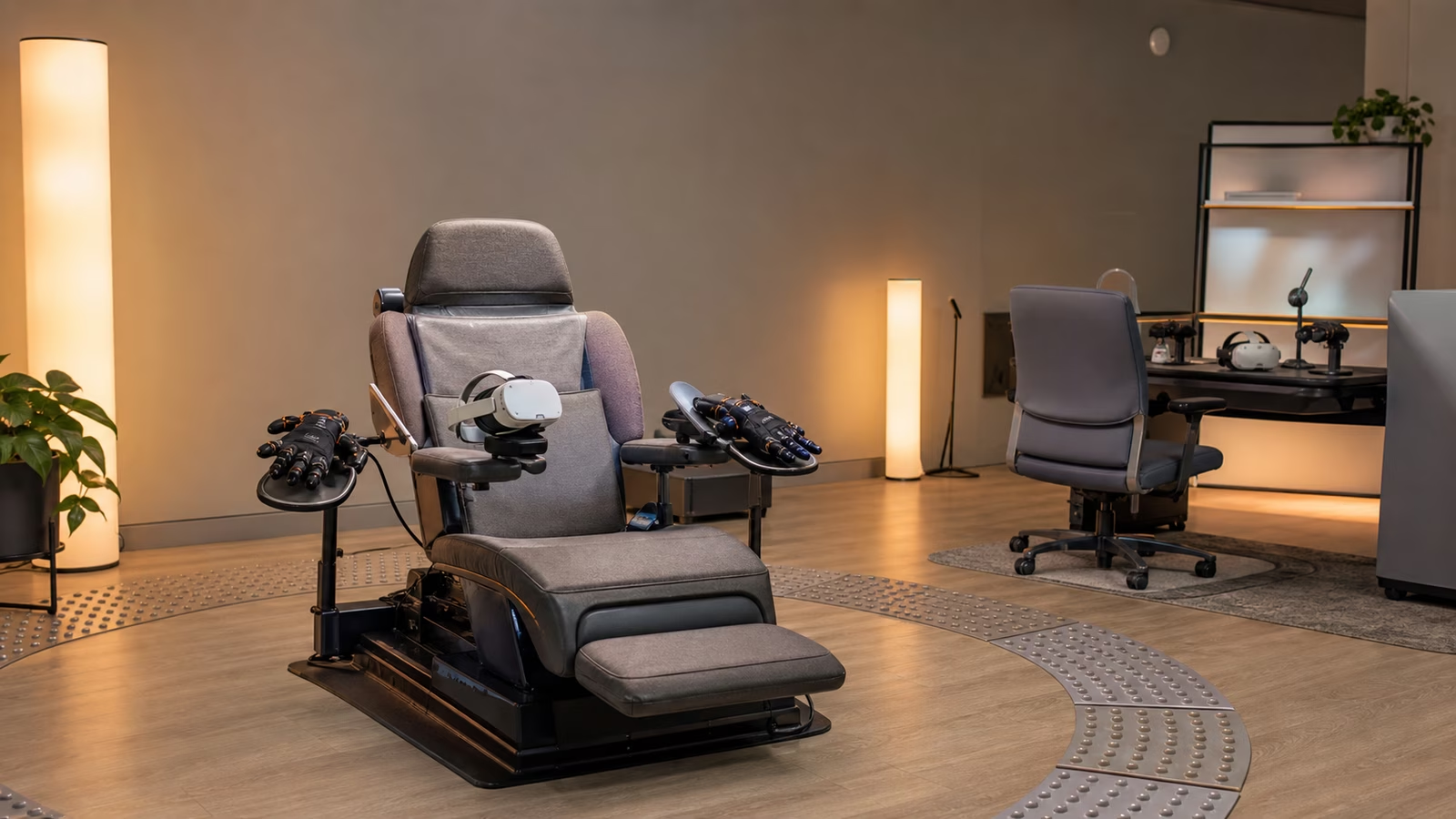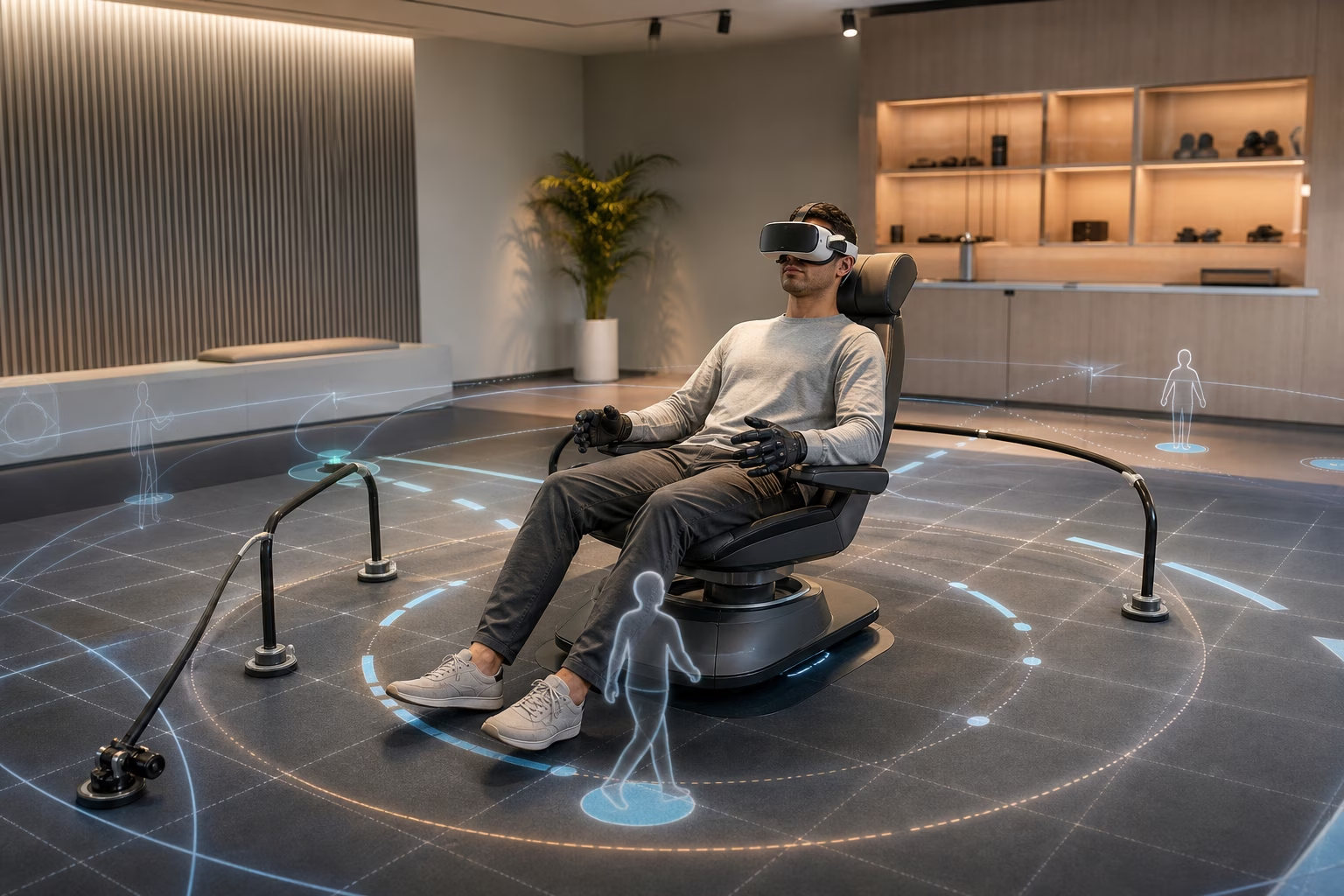
Full dive VR is often imagined as a doorway. Step through and the world is yours. Walk across a forest, climb a tower, drift through orbit, cross a crowded market, run from danger, or sit beside someone who feels present enough to share the room. The fantasy depends on movement so ordinary that the user stops thinking about the interface.
That is exactly why locomotion is one of the hardest problems in the medium. Moving through a virtual world is not only a question of joystick input, treadmill hardware, or clever level design. It is a negotiation among sight, balance, muscle expectation, touch, intent, memory, and consent. A world can look convincing and still fail the moment the body tries to move through it.
How Full Dive VR Might Work frames the larger challenge as an input and output loop. Locomotion sits inside that loop. The system has to understand where the user wants to go, decide what movement should feel like, keep the virtual body coherent, and avoid asking the physical body to believe something it cannot support. That work becomes more delicate as immersion gets deeper.
Movement Is More Than Translation
In ordinary software, movement can be treated as translation. A camera moves from one coordinate to another. A character advances across a map. A button makes the view slide forward. In a deeply embodied world, that abstraction is too thin. Movement changes the user’s felt relationship to space.
Walking involves rhythm, weight shift, ground contact, expectation, peripheral vision, and balance. Turning changes the relationship between the head, torso, feet, and visual horizon. Climbing asks the body to trust grip, height, effort, and consequence. Flying removes familiar support and replaces it with a new grammar of direction. Swimming, falling, crawling, skating, floating, and teleporting each ask the senses to accept different rules.
Current VR already exposes the problem. Some users feel fine with smooth artificial movement. Others prefer teleportation or short hops between stable anchors. Some can turn with a controller. Others need snap turns, slower acceleration, a stable horizon, or no artificial rotation at all. Those preferences are not cosmetic. They reveal how differently bodies tolerate mismatch.
A full dive system would have to treat those differences as first-class design data. It cannot assume that the most realistic motion is the best motion. Realistic visual acceleration without corresponding vestibular and muscle cues can feel worse than stylized movement. A symbolic step, a guided glide, or a vehicle frame may preserve presence better than a literal imitation the body rejects.
Balance Is the Hidden Sense
Balance is easy to ignore because it usually works quietly. The inner ear, feet, muscles, eyes, and body schema keep negotiating where upright is. Full dive VR would have to decide how much of that negotiation to borrow, imitate, override, or leave alone.
If the virtual scene says the user is running downhill while the physical body is seated, standing still, or supported by a rig, the system has a problem. Vision may imply acceleration. The vestibular system may report stillness. The muscles may not feel the expected strain. Touch may not match the ground. Even if the user is entertained, the nervous system may mark the scene as untrustworthy.
Latency, Drift, and Trust explains why timing errors and body-model errors matter. Balance is where those errors become bodily. A delayed footfall, a horizon that drifts, a turn that arrives late, or a virtual slope that does not match the body’s expectation can make the world feel slippery. The user may slow down, hesitate, overcorrect, or feel unwell without being able to name the reason.
The safest movement design may often be less spectacular than the demo version. It may keep horizons stable, introduce slopes gradually, avoid surprise drops, give the user a visible anchor, or frame motion inside a vehicle, rail, path, or companion guide. These devices are not cheats. They are ways of giving the body enough structure to keep trusting the scene.
The Body Needs a Movement Contract
Before a full dive world asks someone to sprint, jump, fall, fly, or fight, it should establish what movement means in that session. This is a movement contract, though it need not be presented as legal language. The user should learn whether they are seated, standing, reclined, suspended, walking in place, using intent signals, being carried by the environment, or inhabiting a body with unfamiliar movement rules.
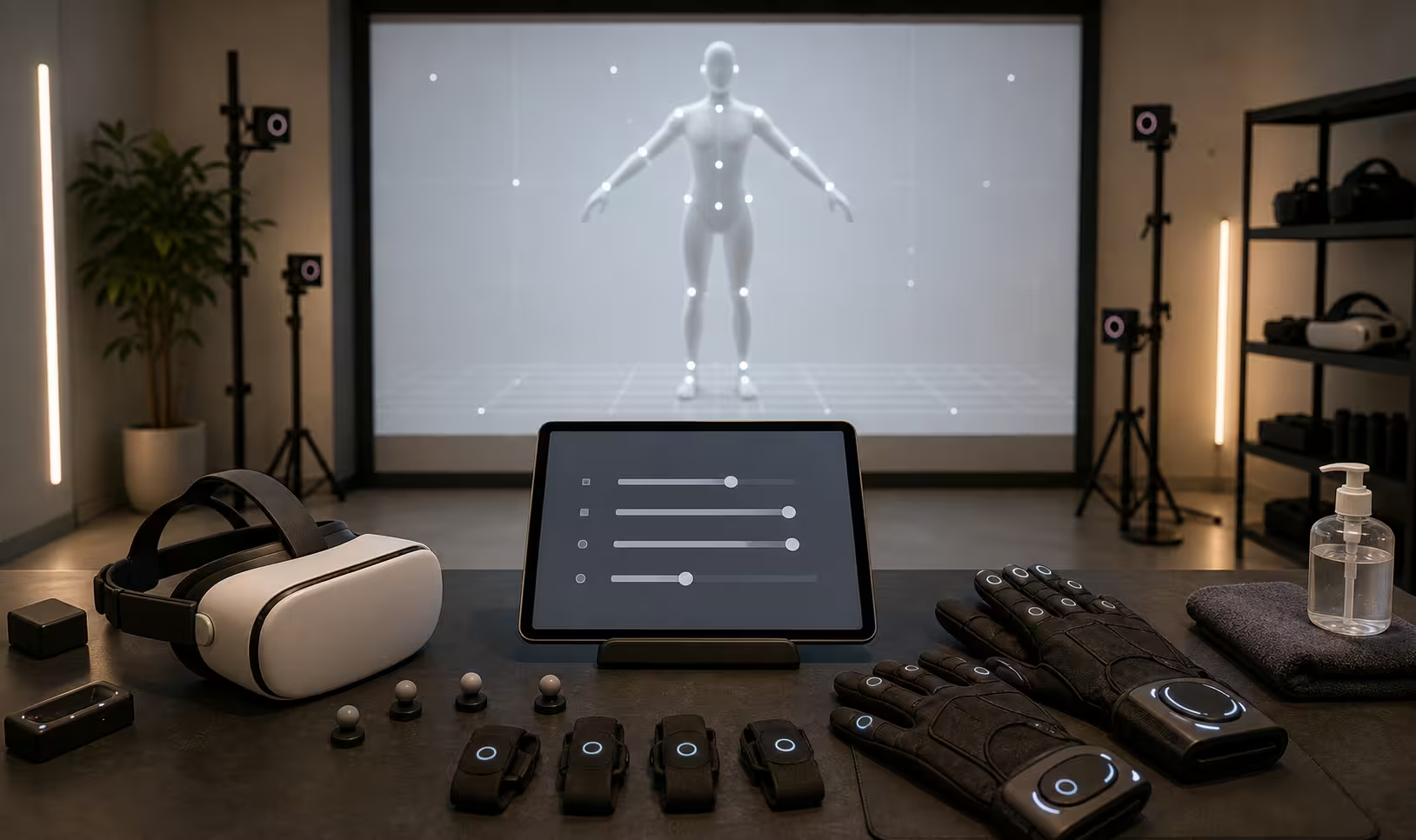
The Calibration Room makes the case for teaching the system the user’s body before the world becomes demanding. Locomotion calibration should be part of that room. The user can test a slow turn, a forward step, a stop, a backward motion, a height change, and an emergency pause. The system can learn how the user responds to acceleration, visual flow, haptic ground cues, and changes in posture.
This is also where the user should learn what the system will not do. It may refuse certain motion at high intensity. It may simplify falling. It may replace abrupt acceleration with a fade or a short transition. It may require a reorientation pause after flight or combat. Clear limits are better than hidden limits because the body can plan around them.
The movement contract matters most when the virtual body differs from the physical one. Avatar Bodies and Body Schema explains why body changes need careful calibration. A taller body changes stride and eye height. A smaller body changes scale and threat. A many-limbed body changes attention. A winged body turns movement into a new skill. These bodies can be meaningful, but they should teach slowly before they enter crowded or high-stakes spaces.
Good Locomotion Gives the User Authority
Movement is agency. If the system moves the user without warning, or makes it hard to stop, the world may feel less like a place and more like a machine carrying the body along. That can be useful in a guided scene, a vehicle, a lesson, or a cinematic transition, but it should be legible. The user needs to know when they are choosing movement and when the environment is doing it.
Authority starts with stopping. A full dive locomotion system should make stopping more reliable than going. If the user freezes, pulls back, closes a hand, says a stop phrase, looks away, or triggers a private exit signal, the world should respect that before it continues the spectacle. Movement that cannot be interrupted is not immersive in the right way. It is coercive.
Authority also means pacing. Some users want slow exploration. Some want athletic motion. Some want seated travel through impossible spaces. Some want a companion to guide them. Some want a stable room with portals instead of continuous movement. Accessibility in Full Dive VR argues that different bodies should be expected from the beginning. Locomotion is one of the places where that principle becomes visible. A seated path, a gaze-guided path, a short-hop path, and a walking path can all be legitimate ways to inhabit the same world.
The design challenge is to keep those paths socially equal. A user who chooses reduced motion should not be treated as absent, slow, or less real. A public world should not make comfort settings into a spectacle. The person moving by stable anchors is still present. The person standing still while the scene repositions around them is still participating.
Multiplayer Turns Movement Into Etiquette
Movement becomes social as soon as another person is present. Distance, approach speed, eye contact, gesture, interruption, and retreat all carry meaning. In full dive VR, those meanings would be stronger because bodies may feel more present. Walking too close is not only a camera problem. It can become a boundary problem.
Shared Worlds in Full Dive VR covers personal space and consent in multiplayer immersion. Locomotion adds the practical layer. A social world needs ways to make approach, touch, following, crowding, and blocking readable. If one user has smooth motion and another uses short jumps, the system must prevent the faster or less predictable motion style from overwhelming the other person’s sense of space.
The world can help. It can soften arrivals near people, create personal buffers, slow movement inside intimate zones, prevent avatars from occupying the same body space, and make retreat private. It can distinguish between playful chase, instructional guidance, accidental collision, and harassment. It can also admit uncertainty. When tracking or network timing is unstable, a good system should widen boundaries rather than pretending nothing is wrong.
This is not only moderation. It is choreography. A shared full dive room needs traffic logic, social distance, and graceful exits in the same way a real building needs doors, corridors, stairs, railings, and quiet corners.
Haptics Should Support Motion, Not Overpower It
Touch can make movement believable. A footstep cue, a handrail, a breeze, the resistance of water, the vibration of a vehicle, or the pressure of a landing can help the body understand what the eyes are showing. The danger is assuming that stronger haptics always improve motion.
The Haptic City treats touch as a language. Locomotion needs that language to be restrained and consistent. A ground cue should arrive when the body expects contact. A slope cue should prepare the user rather than surprise them. A collision cue should protect the body from overcommitment. Simulated impact should be symbolic enough to inform without punishing.
The more motion a scene contains, the more valuable subtle haptics become. A small change under the virtual feet can tell the user that a surface has changed. A light resistance in the hand can make a railing meaningful. A soft boundary pulse can warn that another user’s space is near. These cues do not need to imitate reality perfectly. They need to help the user act with confidence.
Returning After Motion Is Part of Motion
The movement experience does not end when the user stops moving in the virtual world. It ends when the physical body is oriented again. After fast travel, flight, falling, combat, low gravity, altered scale, or unfamiliar avatar movement, the system should not dump the user directly back into ordinary demands.
Comfort and Reorientation in Full Dive VR and Coming Back both argue that exit is part of the experience. Locomotion makes that point concrete. A user who has been flying may need a stable floor before returning. A user who has been very small or very tall may need normal scale restored gradually. A user who has been moving through a crowd may need a quiet room before conversation. A user who ended because of discomfort may need the system to stop asking questions until orientation returns.
The best full dive locomotion may be the part nobody notices because it respects the body before the body has to protest. It gives movement a clear grammar. It lets users stop. It keeps balance in the design, not only in the hardware. It treats accessibility as a movement path rather than an exception. It makes social space readable. It returns the user gently after impossible motion.
The dream is not merely to cross any world. The more important achievement is to move through one while still feeling that the body, the room, and the system are telling the truth.