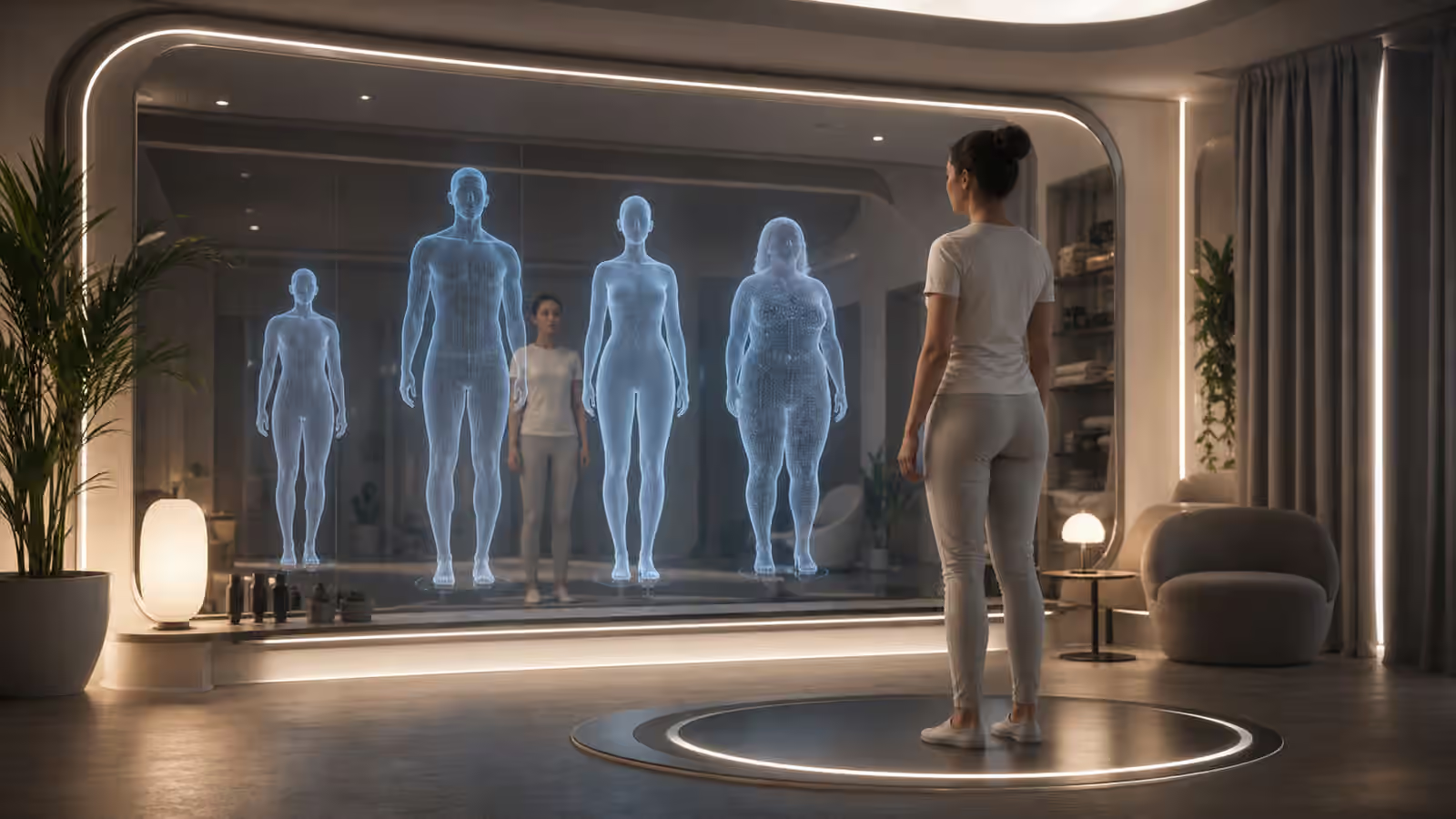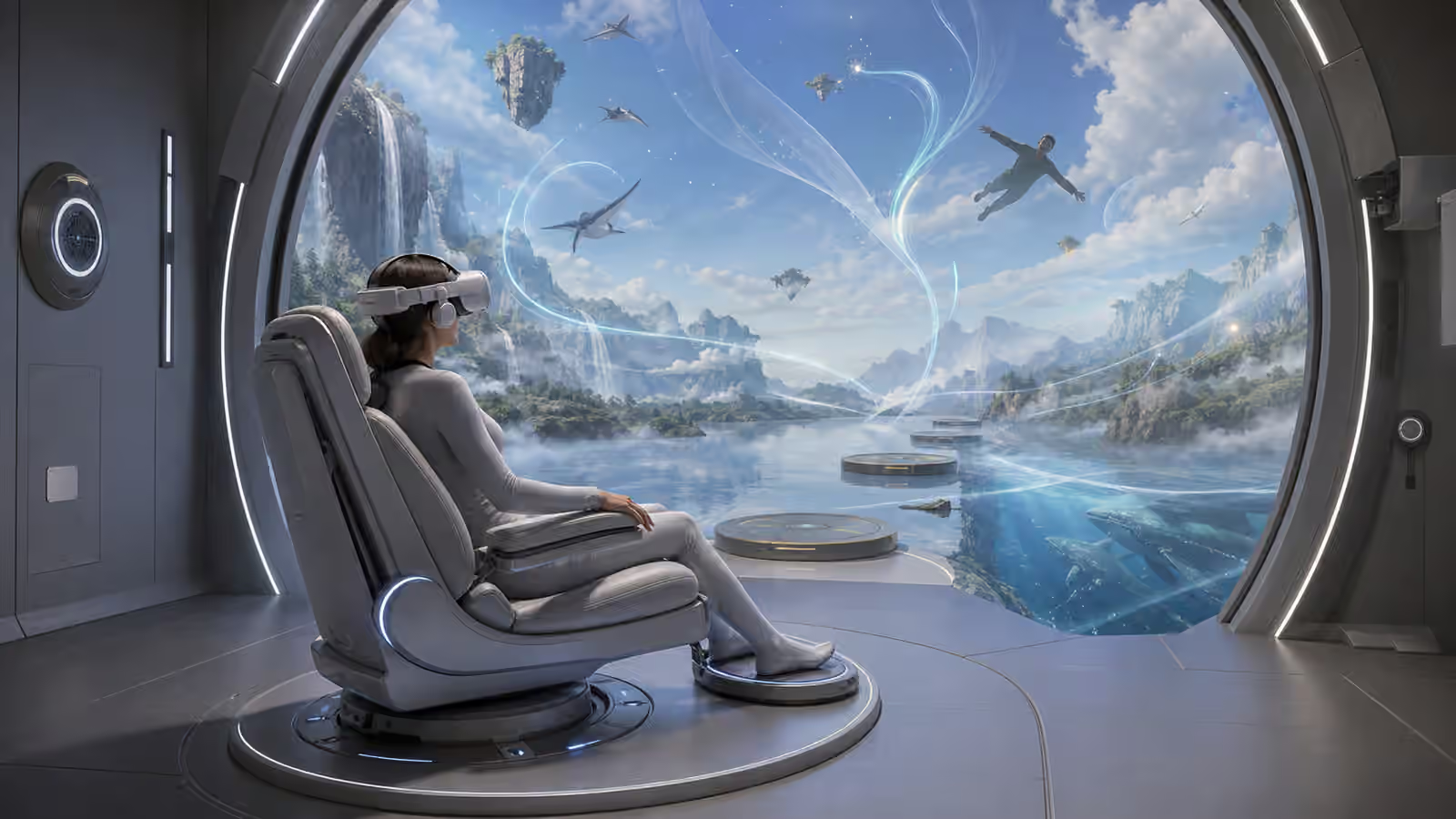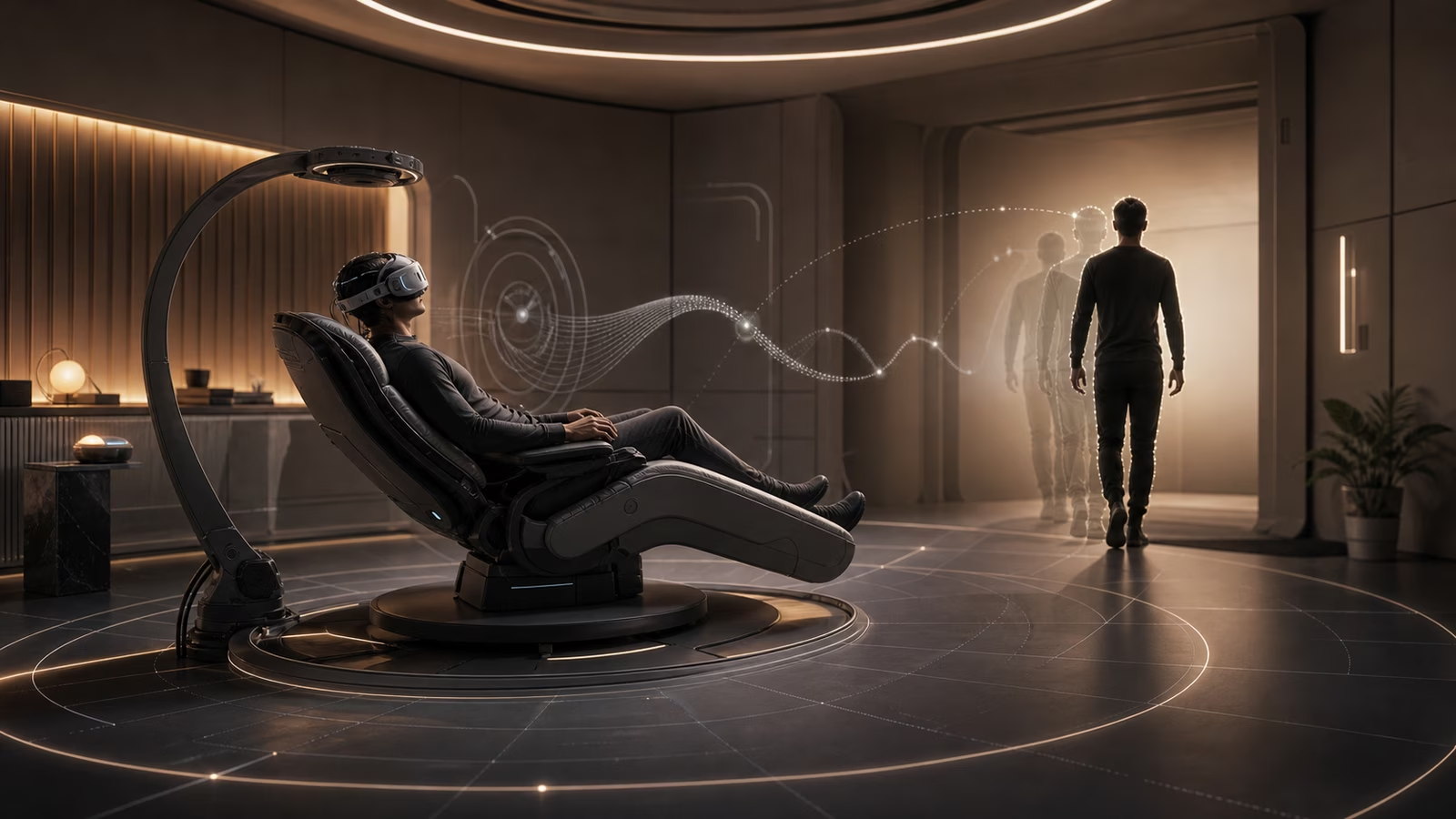
The fantasy of full dive VR is usually described through presence. You are not watching a world. You are in it. Your hand feels like your hand. The floor feels under you. A voice comes from across the room. A door opens, and your body believes the space beyond it.
Presence is fragile. It can be broken by a delay so small that a spectator would not notice it. It can be broken by a virtual hand that starts half an inch away from where your body expects it. It can be broken by a step that arrives late, a touch that lingers too long, a horizon that drifts, or an exit sequence that returns you to the ordinary room before your senses have caught up.
That is why latency and drift are not engineering footnotes. They are trust problems.
Latency is time you can feel
Latency is delay. In ordinary VR, it may be the delay between turning your head and seeing the virtual world update. In a fuller sensory system, latency could appear between intention and movement, movement and touch, touch and interpretation, sound and location, or virtual action and bodily response. The more senses a system tries to coordinate, the more timing becomes part of the experience.
A small delay can make a world feel soft, slippery, or wrong. You reach for a cup and the hand arrives a breath late. You turn and the room follows instead of moving with you. Someone touches your shoulder and the pressure comes after the visual contact. Your body may not write a technical complaint, but it will notice. It may respond with discomfort, mistrust, nausea, hesitation, or a quiet refusal to believe the scene.
How Full Dive VR Might Work explains the input and output problem. Latency lives inside that problem. It is not enough for the system to send the right signal. It has to send it at the right time, in the right relationship to the other signals, with the right recovery behavior when timing slips.
Drift is the world slowly disagreeing with the body
Drift is what happens when the system’s model and the user’s body stop matching. In today’s VR, drift might mean a controller position wanders, a tracking system loses accuracy, or the virtual floor no longer feels aligned with the physical floor. In a full dive setting, drift could become more intimate. The avatar’s arm may feel slightly wrong. The body’s center may feel displaced. The user’s sense of where they are may separate from where the system thinks they are.
The unsettling part of drift is that it can be gradual. A sudden break is obvious. A slow mismatch can sneak under awareness until the user feels clumsy, uneasy, or unreal. The world still works, but it no longer feels trustworthy.
Avatar Bodies and Body Schema is the companion guide here. Body schema is the felt map of what the body can do and where its parts are. A full dive system that borrows that map has to update it carefully. If it pushes too hard, too fast, or too inconsistently, the user may not experience freedom. They may experience confusion dressed as immersion.
Calibration should be continuous, not ceremonial
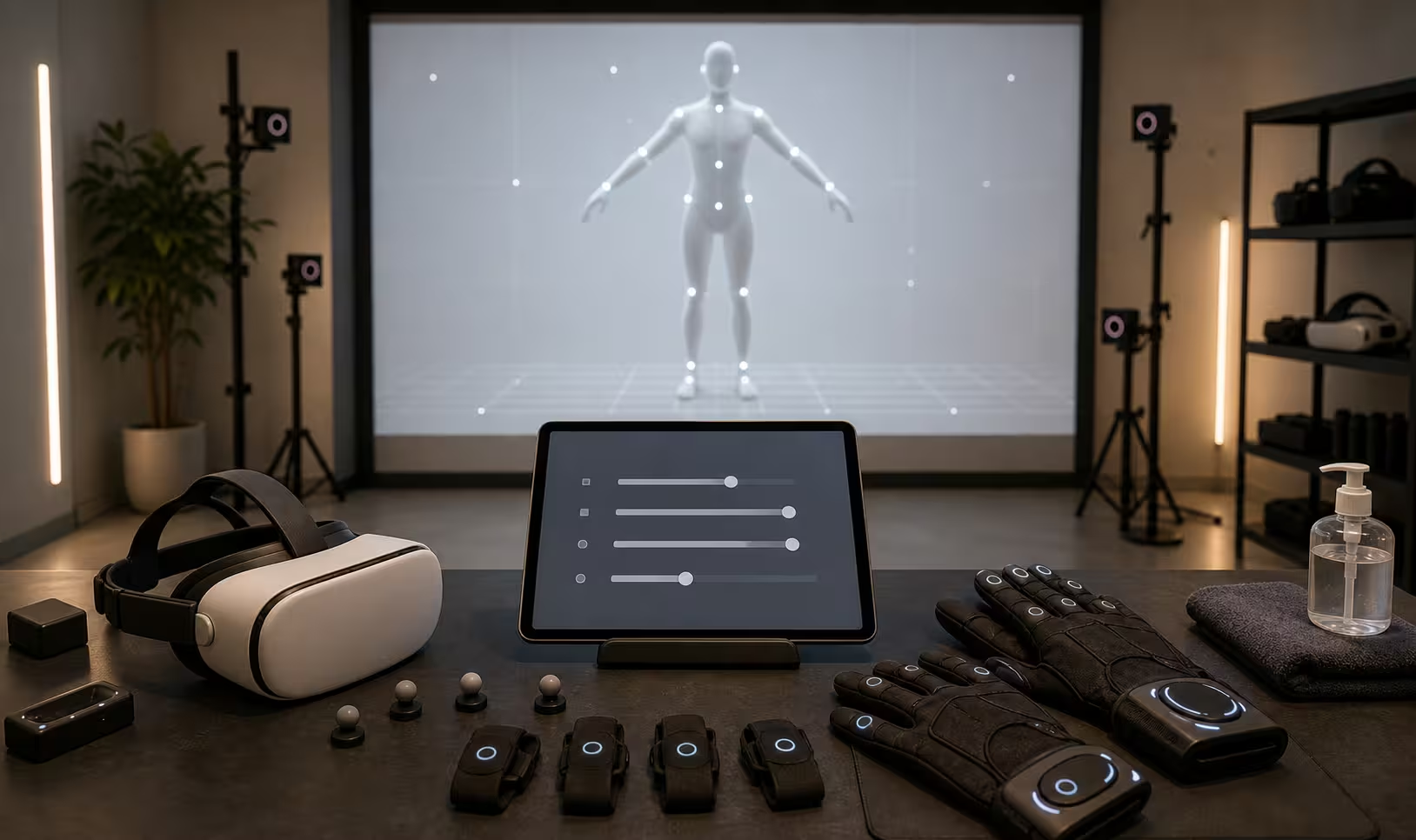
Many imagined full dive systems begin with a calibration room. The user sits down, the system measures them, maps movement, checks sensory thresholds, and then opens the world. That first calibration matters, but it cannot be the only one.
Bodies change during a session. People get tired. Attention shifts. Posture changes. Emotional state changes. Sensors warm, slip, or lose confidence. A virtual body may perform actions that the user’s physical body has never performed. If the system treats calibration as a ceremony at the beginning, it may miss the slow errors that appear later.
A safer system would keep calibrating quietly. It would compare expected signals against actual responses. It would notice when timing begins to degrade. It would reduce intensity when confidence falls. It would offer a pause before the user has to ask. It would understand that a mismatch is not only a technical issue. It is a breach in the user’s confidence.
The Calibration Room presents calibration as the first act of trust. Latency and drift make the case that calibration must also be the ongoing maintenance of trust.
More immersion means more responsibility
In a headset, a small glitch can be annoying. In a stronger sensory system, the same class of glitch may feel more personal. If touch, balance, proprioception, sound, and visual presence all participate, the system is working closer to the self. That closeness raises the standard.
A full dive world should not chase maximum intensity at all times. It should manage a sensory budget. Some scenes can be vivid. Some should be softened. Some should avoid complex motion. Some users may need slower transitions, lower stimulation, or narrower body transformations. The goal is not to impress the system’s designers. The goal is to keep the user’s body and mind oriented enough to consent to what is happening.
This is where Safety, Identity, and Consent stops being abstract. Consent depends on comprehension. If latency, drift, or sensory overload leaves a user disoriented, the system should not treat their continued presence as meaningful agreement. A safe full dive experience needs ways to pause, simplify, reorient, and exit before the user is trapped inside confusion.
Multiplayer makes timing social
Latency is not only between a user and the system. In shared worlds, timing happens between people. A gesture arrives late. A virtual touch is rendered differently for two users. One person’s avatar position is corrected after another person has already reacted. A boundary signal appears a moment too late. These are not just network issues. They are social safety issues.
Full dive multiplayer will need rules for synchronization and for uncertainty. If the system is not confident about a gesture, perhaps it should soften it. If a body boundary is being approached during a timing problem, perhaps the world should create space automatically. If a user is drifting out of alignment, perhaps they should become temporarily less interactive until calibration recovers.
Shared Worlds in Full Dive VR explains why personal space and consent have to be designed into multiplayer immersion. Latency adds a hard practical layer. A boundary that arrives late is not a boundary the user can fully trust.
Reorientation is part of timing
Coming back is not simply turning the system off. The user has to return from one timing regime to another. In the virtual world, the body may have moved differently, sensed differently, or existed in a form the ordinary room cannot support. The exit has to bring perception, balance, memory, and attention back into alignment.
Coming Back treats reorientation as part of the experience instead of an afterthought. Latency and drift make that even more important. If the session ended because timing was degraded, the exit should be calmer, slower, and more deliberate. If the user experienced body drift, the system should help them reestablish ordinary body location before asking them to stand, walk, drive, work, or make decisions.
The most mature full dive system may be the one that refuses to be spectacular at the wrong moment. It may dim the scene, slow the interaction, simplify touch, restore a known body, and ask the user to breathe before it does anything more ambitious.
Trust is the real interface
People will forgive a visible limitation faster than an invisible betrayal. A world that says “tracking is uncertain, please pause” is less magical but more trustworthy than a world that hides the mismatch until the user feels wrong. A body that recalibrates gently is less glamorous than a body that pretends perfection. A session that exits early because timing is unstable may be disappointing, but disappointment is better than disorientation.
Full dive VR will not become believable by removing every sign of machinery. It will become believable when the machinery behaves honestly. Timing, drift correction, calibration, and reorientation are the habits by which the system earns permission to get close.
Presence may be the dream. Trust is the condition that lets the dream continue.