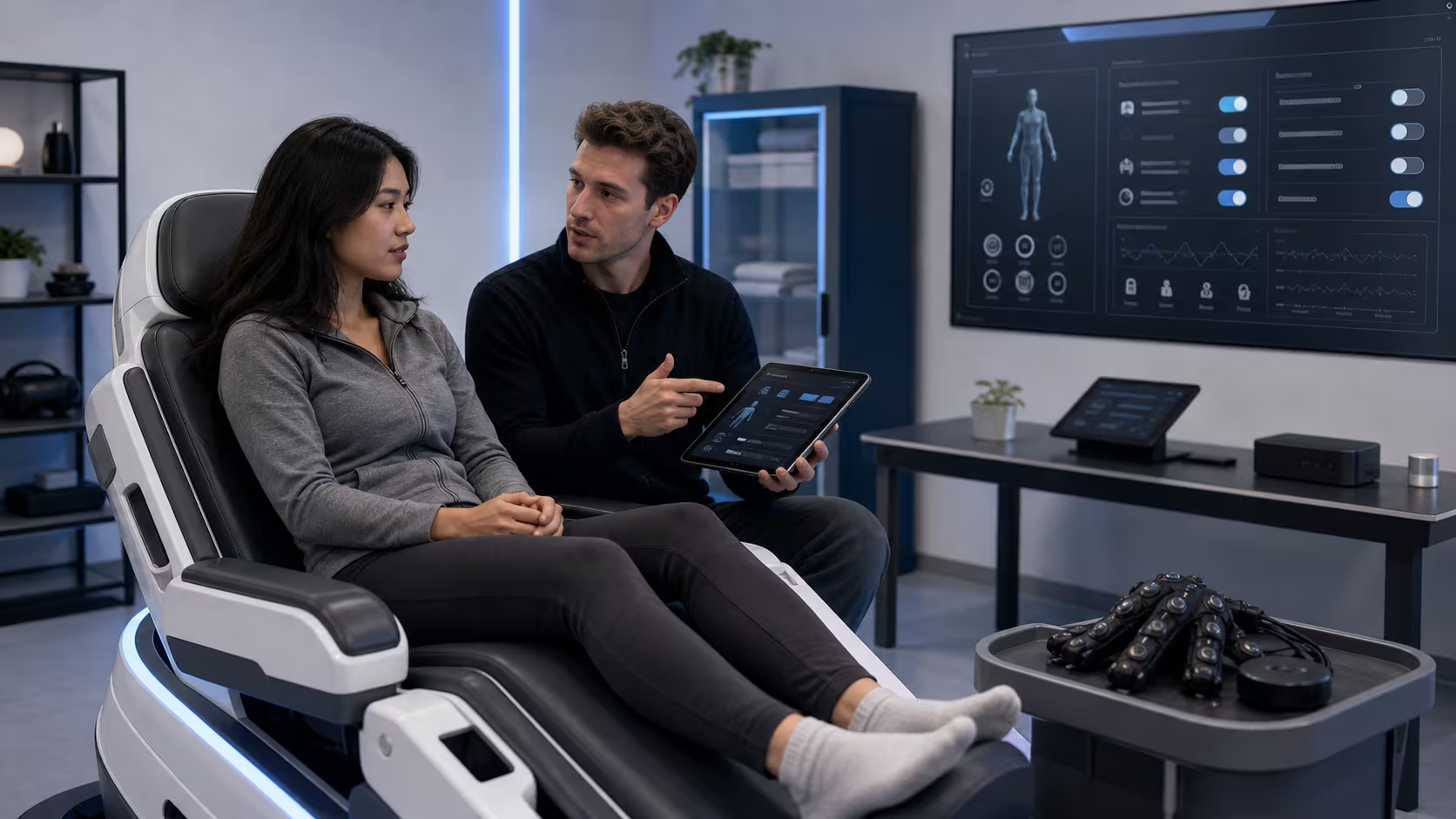
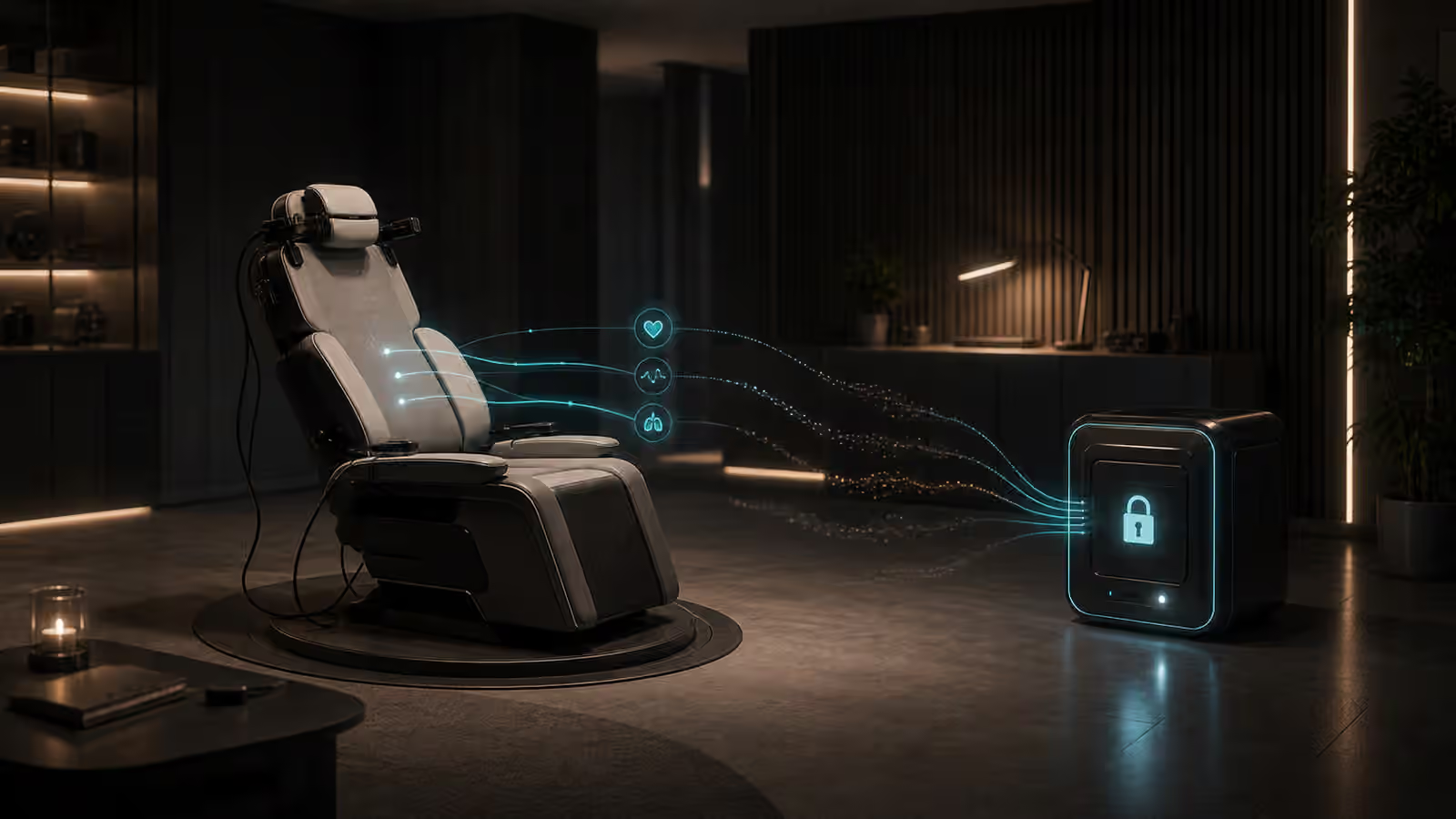
Full dive VR would not only make imaginary places feel closer. It would make people feel closer. A shared room, a borrowed body, a remembered voice, a haptic gesture, or a quiet private landscape could carry emotional weight that flat screens rarely reach. That possibility is part of the appeal. It is also one of the places where the medium would need its clearest boundaries.
Intimacy in this context does not only mean romance or sex. It can mean grief, friendship, family contact, private conversation, shared silence, spiritual practice, roleplay, caregiving, reconciliation, or the comfort of being seen in a body that feels right. The common thread is vulnerability. The user allows another person, synthetic person, or designed world to come close to the self.
Shared Worlds in Full Dive VR covers consent in multiplayer spaces. Intimacy makes that consent more delicate. A boundary that is adequate for a public plaza may be too crude for a private room. A permission prompt that works for a game touch cue may be insufficient for a scene that resembles affection, comfort, or confession.
Closeness Should Not Be the Default
Many virtual worlds reward closeness. Avatars gather shoulder to shoulder. Voices arrive directly in the ear. Synthetic guides step into personal space to feel attentive. Haptic effects make contact memorable. In full dive VR, these choices could feel far stronger than they look from outside.
A humane system should treat closeness as a permission, not a default. Personal distance, voice distance, gaze behavior, touch access, and shared environment control should be adjustable without making the user seem rude. Some people will want warmth. Some will need distance. Some will want different rules depending on the person, world, body, or day.
Permission Boundaries in Full Dive VR argues that consent should live in the environment, not only in menus. Relationship spaces need that principle. A virtual room can show where another person may stand. It can make touch requests explicit. It can let a user soften or refuse proximity without turning the moment into a confrontation.
Synthetic People Complicate Attachment
Synthetic people may become companions, teachers, guides, performers, or memory figures. They may be designed to listen patiently, remember preferences, mirror emotional tone, and respond with just enough unpredictability to feel present. That can be useful. It can also create attachment that the system may be tempted to exploit.
Synthetic People and Consent in Full Dive VR explores this directly, but intimacy adds a specific concern. A synthetic person can be available in ways ordinary people are not. It can wait forever, flatter consistently, avoid conflict, and shape itself around the user’s needs. Those traits can be comforting during loneliness or grief. They can also make it harder to maintain boundaries with the platform that owns the character.
The user should know when a companion is synthetic, what it remembers, who can inspect those memories, and whether its behavior is tuned for the user’s welfare or for retention. A private relationship with a synthetic person is still a relationship mediated by a system. That mediation should not be hidden.
Replays Can Turn Trust Into Evidence
Intimate scenes raise the stakes for recording. A replay of a lesson, a game, or a technical failure may already be sensitive. A replay of a vulnerable conversation, a grief ritual, a consensual touch, or a relationship conflict is something else. It can become evidence, blackmail, training data, nostalgia, or a wound that never closes.
Memory Rights in Full Dive VR and Privacy and Consent in Full Dive VR both matter here. A platform should not assume that because a moment happened in a rendered world, it is available for replay. The user may want some memories to remain unrecorded by default. They may want private markers without full sensory capture. They may want deletion that is understandable rather than theatrical.
Shared intimacy creates hard cases. One person may want a memory preserved. Another may want it gone. A couple may disagree after a relationship ends. A family may want to revisit a memorial scene while one member finds it painful. The system cannot solve every human conflict, but it can avoid making the archive automatic and permanent.
Emotional Carryover Is Real Enough
A full dive relationship scene does not need to be physically real to have real effects. A person may leave a session feeling comforted, jealous, embarrassed, rejected, relieved, or disoriented. They may need quiet before speaking to a partner. They may need to separate an avatar interaction from an ordinary relationship. They may discover that a virtual body changed how a conversation felt.
Social Reentry After Full Dive VR explains why return to ordinary life should be designed. Intimate sessions especially need reentry. The system should not push immediate sharing, social posting, or performance metrics at the exit. It should let the user decide what remains private and when they are ready to talk.
This does not mean treating every emotional response as dangerous. People already carry books, films, dreams, games, and conversations back into life. The difference is intensity and embodiment. Full dive VR may make emotional carryover more vivid, which makes quiet exits and strong consent more important.
Power Differences Need Extra Care
Relationship boundaries change when power is uneven. A therapist-like guide, teacher, employer, celebrity avatar, parent, elder, moderator, or platform-owned synthetic person can shape a user’s choices. Even a friend can have power inside a world if they control the room, the memory archive, or the invitation.
Workplace Boundaries in Full Dive VR and Children and Family Boundaries in Full Dive VR show why context matters. Intimacy should be restricted or carefully governed in settings where refusal is costly. A user should not have to accept emotional closeness to receive education, work access, moderation help, or family participation.
The system can help by separating roles. A synthetic tutor should not slide into companionship without explicit consent. A workplace training avatar should not use personal disclosure to increase engagement. A family account should not let one person monitor another adult’s private room. Design cannot remove all pressure, but it can refuse to amplify it.
Private Does Not Mean Unsupported
There is a tension between privacy and safety. Intimate spaces need privacy, but users also need exits, reports, and help when something goes wrong. The answer is not total surveillance. It is layered support. A user can have a private room with clear emergency controls. A platform can preserve minimal technical traces for safety without recording every sensory detail. A facilitator can respond to distress without reading a private conversation unless the user requests it or a defined emergency threshold is met.
Full dive VR will need the humility to admit that some rooms should stay quiet. The medium may someday host deeply meaningful relationships, but those relationships should not be treated as engagement assets. The closer a world comes to the self, the more it must protect the user’s ability to say no, leave, forget, remember selectively, and return to ordinary life without explanation.
Intimacy is not the reward for building stronger immersion. It is the test of whether stronger immersion can remain decent.