The fantasy version of full dive VR usually skips the house. A person reclines, the world changes, and the story begins somewhere impossible. The ordinary room disappears. That disappearance is part of the appeal, but it is also the reason home use deserves its own boundaries. The user may feel far away, yet their body remains in a bedroom, living room, garage, studio apartment, shared house, or family basement where other people still move, knock, cook, sleep, worry, and make noise.
The Room Outside the World explains why the physical room remains part of immersion safety. Home use makes that point more intimate. A dedicated facility can train staff, control entry, prepare recovery space, and keep strangers away from private signals. A home has groceries on the counter, a child who forgot a charger, a partner asking whether dinner should wait, a neighbor’s drill, a pet that wants attention, and a delivery at the door. The system has to respect that mess without pretending the user lives in a laboratory.
A Home Room Is Not Private by Default
Privacy at home can feel obvious until a person becomes unavailable to the room around them. A closed door may mean concentration, sleep, modesty, work, gaming, grief, or a meeting. A full dive session adds a sharper version of the same problem because the user may not be able to respond immediately, explain what they are doing, or notice who entered. If the system exposes session status on a wall light, household members may learn more than the user intended. If it hides every sign, people nearby may not know whether interruption is safe.
The answer is not simply more secrecy or more visibility. It is legible privacy. The room should be able to say, in plain household terms, that a session is active, paused, exiting, or in recovery without broadcasting the content of the experience. The difference matters. A partner may need to know that the user should not be startled. They do not need to know whether the user is in a social world, a training rehearsal, a memory archive, or a quiet sensory scene.
Privacy and Consent in Full Dive VR treats body data as close to the self. Home use adds proximity. The people most likely to see the hardware are also people with emotional claims on the user. That familiarity can make privacy easier to violate casually. Someone who would never open a medical record might glance at a session dashboard because it is on a tablet in the kitchen. Someone who would never read a diary might ask a synthetic assistant what the user was doing because the assistant sounds helpful. Domestic trust needs technical restraint.
Interruption Is a Design Problem
Household interruptions are not all equal. A fire alarm, illness, equipment fault, or urgent family matter may justify ending a session quickly. A question about laundry does not. A package delivery might need a pause if the user is alone. A barking dog might not. The system cannot decide every domestic priority, but it can give the household better tools than shouting through a door.
A home setup should support graded interruption. A gentle outside request can become a signal inside the user’s world without tearing the scene apart. A more urgent request can move the user toward a neutral room. A physical safety event can trigger a stronger exit sequence. The important point is that interruption should have manners. It should not punish the household for needing the user, and it should not let every minor request seize the user’s attention.
Comfort and Reorientation in Full Dive VR argues that returning from immersion should be designed, not improvised. At home, reorientation has to include the social situation. A user may come back to a worried partner, a child standing too close, a roommate annoyed by the delay, or nobody at all. The room should give the user a moment to understand why they were interrupted before demanding speech, movement, or decisions.
Household Permission Is Not Platform Permission
Full dive VR will need platform permissions, but the home adds a second layer. A user may give a world permission to use haptics, scent, voice, or a synthetic guide. That does not mean the household has agreed to noise, visible emotional reactions, scent residue, shared equipment changes, or a user becoming unavailable for an hour during a fragile evening. Domestic consent is less formal than software consent, but it is real.
Permission Boundaries in Full Dive VR is useful here because permission should be operational. Home use needs the same attitude. A system could offer household modes that reduce outward disturbance, block live audience features by default, hide session summaries from nearby devices, and make recovery time visible without exposing private content. Those are not just convenience settings. They are ways of keeping an immersive system from quietly occupying more of the home than the user meant to give it.
This matters especially in shared homes. One person’s immersive room may also be another person’s office corner, guest room, storage area, or quiet place to read. If a full dive chair, haptic kit, scent cartridge, cooling unit, and recovery lamp claim the space permanently, the household has been redesigned around the technology. Good home equipment should be honest about its footprint. It should fold down, turn quiet, cleanly signal when it is off, and avoid making the household feel like staff around one person’s world.
Families Need Different Boundaries Than Facilities
Children, Teens, and Family Boundaries in Full Dive VR covers younger users directly, but adult home use still affects families. A child may not understand why a parent cannot answer. A teen may want access to equipment calibrated for someone else. A partner may worry about what a session means if it leaves the user quiet afterward. A roommate may feel awkward walking past a reclined body in a vulnerable posture.
These situations do not require melodrama. They require household expectations before the session begins. The user should not have to explain every world they enter, but they may need to explain how interruption works, what the status light means, when not to touch the equipment, and how much recovery time they prefer. The household should not be asked to monitor intimate body data, but it may need to recognize a basic exit problem. The user should have privacy, but not at the cost of leaving everyone else unsure whether they are responsible for safety.
Shared Equipment, Hygiene, and Maintenance in Full Dive VR becomes practical at home. Equipment that sits in a shared room gathers household meanings. A headset on the table can look like an invitation. A fitted liner can feel personal. A calibration profile can reveal the shape of someone’s body or sensory thresholds. Home systems should not encourage casual sharing without explaining what should be recalibrated, cleaned, reset, or kept private.
Recovery Belongs in the House
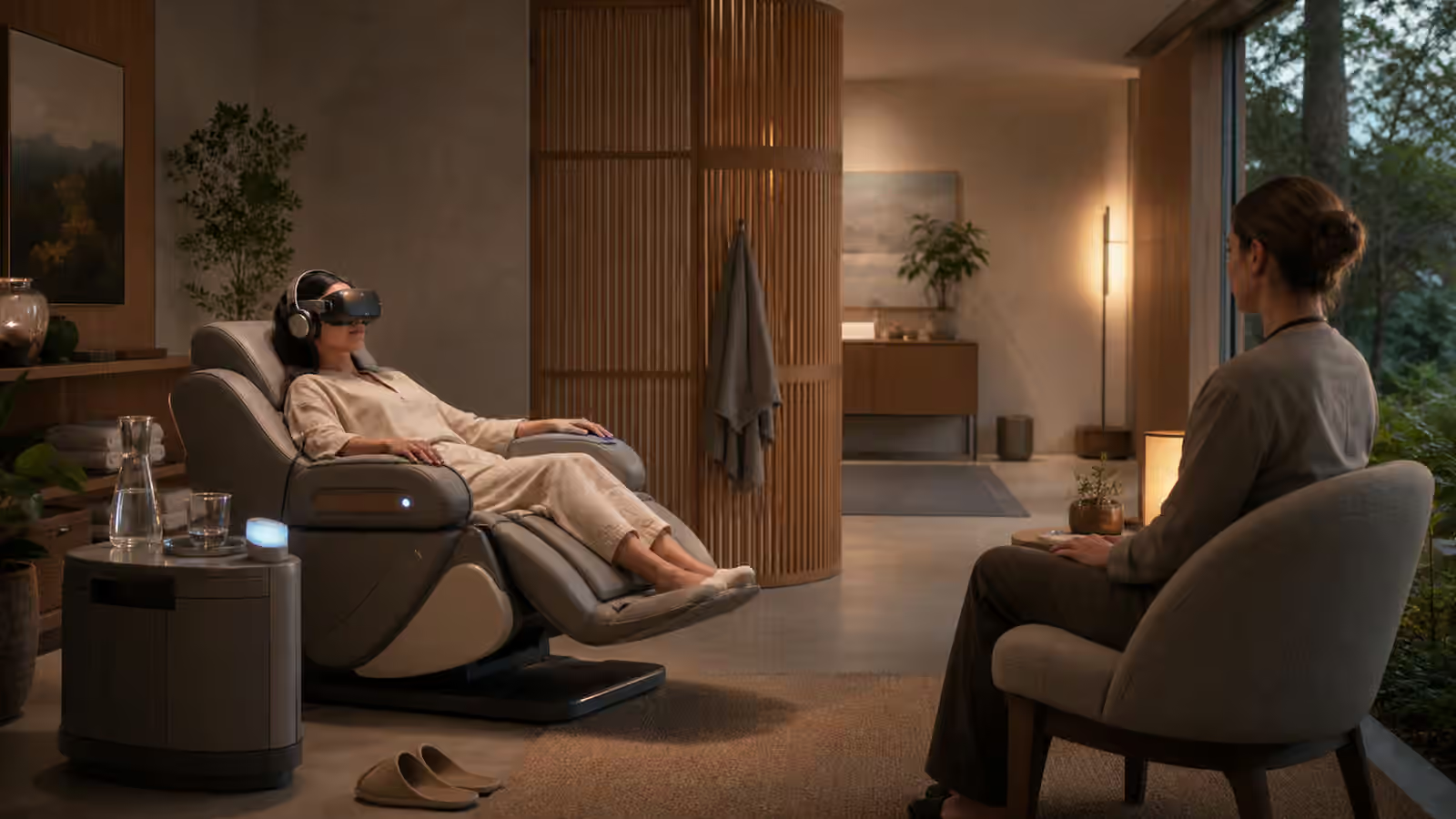
The last minutes of a home session may matter more than the first. A facility can create a recovery suite. A home may offer a lamp, a blanket, a familiar wall, water, and quiet. That can be enough if the design respects it. It can fail if the system ends in a bright menu, pushes social messages, asks for ratings, or drops the user straight into household demands.
Sleep, Rest, and Recovery in Full Dive VR treats recovery as part of safety, not a luxury. Home use makes recovery harder because the ordinary world is already there. The user may exit near a sink full of dishes, a phone full of notifications, or a person waiting to talk. The system should not assume the home is calm just because it is familiar. It should help the user make a clean transition from world to room.
That transition can be simple. The chair returns to a neutral posture. Light rises slowly. Sound softens. Haptics stop before speech begins. The system names the session state without summarizing private content. A household signal changes from active to recovery. The user has time to sit before standing. The ordinary room is allowed to become real again at human speed.
The Home Should Not Become a Backstage Area
A full dive system at home should not make everyone else feel like backstage crew for an invisible performance. The household is not merely a support layer. It is the user’s real environment, with its own rhythms and claims. The strongest home design may be the one that knows when to disappear, not by hiding risk, but by reducing the pressure it places on the room.
Social Reentry After Full Dive VR explains that returning to other people needs boundaries. At home, those other people may be waiting nearby. They should not be forced into curiosity, worry, or service. The user should not be forced into confession or immediate cheerfulness. Everyone needs a way to treat immersion as meaningful without letting it dominate the house.
Full dive VR will become more plausible when it can live among ordinary furniture, shared schedules, sleep, interruptions, embarrassment, affection, and silence. A home system that respects those things will feel less spectacular than the fantasy. It will also be more trustworthy. The measure is not whether the virtual world can erase the room. It is whether the user can leave the room, return to it, and still have a home rather than a device with walls around it.