The city begins with rain.
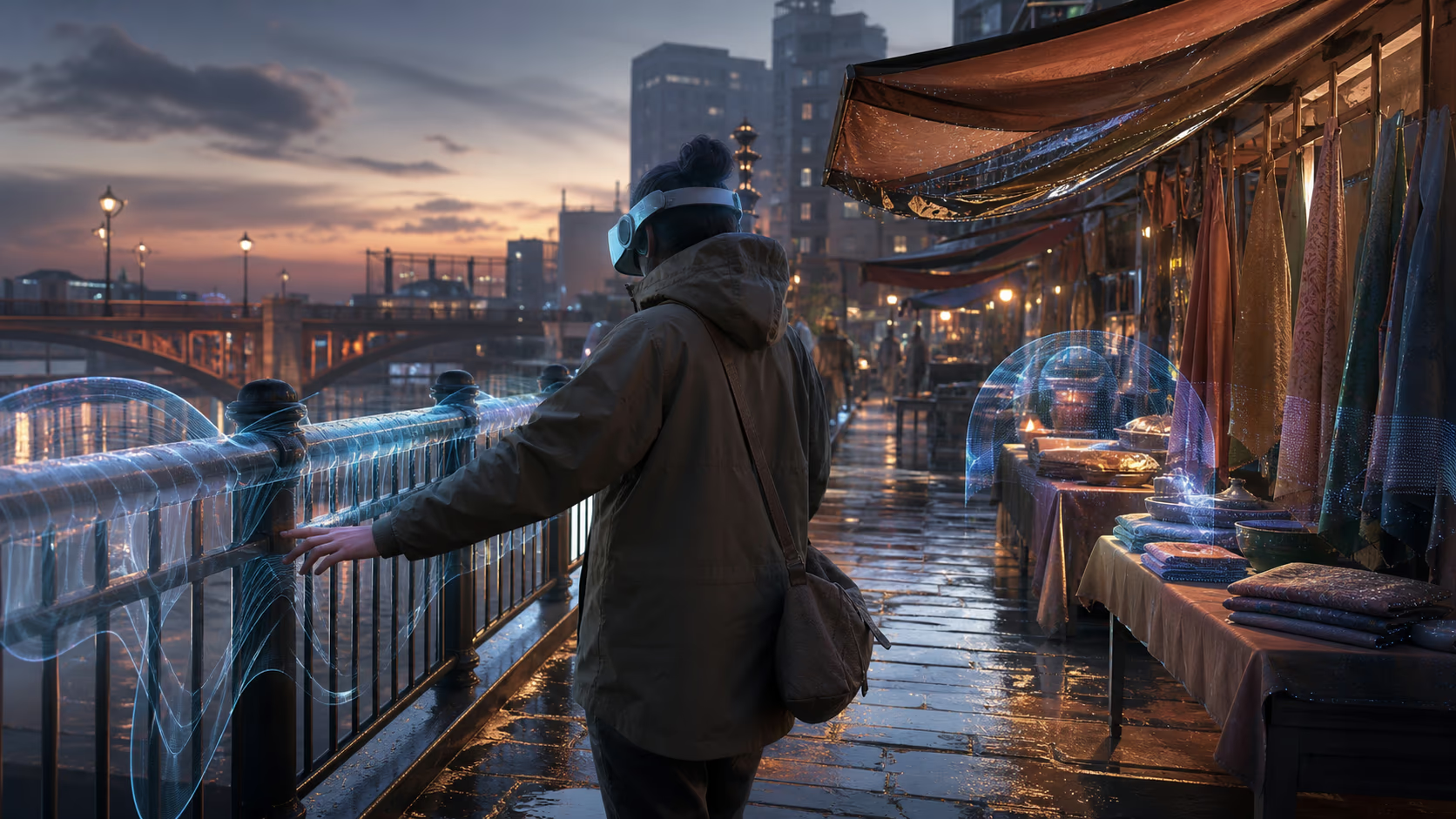
Not a storm. Just a thin silver rain that dots the pavement, gathers on the awning above a fruit stand, and slides down the rail of a bridge you have not crossed yet.
In a normal VR headset, you would see the rain and hear it. Maybe a controller would buzz when a drop hits your virtual hand. Your eyes would do most of the work, and your imagination would cover the gap.
In a full dive system, the rain has to negotiate with your skin.
That is where the fantasy gets difficult. Touch is the sense that makes a virtual world stop being a theater and start becoming a place. A world you cannot touch may still be beautiful. A world that touches you back becomes personal.
The haptic city is a useful thought experiment because a city is full of ordinary contact. Not heroic contact. Not explosions. Door handles, wet stone, cloth sleeves, a warm cup, a railing under your palm, the slight push of a crowd, the difference between stepping on wood and stepping on tile.
If full dive VR cannot make ordinary touch believable, it will struggle with everything else.
Vibration Is Only the First Word
Most consumer haptics today are variations on vibration. A controller buzzes. A phone taps. A vest pulses. The signal can be useful, but it is a small vocabulary.
Real touch is not one channel.
It includes pressure, stretch, temperature, texture, pain, itch, slip, vibration, weight, and body position. Your fingers can tell the difference between silk, glass, cardboard, orange peel, cold metal, and a rough wall because the skin is reading patterns across time and space.
That is why “more vibration” is not the same as better touch.
If every object in the city produces a buzz, the city becomes less real, not more. A brass railing should not feel like a wooden door. Rain should not feel like a notification. A handshake should not feel like a menu confirmation.
A good haptic system needs contrast. Silence matters as much as signal.
Weight Is Not a Texture
You stop at a small market stall and pick up an apple.
In vision, this is easy. The apple sits in your hand. The world updates. Your fingers wrap around it.
The problem is weight.
If your real hand is empty, what makes the apple feel like it has mass? A glove can resist your fingers, but it cannot easily pull your whole arm down. A controller can vibrate, but it cannot create the slow demand of holding something heavy. A robotic exoskeleton can create force, but it adds cost, weight, safety concerns, and mechanical limits.
Full dive may need several tricks at once:
- Visual motion that matches the expected weight.
- Finger resistance when gripping.
- Muscle stimulation or tendon cues.
- Sound design that implies mass.
- Body animation that slows heavy movement.
- Game rules that avoid impossible mismatch.
The goal is not always perfect physics. It is believable enough behavior. The apple can feel light. The suitcase can require two hands. The stone door can refuse to move. Each cue teaches the body what kind of world it is in.
Texture Is Timing
You run your fingers along a brick wall.
The wall is not just rough. It has rhythm. Edge, gap, edge, mortar, scrape, pause. Texture is a pattern unfolding as you move.
This is good news for VR because the system may not need to reproduce every microscopic detail. It may need to produce the right pattern at the right time. A glove or skin patch could change vibration, pressure, and friction as your finger crosses the virtual surface. Audio can reinforce the movement. Visual detail can predict what the hand is about to feel.
The brain is a collaborator. It fills gaps when the cues agree.
But the collaboration is fragile. If the texture arrives too late, it feels fake. If the wall looks smooth but feels rough, it feels wrong. If every brick repeats the same canned buzz, it feels like a sample library.
Haptics is not only hardware. It is choreography.
Pain Is a Boundary, Not a Feature
The city has hazards: hot pipes, sharp glass, high ledges, fast vehicles, hostile spaces. A real body uses pain as warning and protection. A virtual system has to be much more careful.
Entertainment software should not casually own pain.
That does not mean danger feedback is useless. A system can signal harm without hurting the user. It can use pressure, sound, color, resistance, numbness effects, controller lockout, slowed movement, or a clear body overlay. The user can understand that something is dangerous without receiving a painful stimulus.
If future systems ever include stronger sensory output, pain permissions should be explicit, limited, reversible, and off by default. Even then, many experiences should never need them.
The better design question is not “can we simulate pain?”
It is “what is the gentlest signal that still keeps the world understandable?”
Social Touch Is the Hardest Touch
The rain, railing, and apple are technical problems. Social touch is a trust problem.
A stranger standing too close in VR can already feel uncomfortable. In deeper systems, a hand on your shoulder, a push through a crowd, or a hug from a friend could carry real emotional weight. The system has to know who is allowed to touch, where, when, how strongly, and in what context.
There should be no default assumption that deeper immersion means open access to the user’s body field.
Useful controls might include:
- Touch disabled by default for strangers.
- Friend-specific permissions.
- Context-specific permissions for games, therapy, training, and social rooms.
- Visible indicators when touch is synthetic, recorded, or live.
- Instant personal space restoration.
- Strong logs for abuse reports without turning every intimate moment into platform property.
A city becomes livable because people understand boundaries. A haptic city needs boundaries too.
Haptics Should Become a Language
The most promising haptic future may not be perfect realism.
It may be a new language of touch.
In that language, a soft band around the wrist might mean a friend is nearby. A pulse in the palm might mean an object is interactable. Gentle resistance might mean the world is asking you to slow down. A cooling sensation might mark water, not because it perfectly simulates water, but because the body learns the symbol.
Games already do this visually. A red outline can mean danger. A glow can mean selection. A sound can mean success. Haptics can build similar conventions if designers use them consistently.
That matters because full dive worlds will include impossible things. You cannot realistically simulate the texture of a spell, the weight of a memory, or the touch of walking through a cloud. But you can design tactile metaphors that the body understands.
The future may feel less like copying reality and more like composing for skin.
The City Should Not Shout
By the time you leave the haptic city, the best thing you remember may be small.
Not the tower. Not the flying train. Not the shimmering skyline.
The railing.
You remember putting your hand on it while looking down at the river. It was cool. It resisted your palm. When you moved, the little seams in the metal passed under your fingers at the same speed as your hand. For a moment, you did not think, “This haptic system is impressive.”
You thought, “I am leaning on a railing.”
That is the target.
Full dive haptics should not constantly announce itself. It should support the world until the world feels usable. It should save strong signals for moments that deserve them. It should respect the user’s limits. It should treat touch as meaning, not decoration.
The dream of full dive is not just to see another world.
It is to reach out and have the world answer carefully.