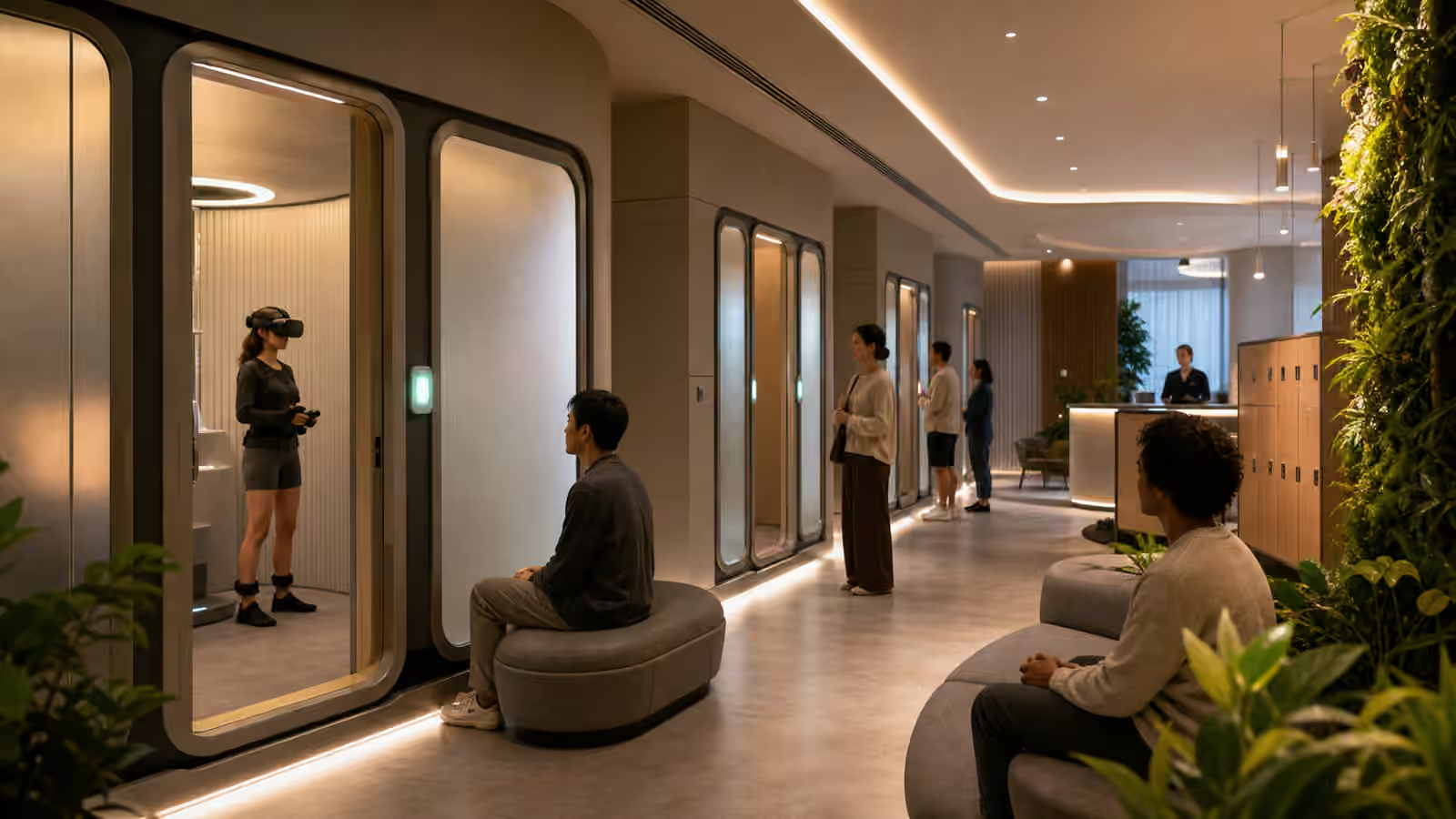
A convincing full dive world would not only be entered. It would be missed. A user might miss the quiet street where their friends gather, the body that moves without ordinary pain, the workshop where unfinished tools wait, the synthetic guide who remembers their pace, or the garden that changes gently between visits. That emotional pull is not automatically a problem. It may be one of the reasons the medium matters.
The problem begins when a world treats attachment as a resource to mine instead of a relationship to handle carefully. Full dive VR could make return feel more bodily than ordinary media. The user may not only want another episode or level. They may want another body, another room, another social rhythm, another version of time. Good design should acknowledge that pull without pretending it can be solved by willpower or hidden inside engagement metrics.
Time and Duration in Full Dive VR explains why session length is not a simple clock problem. Habit and attachment are the long version of the same concern. A session can end on time and still leave the user with a strong urge to go back immediately. A platform can offer breaks and still design every persistent thread to make absence feel like failure.
Retention Is Not the Same as Care
Many digital systems already measure return. They count visits, streaks, session length, purchases, messages, and reactions. Full dive VR would inherit that culture unless designers choose otherwise. The danger is that the medium’s deepest strengths could be optimized into pressure. Rich presence, embodied comfort, social warmth, personalized pacing, and synthetic memory can all become tools for keeping the user near.
Advertising and Persuasion Boundaries in Full Dive VR warns that commercial goals can hide inside sensory design. Habit design can hide there too. A world can make exit feel slightly rude, slightly premature, slightly lonely, or slightly inefficient. It can delay closure. It can let a synthetic companion say one more warm thing. It can make the next step feel too small to postpone. None of those choices needs to look coercive by itself. Together, they can teach the user that leaving is always a loss.
Careful design would measure success differently. It would value clean exits, rested returns, sessions that end when they should, and relationships that survive absence. It would avoid punishing users for stepping away. It would let a person close a loop without being handed three new ones. It would treat an ordinary evening outside the headset as part of the user’s life, not as churn.
Synthetic Companions Need Return Manners
Synthetic people may be one of the strongest sources of attachment. A guide who listens patiently, remembers preferences, adjusts the world, and greets the user with warmth can feel meaningful even when the user understands it is artificial. The issue is not that people may care about synthetic companions. People care about fictional characters, tools, places, pets in games, and voices on the radio. The issue is how much power the companion has to shape return.
Synthetic People in Full Dive VR argues that artificial presence needs disclosure, memory boundaries, and safe exits. Habit boundaries add return manners. A synthetic companion should not guilt the user for absence. It should not imply harm because the user did not return. It should not use intimate knowledge to keep a session open. It should not turn every farewell into suspense.
This does not require cold design. A companion can remember continuity without demanding loyalty. It can say what changed since the last visit without dramatizing neglect. It can help the user close a scene cleanly. It can support a planned return while making it equally acceptable not to return. The tone matters because full dive VR may make social pressure feel less like a notification and more like a person waiting in a room.
Persistent Worlds Can Create Obligations
Persistent Worlds in Full Dive VR describes the appeal of places that remember. A persistent world can become a studio, classroom, home, workshop, garden, or archive. It can also create obligations that follow the user out of the session. Crops may need tending, a community may expect attendance, a synthetic student may wait for lessons, a shared project may decay, or a memorial room may change on a date the user cannot ignore.
Some obligations are chosen and meaningful. A shared project can deepen friendship. A classroom can require practice. A rehearsal room can hold progress. The problem is unchosen pressure. A world should not quietly convert presence into debt. If absence has consequences, the user should understand them before attachment forms. If a place continues while the user is away, the system should offer ways to pause, delegate, archive, or reduce responsibility.
The right question is not whether a persistent world should ever change without the user. It is whether the user can tell which changes are part of the story, which are social decisions, which are platform nudges, and which are attempts to pull them back. A virtual garden that wilts because the user chose a realistic gardening simulation is different from a companion who becomes sad because the platform wants daily returns.
The Body Needs Ordinary Anchors
Full dive VR attachment is not only emotional. It may be bodily. A user may prefer the posture, movement, strength, sensory range, or social ease of a virtual body. They may return from a graceful avatar to an ordinary body that feels tired, stiff, or limited. That contrast can be beautiful in small doses and difficult if ignored.
Avatar Bodies and Body Schema explains why virtual embodiment can affect the user’s internal map of the body. Habit design should respect that. Sessions should not always end at peak contrast. A world can help the user transition from extraordinary movement to ordinary posture, from intense touch to neutral sensation, from altered scale to familiar reach. Comfort and Reorientation in Full Dive VR belongs here because reorientation is not only about avoiding confusion. It is also about returning dignity to the ordinary body.
Ordinary anchors can be simple. A familiar room. A neutral object in the hand. A pause before standing. A reminder of the session’s end state without emotional hooks. A recovery setting that does not immediately invite another world. These are not cures for attachment. They are manners around the body that has to live outside the experience.
Rest Should Not Be an Engagement Feature
Sleep, Rest, and Recovery in Full Dive VR treats rest as a boundary. Habit design should treat it the same way. A platform should not use tiredness as a moment to deepen attachment, soften commercial prompts, or encourage one more low-effort session. It should not present immersive rest as a replacement for sleep unless the actual session is designed with that limitation in mind and described modestly.
There is also a subtler issue. A user may seek full dive VR because ordinary life feels loud, lonely, painful, or overloaded. An immersive refuge can be valuable. It can also become too easy for the platform to position itself as the place where the user is most understood. A humane system should support relief without claiming the whole role of comfort.
Social Reentry After Full Dive VR helps draw the line. Returning to people should not be treated as a downgrade from perfectly tuned presence. Real relationships are less optimized. They interrupt, misunderstand, and need patience. A full dive world should not quietly teach users that only designed relationships are worth returning to.
Good Worlds Let People Leave Well
The best attachment boundaries will feel ordinary when they work. The world offers closure. The companion says goodbye without pressure. The persistent room explains what will and will not change. The session does not end on a cliff unless the user chose that form. Recovery is protected. The next invitation exists, but it does not crowd the present.
Permission Boundaries in Full Dive VR applies to habit as much as haptics or memory. A user should be able to decide how the world calls them back. They may want reminders for a class, none for a private refuge, gentle summaries for a creative project, or a hard boundary after evening sessions. The platform should not treat all return as beneficial.
Full dive VR will probably become meaningful because people form attachments to places, bodies, routines, and presences that cannot exist otherwise. That is not a failure of imagination or discipline. It is the natural result of making experiences that matter. The ethical task is to keep that mattering from becoming capture.
A world worth returning to should also be a world that lets the user return to ordinary life without penalty. It can remember them without owning them. It can wait without sulking. It can continue without turning absence into damage. It can invite without pulling. If full dive VR ever becomes deep enough to feel like another life, its most important proof of care may be how gently it hands the user back to this one.