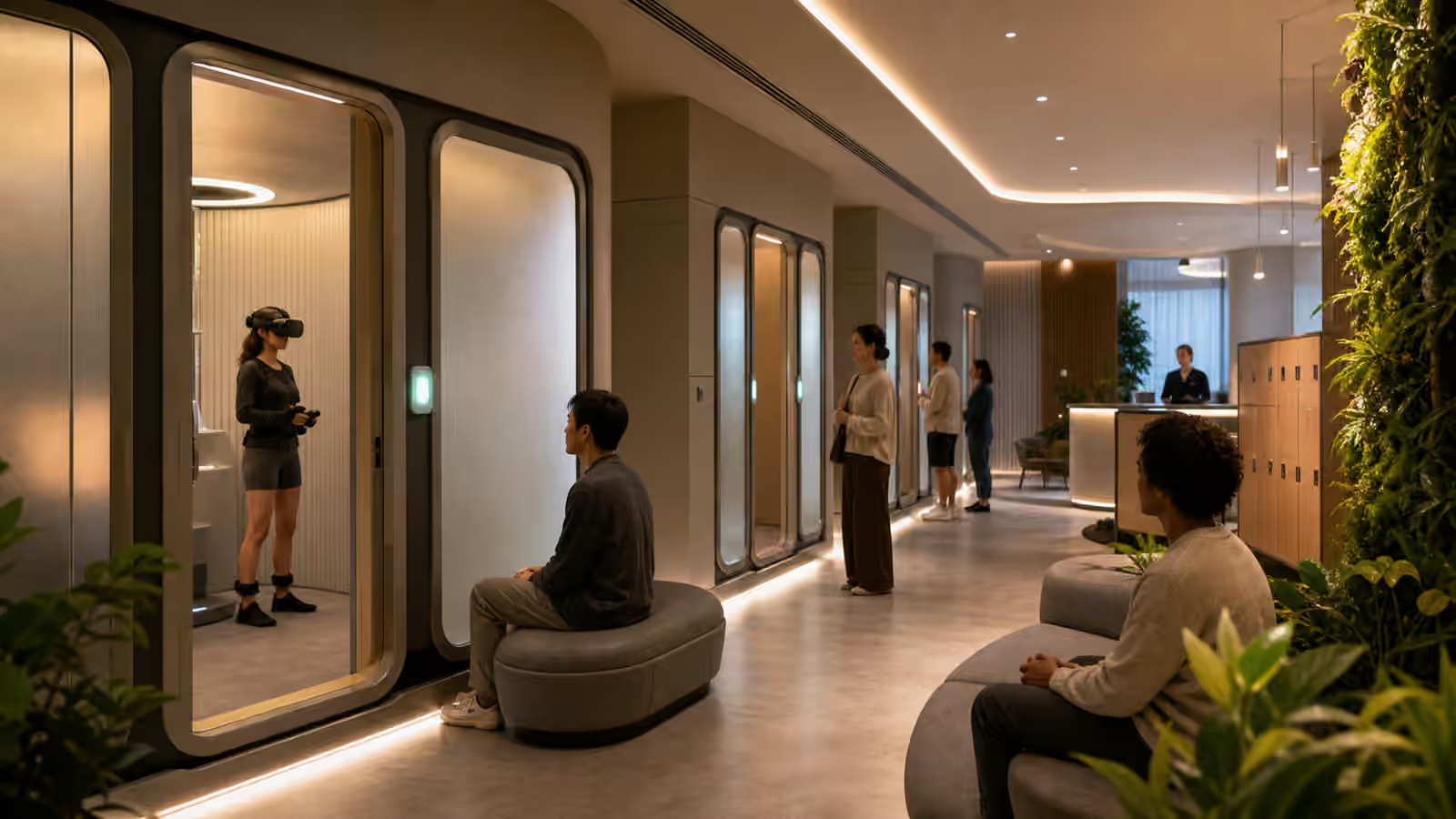
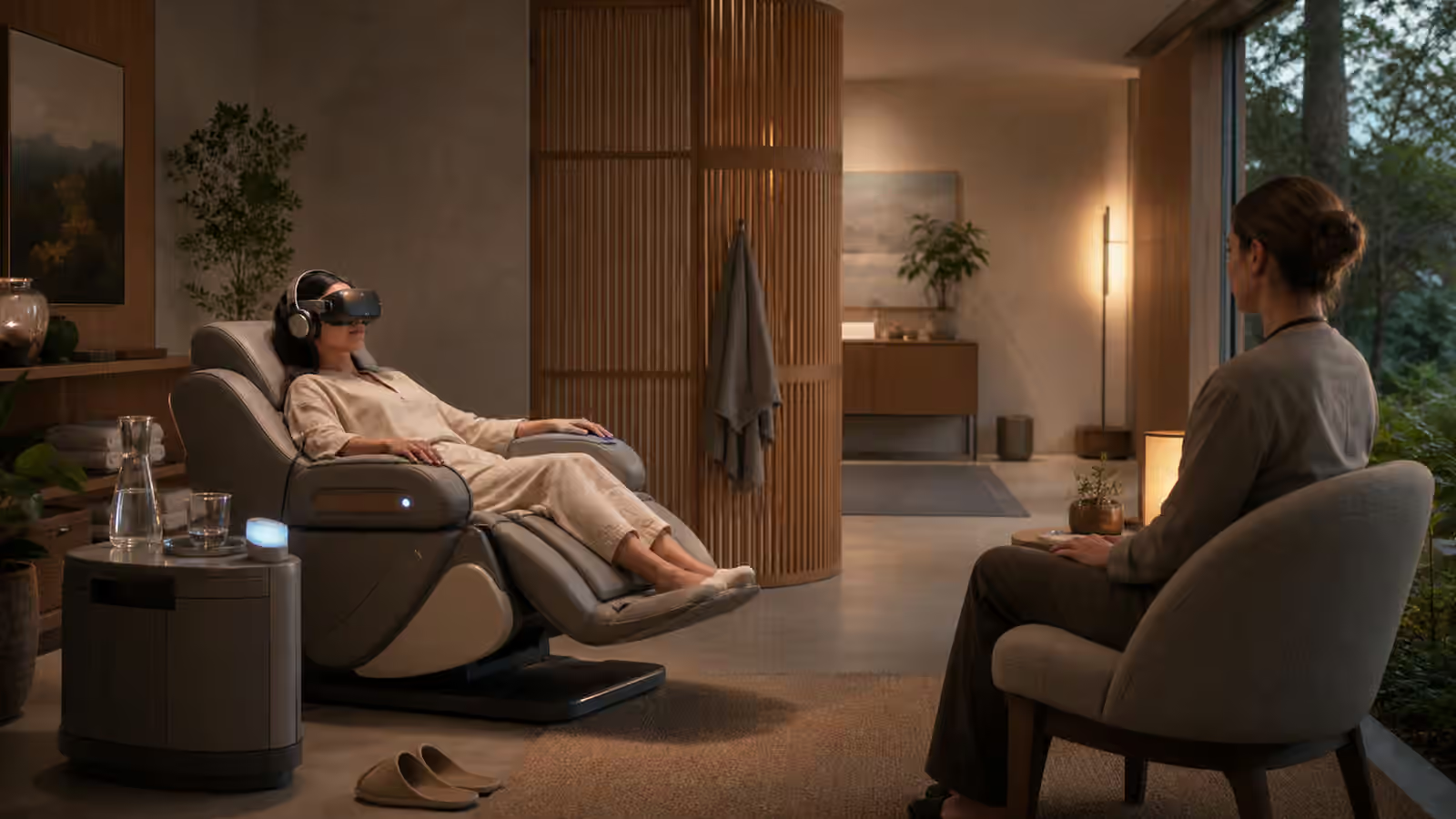
Full dive VR is often imagined as a solitary doorway. The user lies down, the world appears, and the machine handles the rest. That picture may fit a fantasy, but it is a poor model for serious immersive systems. The deeper the experience reaches into attention, sensation, memory, and body trust, the more important the surrounding human roles become.
A facilitator is not merely a technician who presses start. An operator is not merely a guard at a console. These roles sit between the physical room and the virtual world. They help prepare the user, confirm readiness, notice outside-room problems, respect privacy, handle pauses, and make the return ordinary. If the role is vague, the user may not know who can help, who can see what, or who has authority to stop a session.
The Room Outside the World explains why the physical room remains part of full dive safety. Facilitators are the human version of that room. They are part of the trust architecture even when everything goes well.
Support Should Be Visible Before Entry
Users should understand support roles before immersion begins. Who helps with equipment? Who can hear the user during the session? Who can see technical status? Who can pause the experience from outside? Who receives a report if something feels wrong? These answers should not be discovered during distress.
This is not only a policy issue. It changes how a person relaxes. A user who knows that the facilitator can stop the session for a physical hazard but cannot casually inspect private thoughts or emotional labels may feel safer than a user who sees a mysterious console and a silent observer. Clear authority reduces suspicion.
Shared Equipment, Hygiene, and Maintenance in Full Dive VR shows how ordinary preparation affects dignity. The facilitator’s posture matters in the same way. Calm explanation, unhurried fitting, privacy during adjustments, and respect for unusual needs can set the emotional tone before the world loads.
The Operator Should Not Become a Spectator
Deep immersion creates a temptation to watch. The session may be beautiful, strange, funny, or revealing. A facilitator might want to see what the user sees, review an avatar performance, or inspect a replay to understand a reaction. That curiosity should be constrained. The operator’s role is support, not entertainment.
Spectator and Streaming Boundaries in Full Dive VR explains why watching an immersive session is not neutral. Even when the user consents to technical supervision, they may not consent to being observed as a performer. A support view should be designed around safety signals, equipment status, and user-requested help. It should not default to a full emotional theater.
The difference matters because users may behave differently when they feel watched. They may endure discomfort, avoid asking for help, or choose a less honest avatar. A well-designed operator role lets the user know that support exists without turning immersion into surveillance.
Outside Authority Needs Limits
An outside operator may need authority to pause or stop a session. A strap may slip. A user may show signs of distress. A room may lose power. Another person may enter the physical space. A network failure may make the virtual scene unreliable. In those moments, outside authority protects the user.
But authority without limits can become coercive. An employer should not use an operator console to keep a worker inside a training scene. A school should not make a private exit visible to a classroom. A family member should not override an adult user’s boundary because they are nearby. A facilitator should not continue a session because the schedule is tight.
Workplace Boundaries in Full Dive VR and Children and Family Boundaries in Full Dive VR show how context changes power. Operator roles should be narrower in contexts with stronger authority gradients. The person inside the experience should not lose basic control because someone outside has a badge, a login, or a relationship.
Pauses Need a Social Script
Pauses are awkward when nobody knows what they mean. Did something break? Did the user fail? Is the facilitator annoyed? Is the session being recorded? Should the user explain immediately? A good full dive environment makes pauses normal before they are urgent.
The operator can help by using a simple and consistent rhythm. The system pauses, the world quiets, the user receives a clear reason if one is available, and no one demands a performance of composure. If the pause came from the user, the facilitator can wait for permission before asking questions. If the pause came from outside, the facilitator can explain the physical issue without flooding the user with details.
Session Logs and Incident Response in Full Dive VR covers the formal side of follow-up. Operator pauses are the everyday side. Most pauses should not become incidents. They should become evidence that the system can slow down without shame.
Facilitators Need Training in Not Knowing
The hardest skill may be restraint. A facilitator will sometimes see signals that suggest discomfort without knowing what the user feels. They may see motion freeze, voice changes, repeated exits, or unusual calibration drift. It is easy to turn those observations into stories. The user was scared. The user was dishonest. The user liked something. The user is not suited for immersion.
Those stories can harm people. Bodies are noisy, and immersive systems are imperfect. A facilitator should learn to treat signals as prompts for respectful inquiry, not as proof of inner life. Privacy and Consent in Full Dive VR warns against overconfident emotional inference. Human operators need the same humility as automated systems.
Good training would include technical competence, privacy discipline, accessibility awareness, de-escalation, equipment handling, and clear escalation rules. It would also include the ability to say, “I do not know what that meant, so I will ask without assuming.”
The Best Support Feels Boring
Full dive VR support should not feel heroic most of the time. The best facilitator may be remembered only because the session felt ready, the boundaries were clear, and the return was calm. The best operator console may be the one that did not invite unnecessary watching. The best emergency authority may be the one used rarely because preparation caught problems early.
This boring competence is not a small matter. A medium that asks for bodily trust cannot be operated like a novelty attraction. It needs roles, permissions, scripts, and limits that make care repeatable.
The user enters the world alone in one sense. No one else can inhabit their exact body map, attention, memory, or fear. But they should not be abandoned at the threshold. The human system around full dive VR has to be as thoughtfully designed as the virtual one.