The promise of full dive training is seductive: practice inside a world that can slow time, reset mistakes, simulate rare conditions, and give the body feedback that ordinary screens cannot. The risk is equally plain. A person may leave a vivid simulation feeling more capable than their real-world body, equipment, environment, or judgment can support.
Full Dive VR for Education and Training treats learning as a broad use case. Embodied skill transfer is narrower. It asks what happens when a learned movement, posture, rhythm, timing, or decision has to travel back from a virtual body into an ordinary one. The answer will rarely be simple. Some practice may transfer well. Some may transfer only with physical rehearsal. Some may build understanding while leaving muscle, balance, risk perception, and fatigue behind.
A Virtual Body Is a Teaching Instrument
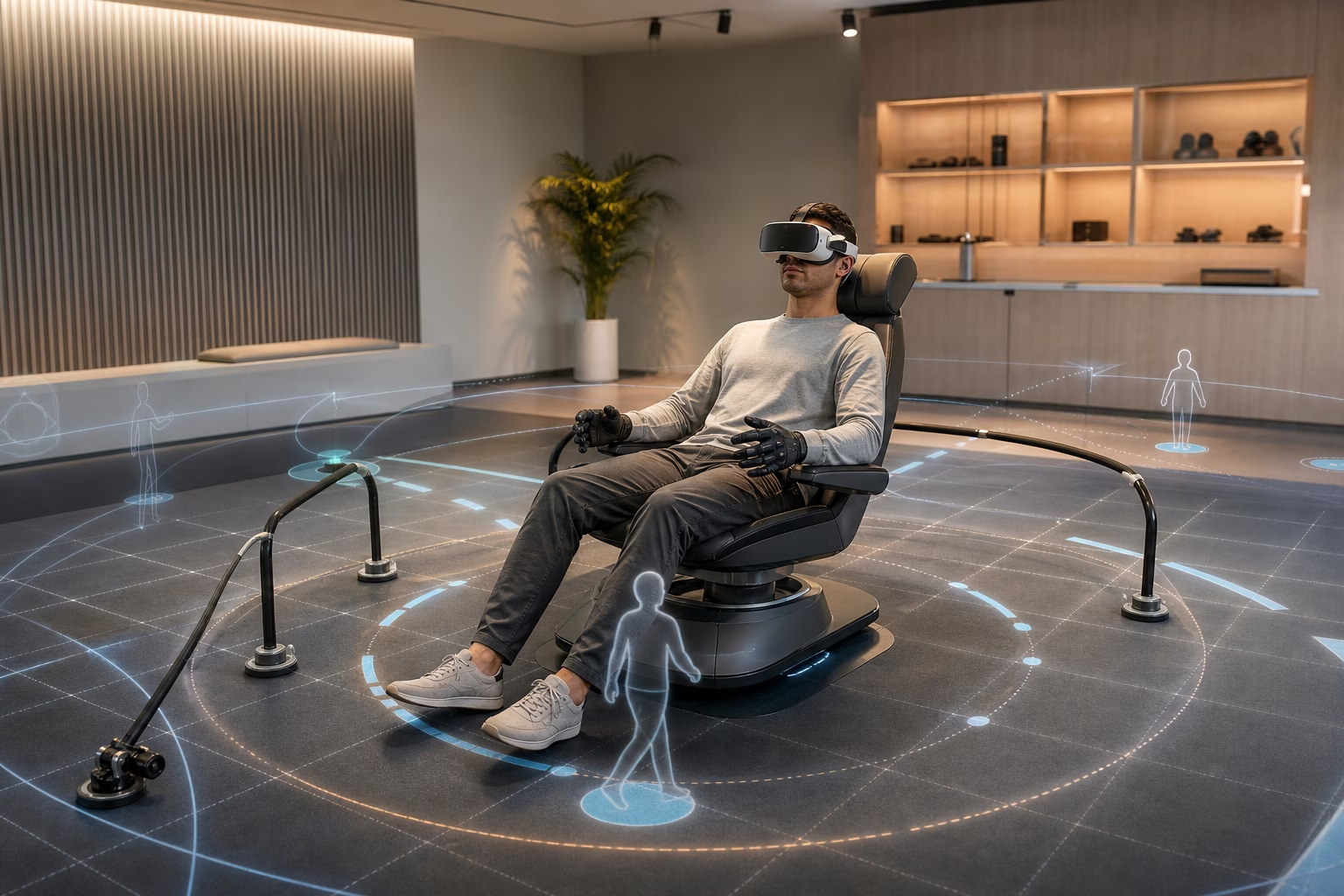
Full dive systems may eventually shape a training body in ways no real instructor can. They could slow a hand motion, exaggerate pressure, highlight balance, replay a mistake from inside the movement, or let a learner feel a clean version before attempting it. That could be powerful for crafts, equipment handling, performance, emergency drills, accessibility practice, and many other settings.
The virtual body, however, is not neutral. If it is stronger, steadier, less tired, more flexible, or more pain-free than the user’s ordinary body, it teaches through difference. That difference can help learning when it is made explicit. It can mislead when it is hidden. A person who practiced a precise lift with a stable virtual spine and idealized grip still needs to know what changes when their real body, real object, and real floor return.
Avatar Bodies and Body Schema explains why the body map matters. In training, the avatar is not only identity. It is part of the curriculum. Designers should decide when the training body matches the user closely, when it demonstrates an ideal, and when it intentionally exaggerates a cue for instruction.
Feedback Should Not Become False Mastery
Immediate feedback can make full dive practice feel satisfying. The world can show success, correct alignment, repeat a scenario, or reward smoother timing. The danger is that feedback can become too clean. Real environments include noise, awkward tools, uneven floors, weather, distraction, social pressure, maintenance issues, and imperfect information. A simulation that removes all mess may teach confidence faster than competence.
This does not mean every training scene should be harsh. Early practice often needs clarity. The learner needs to understand the pattern before dealing with friction. But a path toward real transfer should gradually reintroduce ordinary constraints. It should show what the simulation simplified. It should mark which parts of success came from the user’s skill and which came from the world’s assistance.
Reality Testing and Grounding in Full Dive VR is useful after intense training because the user may need to separate simulated ease from real-world readiness. A debrief should not merely celebrate completion. It should name uncertainty.
Calibration Is Part of the Lesson
Skill transfer depends on calibration. A user with limited shoulder range, different grip strength, slower reaction time, or sensory sensitivity should not be pushed through a training body that ignores those realities. At the same time, the system should avoid reducing the person to a deficit profile. Calibration can support better practice without making the learner feel measured instead of taught.
Calibration Profiles in Full Dive VR describes what might travel between worlds. Training profiles need special care because they can affect evaluation. If a system knows a user’s movement ranges, fatigue patterns, and preferred feedback, it may be able to teach well. It may also create sensitive records about ability and performance. The learner should understand what is stored, who can see it, and whether the profile follows them into employment, school, competition, or public rooms.
The best calibration will be humble. It will say, “This setting helped you practice here,” not, “This is what you are.” It will allow local adaptation without turning every movement into a permanent assessment.
Risk Needs Its Own Translation
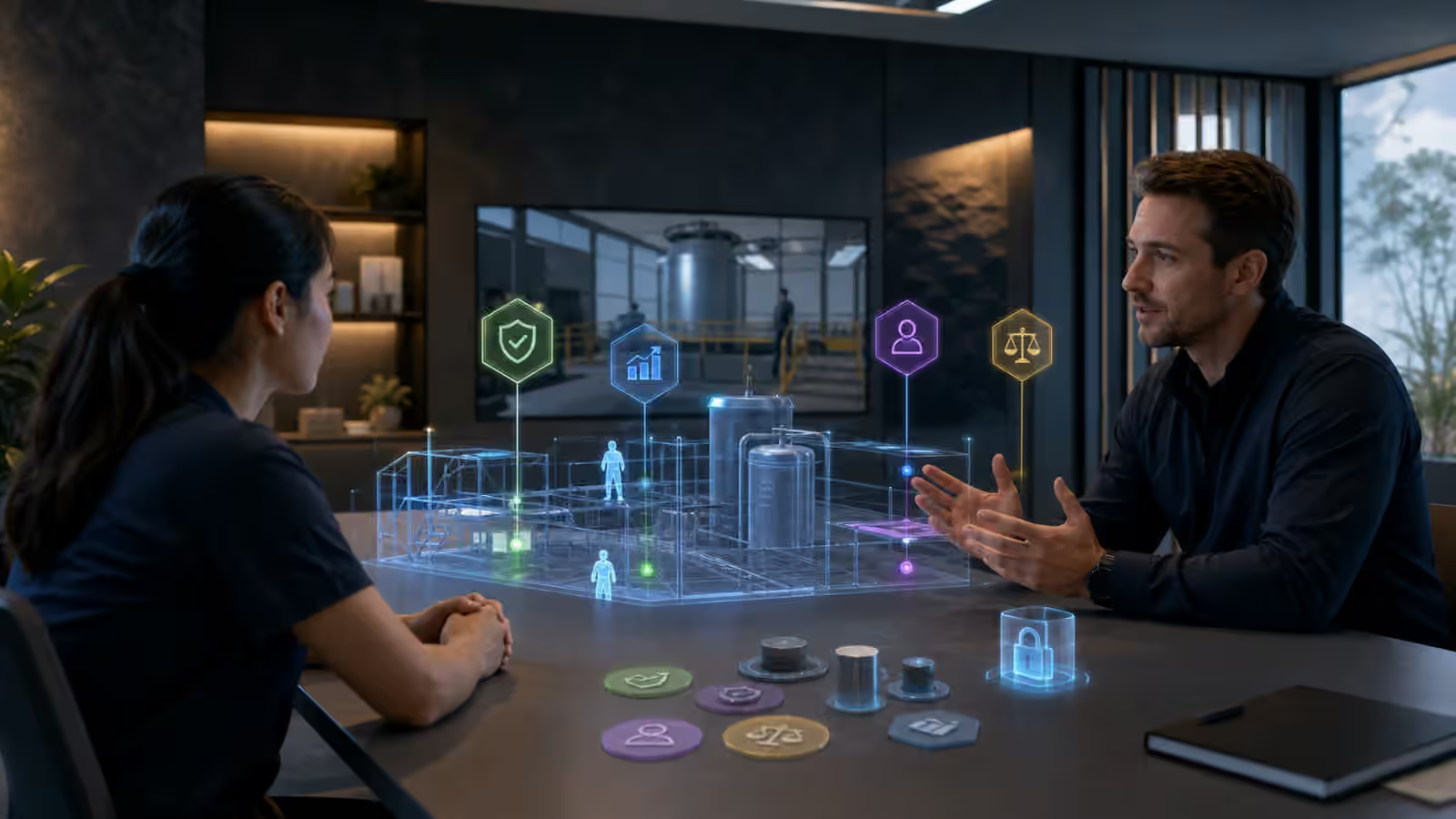
A full dive training world can simulate danger without exposing the user to the real thing. That is one of the medium’s obvious strengths. A person can rehearse a machine failure, a difficult conversation, a navigation task, or a high-pressure decision with less cost. But risk is not only information. It is also consequence, fatigue, noise, accountability, and sometimes fear.
If a simulation makes risk feel too comfortable, it may teach the wrong lesson. If it makes risk feel too intense, it may overwhelm learning or violate consent. Pain and Discomfort Boundaries in Full Dive VR matters because discomfort can become a shortcut for realism. Training designers should not assume that stronger sensation produces better transfer.
Good risk translation gives the learner meaningful stakes without pretending to be the real event. It can show near misses, require recovery steps, and make uncertainty visible. It can also stop before intensity becomes spectacle. The learner should come away with respect for the real task, not just a memory of surviving a dramatic scene.
Debriefing Completes the Movement
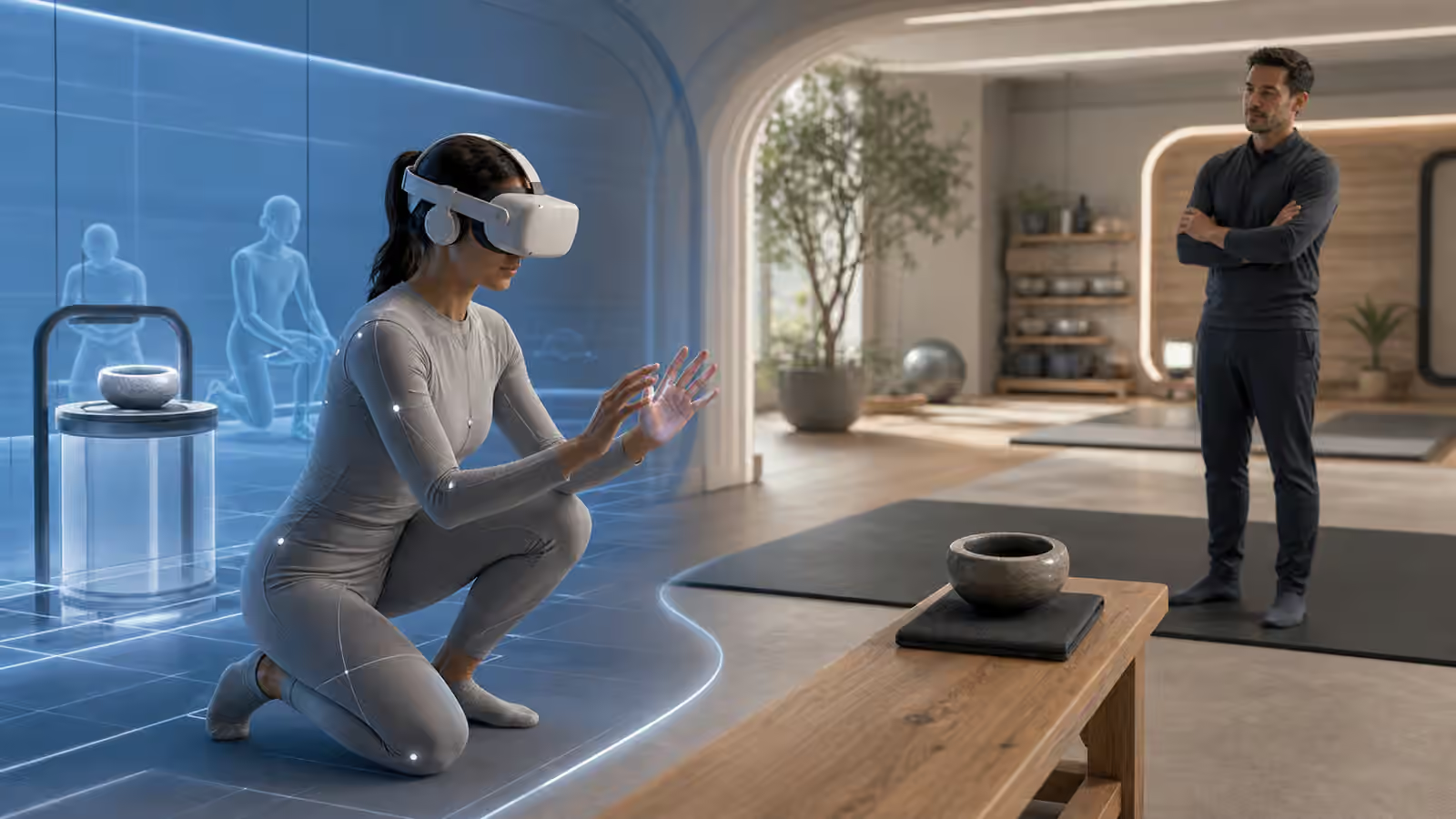
A skill does not transfer at the exit door by itself. The user needs debriefing that connects virtual practice to ordinary action. What should they try physically? What should they not assume? Which cues were exaggerated? Which tools were idealized? Which mistakes repeated? Which parts of the scenario require a qualified instructor, real equipment, or supervised practice before they matter outside the simulation?
Coming Back treats return as human work. Training return is especially concrete. The user may need to stand, stretch, handle a real prop, make notes, talk to a coach, or wait before acting on the simulated confidence. The world should not send someone directly from a flawless rehearsal into an unsafe real-world attempt.
The most responsible full dive training systems may be modest about transfer. They will say where practice helped and where it did not. They will preserve the wonder of embodied learning without pretending the simulation has replaced the body, room, tools, people, and consequences waiting outside.