The easiest promise to make about full dive VR is that it will change learning. The promise sounds obvious. If a person can enter a believable world, then a classroom no longer has to describe a rainforest, a turbine hall, a Roman street, a surgery theater, a lunar worksite, or the inside of a molecule. The learner can be there, or at least somewhere that feels close enough to matter.
That promise is exciting, but it needs discipline. Education is not improved just because the room becomes spectacular. Training is not effective just because the simulation feels intense. A full dive environment could make some lessons unforgettable and others misleading. It could help people practice safely, or it could teach confidence without competence. The difference will depend on design, feedback, assessment, consent, and the honesty of the people selling the experience.
The useful question is not whether full dive VR can make learning vivid. It can. The useful question is when vividness becomes understanding.
Presence is not the same as learning
Presence is the feeling of being somewhere. Learning is a change in what you understand, remember, notice, or can do. They often support each other, but they are not the same thing. A student can feel present in a virtual ancient city and still leave with a tourist’s collection of impressions. A trainee can feel present in a simulated factory and still miss the quiet cues that matter in the real one.
Good education uses presence as a tool, not as the lesson itself. A full dive history lesson should not only let someone walk through a market. It should help them notice social roles, trade, architecture, food, language, power, and uncertainty. A full dive biology lesson should not only shrink someone down into a cell. It should help them understand scale, interaction, probability, and the limits of the model. A full dive safety lesson should not only create danger. It should teach perception, judgment, and recovery.
The risk is spectacle. A beautiful simulation can feel authoritative because it surrounds the learner. The more immersive the world becomes, the more easily people may forget that it is an interpretation. Every reconstructed street, body, ecosystem, and machine contains choices. A good learning system should reveal those choices instead of hiding them behind confidence.
Practice needs consequences, but not the wrong ones
Training often improves when people can practice before the stakes are real. Pilots use simulators because crashing in simulation is better than crashing in the sky. Emergency teams drill because the first confusing moment should not happen during the actual emergency. Full dive VR could extend that logic to many fields: equipment operation, difficult conversations, spatial judgment, navigation, teamwork, inspection, craft skills, and rare events that are hard to rehearse safely.
But simulated consequences have to be tuned carefully. If nothing matters, the learner may treat the exercise like a game. If everything feels overwhelming, the learner may freeze or remember only fear. A good simulation creates pressure that serves the lesson. It lets people make mistakes, see results, recover, and try again with better attention.
This is especially important in social training. A virtual patient, customer, student, witness, or coworker can help someone practice words and timing, but the system must not pretend that simulated people fully replace real relationships. Human interaction includes ambiguity, ethics, culture, and history. A full dive roleplay can prepare attention. It should not certify moral wisdom.
Embodiment changes what counts as feedback
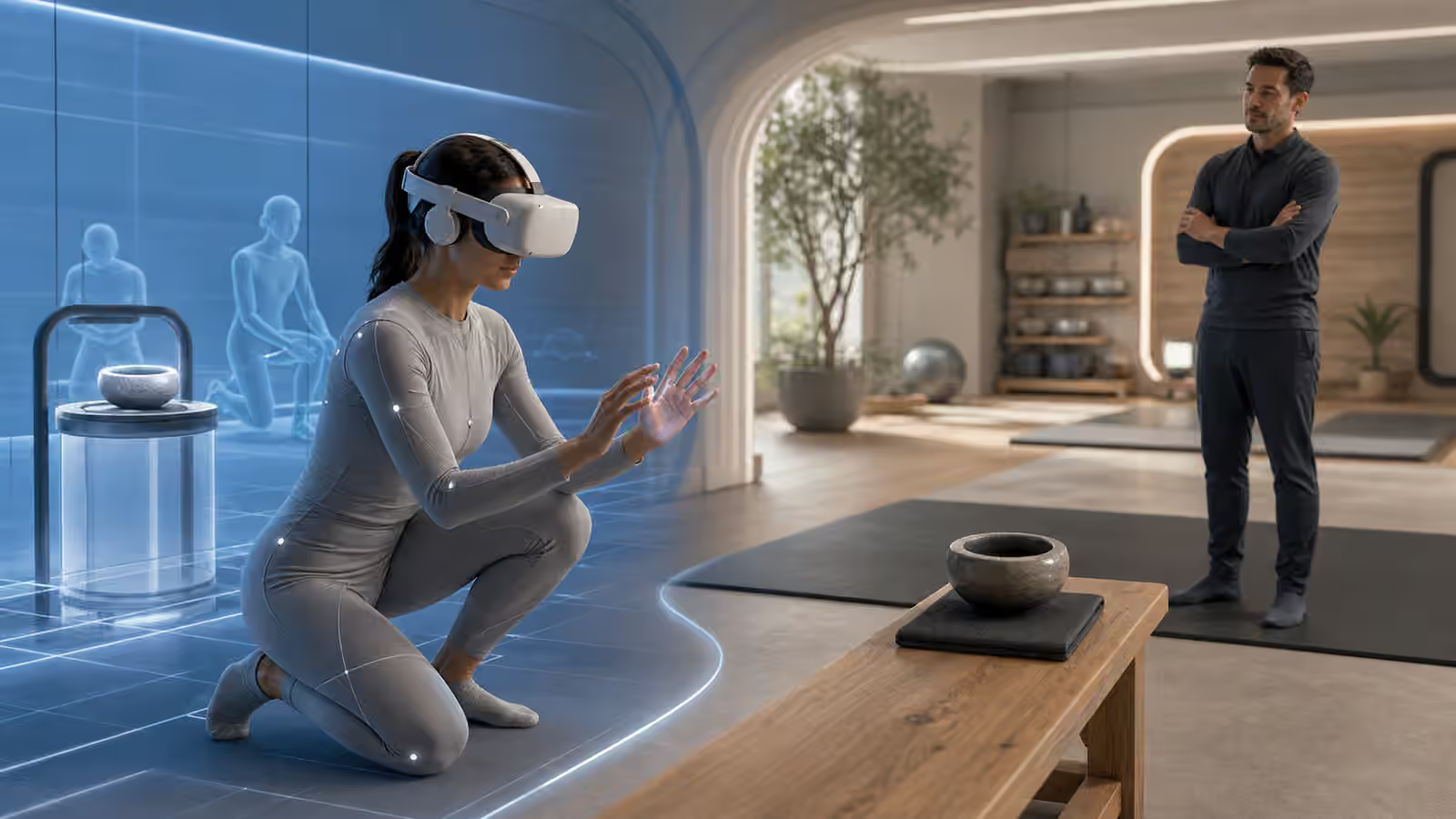
Full dive training becomes more interesting when the learner has a body in the simulation. A body changes learning because it creates posture, reach, timing, weight, balance, fatigue, and emotion. Even a limited sense of embodiment can make a lesson more memorable than watching a flat screen.
That body also creates design problems. If the virtual body moves too perfectly, the learner may practice a version of skill they do not actually possess. If the system smooths errors invisibly, it may teach false confidence. If the virtual hand always grasps cleanly, the person may never learn how hard real grip, friction, tool alignment, and material resistance can be. If the simulation exaggerates feedback, it may teach caution in the wrong places.
The best training simulations will probably make assistance visible. They will distinguish between what the learner did and what the system corrected. They will show when a motion was guided, when timing was slowed, when an object was simplified, and when the environment was made forgiving. That honesty helps the learner transfer skill back to the real world.
This connects to Avatar Bodies and Body Schema . The virtual body is not only decoration. It is part of the learning instrument. If the body lies, the lesson may lie too.
Teachers still matter
Full dive VR may make some learning environments richer, but it does not remove the need for teachers, mentors, coaches, trainers, and peers. In fact, immersive environments may make guidance more important because the learner can become absorbed in the wrong detail.
A teacher can pause the scene, ask what the student noticed, compare interpretations, slow down a moment, or pull attention away from spectacle. A trainer can distinguish between a mistake of knowledge, timing, stress, or motor control. A mentor can explain why the simulation was simplified and what real experience adds. A peer can reveal how two people can inhabit the same virtual lesson and come away with different assumptions.
The fantasy version of full dive education treats the system as a perfect tutor. The mature version treats it as a powerful room. A powerful room still needs good pedagogy. It needs sequencing, reflection, repetition, assessment, and care.
Assessment should measure transfer
The central test of training is transfer. Can the person use what they learned outside the simulation? A full dive lesson that produces high scores only inside its own world may be entertaining without being useful. The assessment should ask whether the learner notices better, explains better, decides better, or performs better in a different setting.
For knowledge-heavy subjects, transfer might mean explaining a concept without the immersive scene. For inspection tasks, it might mean finding faults in a new environment. For equipment training, it might mean moving safely from simulation to supervised real equipment. For interpersonal skills, it might mean using better timing, listening, and restraint with actual people.
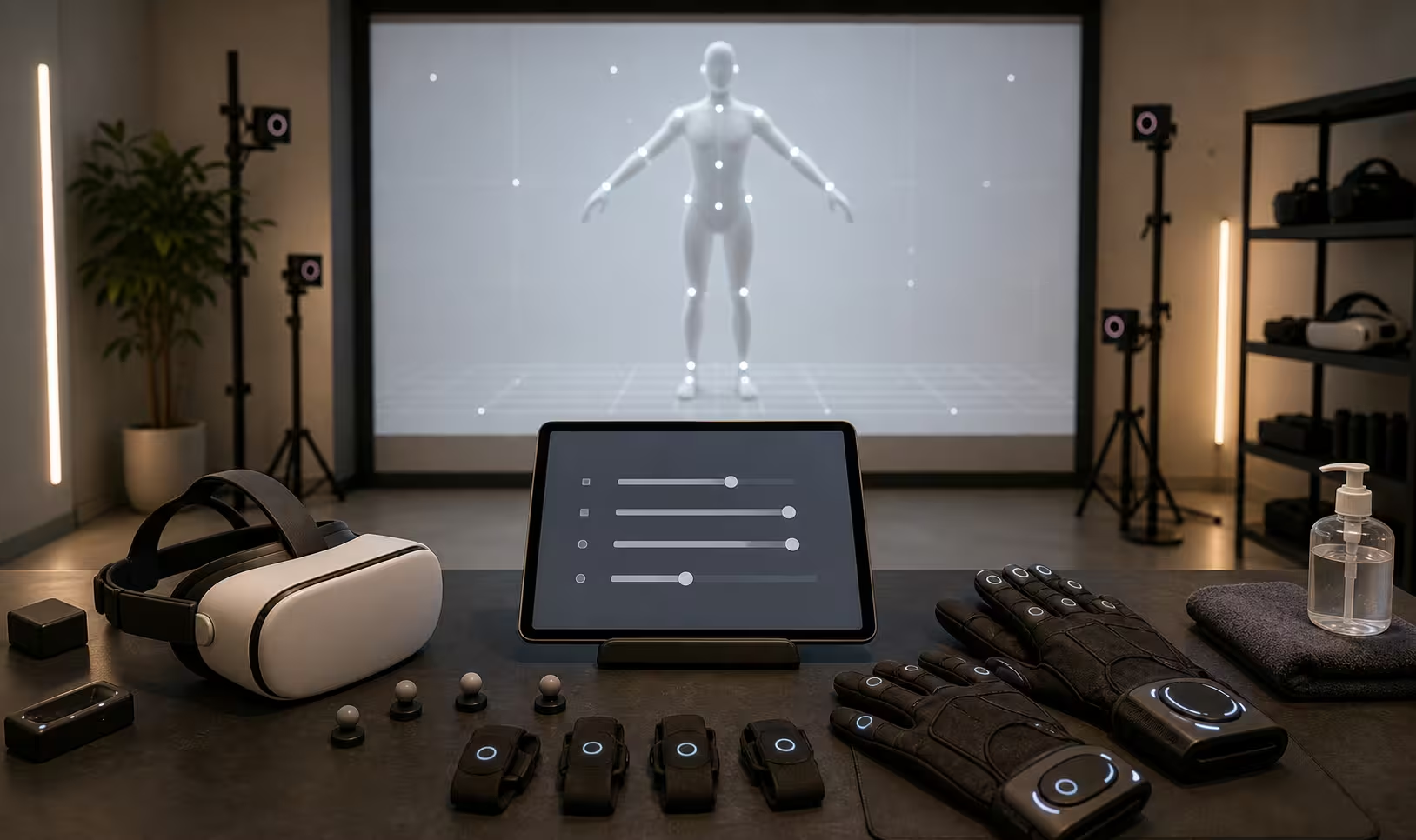
This is where full dive systems should be humble. They can record choices, timing, gaze, movement, hesitation, retries, and patterns of error. That data can be useful. It can also be invasive or misleading. A learner’s nervousness in simulation does not always equal incompetence. A smooth performance does not always equal readiness. Assessment data needs context and consent.
Safety includes the way back
Educational simulations can still affect people deeply. A disaster drill, historical atrocity, conflict scene, medical emergency, or emotionally charged roleplay can leave a trace. The more immersive the system, the more responsible the exit has to be.
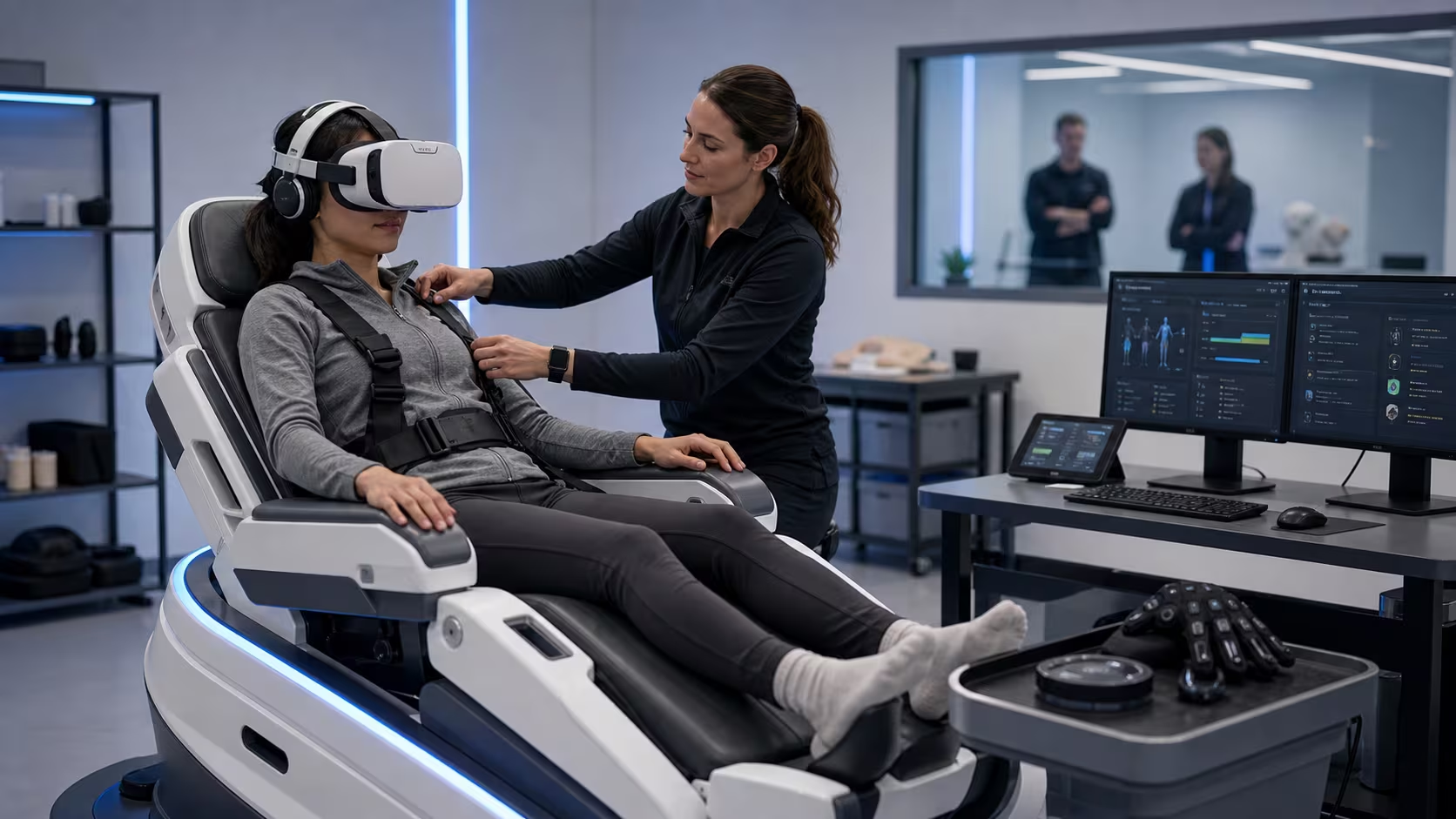
A good training room should include orientation before and after. The learner should know what kind of experience is coming, how to pause, how to leave, what data is recorded, and who will review it. Afterward, there should be space to return to the ordinary room, ask questions, and separate simulation from real memory. Coming Back treats reorientation as part of the experience for this reason. Training does not end when the scene fades.
The safest full dive education will not always be the most intense. Sometimes the right design is slower, quieter, and more explicit. Wonder is useful. So is restraint.
Full dive VR could become one of the great learning tools if it respects the difference between experience and understanding. It can put people inside models, histories, machines, languages, and possible futures. It can let them practice before stakes are real. It can reveal patterns that flat media struggles to show.
But it will only deserve trust when it teaches honestly. The simulation should say what it knows, what it simplified, what it corrected, and what the learner still has to practice in the world that does not disappear when the headset comes off.