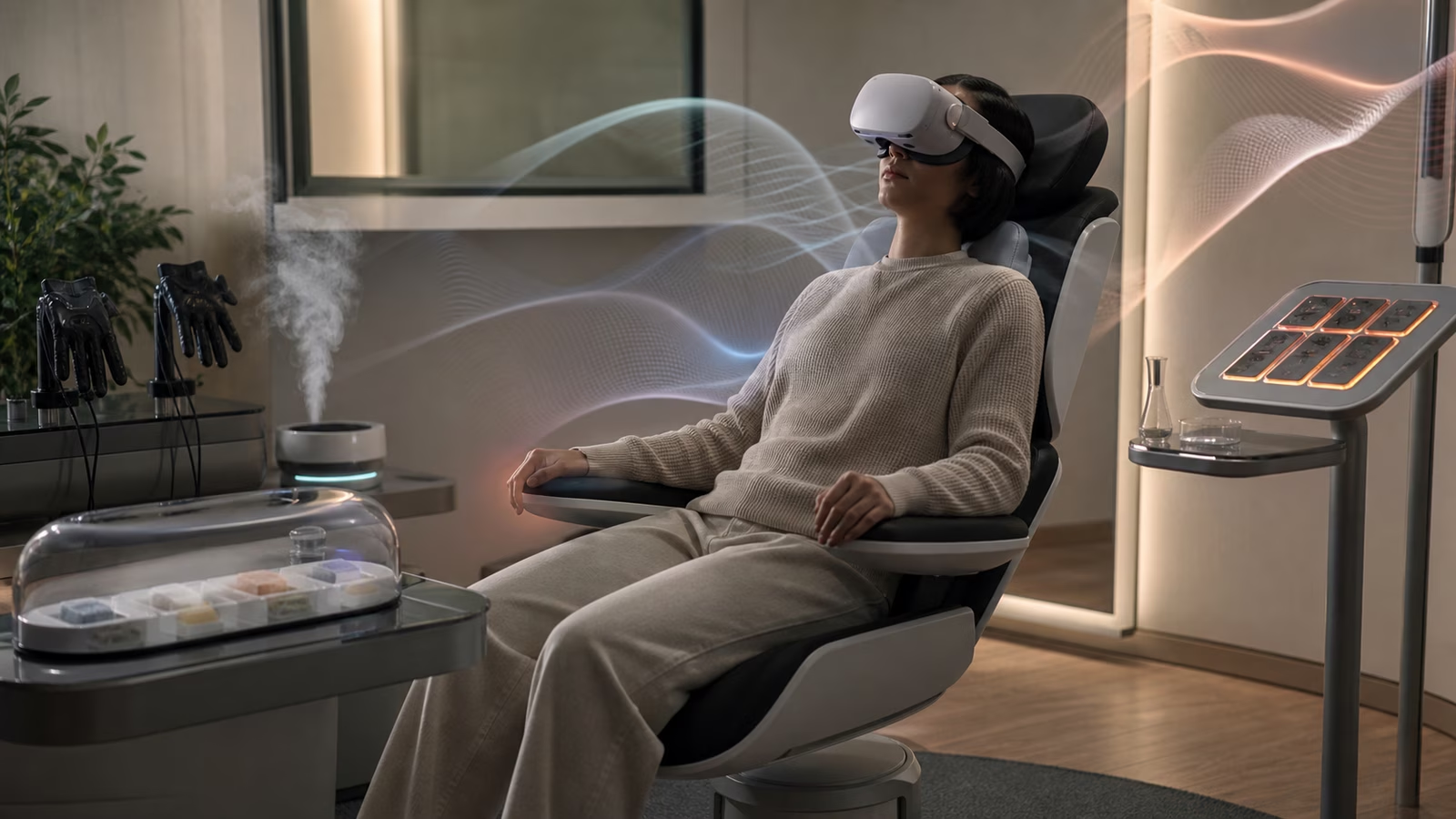
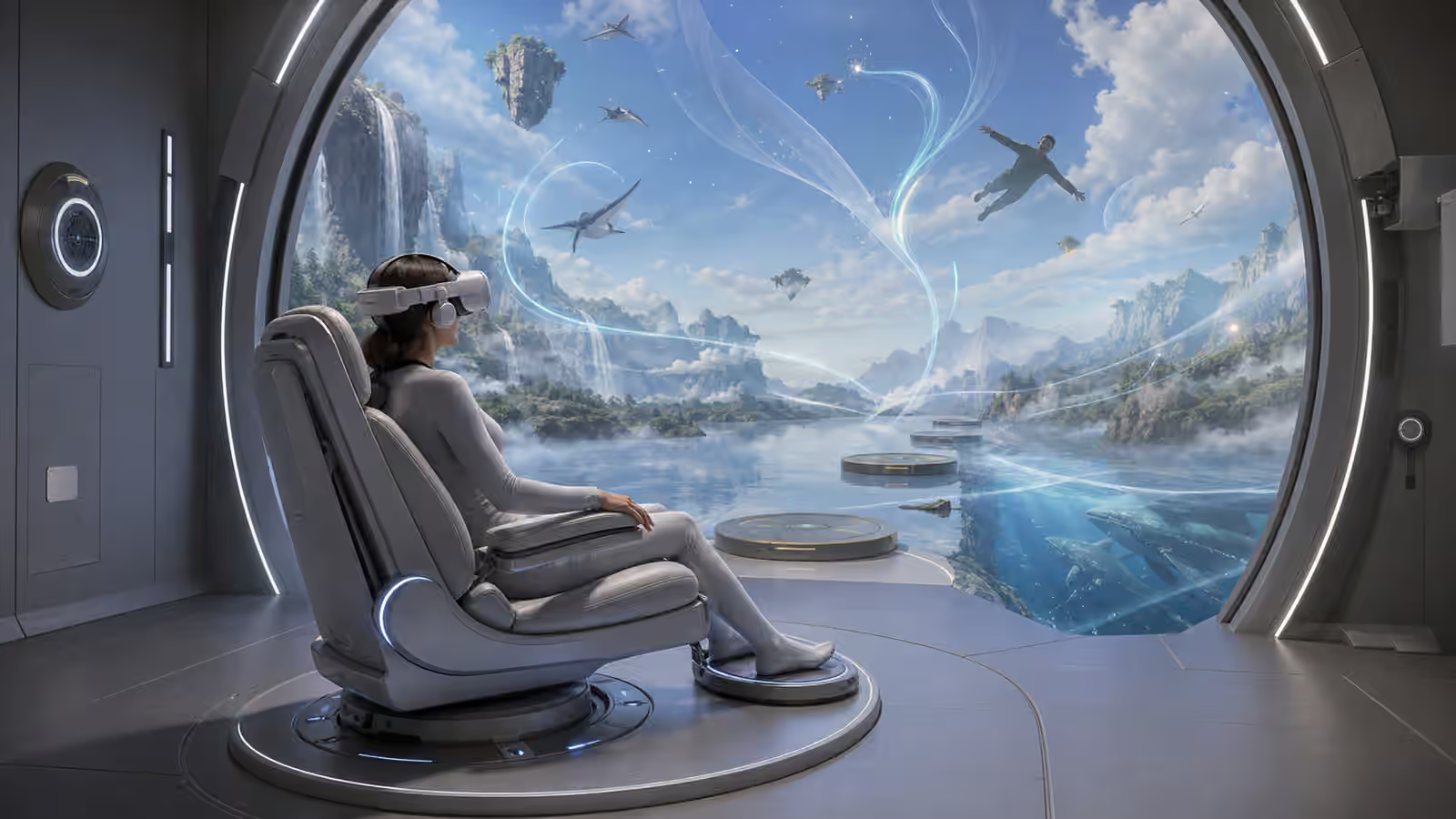
Touch is the sense that makes a virtual world stop looking like scenery and start behaving like a place. A wall can be beautifully rendered, but it becomes a wall only when the hand expects resistance and the world answers. A cup can look warm, but it becomes a cup when the fingers close around a rim, meet a surface, feel weight arrive, and trust that the object will not pass through the palm.
That is why haptics sit so close to the full dive dream. Sight and sound can invite the user into a world. Touch asks the body to believe it.
The difficulty is that touch is not one channel. It is pressure, vibration, stretch, slip, temperature, texture, joint position, muscle effort, balance, pain avoidance, and the quiet prediction of what should happen next. A convincing system would not simply make the controller buzz at the right moment. It would need to coordinate contact with the user’s body map, the object’s behavior, the room’s rules, and the user’s permission.
The Haptic City imagines what believable touch might feel like when a user walks through a future city. This guide looks at the underlying problem in a plainer way. Contact, weight, and texture are not decorative realism. They are agreements between the world and the body.
Contact Begins Before the Hand Arrives
Touch starts before contact. When you reach toward a table, your body predicts the table before the fingertips land. The arm slows. The wrist changes angle. The hand opens to fit the object. If the surface appears closer than it feels, or if resistance arrives late, the brain notices the disagreement before the user has words for it.
In ordinary VR, this mismatch is common. A virtual hand passes through a cabinet. A sword has no weight until a vibration motor tries to compensate. A railing looks solid but cannot catch the user’s balance. Designers work around the problem with visual tricks, sound cues, animation limits, and interaction rules. Those workarounds can be elegant, but they reveal the gap between seeing and touching.
A full dive system would make the gap smaller and therefore more serious. If the system can suggest real contact, it also has to decide when not to. It should not let a user lean on a virtual balcony unless the physical support and sensory model can keep the body safe. It should not let a stranger’s avatar reach through a personal boundary just because the rendering engine can draw it. It should not make every surface maximally tactile simply to prove the technology works.
How Full Dive VR Might Work explains the larger input and output loop. Touch is where that loop becomes intimate. The system reads intent, posture, and expectation, then writes sensation back into the body. If the timing is wrong, the illusion does not merely lose polish. It loses credibility.
Weight Is a Promise
Virtual weight is often imagined as a force problem: make the object feel heavy. But weight is not only downward pressure. It is effort over time. It is how the shoulder prepares, how the grip tightens, how the elbow changes path, how the body braces before lifting, and how fatigue accumulates if the object stays in the hand.
This makes weight hard to fake cleanly. A glove can press against the fingers. A controller can resist movement. A suit can pull or vibrate. A neural interface might one day write more direct signals. None of those automatically gives the user a believable heavy suitcase, sword, backpack, or sleeping child. The sensation has to match the action. The user’s virtual arm cannot move like air while the system claims the object is heavy. The world cannot ask for effort and then let the avatar ignore it.
Weight is also social. A shared object teaches people what kind of world they are in. If two users lift a crate together, their timing, posture, and sense of contribution should roughly agree. If one person feels resistance and the other sees effortless motion, the object becomes untrustworthy. In a training scene, that mismatch can teach the wrong habit. In a social scene, it can turn cooperation into confusion.
Latency, Drift, and Trust in Full Dive VR belongs here because weight depends on timing. Resistance that comes a fraction too late feels slippery. A heavy object that becomes light during a tracking correction feels false. A hand that drifts away from the felt load can make the user’s own body feel unreliable. The more convincing the touch channel becomes, the less tolerance there is for silent mismatch.
Texture Is Information, Not Wallpaper
Texture is tempting to overuse. A future system might make every surface declare itself: stone, bark, water, cloth, steel, dust, skin, paper, glass. That would be a poor goal. Real touch is selective. People do not inspect every wall they pass. They notice texture when it helps them understand material, danger, age, comfort, cleanliness, temperature, or craft.
Good tactile design would use texture as information. A smooth rail tells the user where hands belong. A rough edge warns against a broken surface. A soft cushion says this object can receive weight. A damp floor changes movement. A worn handle tells a story about use. Texture can make a place feel inhabited, but it should also help the user act.
The hardest part is continuity. Texture is not a single spark at first touch. It changes as the finger moves. It has direction, friction, pressure, and scale. A wooden table feels different when tapped, stroked, gripped, or leaned on. Cloth changes under pressure. Metal responds to temperature and force. Skin and social touch raise a different category of permission entirely.
The guide to Smell, Taste, and Temperature in Full Dive VR makes a similar point about subtle senses. Richness is not intensity. A small cue at the right moment may do more for presence than a constant stream of sensation. Texture should clarify the scene, not exhaust the hand.
Resistance Has to Respect Refusal
A system that can resist the user’s movement has crossed into a stronger relationship with the body. It can guide, slow, block, redirect, or hold. Those abilities might be useful for training, accessibility, rehabilitation, art, and play. They also need careful boundaries.
Resistance should be legible. The user should understand whether a door will not open because it is locked in the story, because the system is protecting a boundary, because another person has not consented, because tracking confidence is low, or because the user’s own safety setting has intervened. The felt result may be similar, but the meaning is not.
Resistance should also be proportional. A world does not need to overpower the user to be convincing. It can soften the hand, fade the object, redirect attention, make the avatar step back, or reduce interactivity until calibration improves. The most trustworthy haptic system may be one that avoids dramatic force whenever a quieter design choice would protect the same boundary.
Permission Boundaries in Full Dive VR is the natural companion to this question. Permission is not only about entering a scene. It is about what the world is allowed to do once it has access to the body. If the system can create pressure, hold, impact, or restraint, then refusal has to be fast, ordinary, and respected without negotiation.
Touch Changes the Avatar
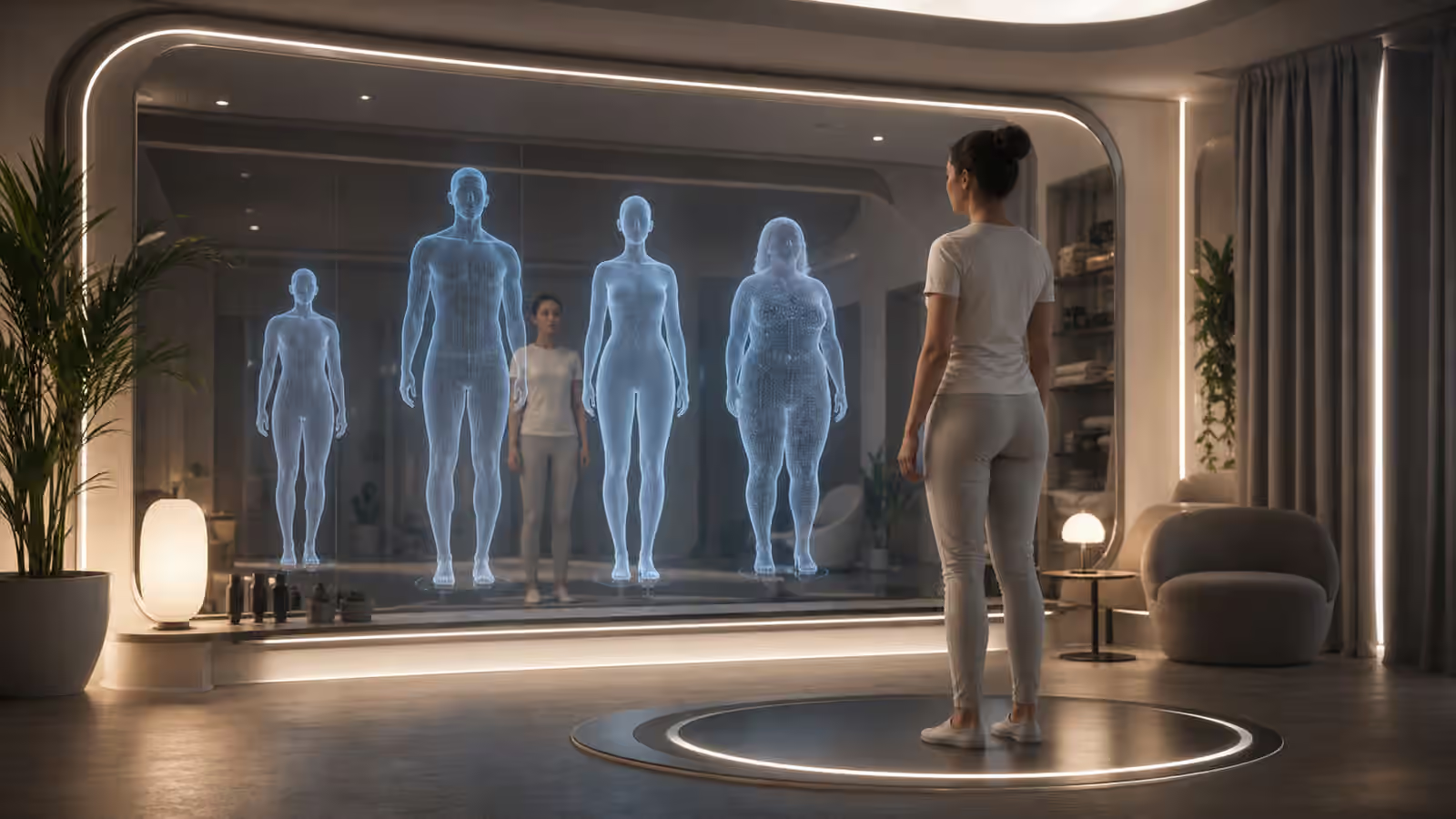
The avatar is not only something other people see. It is the body through which the user receives the world. When touch becomes convincing, the avatar’s shape, reach, strength, skin, clothing, tools, and limits become part of the user’s felt self.
That can be liberating. A user might inhabit a body that moves without chronic discomfort, practices a skill safely, changes scale, or explores a form that ordinary life cannot offer. It can also be disorienting if tactile feedback teaches the wrong body too aggressively. A longer arm, different hand, unusual gait, or transformed skin texture may feel playful at first and strange after the session ends.
Avatar Bodies and Body Schema explains why the body’s internal map matters. Contact and weight write directly onto that map. A virtual body that can feel a stone path, catch a ball, or carry a pack is asking the brain to make predictions. If those predictions become too inconsistent, the user may not feel expanded. They may feel unreliable to themselves.
This is one reason calibration should not chase maximum realism. It should ask what kind of body the user wants for this session, what sensations are welcome, what should remain symbolic, and what should be omitted. A fantasy body does not need every possible tactile detail to feel meaningful. It needs enough consistency that the user can inhabit it without losing the thread back to the ordinary body.
Social Touch Needs Stricter Rules
Touch between people carries more meaning than touch with objects. A handshake, push, hug, tap on the shoulder, brush past the arm, or hand placed too close can be friendly, intimate, rude, accidental, threatening, or confusing depending on context. Full dive VR would not get to ignore that complexity. If social touch feels real enough to matter, it needs consent rules strong enough to match.
Shared Worlds in Full Dive VR treats personal space as part of the architecture of multiplayer worlds. Haptics make that architecture felt. A boundary should not only be a menu preference. It should shape what other users can do, how close their touch can get, how impact is softened, and what happens when the system is uncertain about intent.
The system should also distinguish local sensation from public performance. A user may choose to receive a symbolic greeting without broadcasting that choice as vulnerability. Another may want visual contact but no tactile contact. Another may accept touch from trusted friends in one world and reject it in public spaces. The haptic layer should not flatten those preferences into one global on switch.
Reentry Includes Letting Go
After a strong tactile session, the return to the ordinary room should help the body let go of virtual contact. The hands may still expect resistance from tools that are no longer there. The shoulders may remember a weight the room cannot see. The skin may carry a trace of texture, warmth, or pressure in attention even if no physical mark exists.
Comfort and Reorientation in Full Dive VR and The Room Outside the World both argue that exit is part of safety. Haptics make that exit more concrete. The user may need a neutral object to hold, a familiar surface, quiet lighting, and enough time for the hands to become ordinary again. The system should not end a scene with simulated weight and immediately ask the user to stand, walk, sign a decision, or explain an emotional reaction.
The best tactile full dive systems may not be the ones that make everything feel real. They may be the ones that know which contacts deserve trust, which weights should be softened, which textures should stay in the background, and which sensations should never be imposed. Touch is powerful because it is close to the self. That is exactly why it has to be designed with patience.
Full dive VR will not earn belief by making every object buzz. It will earn belief when a hand meets a world and the world answers honestly: here is what you may touch, here is what can hold you, here is what should remain out of reach, and here is the path back to your own body.