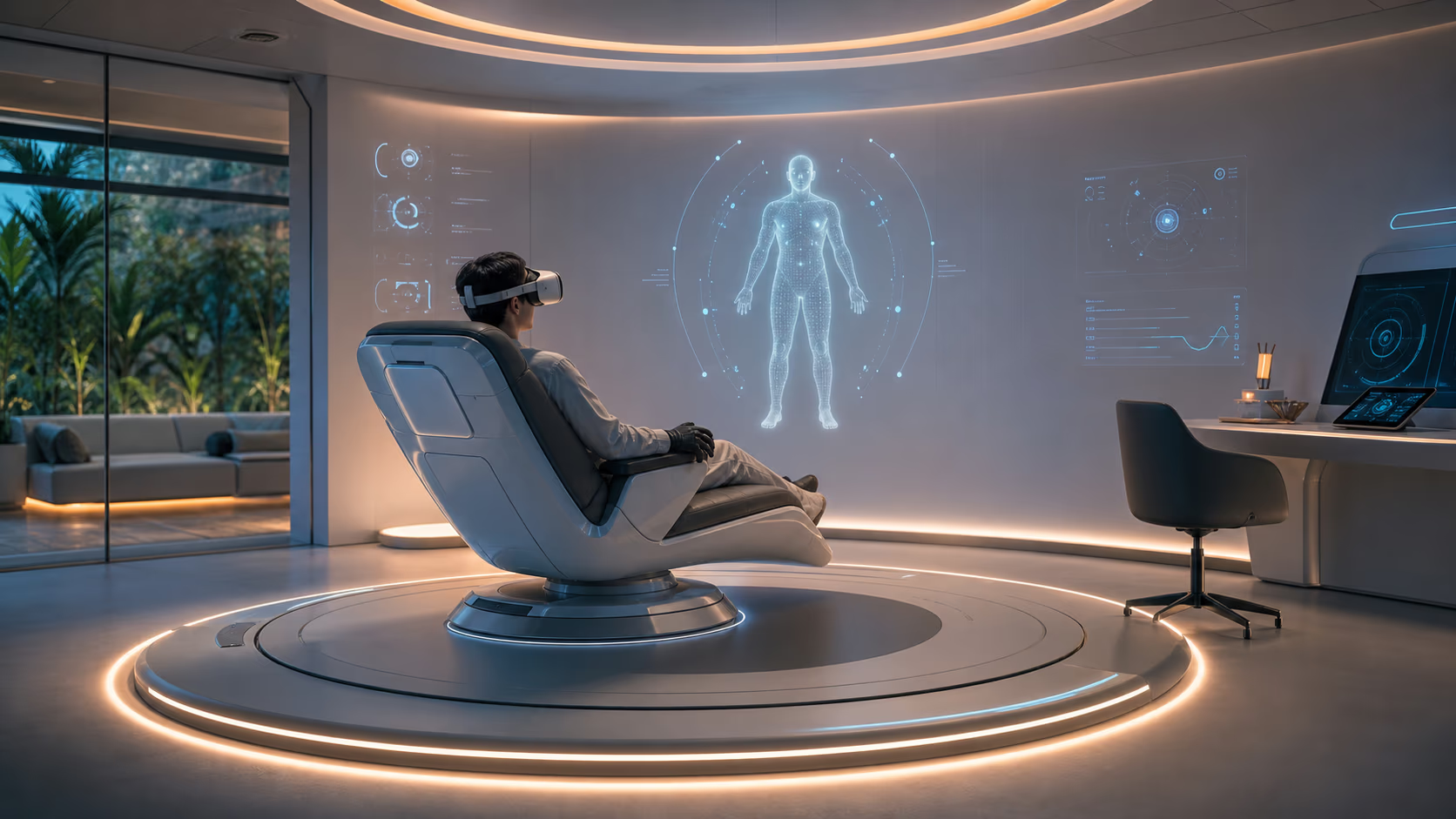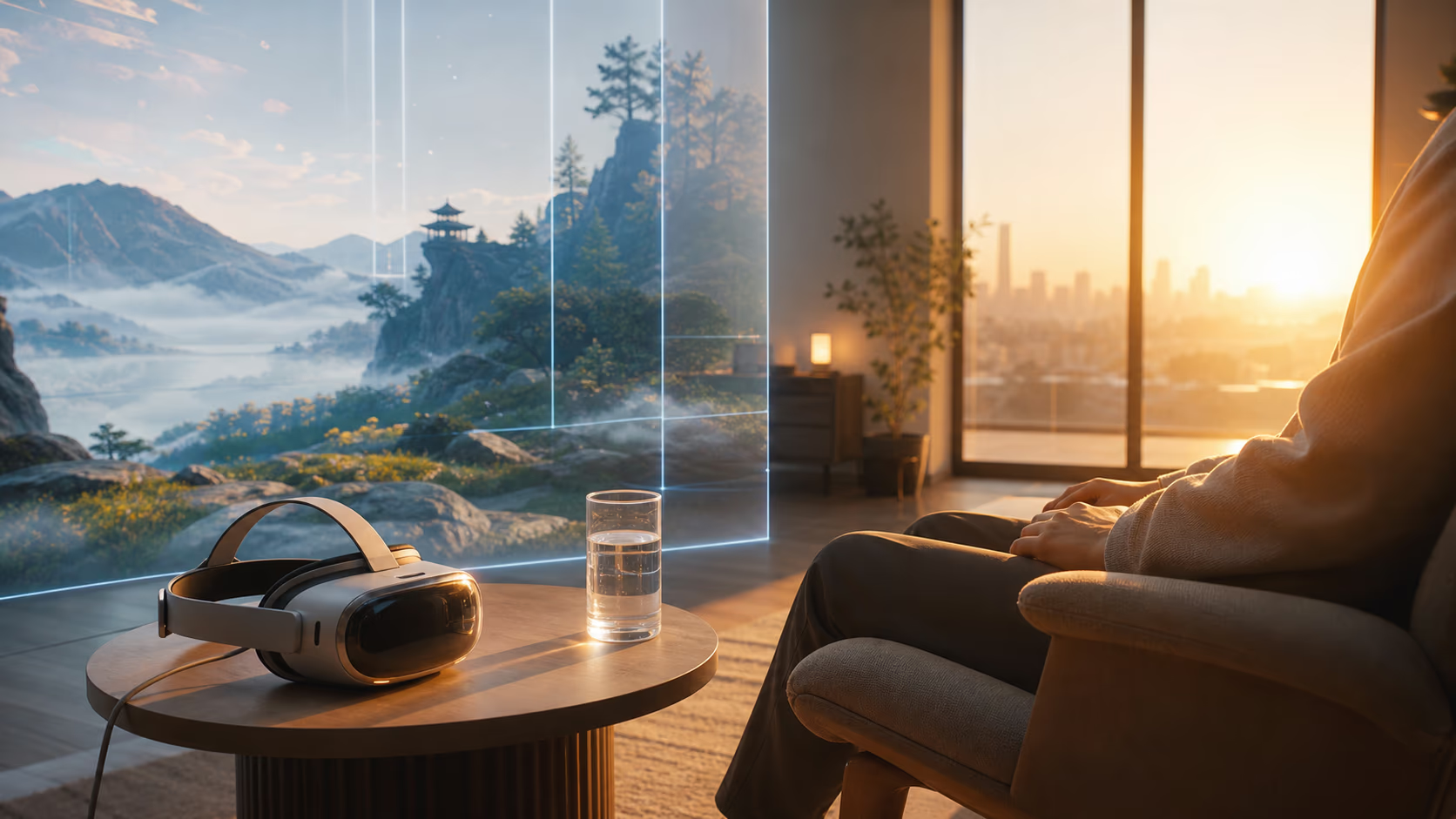
The last room matters as much as the first.
In the fantasy version of full dive VR, you open your eyes in another world. The story usually ends there, at the doorway. But every session has another doorway: the return.
You leave the mountain city, the training sim, the shared dream theater, the underwater archive, the impossible garden. The world dims. Your virtual hands fade. The floor becomes the floor again. The headset comes off. The real room is quiet in a way that feels almost rude.
What happens in those first thirty seconds may decide whether the experience feels wondrous, confusing, exhausting, or unsafe.
Current VR already has a small version of this problem. After a long session, some users need a moment to reorient. Their eyes adjust. Their balance settles. Their sense of scale returns. Full dive VR would make that transition more important because the experience could involve deeper embodiment, richer touch, stronger emotion, social intensity, and more intimate data.
Coming back should not be an afterthought.
Exit Is Not the Same as Recovery
An exit ends the simulation.
Recovery helps the person return.
Those are different jobs. A power cut can end the simulation. That does not make it a good exit. A menu button can close an app. That does not mean the user is oriented, calm, and ready to stand up.
A full dive system should treat return as a sequence:
- Lower sensory intensity.
- Restore the user’s body map.
- Show the physical room or a stable transition room.
- Confirm orientation.
- Offer a short session summary.
- Let the user choose what to save or delete.
- Give a clear next step: continue, rest, report, or leave.
The order matters. A user who is still disoriented should not be asked to make complex privacy decisions. A user who is distressed should not be pushed toward sharing a clip. A user who just experienced intense motion should not be encouraged to stand immediately.
The system should be patient because the body is patient with it.
The World Should Loosen Its Grip
Abrupt transitions can feel harsh.
Imagine a full dive scene where you are running through snow, hearing wind, feeling cold pressure through the suit, speaking with friends, and tracking danger behind you. Then, instantly, black screen. Silence. Your living room. Battery warning.
That may be technically simple, but humanly sloppy.
A better exit loosens the world’s grip in layers. Motion stops first. Threat disappears. Social audio clarifies. Haptics soften. The horizon stabilizes. The virtual body returns to a neutral posture. The system reminds you where you are: “You are leaving the session. You are seated. Your physical room is clear.”
This does not have to be patronizing. It has to be reliable.
The transition room can be part of the platform. A familiar calm place that always works the same way. It may show a passthrough view, a simple body outline, a breathing pace, or a countdown. The point is not decoration. The point is continuity.
The mind entered through a frame. It should leave through one too.
The Real Body Needs a Roll Call
Deep immersion can make the real body feel temporarily distant.
A reorientation sequence should bring it back gently. Hands first. Feet. Breathing. Seat. Room. Time. Other people nearby. Devices still worn. Cables or obstacles. Glasses. Water. The ordinary inventory of being here.
Current VR often leaves this work to the user. That is acceptable for many short sessions. Full dive should do better.
The system might ask simple physical questions:
- Are you seated or standing?
- Do you feel dizzy?
- Are your hands free?
- Is anyone waiting for you outside the session?
- Do you need a break before continuing?
It should also detect what it can safely detect: session length, motion intensity, high stress, repeated exits, balance risk, and hardware state.
The goal is not to medicalize every session. The goal is to avoid pretending that a deeply embodied experience ends the moment the display turns off.
Social Exit Needs Etiquette
Leaving alone is one thing. Leaving a shared world is another.
In a social full dive session, exit design has to protect both the person leaving and the people who remain. A sudden disappearance can be confusing. A forced goodbye can trap someone in an uncomfortable situation. A visible panic exit may reveal private distress. A silent exit may be safest.
Good systems should offer exit modes:
- Quiet leave.
- Polite fade.
- Emergency cut.
- Scheduled return.
- Pause with avatar idle.
- Leave-and-report.
Each mode has a different social meaning. The user should not need to explain themselves every time. The platform can provide graceful signals without exposing private reasons.
This matters because social pressure is one of the easiest ways to make people stay longer than they want. A full dive system should make leaving normal, not shameful.
The Summary Should Serve the User
After an immersive session, a summary can be useful.
What did you learn? Who was present? What choices did you make? Did anything trigger discomfort? Did you grant new permissions? Was anything recorded? Are there follow-up tasks? Do you want to save a memory, clip, skill metric, or nothing at all?
The danger is that summaries become engagement funnels.
A responsible summary should not be designed only to pull the user back in. It should help the user understand what happened. It should make privacy choices clear. It should flag intense content honestly. It should make reporting easy. It should let the user close without penalty.
If the system knows the session was long or intense, it can recommend a break. That recommendation should be allowed to mean something. No streak loss. No artificial punishment. No countdown pressure.
The return is part of the product, not a pause between monetization opportunities.
Bad Exits Break Trust
People remember bad endings.
A beautiful world can be damaged by a jarring exit. A safe training simulation can feel unsafe if the recovery flow is confusing. A social space can feel manipulative if it makes leaving awkward. A therapeutic tool can cause harm if it opens difficult material and then drops the user into silence without closure.
Full dive VR will need designers who think like stage managers, clinicians, game developers, safety engineers, and hosts.
The question is not only “how do we keep the user immersed?”
It is “how do we help the user stop being immersed?”
That question may sound less glamorous, but it is one of the places where the medium will prove whether it respects people.
The Best Return Feels Like Being Handed Back to Yourself
The ideal exit does not make a spectacle of itself.
It simply works.
The world fades without grabbing. Your hands return. Your room appears. You know whether the session was saved. You know who was there. You know how long you were inside. You know that you can stand now, or that you should wait. Nothing follows you that you did not choose to keep.
For a moment, the virtual world and the real room overlap in memory. Then the real room wins, as it should.
Full dive VR will be judged by how astonishingly it can take people elsewhere. It should also be judged by how carefully it brings them home.