
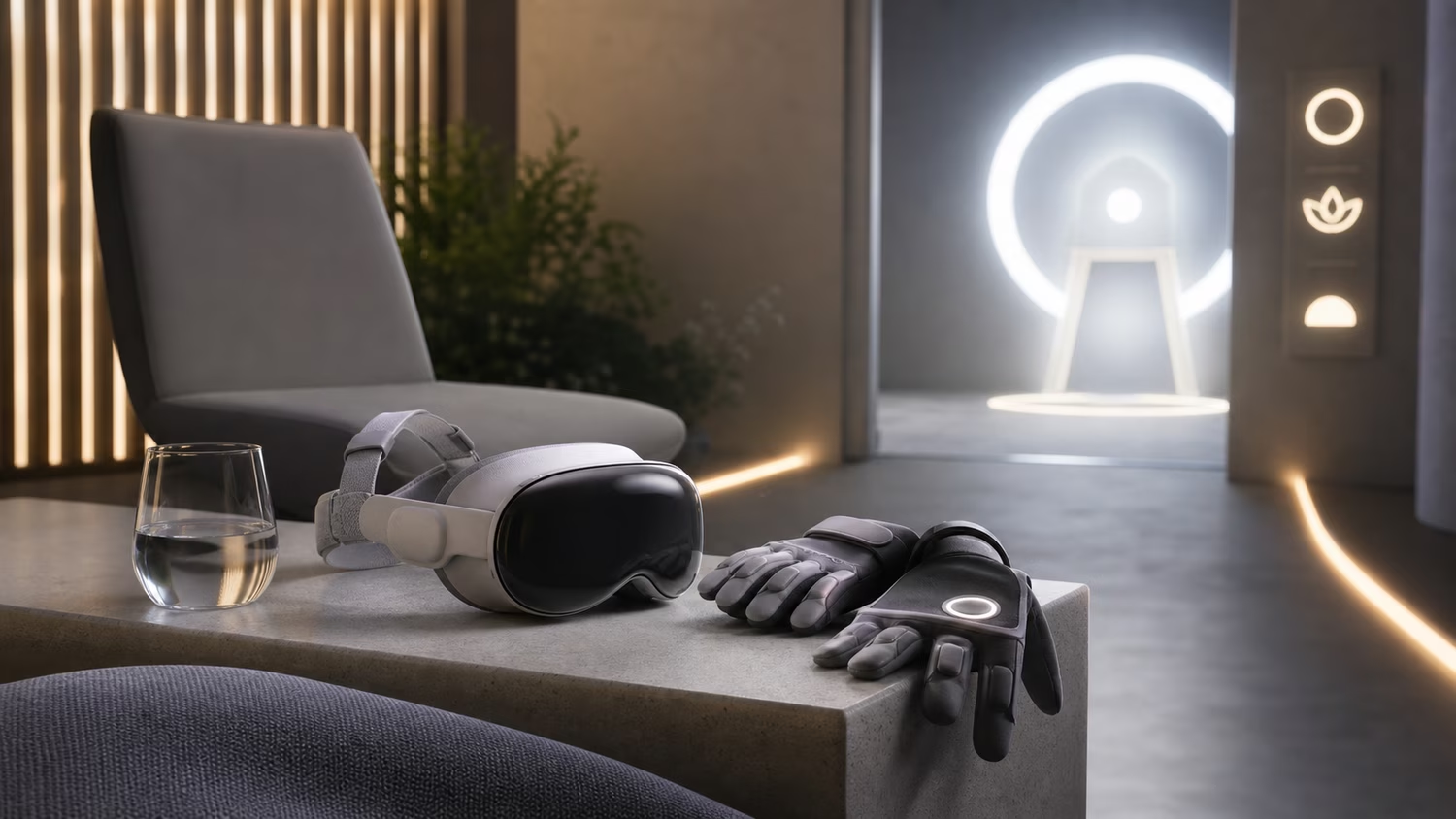
The fantasy of full dive VR usually ends at arrival. You put on the system, the room disappears, and a convincing world opens around you. The harder design problem begins later, when the world has to let you go.
Coming back should not be treated as a loading screen. It is part of the experience. If a virtual world has felt spatial, social, emotional, and embodied, then exit is not a simple off switch. The user has to return to a physical room, a real body, a chair, a floor, a clock, and other people who may not know what the last hour felt like.
Current VR already hints at this problem. Some users remove a headset and need a moment before walking. Some feel motion discomfort when visual movement and inner-ear signals disagree. Some carry emotional residue from an intense game or social encounter. Full dive VR would deepen those effects because it aims to make the loop between intention, sensation, and body model more persuasive. How Full Dive VR Might Work explains that loop in technical terms. This guide asks what it should feel like when the loop slows down.
The answer cannot be only better hardware. Comfort is a design discipline.
Discomfort Is Information
VR discomfort is often treated like a nuisance to be patched after the exciting parts work. That is backwards. Discomfort tells the designer where the body does not believe the world, where the senses disagree, or where control has become unclear.
Visual motion is the obvious example. If the virtual scene says the user is accelerating but the vestibular system reports a still body, the brain may object. Some people adapt. Some do not. A full dive system that ignores this is not immersive; it is careless. The goal should not be to bully the body into accepting every possible motion. The goal should be to design movement, feedback, and recovery so the body can keep trust.
Touch creates a similar problem. A haptic glove can suggest contact, but if the timing, pressure, or resistance does not match what the eyes see, the illusion may become irritating rather than convincing. A virtual wall that stops the hand visually while the real hand keeps moving teaches the body that something is wrong. Designers can stylize that mismatch, avoid certain interactions, or provide substitute cues, but they cannot wish it away.
Full dive systems may eventually include muscle input, nerve stimulation, or other deeper interfaces. That makes comfort more important, not less. The more intimate the signal, the more carefully the system must introduce, label, and withdraw it.
Session Boundaries Need to Be Felt
A good session boundary is not only a timer. It is a transition the user can feel before control changes. The system should make it clear when an experience is beginning, intensifying, pausing, saving, sharing, or ending. In ordinary software, a hidden state change is annoying. In deeply immersive VR, a hidden state change can be disorienting.
The user should know what kind of world they are entering. Is it social? Recorded? Physically active? Emotionally intense? Does it use body tracking, eye tracking, voice, biometric feedback, or remembered preferences? Memory Rights in Full Dive VR covers the data side, but comfort begins before privacy settings. It begins when the user understands the terms of the session in plain experience.
Ending deserves the same respect. A system that drops the user from a simulated storm, battle, concert, classroom, or intimate conversation straight into a silent bedroom has failed at pacing. Even if the content was safe, the transition may be crude. Better design would lower sensory intensity, restore awareness of the real body, confirm the user’s orientation, and give the mind a short bridge.
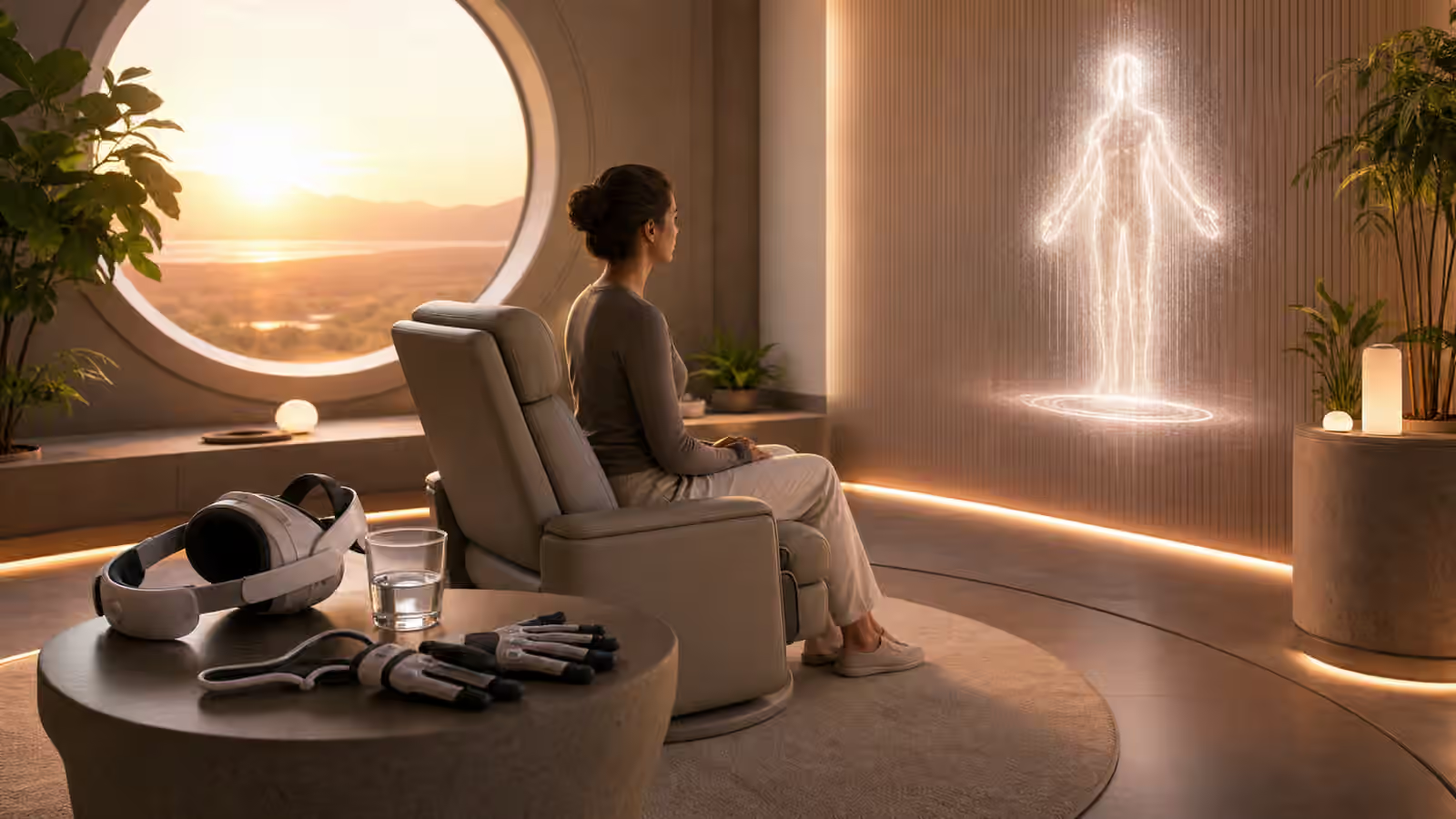
That bridge does not need to be theatrical. It could be a consistent reentry room, a grounding sound, a visual fade that reveals body position, a reminder of time elapsed, a breathing pause, or a gentle prompt to sit before standing. What matters is that the exit has a shape.
The Body Model Should Come Home Gradually
One of the most interesting full dive questions is how flexible the body model can become. A user might inhabit a taller body, a younger body, a non-human body, a weightless body, or a body with different abilities. Avatar Bodies and Body Schema explores that problem in more depth. Reorientation is where the experiment meets the floor.
If the user has spent time in a body that moves differently, the system should not assume instant return. Even current VR can create a brief aftereffect when users reach for virtual objects, misjudge distance, or feel that the real room is smaller than expected. A deeper system could make that stronger. The user may need a few moments to remember ordinary height, hand position, balance, and limits.
Designers should treat that as predictable, not embarrassing. The exit sequence can ask the virtual body to match the real body before the session ends. It can slow movement, remove unusual abilities, restore normal gravity, and show the user’s real seated or standing posture. It can avoid ending immediately after flight, falling, combat, deep water, zero gravity, or intense social contact.
There is a moral layer here too. If a world gives a user a body that feels freer, stronger, safer, or more expressive than ordinary life, returning may carry emotion. The system should not pathologize that. It should also not exploit it. Comfort includes emotional reentry, not only balance.
Social Reorientation Is Part of Safety
Full dive VR will not be only solitary. Shared worlds may involve friends, strangers, teachers, performers, moderators, synthetic characters, and AI companions. Leaving a social space can be harder than leaving a visual scene because relationships do not fade just because the display does.
A user may need to know who can still contact them, what was saved, what remains private, and whether an avatar or synthetic person remembers the interaction. Shared Worlds in Full Dive VR argues that multiplayer immersion needs boundaries built into the room. Reorientation is one of those boundaries.
The exit should not strand the user socially. If a person leaves a shared world, others should receive an appropriate signal. If the user exits because of discomfort, harassment, overload, or emergency, the system should protect them from immediate pursuit unless they choose otherwise. If a session involved strong emotion, the system should make aftercare options visible without forcing a scripted mood.
This is especially important with synthetic people. An AI character that feels present inside full dive can leave a real trace in memory. The user should know whether the character persists, whether it can refer to the encounter later, and how to close that relationship for now. A clean exit is a consent feature.
Comfort Settings Should Not Be Hidden in Shame
Many users will need comfort controls. That should be normal. Movement style, haptic intensity, field of view, acceleration, audio density, social distance, touch permissions, session length, and reentry pace may all need adjustment. If those controls are buried as accessibility afterthoughts, users will push past discomfort because changing settings feels like admitting failure.
A mature full dive platform would make comfort calibration part of the main experience. Not as a medicalized warning, and not as a childish tutorial, but as ordinary setup. The system learns how the user handles motion, touch, proximity, temperature cues, and intensity. The user learns which settings make worlds feel better rather than merely stronger.
The best comfort design may sometimes make immersion less realistic. That is acceptable. Symbolic feedback can be safer than literal feedback. A visual pulse may communicate impact better than a painful sensation. A gentle resistance cue may be better than trying to imitate a hard collision. A stylized teleport may be better than simulated acceleration for a user who gets sick. Presence is not the same as maximum realism.
The Exit Is Where Trust Is Proven
People will forgive many limits if the system is honest with their body. They will tolerate stylized motion, simplified touch, and gradual transitions when those choices help them feel oriented and respected. They will trust less when the system hides intensity, records too much, rushes exits, or treats discomfort as user weakness.
Full dive VR asks for unusual trust. It asks the user to let a machine shape sensation, attention, memory, and social presence. That trust cannot be earned only by making the world beautiful. It has to be earned by giving the user reliable ways to pause, soften, understand, leave, and return.
The future full dive room should not be designed like a trapdoor into another world. It should be designed like an airlock. Enter with clarity. Adjust pressure slowly. Know where the exit is. Come back with enough time for the body and mind to agree on where they are.


